

We’ve all seen the headlines: AI is coming for the charts, AI is flooded on Spotify, and AI is either the end of artistry or its greatest savior. But what do those actually in the trenches - the producers, engineers, songrwiters, and musicians - really think?
A new survey from Sound On Sound and Sonarworks asked 1,100+ music creators how they are navigating the AI explosion in 2026. The results are a fascinating mix of "grudging acceptance" and a fierce protection of the human element.
Here is the breakdown of what every indie artist, producer and industry pro needs to know about the current state of AI in the studio.
Utility Over Creativity
The biggest takeaway? Musicians and producers aren’t looking for AI to write their next hit; they’re looking for it to do the chores.
Nearly three-fifths of respondents recognize AI’s potential to automate "tedious" tasks like vocal tuning, drum editing, and file management. It’s the "bread and butter" mixing skills - like corrective EQ and dynamic control - that are increasingly being offloaded to AI tools.
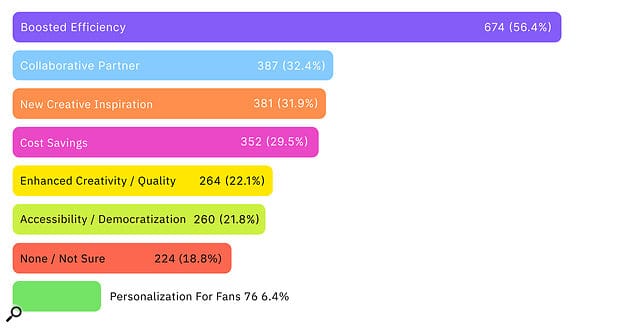
The Hypebot Take: For the independent artist, this is a win. AI is lowering the barrier to entry for high-quality production. If you can automate the "grunt work" of a mix, you can spend more time on the song.
The Genre Divide
Not all genres are embracing AI equally. The survey found a clear divide:
- Early Adopters: Two-thirds of respondents believe EDM and Mainstream Pop are the most amenable to AI generation. Ambient and "functional" music (think lo-fi beats for studying) are also high on the list.
- Holdouts: Jazz, Blues, and Classical are seen as the most resistant. Why? Because these genres rely heavily on human improvisation and the subtle "imperfections" that AI still struggles to replicate authentically.
"Watchful and Pragmatic" (The 80/20 Split)
If you think the industry is universally "hyped," think again. Only 20% of creators describe their feelings toward AI as positive. The other 80% are split between neutral and outright negative.
There is a massive concern regarding originality. More than a third of producers worry that relying on AI will lead to "musical sameness"—a sea of palatable but generic-sounding tracks that prioritize engagement over artistic depth.
The Ethics of the "Machine"
Ethics is no longer just a buzzword. For some it feels like a professional hurdle. Many respondents expressed concern over how AI models are trained, with some feeling it is exploitative to use tools trained on the work of other musicians without consent.
Until legal frameworks and "ethical AI" become the standard, a significant portion of the professional community remains hesitant to build their workflows around these tools.
From Producer to Creative Director
Perhaps the most prophetic finding in the report is how the producer’s role is evolving.
We are moving away from "manual audio manipulation" and toward a Creative Director model.
In this future, the producer’s value isn’t in how well they can manually tune a vocal, but in their judgment, emotional intelligence, and interpersonal communication. As technical tasks become optional, "musicality" and "creative vision" become the only true currencies left.
Hypebot's Bottom Line
Only 3.6% of respondents believe that AI is a passing fad. But it also isn't the "full automation" bogeyman many feared, according to survey respondents.
The industry is landing on "Major automation with human oversight."
The machine handles the math; the human handles the magic. For the savvy artist in 2026, the goal isn't to fight the tech, but to use it to clear the path for the stuff a computer can't do: feeling something.
To read the full survey results and data, head over to Sound on Sound.