


Here’s a new one for the ongoing “how not to launch a festival” file: A brand-new Argentinian event called Music Gol Festival announced a stacked lineup last week. There was just one problem...
Every single act named on the bill had to have their agents say, on the record, that they’d never heard of the booking.
The festival was pitched as a one-day event at Rosario’s Estadio Gigante de Arroyito — a 48,000-capacity stadium — set for June 12, 2027, under a previously unknown promoter called Underdog Entertainment. The announced lineup featured The Red Hot Chili Peppers, The Human League, and Happy Mondays — three internationally touring acts with professional representation, management, and agents who all, within days, said they had no knowledge of this booking.
The lineup announcement has since been deleted.
Is This More Than a One-Off Scam Story?
Our instinct is to read this as an isolated, almost comic case of a promoter getting way out over their skis — announce big names, rake in the money, hope nobody checks, quietly walk it back if caught.
But it lands in a year where live-event fraud has been spiking, at least according to cyber-security researchers. “Phantom festival” scams — events promoted with professional-looking posters and lineups that don’t hold up to scrutiny — are made more possible now with AI tools, which allow programmers to generate convincing promotional materials and digital marketplace transactions in minutes.
Earlier this year, Coachella itself had a very different but related problem: so much counterfeit-ticket fraud that fans and press started calling it “Scamchella,” with at least one attendee reporting he’d paid over $2,000 for wristbands through a resale site only to have his access revoked mid-festival.
Those two stories aren’t the same problem as Music Gol — one is a ticketing scam based around a legitimate festival, the other an entirely fabricated lineup. But both give serious Fyre Festival vibes all over again.
A mega-disaster that's been documented aggressively, Fyre Festival was a 2017 event that sold a luxury Bahamas experience built on a lineup that included Blink-182, Migos, and Major Lazer — to name just a few artists — and part of what made its collapse so instructive for the industry was that acts began pulling out once it became clear the infrastructure wasn’t nearly close to ready.
Founder Billy McFarland ended up pleading guilty to wire fraud and served six years in prison, with a judge ordering him to repay tens of millions to investors. The reason Fyre still matters for a story like this almost a decade later is its zombie afterlife: McFarland has spent the past several years trying to relaunch a “Fyre Festival 2,” with the relaunch postponed at least twice in 2026 alone and McFarland reportedly putting the entire Fyre brand up for sale in the interim.
Indeed, outside of the musical world, many such fraudulent ticketing schemes can be seen across the Events industry.
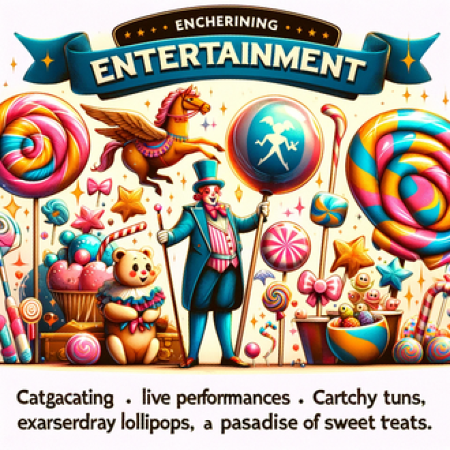
“Willy’s Chocolate Experience” for example, was a failed 2024 event in Glasgow launched by a London-based company called House of Illuminati. Run by a single person (Billy Coull) and incorporated only months earlier, House of Illuminati advertised an “immersive” Willy Wonka-themed event using AI-generated images of chocolate fountains, enchanted gardens, and oversized candy props.
Families paid between £35–45 per ticket. What they got was an almost-empty warehouse with a few tables, scattered candy props, a half-inflated bouncy castle, and one actor in costume — no chocolate at all. Parents called police demanding refunds on-site, the event was shut down mid-day, and the actors hired to perform said they’d been misled too.
Coull later apologized publicly, said he was the company’s sole employee, and claimed the event had “looked good on paper.”
The Structural Gap This Exposes
Back to the Music Gol Festival, what’s notable is how little friction there seems to be between: “announce three major international acts” and “those acts publicly disavowing it.”
There’s no verification layer between a promoter putting out a press release and that lineup hitting ticketing sites, social feeds, and fan expectations. Venues can (and in this case, presumably did, given the stadium’s size) rent out a date without confirming the promoter actually has artist agreements in hand.
The live music industry is growing rapidly, but these bumps along the way suggest the vetting infrastructure hasn’t caught up to the pace of new promoters entering the market.
What remains to be seen is whether Underdog Entertainment will resurface at all with a public response or a corrected lineup, or just disappear entirely. And whether any of the three acts’ teams pursue this further with a cease-and-desist or a public statement.