__________________________
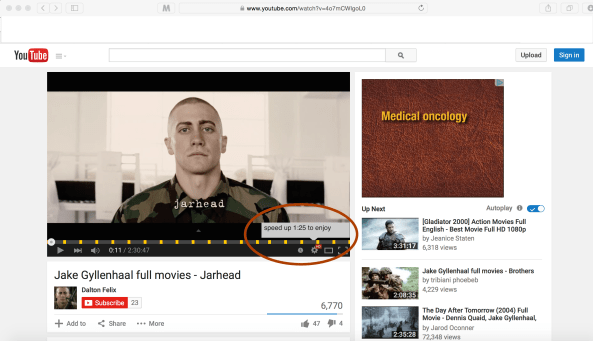
Guest post by Chris Castle of Music Technology PolicyBoth Peter Kafka and Lyor Cohen seem to be mystified by concerns about how YouTube shakes down artists and songwriters in Kafka’s interview with Lyor in Recode. It should come as no shock that Google chose Kafka (a long-time Google fan boy) as the safe interviewer for Lyor, but it really is stunning how oblivious Lyor is to how to scam Content ID which has leaked like the proverbial sieve since its inception. And unlike Lyor, I’m just not willing to believe that the Content ID team at Google doesn’t know exactly what they are doing. Or not doing.Here’s Lyor’s money quote from the interview:When I told [Google’s Content ID developers] about the albums, they said, “Yeah, they jumped over our Content ID by speeding up the tempo of the music, slightly. We’ve already got a solution for it.” I had them walk me through the process. I felt so proud that I could really talk to people in the industry that had this feeling about Content ID, and finding bad actors, and confidently say, “We’ve got a team that is dedicated to fixing this.”The more we frustrate bad actors, the more we can stop cottage industries. They’re just going to give up, at a certain point. And I think the industry will feel really good about that.Couple facts: Content ID works by comparing the soundtrack of a YouTube video to an audio fingerprint reference of a known recording. Let’s be clear–the Navy has used psychoacoustic fingerprinting since World War II–essentially the same technology as Content ID. Remember Jonesey in the Hunt For Red October. They called it “sonar” in the movie, but it was actually a method for capturing a sound in the wild and comparing it to a known sound.Jonesey was able to identify Red October by manipulating the speed to create a new fingerprint with which to track the Soviet submarine. Red October was able to fool the U.S. Navy acoustic fingerprints by an new engine type that made a sound the service had not recorded before. Jones manipulated the speed to determine if the sound the database identified as a biologic was actually man made. Once identified by the reference copy, the database could be programmed to recognize the sound captured in the wild repeatedly as long as it did not vary from the reference version.The acoustic fingerprint is a mathematical rendering of the wave form of a sound. Machines then can look for what is essentially a number and when they find a match, take some preprogrammed action depending on the network the machine is connected to.If you were on the side of the good guys, what you would not do in this situation is offer an easy way to defeat the 1940s technology by changing the speed of the sound captured in the wild. Unless, of course, the plan was to use speed as a countermeasure to defeat detection.And it’s not just music that is getting manipulated, it’s movies, too. Like this illegal and monetized copy of the movie Jarhead that was easy to find using the “full movie” search term for either Jake Gyllenhaal or Jarhead:
Related articles