


__________________________
Guest post by Cary Sherman, Chairman & CEO of the RIAA on MediumToday we report the state of the U.S. music business mid-way through 2017. Retail revenues for recorded music increased 17%, powered by 30 million music subscriptions and a talented array of artists and the professionals who support them. Our story continues to be one of great promise, but our footing is fragile, and a sustained, durable recovery is jeopardized by a fundamentally uneven playing field.Two storylines continue to inform the narrative of the music business.Music matters, music fuels
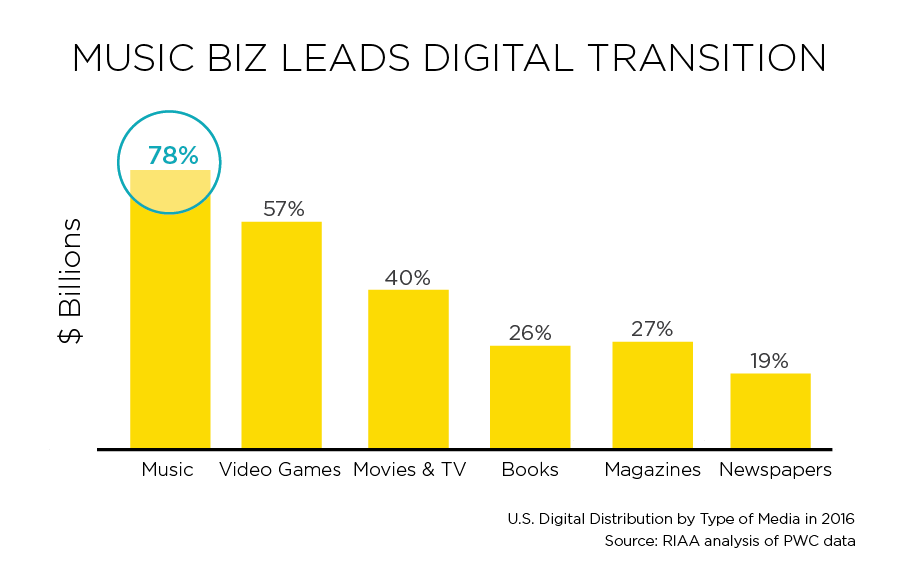
We’ve said it before, but it bears repeating and it is has never been more true: music is a ubiquitous presence that dominates our culture and commerce. That doesn’t happen by accident. Record labels continue to do their part, embracing new business models, partnering with more than 400 services worldwide to deliver music to fans instantaneously at the touch of a fingertip.The pace of change embraced by record labels is staggering. Just two years ago, digital downloads was the largest format, and streaming was only beginning to take hold. Fast forward a few short years, and the business is already dramatically different.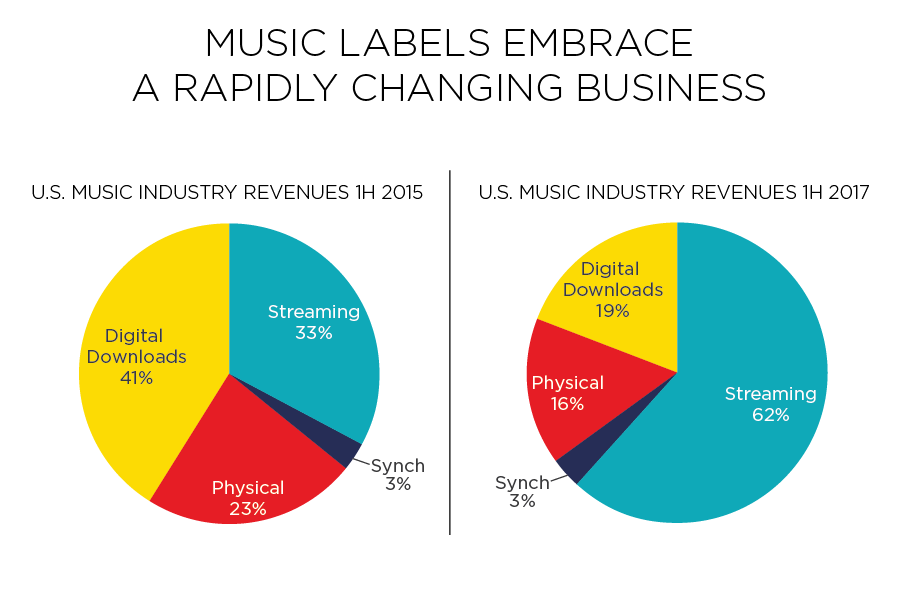
Not all streams are equal
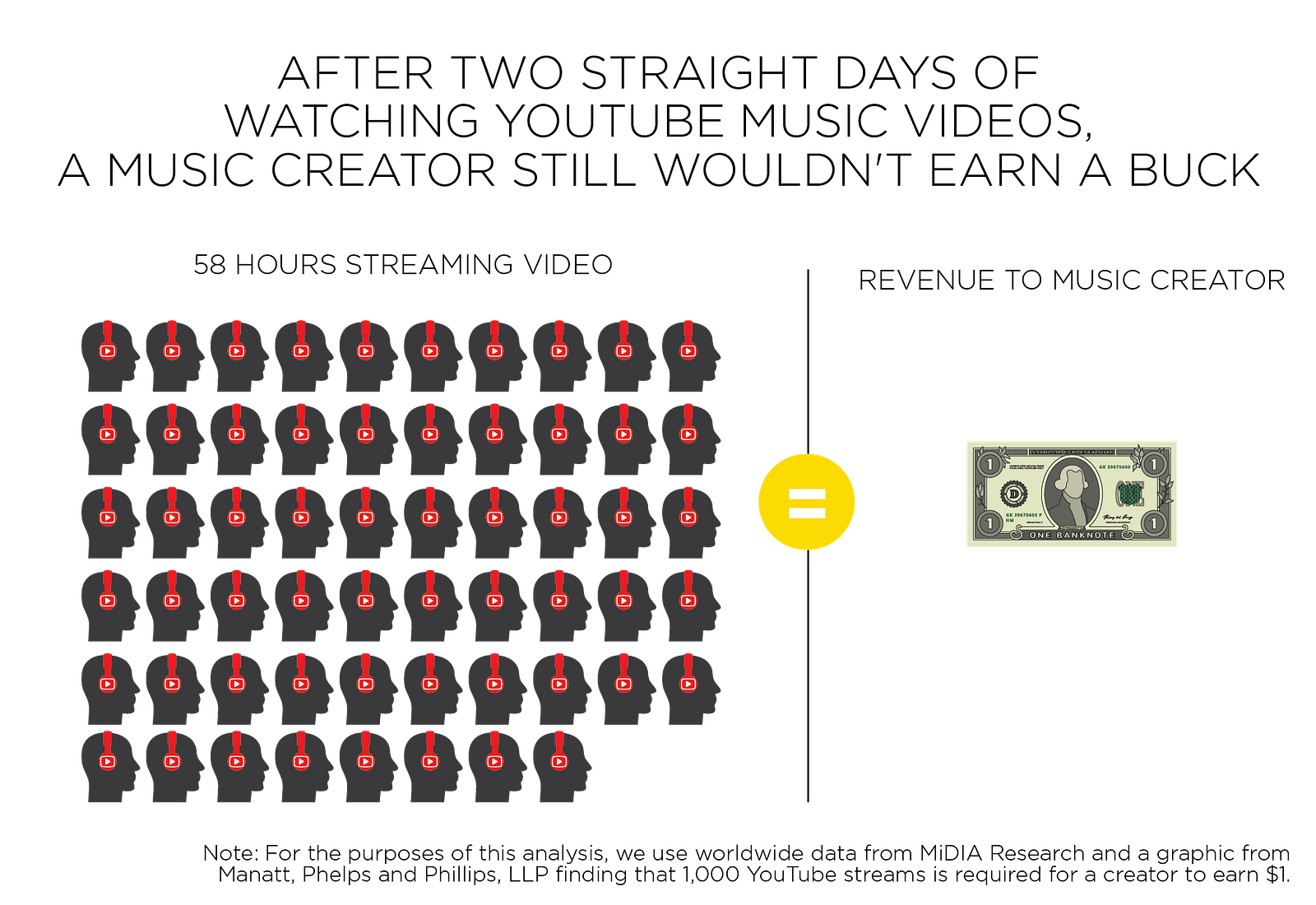
We estimate that there may be a TRILLION streams in 2017, counting both on-demand services and digital radio (some 460 billion in first half of the year). Wrap your head around that staggering number. It is encouraging but also speaks to the foundational challenge that continues to confront the music community. To the fan, there is often little difference between the multitudes of services available, yet the payouts to creators are very different and vastly impacted by outdated or abused laws and regulations.And that’s why a united music community continues to be incredibly animated about music’s “value gap” and calls upon policymakers — and our business partners — across the globe to do better and address these inequities (look no further than the massive response to YouTube’s recent self-congratulatory blog).As you can see from the chart that my colleague Josh included in his summary of 2017 mid-year statistics, the amount of revenues that the three major categories of streaming generated is dramatically different, as is their disparate contribution to overall revenues.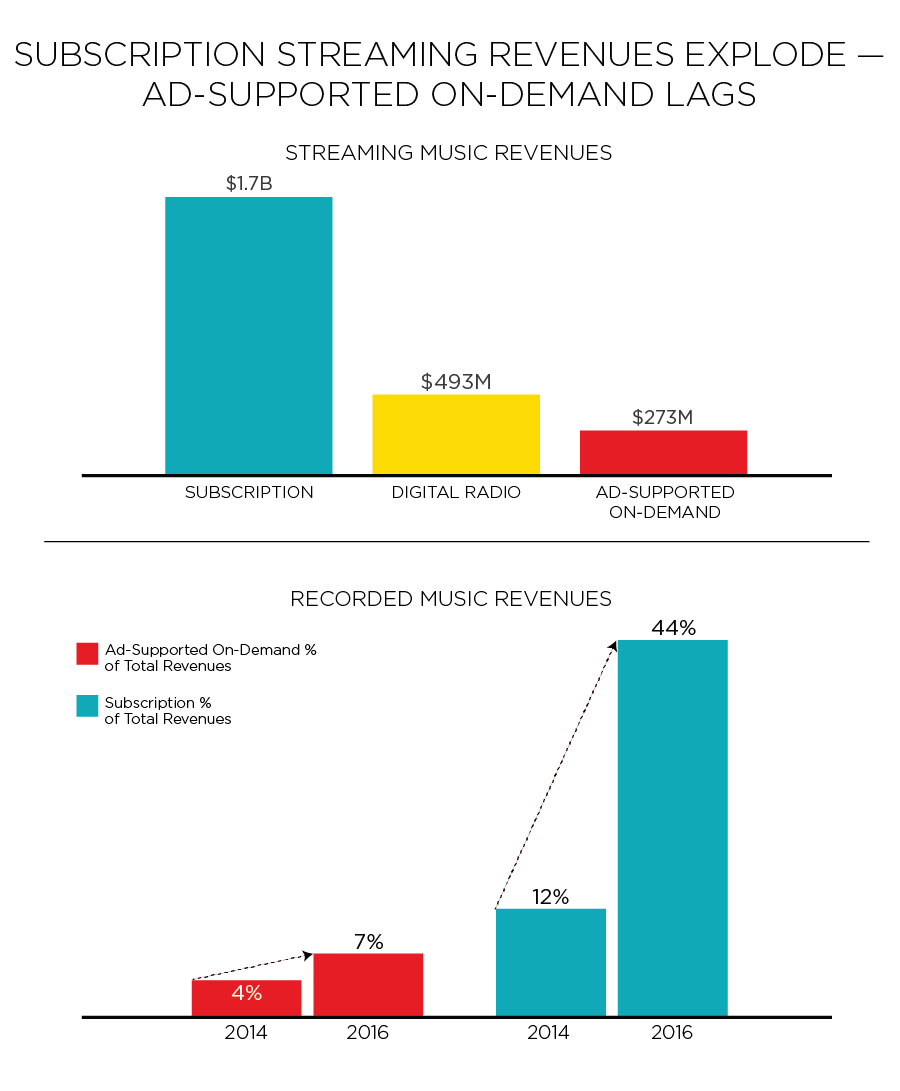
Related articles