


A Look Inside the Strategies Powering This Year’s Biggest Breakthrough Artists
by Jay Gilbert of Your Morning Coffee
This week on the podcast, we're digging into something every artist, manager, and label exec has asked at some point: how does an artist breakthrough actually happen?
The mtheory digital team recently published an analysis of four of 2026's biggest breakthrough artists: Ella Langley, Malcolm Todd, Geese, and Sienna Spiro. Four very different artists with four very different playbooks. But when you lay them side by side, some surprising patterns show up. Almost nobody broke on first impression, and one viral moment may no longer be enough.
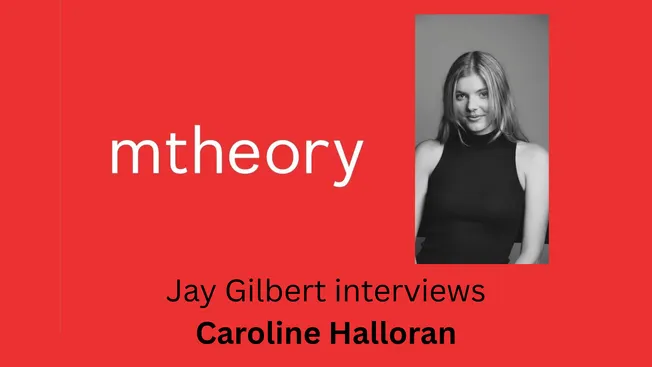
Joining us on the Your Morning Coffee podcast this week to break it down is Caroline Halloran, Director of Audience Development at mtheory.
Here are the threads I see running through all four:
1. Nobody broke on first impression. This is the biggest one. Ella's "Choosin' Texas" built gradually before becoming a record-breaking hit. Malcolm's "Earrings" and "Sweet Boy" came back almost two years after release. Geese spent years collecting critical praise before it turned mainstream. Even Sienna's rise ran about two years from 1M to 30M. Release-week numbers weren't predictive for any of them.
2. Catalog and prior work did the heavy lifting. Three of the four (Malcolm, Geese, Ella) leveraged something already in the world, whether older tracks, existing tastemaker buzz, or a slow-building single, then timed the next release to meet the momentum. The new project landed on an engaged audience rather than a cold start.
3. Content matched identity rather than chasing trends. The spectrum runs from Malcolm's unfiltered posting to Geese's polished, curated look, with Sienna's retro aesthetic and vocal showcase somewhere in between. The strategies differ, but each one felt genuine and authentic to the artist. One important point from mtheory: developing artists often can't afford to be purely curated and need to post consistently and use trends in an on-brand way.
4. Multiple waves, not one moment. Successive bursts of attention compounded each other. In a saturated market, a single viral moment tends to stay in a niche, so the threshold for a real career looks more like a series of breakthroughs.
5. Sustained release cadence kept the story alive. Ella's singles roughly a month apart, Sienna's waterfall release strategy. Both kept fresh product in front of a growing audience rather than going quiet between projects.
6. Different channels for different roles. Short-form social drove discovery (Malcolm, Sienna), but deeper content did the converting: Sienna's long-form live performances, Ella's collabs (Morgan Wallen), awards, and brand partnerships, Geese's press coverage and Chaotic Good micro-influencer seeding. Discovery got people in the door, and something else gave them a reason to stay.
The takeaway for artists and teams is patience and infrastructure. If the first moment often isn't the biggest, the real risk is giving up on a record too early, or not having the catalog, metadata, and follow-up plan in place when the second wave hits.
Caroline Halloran, Director of Audience Development at mtheory
Jay Gilbert: Caroline, good to see you. Thanks for joining me today.
Caroline Hallorin: Thanks for having me, Jay. I'm super honored and excited to be here.
Jay Gilbert: For those that don't know, talk a little bit about what you do and what mtheory does.
Caroline Hallorin: Of course. So I am the director of audience development here at mtheory. And our main business offering is we partner directly with managers to act as extra infrastructure across the whole business. You know, managers, we like to say, try and do the impossible. And not one manager can handle it all, all the way from touring strategy to release strategy to DSPs, merch, you name it. So we come in and help managers and help beef up their whole business.
"that first moment doesn't have to be its biggest"
Jay Gilbert: The mtheory digital team recently did an analysis of four of 2026's biggest breakthrough artists. One of your big takeaways is that a song, you know, that first moment doesn't have to be its biggest. The release week numbers rarely predicted the eventual outcome. So what should teams be watching in those early weeks instead, so they don't give up on a record too soon?
Caroline Hallorin: I think it can be pretty simple. I don't think you have to overthink it. And that's really about looking at the anomalies in the data. So typically we'll see for streaming patterns is it usually follows the track list order. So outside of your pre-release singles and your focus track, typically that first track on an album will perform the best and the last track on the album the worst. And so it's simply taking a look and seeing if any track is raising its hand.
Any track maybe in the middle is performing higher than a track in the beginning and start to try and diagnose what could be leading that spike. You know, that could be UGC, that could be just general fan chatter or a fan favorite track and start to double down. And it can be as simple as you see this track is raising its hand, have the artist just post about it a little more in socials.
You don't have to get too crazy, but just making sure that you're monitoring the data and slowly reacting to see how you can amplify. And we'll get into this later. But if it really starts to go off, there's other strategies as well to kind of take that moment to the moon.
How To Capitalize On "The Moment"
Jay Gilbert: So let's talk about catalog revivals. Malcolm Todd's “Earrings” and “Sweet Boy”, they resurfaced nearly two years after release right ahead of his new album. When an older track starts to catch a little bit of fire, how does a team capitalize on that moment and what should they have in place to be ready for it?
Caroline Hallorin: Great question. And you know, typically what we're seeing with these catalog moments or revivals is they're usually deriving from social buzz. So there's kind of like two categories I like to look at when you're trying to amplify a moment like this. And one's, of course, social media strategy where the actual moment's happening. And that's get ready to use all the tools on socials. You know, you should be using TikTok Spotlight feature to pin UGC, repost fan content, and have that artist really engage with the content that exists, such as commenting, resharing, and making it clear to the fan base and the community that the artist sees and loves what's happening with their catalog.
And then, of course, you have your classic influencer and creator campaigns that there's a specific trend or narrative that that content is following that you can have amplify. And then the second bucket is creative amplification. And this is typically a little more expensive. So not everyone can enact this, but this is where you consider hiring an artist to do a remix of the catalog song or do a full production music video if that didn't exist or an alternative version.
You know, when you have these big catalog discovery moments, you know, this is a moment where your fans are paying attention and you really want to keep their attention and give them another asset to dive into. So that world building can be a little more impactful. You know, speaking of the analysis, I think an artist that did a great job of this is Sienna Spiro. They really leaned into alternative live performances and live cuts of her songs, especially because her powerhouse vocals is such a big part of her brand.
I just thought they beautifully tapped into like the different avenues that you can lean into with these different versions to keep catalog and new music fresh.
Unfiltered Versus Curated
Jay Gilbert: Tell us about sort of the unfiltered versus curated take. You know, you've got Malcolm's casual unfiltered content on one end and then Geese's polished stuff on the other, but both worked. How does a developing artist figure out which lane is theirs, especially when they can't afford to be highly curated and still need to post consistently?
Caroline Hallorin: Yeah, I think a lot of artists get paralysis when asked this question. And I think it's as simple as going back to what are they naturally good at, you know, don't force an artist to partake in face-to-camera content if when they send it to you, they seem awkward and uncomfortable or to join a trend that's not on brand. It's really as simple as just learning what they're naturally good at. That could be their vocal ability.
That could be their stage presence. That could be their fun personality. But regardless of what lane they choose, I often say a developing act does not have the luxury to be as quiet on socials. I think when you're in that discovery stage of your career, you need to do the things that help you get discovered. I think Chappell Roan is actually a great example of this. She actually was one of our 2024 breakthrough targets.
And if you go down deep enough, she was really active on socials. She was playing the game on TikTok. She was doing the vlogs and the behind the scenes. And she's now earned the privilege to now be a little more picky and a little more strategic on socials. And I always like to think of socials as that free tool. And every single time you post, there’s a potential to gain a fan. And I think that's pretty awesome.
Jay Gilbert: Yeah, I think you're right. I think that authenticity is super important. You say that one viral moment used to put an artist on the map, but now it takes multiple viral moments. Why do you think that's changed? And what does it mean for how labels and managers plan a campaign today?
Caroline Hallorin: I think virality has sped up and the algorithms are getting smarter than ever. I think it's funny the amount of times I'll see a trend on my For You page that I'll assume everyone knows and take to a friend or colleague and reference it and they look at me so confused just shows that the algorithms and these trends are becoming more niche. And I think that can be a good thing. It means we can be a little more intentional with our marketing and really double down on specific communities.
But it also means it's a lot harder to have that global moment. You know, these trends are becoming a lot more niche. And like you mentioned, Malcolm is such a great example of this. He had to have multiple viral moments with “Sweet Boy” and “Roommates” and then “Earrings” for those viral moments to start to translate into ticket buying fans. So I think what that means for teams is you just got to be quicker than ever to enact and also start where the community is.
Don't try and make a global trend happen at once. See what's making the community tick and see if you can slowly expand that to other markets.
Discovery vs Conversion
Jay Gilbert: So let's talk about discovery versus conversion. Short form video drove discovery for artists like Malcolm and Sienna. But things like long form live content, collaborations, award shows, press, and brand partnerships, they seem to be what kept fans around. What do you think a handoff looks like in practice? Where do you see campaigns drop the ball?
Caroline Hallorin: I think that handoff is all about pitching your artists like crazy. When you have a viral moment, this is the time to scream your artists’ names at the top of your lungs and use the data to tell the story and dream big and try and make your artists as visible as possible. This is when you maybe circle back for SNL, award show appearances, interviews, definitely repitch to DSPs. And if you delivered this track with a label partner, let the label partners know because they can unlock funds that maybe you don't have to enact some of those strategies like a creator campaign or a music video.
Jay Gilbert: Yeah, it's so smart. If you were advising an artist with a record that's quietly building but not really breaking yet, what's one of the things you tell them to do?
Caroline Hallorin: I think it's to have a clear goal and vision for your brand identity because when these viral moments happen and they happen very quickly, it's kind of a blip in the system for a fan or potential fan to notice you. And they just know this hit and if they click into your profile or want to discover you more deeply and you don't have your world established or you don't know what you're trying to say as an artist, you're gonna lose that conversion opportunity.
Viral moments happen a lot but they're also rare in terms of all the artists that are out there. So I just would really encourage the artists spend the time to make sure that when it happens, they're ready and a fan can really resonate with who they are outside of the hit.
Jay Gilbert: Where can our listeners learn more about you, Caroline, and the team there and the work you're doing at mtheory?
Caroline Hallorin: You can simply just go to mtheory.com and look at some of our case studies with clients like Kacey Musgraves, Tyler Childers, and Ashe, to name a few. But also feel free to reach me at just caroline@mtheory.com. Especially if you just want to chat. I always love kind of digging into industry philosophy. And if you want to learn more about me or mtheory, hit me up there.
Jay Gilbert: Always a pleasure, my friend. Thank you so much for taking the time.
Caroline Hallorin: Thanks so much, Jay.