

How to Put on a Concert to Remember: A DIY Promoter’s Guide
By Phil Simpson
I am a 38-year-old music industry professional who has, for most of my adult life, been obsessed with music — playing (I play guitar, violin, melodeon, piano, and sing), writing, listening, watching, and reading about. Music is an incredible thing, and I feel blessed my life has been touched with it.
My journey to where I am today started when I was much younger; performing regularly in public, organising gigs for my (rock!) band, and running open mic nights. This then led me behind the scenes to the industry side; promoting concerts, repping (covering) shows for other organisers, and ultimately working in the live agency business booking tours and festivals for artists. A pandemic-driven diversification took me into the great world of music publishing, working with songs and songwriters, and I now run a music publishing business and an independent booking agency.
In my spare time (and with the help of some great teams of people), I put on regular concerts in my local area, organise an annual (small) not-for-profit music festival and still enjoy playing and performing regularly.
Music started as my passion, became my hobby and is now my business! (And yes, I do occasionally reflect on how healthy this is!)
Why I’m Writing This
Because of my profession, I go to a lot of gigs. Though fundamentally the same thing, they are all a different experience, and I have seen the best, the worst, and everything in between when it comes to how they’re organised.
There are no official protocols or qualifications when it comes to being a concert promoter, and that’s part of the charm in the more grassroots end of presenting live music in which I operate. Every venue, artist, and organiser have different approaches and in some ways that’s what keeps it all interesting. There are a huge number of passionate individuals putting on gigs in the UK that many domestic and international artists have built their careers on, and long may this continue!
As an organiser committed to providing the best possible experience for artists and audiences, I feel like I sometimes come away from shows feeling a just little frustrated. Maybe something could have been done just that bit better (which would have significantly improved the evening for all), or it seems a fundamental decision — or indecision has tainted the experience somehow.
I am writing this more of an exercise for myself, but also in the hope that the reader might just take something away that wasn’t previously considered. Who knows, they may disagree with me so much that I can learn and improve! At the very least it might just make an interesting read to those who don’t know what goes on behind the scenes when organising a concert! In life, I am a big believer in analysing and questioning practices and think we can all learn from other people and their perspectives — regardless of whether they may be right or wrong.
Though promoters regularly compare notes, it occurred to me that I have never come across such a document, so here we are.
I planned for this to be more focused on the actual concert (rather than the booking and promoting part), but it felt right to talk briefly about these aspects also, so I have.
I hope this doesn’t come across as though I consider myself an expert or have all the answers. Additionally, there are probably aspects I’ve forgotten to mention! I am simply explaining what I do (and the reasons why) when I put on a show to make the experience the best it can be for all.
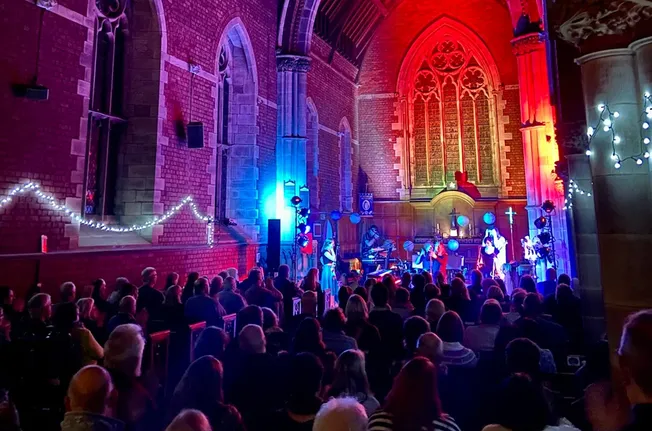
For some context, I am based in the UK and operating at a relatively small scale; seated concerts in the range of 30–300 capacity, in listening rooms (arts centres, community spaces, churches, function rooms in pubs) and with ticket prices between £12–30. The genre I promote tends to be mainly in the acoustic-leaning genres and includes everything from full bands to soloists. My ‘regular gig’ takes place in a beautiful 120-capacity church in the Northern town I call home.
I am very much a hobbyist promoter, and though I make money on most of the concerts I promote, I have certainly lost money on plenty of concerts over the years. Putting on live music is often compared to professional gambling; the upfront costs are big, the profit margins are narrow, and the results often unpredictable. It’s a simple case of trying to sell more in tickets than what the show costs to put on in the hope there’s some left over. Of all the great shows I’ve organised over the years — of which many of the details have now become somewhat hazy — it seems I have no problem remembering those I lost money on!
Financials aside, what really matters to me when once I’ve committed to hosting a concert is the overall experience and atmosphere: I want everyone to have a great time (and to come back again!), and if a show is desperately struggling to sell tickets, my main preoccupation turns to what I can do to make the room feel less empty and offer the artist and audience a great night regardless.
So, let’s start at the beginning.
Booking
Booking artists of any statue without an existing reputation or recognition is not easy, and the truth is that the more artists and events you book, the easier it will get, and the higher profile artists you will be able to attract (if you wanted to). It is much easier to sell tickets for an artist that people know already of course, but to be able to get to that point, you need to be comfortable in offering a realistic and fair financial proposition, and most cases have some kind of track record.
From my perspective, my programme is usually built from a mixture of lower-level/emerging artists and artists that I know are going to easily attract ticket sales, but with the bulk being in the mid-range. I could easily fill the calendar with well-established (within reason/appropriate to my venue size) artists that will sell lots of tickets, but the satisfaction in doing this — and thus my motive, comes from being part of the story.
What makes a realistic financial proposition? Every artist or agent that you deal with will have a different take on this, but generally something where the artist can come away with an equivalent to 70–80% of appropriately priced ticket revenue after costs of staging the show would be fair. In normal cases, it will be a box office split agreement weighted in the artist’s favour, with a guaranteed minimum performance fee.
There is an art to negotiating a fair deal for all, which will only come with experience. The more deals you do and shows you put on, the more comfortable it will get. When I am putting in an offer for an artist, I of course want it to work for us, but also want it to feel good from the artist’s side; i.e. I don’t want them turning up at my venue having begrudgingly accepted a lower-than-average offer and maybe not feeling overly enthusiastic about being there. There is nothing wrong with explaining your perspective to the artist/agent and ensuring they understand all the issues (and costs) you might have to deal with that are unique to your venue.
Ticket pricing often presents a challenge. Pitch too low and you’ve at best shortchanged the artist (and yourself), and at worst, devalued the artist and event. Pitch too high and it could put people off buying to start with and may make people question the credibility of the proposal. In most cases, the artist or agent will be able to offer guidance around their typical ticket price, but I’d recommend looking at what other comparable venues are charging for equivalent shows. For larger and more grandiose venues (and the right artist of course), a higher ticket price is absolutely acceptable. A pokey back room of a pub? Not so much.
These days I take on board guidance from the artist’s side when it comes to pricing, but ultimately trust my instinct. Without sounding like I need to get out more, my favourite prices (!) are £15, £17.50, £18, £19.50, £22.50, £25, £27.50 etc. I don’t know why, they just seem to work. Would I buy tickets for a show priced at £13 or £15.50? Absolutely not…
It’s important to be completely transparent about your set up during the booking process. In many of the spaces I use for example, we do not have three lockable dressing rooms (with full-length mirrors), the facility to offer a three-course meal in-house after sound check, or a grand piano. Even if these were asked for however, as long as your limitations are discussed in advance, there is usually a solution to be found.
I would suggest not trying to do anything with less than two months’ lead-time, and it is also worth reminding the artist/agent not to play another show too close to yours geographically around the time of your show. In the interests of everyone, every concert deserves to be given its best chance of being a success (especially when peoples’ livelihoods might be at stake) and I’m always happy to walk away if I feel this might not be the case.
Once you have the deal ready to go, it’s worth a double-check with your venue to make sure the date is yours before confirming 100%. I sometimes do the sound myself at my shows but if I knew I wasn’t going to be, I’d typically contact my usual sound/light suppliers at this point also and get the date in their diaries. I usually use the same companies each time and would recommend building a relationship with a local supplier you can trust.
Promoting the Event
Assuming the gig has been confirmed, we will now talk about how to promote it and actually sell tickets. Again, this is not the main subject of my writing, but it feels necessary to talk about this in the wider context of putting on a great show. I will not pretend to be a marketing expert here and will simply tell you what works for me.
My strategy is a mix of real-world and digital; the latter, in my opinion being a much more efficient way to spend your advertising budget. I would suggest anybody serious about organising events generally learns (even on a basic level) how to place targeted digital adverts on Meta and Google, and about the audience they’re trying to reach.
It’s important to mention that email is still a hugely effective marketing tool and if you aren’t yet building a mailing list, start doing so at your next gig (this goes for artists too!). You can of course include all sorts of information and call-to-actions in the email including information about special ‘subscribers-only’ pre-release/early-bird tickets etc., all of which can help drive urgency, interest and a sense of community.
When you book an artist, it should be noted that there is a responsibility from their side also to help you make the show a success. Don’t be afraid to get on their case a bit if needs be. Ensure they have announced your show properly, have accepted your event co-host invitation on Facebook, have included the show on their show listings on their website and mailing list, and they have provided you with all the assets you need to help promote the event. At the minimum, I would ask for a great photo (which you can use to make a poster), some words (brochure copy that sells the show/experience — rather than the artist’s history), a studio video asset (20–30 seconds in length), and perhaps a more personal and specific video asset with the artist talking to camera about how they’re looking forward to coming to play in your town.
To me, the artwork is very important. In an age where we are bombarded with lots of information all the time — and most of it with good quality imagery — it’s important to not stand out by having substandard graphics. Pay a professional to do it if necessary. The posters should be clear, vibrant and totally pro looking. I really think this matters and generally everything relating to your show should scream quality.
I will not talk in detail about social media posts/creating Facebook events as I hope these will all be a given. What I would say is just cover all bases; do create that Facebook event, do give as much information as possible in the description, and do add the venue, the artist, the label etc. as cohosts.
Facebook does not like you sending traffic away from the site, so I usually avoid putting external links in my posts (and put ticket links in the comments instead — though an expert might tell me better!) and it’s worth uploading any assets that you have been given natively (i.e. don’t just share existing content someone else has already shared but upload the file yourself to your page) for maximum reach and engagement.
I put up physical posters at the venue and key locations in my town and the wider area. If it is a big concert, I may make up a vinyl banner or large poster (proving I have a good location to display it) which can really make a statement.
I feel ticketing is where many organisers overlook an opportunity for diversification. I place numerous allocations with different ticketing outlets, allowing me to benefit from the increased reach. I also place an allocation of physical tickets in my town’s tourist information centre (who offer a box office service in return for a small commission) as some people do still like to buy a physical ticket and I additionally benefit from a series of extra promotional activities they undertake as part of their service. Trying to see patterns in/second guess why/from/where people have bought tickets to a show is a fool’s errand and my advice would be just to maximise the exposure and make it as easy as possible for people to stumble on your event and buy tickets. Just remember to make sure your allocations add up to your total sellable capacity and keep an eye on the sales of each of them! You can always re-allocate or juggle depending on which outlets are selling better.
Speaking of capacity and ticket sales, I tend to oversell my shows by a small margin to allow for no-shows on the night (currently between 5–10% for my concerts) and to maximise the earning opportunity for everyone. In the event all ticket holders do show up, we just have a very busy space, but we are still well under the legal limit. (We could be greedy and sell up to 20 more tickets, but it would not be a pleasant experience for anyone and the queues for toilets and bar would become a real issue!)
Again, this is not a guide on marketing, but it feels right to mention. My advice on the ‘promotion’ aspect of promoting concerts is to keep the quality of what you put out high, ensure all interested parties are engaged and working with you, read about the Seven Touches and other marketing principles, and just do all you can. Sometimes you’ll find you have done everything in your power, but something is just not connecting, and tickets are not selling. Unfortunately, this is just part and parcel of promoting shows.
A big tip would be to keep an eye on ticket sales from the time it goes on sale, right up to the event. You will hopefully be able to see the spikes of sales after each new promotional activity happens (adverts etc.) and if you’re aware of a potential low-sales situation well in advance, at least you have time to do something about it.
"From the moment they enter the venue, they know they are in safe hands, can relax, and for this they are grateful... A happy and relaxed artist will be at their best for the show."
Support Artists
I like to include a support artist at my shows wherever possible; to me an opening act adds value, interest, and flow, and makes it feel much more like a serious gig.
Some artists prefer to play two sets (each one being around 45–50 minutes) with an interval (usually so they can sell more merchandise — fair!) but I do usually appeal this in the hope they can be persuaded to have an opening act. (Not all can, and I’m happy to respect this.)
When choosing a support act, I usually look for a relatively local artist if possible; someone who complements — rather than imitates — the headliner, and someone who I think might benefit from doing it. Of course, adding a local name to the bill can help raising the general interest level of a concert and *maybe* increase the attractiveness of the evening as much that it might help on the ticket selling front, but in my experience, this is seldom the case. Adding a support act for me is not motivated by a need to sell tickets, rather to add to the overall experience. As I alluded to earlier, it can also be a great opportunity for an upcoming artist to play to a ready-made crowd and have the association and credibility of supporting the headline act. Most headline acts were a support act once.
I strongly believe in not putting too much music in front of people and/or making the night too long. If I were a professional touring artist, I would always want to leave my audience wanting more, rather than watching them hurry for the door straight after the last song in a non-merch-buying, fatigued, ‘let’s just get going’ state having watch-watched through too much music and longing to get home.
If there is an opening act (and I think there should only ever be one support act before the main artist, by the way), I think they should play for 30 minutes and no more. They should certainly not do an encore out of respect for the main artist. The interval should follow this (20–25 mins in duration ideally) and the headline act should go on and play for at least 75 minutes excluding any encore(s). Though the amount of music in this scenario isn’t that much less, I believe the psychological impact makes all the difference.
Adding a support act also offers an extra opportunity to generate some more interest (and further reach) on your social media (and theirs) and so it’s not always wise to announce the support straight away; save the surprise and reveal them closer to the show for a renewed spike of interest. It may just tip the undecided. Just as the headliner, the support artist should actively help you promote the show and provide you with the necessary content to add their name to the show listings and box office.
+Read more: "Here's a List of Every 100% Sustainable Energy LEED Certified Music Venue"
Two Weeks Before the Concert
I make a point of reaching out to the venue, and to the artist/agent a couple of weeks before the show to talk through the evening to discuss how things are looking and anticipate any potential issues that could arise.
It’s important to ensure you have the technical specification/requirements from the artist, that these can be satisfied, and that they have been passed on to whoever is doing the sound and lighting on the night. Speak with any other hired-in help to confirm plans and timings.
From the artist’s side, this process is called Advancing and it’s crucial that the artist — or someone from their team/tour party — is talking with you as the promoter before the show as to double-check what has been agreed and address any potential issues. It’s great if the artist has an agent to secure the gig, but that direct communication with people who will be actually working together on the day is important. If I were the artist, I’d be nervous if the first time I (or someone from my team) speaking with the promoter or sound crew was on the day of the show upon arrival at the venue!
One of the considerations I often have in advance of the show is sightlines (the views from different parts of the auditorium) and whether the artist I’ve booked sits or stands to perform. If they will be sitting down, I know I need to organise and bring in raised staging so that the audience sitting towards the back (on floor level) can still see and enjoy the show properly.
"Regardless of whether or not we are sold out, I like to put a spare show poster out on a board outside the venue. This simple gesture not only shows that you’re trying to be helpful for the audience, but also that you have gone to the effort to make up posters for the gig."
On the Day
The promoter and any tech crew should arrive at the venue well in advance of the artist. If I am doing the sound, I’ll arrive there super-early to set up and double-check everything is working as it should.
I would typically arrive at around 2pm. If the show was at my usual church venue, I’d ensure the heating is switched on right away in the colder months and get to work setting up, starting with the most important bits: the staging, the sound system, and lighting rig. (Thankfully, I usually have help with this.)
I then tidy up the performance area and remove anything that might be a distraction or affect the aesthetic (in the case of the church, we fold down a big, white overhead projector screen, move back the altar table, and wrestle a solid-brass Eagle lectern off the stage area). I like to put a large rug on the performance area; when there isn’t a stage, this creates a visual, floor ‘focus space’, and when there is, it helps to soften any noise from feet or chair movements.
I set out the chairs aiming to match the number to the expected audience size (based on ticket sales, plus guests and helpers). I tend to slightly underestimate where I can so that every chair is ideally used, and I keep a few stacked nearby and easily accessible in case I need to add a few in. As I mentioned earlier, I usually oversell by a few tickets so that we achieve the best attendance — and income — we possibly can so I take this into account. There is nothing more frustrating than a couple of empty chairs on the front row, but that still does happen occasionally, somehow.
I can be meticulous when setting up, checking that all the chairs are symmetrical and that there are equal numbers on each side of the aisle. I sit in some of the chairs to check the view, and to ensure that people sitting on the front rows aren’t too close to the speakers or likely to be blinded by the stage lights. I’ll probably count the chairs I’ve put out several times over!
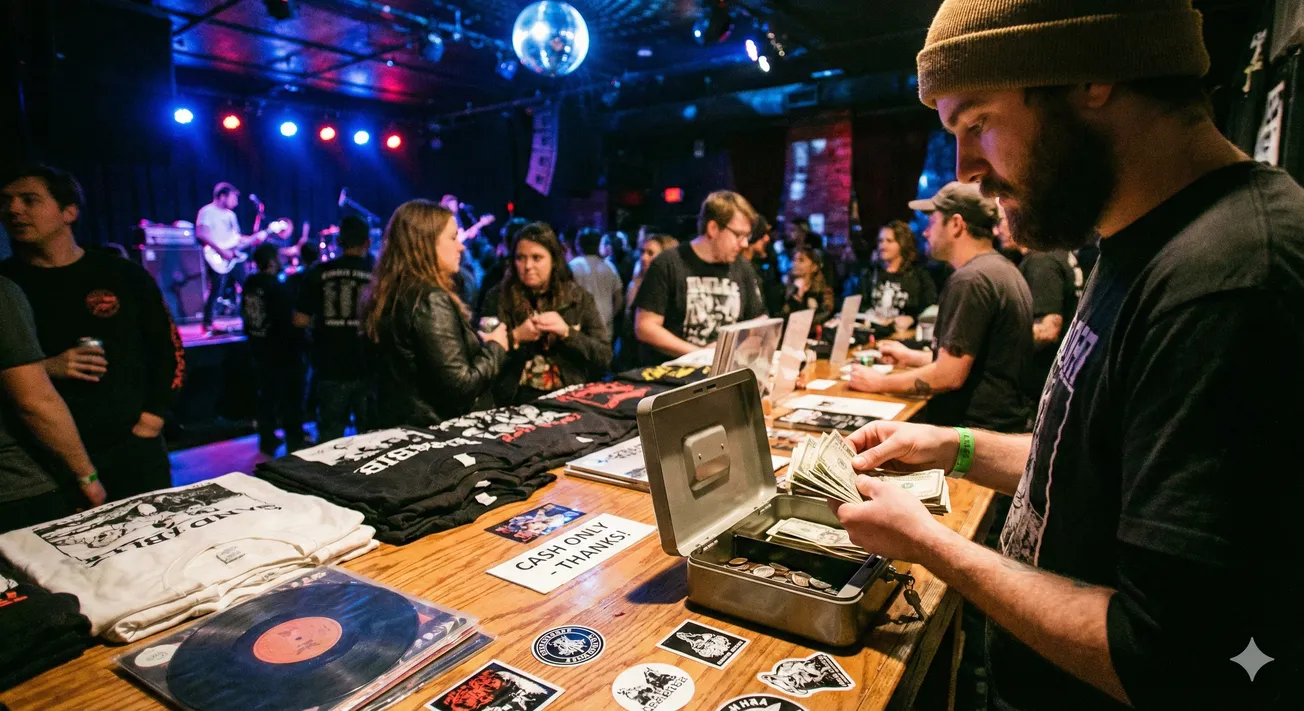
Next is to locate a suitable space to set up a table from which the artist(s) can sell their merchandise. I find this is best placed at the back of the room — perhaps near the exit — and where it won’t be affected by queues (other than maybe attracting them!). There should be power nearby, and it should be well lit. I don’t offer the artists any profit share from our bar income and thus don’t charge artists to sell their merchandise at my shows. Taking a commission from an artist’s merchandise sales is an outdated convention which unfortunately still rears its head (albeit in more local authority/major corporation-owned venues) from time to time and is not something I’d suggest trying to impose as a promoter. Any minimal extra income it might bring would come at the cost of your credibility and leave artists with a poor impression of you as an organiser.
I aim to be ready and properly set up well in advance of the artists’ arrival. I usually tell them to get to the venue for 4pm and it really pays to be ahead of yourself so there’s no rushing around or risk of delays opening the doors if things are taking longer than planned. This is especially true for the staging, sound system and lights, but also for the backstage area and general presentation of the space.
Regardless of whether or not we are sold out, I like to put a spare show poster out on a board outside the venue. This simple gesture not only shows that you’re trying to be helpful for the audience, but also that you have gone to the effort to make up posters for the gig (which the artist might not have yet seen) or have used what materials you may have been sent. I have been to lots of shows over the years that were clearly not sold out (or indeed were very quiet!) and then noticed there were no posters for the show anywhere to be seen in/around the venue. What kind of message does this send?
I like to make sure there are hot drinks ready, and that the backstage/’Green Room’ area is furnished with a welcome offering; this could be their rider if they have asked for one, or it could simply be some biscuits/snacks/local refreshments.
I always choose something local for them to enjoy on arrival so that they get a taste of the area (which they might not have been to before), and I usually include a postcard featuring a local scene, on which I write a quick message of gratitude for coming to play for us (and often a song request (showing how much of a fan I am!)). Small details like this will be remembered and will go a long way. In my experience, artists are not expecting separated M&M’s or gold-plated crockery; they just want to feel welcomed and looked after.
It’s always nice to be able to greet the artist as they arrive with a relaxed demeanour and with a ‘ready-to-go’ space. I usually turn the house lights down, put on some suitable background music and present the space in its best light (excuse the pun); crucially, as it would be during the concert. Again, first impressions count.
The church I regularly promote concerts at looks stunning in gig-mode (and out of it actually — though we light it up really well for shows) and artists are often quite taken aback by this alone when they walk through the door. Combine that with being offered a hot drink, assisted in with their equipment, and being shown their space and it shows every detail has been considered. From the moment they enter the venue, they know they are in safe hands, can relax, and for this they are grateful. For me, it is this attention to detail from the outset which sets off the whole experience on a front leap. A happy and relaxed artist will be at their best for the show.
If there is a catering cash buyout agreed (to allow the artist to head out for something to eat before the show) — there usually is — I make sure I give this to them as soon as possible after arrival so I don’t forget and the artist needing to ask me for it later.
I consider all the above when I’m thinking about arrival times, and top tip: artists normally rock up a bit earlier than you tell them!
Pre-Doors
Once the artist has arrived and is fully loaded into the venue, I try to give them as much time as possible to do a sound check, and clearly communicate to them what time things are happening so we can stay on track. A soundcheck for the headline artist is crucial, but the support act should also get time to do one before doors are opened.
After soundchecks are complete, I ensure the artists are shown where they can put all their empty cases and bags (read: ‘move your stuff!’), give them a ten-minute warning before opening doors, and again tell them when the house is open.
On the subject of soundchecks, whilst it’s common for them to be run at a louder volume than it will actually be during the performance (to mitigate/eliminate any feedback issues/assess headroom), I’m always careful about the volume of the actual gig. Yes, the sound has to be perfect but that doesn’t necessarily mean it has to be loud. Like I’m sure the artists would, I want my audience to have to ‘lean in’ and *really* listen — which can’t be done if it’s overbearingly loud.
In the final few minutes before doors, I do a walkaround to check for stray cables and/or hazards, have a final lighting check, and make sure the venue and bar personnel are ready. I would usually also put some flyers for the next concert (along with QR-code-loaded mailing list signup forms) on the chairs, and place posters on the noticeboard and at optimum locations in the toilets!
It’s important to have some quiet background music on through the PA as people are arriving, and in between the show. I take care in choosing this and usually pick something that is in keeping yet contrasting to the headline artist. I once promoted a very well-known singer-songwriter who provided me with his own curated Spotify playlist in advance to play in the background. I thought this was genius and I don’t know why more artists don’t do this. I can’t be the only one to have heard totally inappropriate background music before a concert and to me, it’s one of the most basic things which sets the mood for the evening.
In my younger days of playing in bars, I’d often get frustrated when the staff chose to blast loud dance music (and all the hits!) right before, in between, and after my laid-back acoustic set. (And you guessed it, lowering the volume gradually before turning it off mid-song wasn’t even a consideration!)
Doors Open
Using the church venue again as my example, I try to open doors at 6:45pm to give everyone a chance to have a drink (or two — we run our own bar!) before the show starts. I usually open doors at 7pm at other venues, but the extra fifteen minutes just gives everyone a bit more space and helps the bar queue — and sales — here.
Though I’m not usually the one taking tickets, I like to be hovering around the entrance as people are coming in; I’m always interested in the audience coming to my shows and it gives me a good opportunity to welcome them in and engage them in light conversation to learn a bit about their behaviours (‘Have you travelled far?’/ ‘Have you been before?’). As with artists, a warm welcome goes a long way and creates a great first impression which is important as we often have people who are new to the venue and we’d like them to come back!
As we get nearer to start time, I usually check in on the artists to see if there is anything they need and take the opportunity to remind them of the schedule and expected set-lengths/times as to avoid any unexpected surprises.
"I usually stand near the back and enjoy from afar. Not only is the sound better, but I enjoy watching the audience — their energy and engagement is what makes the performance to me and it’s fascinating how different each night can be."
The Show Starts
My concerts are usually billed to start at 7.30pm but I usually start around four minutes late to build up some anticipation. Just before start time, we’ll set down the lighting (it should be brighter as people are coming in and getting drinks) and I’ll head up to the mic to address the audience. Everybody has their own style of doing this, but I always feel less is more. I’m not the most confident public speaker so I never have to worry about saying too much but I do think it’s a nice touch to do this and I just make sure to say the basics. The audience doesn’t need life stories or a detailed history of the artist, just a simple welcome, being made aware of any safety notices, and most importantly, an animated prompt of applause to welcome the artist to the stage! Audiences like to relax and be guided through an event, and I see myself very much taking up this role.
I strongly believe the bar should not be open during the performance — at least for the listening room-type shows I organise. Sure, it’s more tolerable at standing/club gigs but I’ve seen the edge taken off shows too many times due to a distraction at the back (or once awkwardly at the front!) of the room. I totally understand the bar is for some a necessity to make the fragile economics of putting a gig on viable or just that bit easier (see our 6.45pm door time!), but it should not be to the detriment of the gig — otherwise, what is the point? It doesn’t matter how respectful the drink-buyers or bar staff are, or how quiet they try to be, people buying drinks (I once saw crisps, too, help us!) during the show is a distraction which eats away at the overall experience. Whether you’re sat in the seats nearest the bar, sat right at the front, or performing to the audience as the headline artist, trust me, you will be aware of it.
If there are any latecomers (there usually are), I whisper to them as I check their tickets as a subtle hint that they are, whether they realise it or not, a disruption. I do usually let latecomers quietly get a drink (from the recently closed bar!) once the show has started, but begrudgingly! If there are no empty seats near the back, I’ll guide them to vacant seats (those on the front row, with any luck!), but I’ll always wait with them until the current song has finished.
I realise how all of this makes me sound, but I am keen to nudge back a level of respect from audiences which I’ve noticed slipping a bit in the last few years. Mobile phones going off repeatedly (from the same person!), audience members heckling the artist, people getting up to use the bathroom mid-song and disturbing a whole row while they awkwardly clamber out — I’ve seen it all and I can’t help but get irritated.
What do I do if there are audience members who are chatting, I hear you ask? Thankfully this rarely happens at the shows I put on and though I can tolerate some gentle murmurs at some of our busier gigs when it’s a bit more buzzing, if it’s a silent audience and there is repeated talking during the music, I’ll quietly — and assertively — let them know they’ll be asked to leave if they continue to be a disturb the experience for others.
These scenarios can be tricky to navigate but are all about watching and reading the room. In most cases, the offenders are completely oblivious and are mortified after being checked. Thankfully, although I’ve been close, I’ve never yet had to ask anyone to leave.
On the topic of wider gig etiquette, from time to time we have photographers (sometimes with the band, sometimes from the local press) and though I’m sure they’ll be experienced, I always make a point to remind them to shoot in the first three songs only as not to cause an ongoing distraction for the audience for the duration of the gig. If you’re an audience member wishing to take a photographic memory or video, please (please) make it quick, turn town your screen brightness, and be aware of your fellow music fan behind you who is — quite bizarrely — trying to enjoy it in the moment!
+Read more: "What the Heck Is 'Gig-Tripping?'"
Time for a Break
The interval, as I mentioned earlier should be long enough allow everyone to visit the toilet/bar/merch table, but not so long that people start to get restless.
The church doesn’t quite have enough toilets for a full capacity crowd, so our intervals tend to reach twenty-five mins, which is as long as I’d want really. I feel twenty minutes is perfect. The lights and background music should be back on for the break and it’s a good time for one last check-in with the headline act before they take the stage.
If I haven’t had the chance already, I’d usually ask the headline artist what they’d like to do about encores at this point. Most artists are happy and ready to play another song or two if the audience want it and I often play a small part in this by going up onto the microphone, saying some thank-yous, and then speculating/gesticulating wildly whether the artist ‘might come back to give us one more’ — usually to rapturous applause (for them, not me!).
Every artist has a different way of navigating this slightly awkward convention, but I’m happy and ready to facilitate (or guarantee) for them if they wish. A couple of artists recently have flat-out said the last song is their last and they won’t be doing another song, and that’s fine — everyone knows where they stand. Talking about it in advance and having a plan minimises any potential tumbleweed moments.
The interval is also a perfect time to check in with the sound team and make sure they are happy with everything. I remember a particularly fraught interval a few years back where the sound wasn’t quite right for the first half, and we ended up having to bring four extra speakers — and set them up — all during the break. I think we got to 27 minutes on that occasion.
The Main Event
It’s when the headline act is on stage that I feel most relaxed; the night is going well and the artist everyone has bought tickets to see is now on stage delivering a killer performance.
I usually stand near the back and enjoy from afar. Not only is the sound better, but I enjoy watching the audience — their energy and engagement is what makes the performance to me and it’s fascinating how different each night can be, even though you’re essentially running the same exercise. It’s also very easy to gauge how well a band is being received by keeping an eye on the crowd.
There isn’t a huge amount for me to do during the show other than enjoy it, keep an eye on the time and listen/watch for cues that the band might be coming to the end of their performance. After all, I need to prepare for my big (and never remotely awkward) moment.
Once the last number has finished and any encores are complete, it’s time to further signal the end of the night. I put the house lights back up and play some background music which is completely different; a palate-cleanser; my usual go-to being ‘Waitin’ for Katie’ (Ted Shapiro/Gus Kahn) and other vintage ragtime/jazz from the 1920’s! I would usually let this play for around 15 minutes before going to complete silence and full working-lights as the queue for merchandise comes to an end and it’s *really* time people to leave!
As we pack down and tidy up, so comes the end of another long day on my feet and the culmination of an event I might have first put into the diary eleven months prior. To this day the thrill of organising a concert — bringing people together to experience the magic of a talented artist sharing their great music to a select few feels as close to sacred as one can get. At least without being in a church.
7 Tips for Artists (From a Promoter)
1) Have one great quality press photo in landscape and portrait mode.
I sometimes get sent a variety of different shots with different locations, clothes, and themes. As nice as this is, an artist should be brand focused. That image is your brand, and it should be consistent and recognisable anywhere. Offering multiple images diluting this.
2) Invest in some quality videos.
One studio video and one great live video is perfect. Each video serves a different purpose; one to display you at your best/in studio setting, the other to show you can really perform live. They should both have great sound, be professionally edited, and the live video would ideally show some of the audience and venue. Upload to YouTube and share as links. Promoters need content to drive sales, and high-quality content will always perform better. You’re also more likely to get the gig if the promoter can see what assets they might have to advertise the concert from the outset.
3) Have some great words (brochure copy/blurb).
I don’t want to use the word ‘bio’, as a biography isn’t always helpful when selling an experience; people want to know who you are, what you do, and what to expect from your live shows. A plotted history often makes a long and uninteresting read. ‘Sell the sizzle, not the sausage’, as my great friend Huw says. Short and long versions are useful.
4) Say who you are on stage.
It’s amazing how many artists I see not doing this. This is of course more relevant for support artists and festival gigs, but I’d recommend saying your name/band name on stage twice during your performance; once at the start and once at the end. Make it easy for people to remember who they’re watching so that they can listen and learn more later if they wish to.
5) Build relationships.
The music industry is small, and you’ll likely encounter the same people time and time again throughout your career. Be friendly, respectful, and easy to work with. Thank your promoter and sound engineer on the night. If you have a great gig with promoter X, give promoter X a call next time you’re planning a show in that area. Promoters should be seen as part of your wider team and you should aim to have someone on the ground who understands what you do, and how to sell you in your key markets. A good promoter will help you strategize and grow.
6) Don’t miss the opportunity to collect email addresses for your mailing list on the night.
Mention it on the microphone and go straight to the merch table after your set. Even if you’ve nothing to sell, or have yet to even start a mailing list, put some paper and a pen out and encourage people to sign up whilst you’re chatting. Playing shows and being able to ask people in-person in the moment is a much more effective means of achieving sign ups than simply putting a callout on your social media or website.
7) At the earliest viable point in your career, bring on board a sound engineer to travel with you to each show and provide a consistent experience for you and your audience.
Having someone ‘on your side’ at festivals is particularly useful, and you’ll save a lot of stress by not having to rely on the house engineer (who in most serious venues will be probably well-skilled but might not know — or care about — your music).
Recommended Reading
- The Booking Agent’s Book of Secrets for Touring Musicians by Phil Simpson
- Bill Graham Presents: My Life Inside Rock And Out by Bill Graham and Robert Greenfield
- This Business of Concert Promotion and Touring: A Practical Guide to Creating, Selling, Organizing, and Staging by Richard D. Barnet and Jake Berry Ray Waddell
Phil Simpson is a music industry professional and the author of The Booking Agent's Book of Secrets for Touring Musicians.