

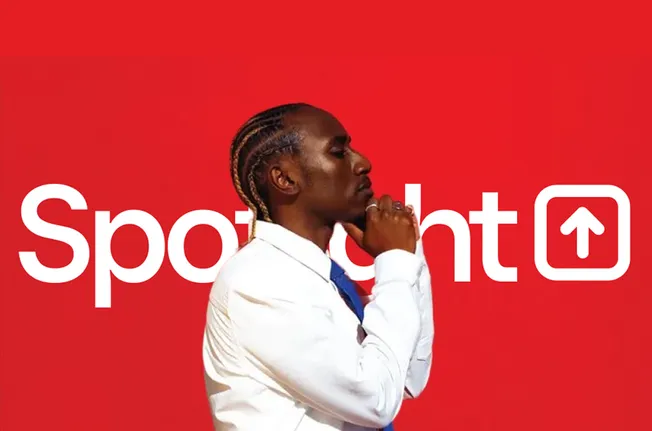
Streaming service TIDAL has expanded its Spotlight program — previously limited in scope — into new territories across Canada, the UK, and parts of Europe, opening the door for more independent artists to access editorial promotion and cash awards.
For indie musicians navigating an increasingly crowded streaming landscape, this update signals something bigger than just a new feature: it reflects a shift toward platforms rewarding discovery and participation at the same time.
Spotlight is tied to TIDAL Upload, the platform’s direct-to-fan publishing tool that allows artists to upload original tracks and share them publicly inside the app. If TIDAL’s editorial team selects a track for playlists or in-app features, the artist becomes eligible for a one-time $1,000 award — in addition to the visibility (and hopefully streaming revenue) that comes with editorial placement.
There’s no separate application process. Artists simply upload an original track, make it public, and wait for editorial consideration — a workflow that lowers the barrier to entry compared to traditional pitching pipelines.
Eligible countries now include:
- United States
- Canada
- United Kingdom
- Germany
- France
- Spain
- Poland
- Sweden
- Netherlands
- Norway
- Switzerland
For artists outside the U.S., payments are processed through Stripe, while US creators receive payouts via Cash App — super easy.
A New Kind Of Discovery Economy
Nowadays, independent artists are increasingly skeptical of algorithm-only discovery. This is why we love what TIDAL is doing with Spotlight, something different: human editorial curation paired with financial incentives.
Instead of relying solely on streams to generate income, which can be a deck of cards stacked against them, artists can be rewarded for the impact and quality of their releases, judged on editorial fit and musical merit, not just data signals.
Many indie musicians struggle to gain traction on algorithmic playlists without existing momentum. Spotlight offers a parallel path — one that emphasizes storytelling, artistic identity, and curation over pure metrics. A single editorial placement can:
- Put a previously unknown artist into curated listening environments
- Surface new music directly on the app’s homepage
- Provide immediate financial validation through the award system
That combination turns editorial placement from a vanity metric into a tangible growth milestone. And for independent artists working without label budgets, even a $1,000 boost can fund studio time, marketing, or touring — small investments that often determine whether a project moves forward or stalls.
For independent creators, what this reflects is that platforms are starting to reward artists who participate directly in their ecosystems — not just those who arrive with label backing.
And hopefully, whether Spotlight evolves into a long-term model or remains an experimental feature, the future of artist growth may rely less on chasing algorithms and more on building ecosystems where creativity, curation, and compensation exist side by side.