A New Website Tracks How AI “Slop” May Be Draining Spotify Royalties From Real Artists
As debates about AI-generated music intensify, a new project is trying to put numbers behind a growing concern in the streaming era: how much revenue might be flowing to algorithmically generated artists instead of human musicians.
A new website called SlopTracker aims to visualize the potential economic impact of AI-generated music on streaming platforms — particularly Spotify — by identifying suspected AI artists and estimating how much money their streams may be diverting from real musicians.
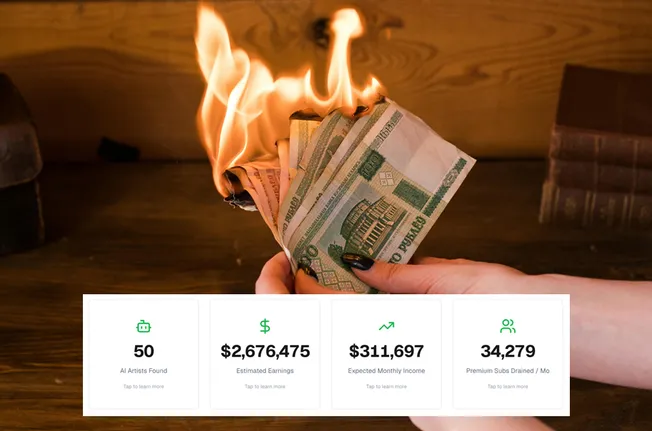
The site presents a running dashboard that tracks streams, estimated royalties, and the number of Premium subscriptions effectively needed to generate that revenue. Its central argument: while the music industry is facing a surge of AI music tools, it's also dealing with a surge of AI music profiles already operating inside streaming ecosystems.
Measuring the Rise of “AI Slop”
The project uses the increasingly common term AI slop, a phrase widely used to describe high-volume, low-effort AI-generated media flooding online platforms. The term gained popularity in the mid-2020s as generative tools began producing massive quantities of digital content with minimal human input.
In the context of music streaming, the new concern is scale.
Because generative tools can produce tracks quickly and cheaply, large numbers of AI-generated songs can be uploaded to streaming services in bulk, potentially gaming recommendation systems and accumulating streams at scale.
SlopTracker’s analysis claims that even a relatively small group of AI-generated artist profiles can generate significant streaming income. In one sample highlighted by the project, just 50 suspected AI artist accounts collectively accumulated millions of streams and could be earning hundreds of thousands of dollars per month.

+Read more: "Will Musicians Be Extinct In a Decade?"
Why AI Streams Affect Everyone
Most streaming platforms (including Spotify) use a pro-rata royalty model, meaning subscription revenue is pooled together and divided according to total streams across the platform. Every stream contributes to that pool’s distribution.
That means streams of AI-generated tracks are paid from the same royalty pool as songs created by human musicians. If automated content captures a growing share of listening time, the overall payout available to human artists becomes diluted. Currently, many streaming services do not clearly label whether a song was generated by AI, leaving listeners unaware of what they’re streaming.
A Transparency Tool for Listeners
To address that gap, SlopTracker combines several approaches:
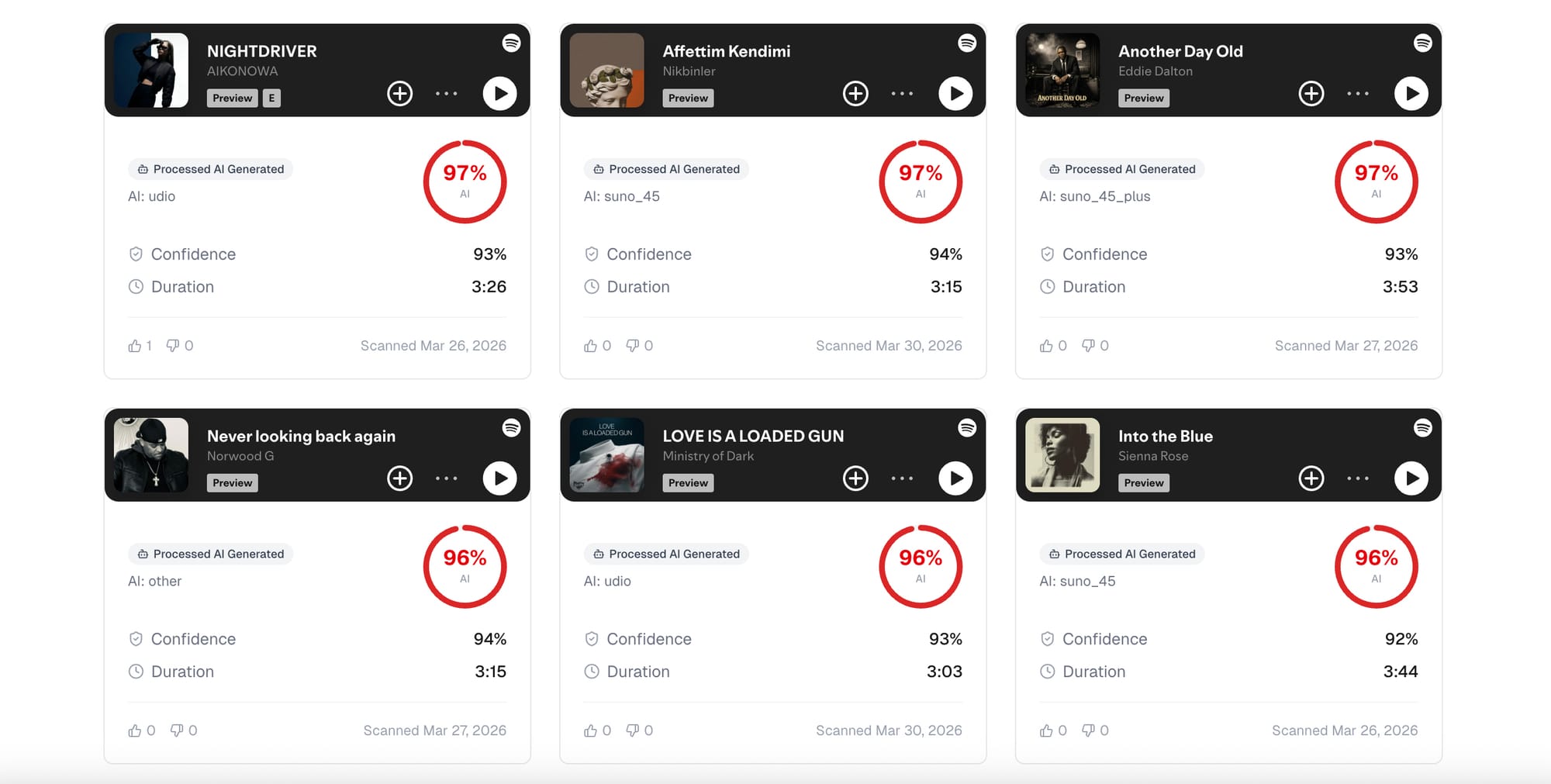
- Audio analysis tools designed to detect AI-generated patterns in recordings
- Manual tracking of suspicious artist profiles
- A public dashboard estimating the financial impact of these accounts
- Listener education, including guides for blocking artists on streaming platforms
The site also encourages users to examine Spotify’s “Fans Also Like” sections—where clusters of algorithmically generated artists often appear together.
According to the project, these rabbit holes can reveal networks of accounts with minimal artist bios, no social media presence, and large catalogs uploaded in short timeframes—common indicators of automated music pipelines.
+Read more: "How Money Actually Flows Through the Music Industry in 2026"
Looking Ahead
Whether SlopTracker’s methodology becomes widely adopted or not, the project highlights a broader industry tension: the streaming ecosystem was built around the assumption that human musicians create most of the music.
That assumption may no longer hold.
Reports already suggest that AI-generated tracks account for a significant share of daily music uploads on streaming platforms. In one estimate cited by the site, roughly 28% of new uploads to Spotify were AI-generated as of 2025, with the true number likely continuing to rise.
For independent artists — who already compete in an environment of massive content oversupply — that shift could have major implications. The rise of AI music has already sparked industry debates around copyright, training data, and the role of generative tools in the creative process.
Instead of focusing on how AI music is created, the project exemplifies what happens when large volumes of AI-generated tracks begin competing directly with human artists inside streaming payout systems.