

The Chicken Nugget Theory of AI Music Consumption
By Adham Nazir of MIDiA Research Blog
Wisdom about human nature often presents itself as guidance from an elder sage. Every now and again, though, it comes in the form of chicken nuggets.
Amidst the arguments about the extent to which generative AI in music is morally, creatively, or legally just, the music industry risks forgetting something (or someone) quite important. This is because we’ve done an excellent job of platforming our own perspectives, building an echo chamber that has sidelined the experience of one of the industry’s most important constituents: the everyday consumer.
Look no further than an iconic clip from Jamie Oliver’s Food Revolution on YouTube to see why music industry execs need to look beyond their own circles at this critical time.
Inputs, outputs, and chicken guts
Jamie Oliver, a passionate chef who has dedicated his life to food, believes that chicken nuggets are a bad food choice and wants to explain why to children. He makes the argument for breast being the cleanest, best form of chicken meat before demonstrating the guts, additives, and blending process that go into making ultra-processed chicken nuggets.
The argument is sound and the children agree with Jamie, making grossed-out noises at the chicken nugget cooking process along the way.
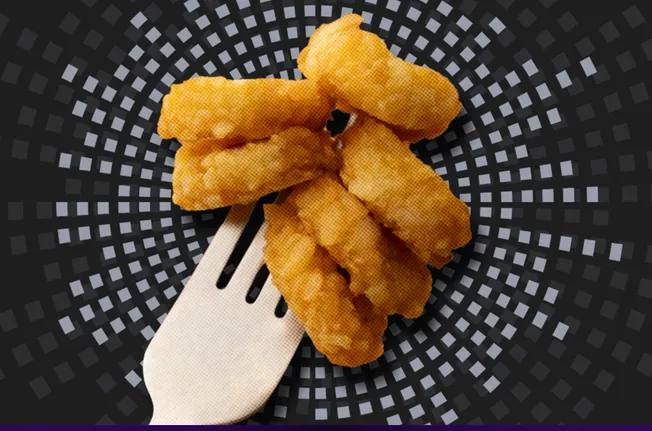
So why is it that when Jamie presents the final form of the supposedly revolting chicken nugget, every child still wants to eat it?
It’s because human nature prioritises the output over the input. We as consumers are beholden to the taste, not the ingredients.
History doesn’t repeat itself but it often rhymes. Countless industrial advances have played out similarly over the last 250 years, and not just among children but grown adults, too. Artisan weavers in the 1800s dedicated their lives to mastering their craft, yet over the course of the industrial revolution they lost out to machines.
As a creative myself, I mourn what that represents and the impact it had. I’m not sure a machine could ever truly capture the intricate delicacy and creative expression of an artisan. But the truth is, it didn’t have to.
Years after the dust has settled, are the clothes on our backs not heavily processed by machines? You may tell me that if you could get clothes from artisans you would, and I would believe you. It doesn’t change the fact, however, that the vast majority of us don’t.
+Read more: "How Money Actually Flows Through the Music Industry in 2026"
What if consumers don’t care?
The generative AI music genie is out of the bottle. In the coming years, it won’t just be the industry that influences the future of music. Consumers will play a pivotal role in shaping demand by voting with their ears, eyes, and hours in the ever-saturated attention economy.
Consumers may decide that they can tell the difference and don’t like AI-generated music, at which point incumbent industry stakeholders rejoice. The model of the past adjusts to the operational enhancements afforded by assistive AI, but remains largely unchanged.
On the other hand, consumers may not be able to tell – or care – if the music that moves them was made by trained professionals in a recording studio or by a first-time producer prompting Suno.
If it is the latter, those who anticipate demand by adapting to the new market economics that come with rapid experimentation, A/B testing, and iterative music may be primed to come out on top.
In the long run, scaled creation and personalised consumption could drive a new era of hyperoptimisation in music, building on the proven techniques used by today’s chart-topping songwriters and artists.
The challenge is not whether everyday consumers will care for generative AI music when the negative impacts of it are put in front of them. It’s whether everyday consumers will care enough to avoid it when they hear it in their day to day lives – if they can even tell the difference.
The answer could be closer to home than we think. I don’t know about you, but I still eat chicken nuggets.
Want the latest entertainment research and insights directly to your inbox? Our newsletter has you covered, click here to subscribe.