
By Andres Payne, CEO/Founder of Vollou
Music royalties remain one of the most persistent challenges in the live music industry, with the issue particularly visible in electronic music. While the genre is projected to grow globally at a compound annual growth rate (CAGR) of around 9.31% year on year, according to Wise Guy, research from Fair Play shows that a large share of DJ and club performances still go unreported.
As a result, 71.6% of UK nightclub licence fees never reach the right artists, leaving many royalties misallocated due to gaps in reporting and outdated processes.
As electronic music performance volumes increase worldwide, improving how live plays are identified and paid is becoming increasingly critical for artists, music publishers, and music rights organizations. Without accurate reporting, significant royalty value continues to be distributed incorrectly.
At the same time, new technology is emerging to address these gaps. Our company, Vollou, which is already used by leading DJs like Martin Garrix, is taking advantage of recent developments in AI to build music recognition systems to automate setlist reporting in real-world DJ environments. These approaches offer a more efficient way to capture live performances across the royalty ecosystem.
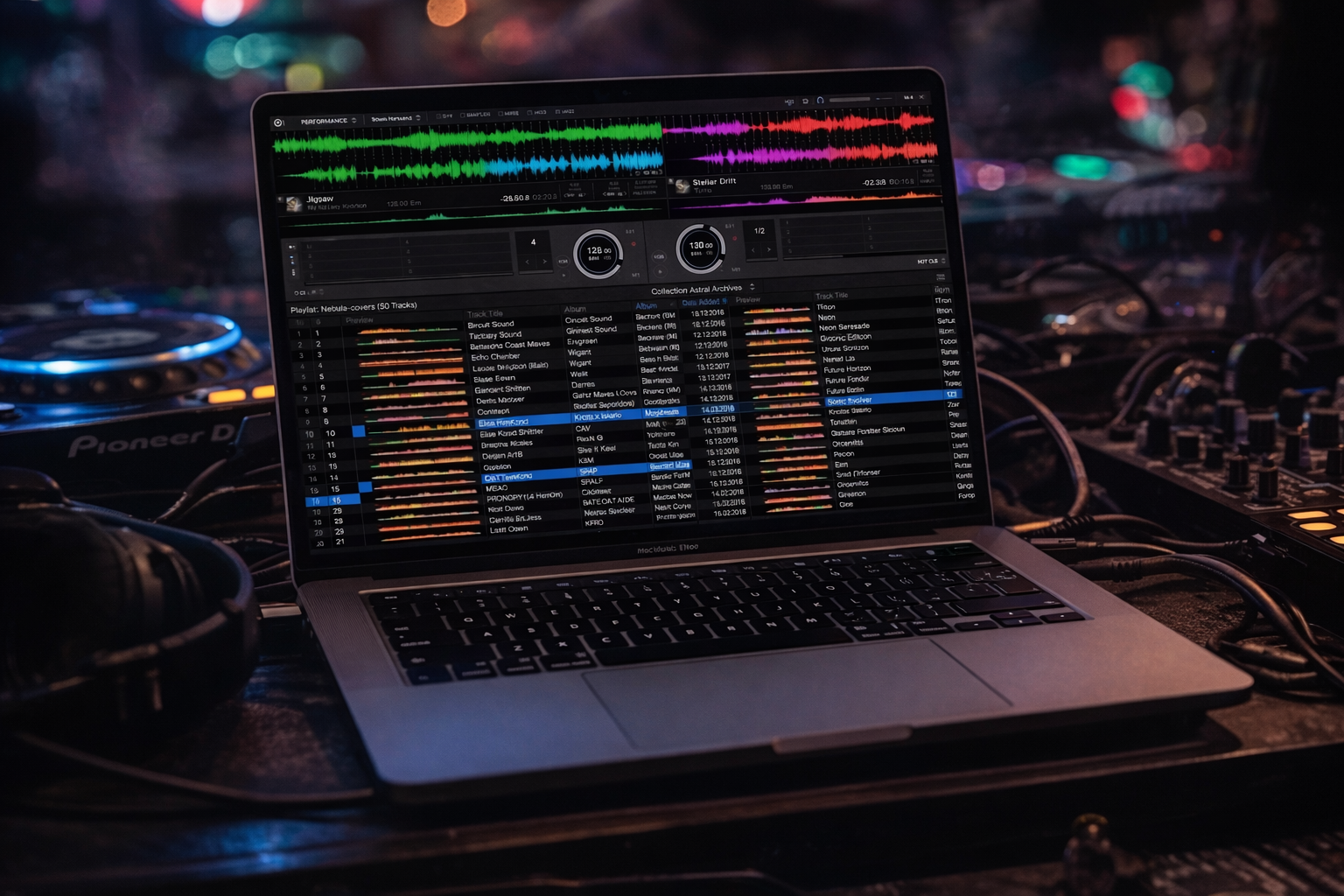
Why DJ Setlists Remain Difficult to Report
DJ performances differ from traditional live shows. Tracks are mixed continuously, often pitched, layered, adjusted in speed, and played in short sections. DJs build their performances dynamically, changing track order, selection, and song duration in real time. As no two DJ sets are ever the same, manual setlist reporting becomes unreliable and time-consuming, especially when performances need to be reconstructed after the event.
In practice, around 5% of performances are supported by voluntary DJ setlist submission.
Fair Play highlights the scale of the issue. When DJ setlists are missing, music cannot be matched to what was actually played. In these cases, royalties fall into a “black box,” which distributes based on radio playlists and chart data rather than actual club usage. This approach systematically disadvantages electronic music, as 60% of club tracks never appear on radio. This means a large portion of electronic music is poorly compensated in the current distribution models.
The current reporting process also places a heavy workload on publishers. This includes processing paper setlists submitted by DJs, following up with artists and venues for missing information, and manually inputting performance data. Low submission rates, inconsistent templates, and different requirements across countries further reduce the effectiveness of existing systems.
+Read more: "NTS Thrives in the Spaces That Streaming Leaves Behind"
Growing Pressure on the Royalty Process
As electronic music becomes a larger part of the global music business, these inefficiencies are becoming increasingly difficult to ignore. Publishers handling international DJ performance setlists often need to recreate the same performance data multiple times, as different countries operate through different PROs (Performing Rights Organisations), each with their own reporting templates and submission requirements.
Recent data shows why this matters. According to The Guardian, over 106,000 performances in the UK failed to distribute royalties due to missing setlists. PRS has also reported that only 10 out of 230 DJs submitted setlists at the major British festival, Creamfields.
At the same time, PROs receive high volumes of incomplete or incorrectly formatted data, leading delays, additional manual work, and inaccurate distribution. Under the current manual approach, inefficiencies affect every part of the ecosystem, from DJs and publishers to venues and PROs. Fair Play suggests that over 82% of stakeholders believe current royalty systems are poor, reinforcing the view that existing methods are no longer fit for a growing live music industry.

Why Automated Music Recognition is Gaining Attention
Advances in music recognition technology are changing the way live and DJ performances are reported. By capturing tracks directly during the performance, setlists can be generated automatically without manual input.
For the industry, automation offers clear advantages:
- Higher accuracy in royalty distribution, even in complex DJ environments where tracks are mixed and pitched
- Less manual workload for publishers, DJs, venues, and PROs
- Faster and fairer payouts, ensuring artists are compensated for their work
Some companies, like Vollou, are already deploying these tools across festivals, venues and international DJ shows. Their app-based solutions are used by publishers like Armada and leading DJs such as Armin van Buuren and Hardwell.
What this Means for the Industry
Electronic music has long suffered from the limitations of current royalty reporting, but the issue now affects a growing share of the global music business. As performance volumes rise, manual systems are no longer sustainable. Automated solutions signal a structural shift from manual, fragmented and time-consuming processes to more efficient, reliable and scalable workflows.
For artists, publishers, and PROs, this means fewer gaps in reporting, less manual work, and a clearer path to accurate and transparent royalty distribution at scale. Who adapts, and who gets left behind?