

By Dr. Nicolai Klemke, Founder/CEO of neural frames
More than 100,000 tracks are uploaded to Spotify every day. This means that somewhere, at this very moment, someone has written what they believe is the most important song of their life and it has just landed in a digital pile the size of a small city.
Most young listeners won’t find it simply by digging. As artists were busy optimizing for streaming, the visual social feed became just as important, with 82% of Gen Z and 70% of millennials discovering new music through short videos.
At the same time, AI video tools are evolving so quickly that even the people building them occasionally pause and wonder when the ground shifted beneath their feet. Models like Google’s Veo 3 are producing hyper-realistic clips that weren’t possible a year ago
So music has never been more abundant, visuals have never mattered more for discovery, and Artificial Intelligence has never been more powerful. And yet, many AI video tools still feel strangely disconnected from music.
Treating Music as an Afterthought
The most common mistake companies make when building AI for musicians is almost embarrassingly obvious, which may be why it persists. They treat music as an accessory.
Generative video grew out of text-to-image research, so most systems are built around prompts: describe something, receive something. But that logic doesn’t translate neatly to music, nor is it how great music videos are made.
Professional music videos aren’t assembled at random. They are structurally synchronized to the track. Research from the Polytechnic Institute of Paris, which analyzed 548 official music videos, found consistent synchronization between shot timing and musical structure at the beat, bar, and section levels.
“For chorus and verses, the editing will follow the rhythm and typically accelerate near climaxes. During bridges, it will often be slower and poetic,” the study explained.
When an artist uploads a track, they’re handing over structure, not background audio. The shape of the song needs to be the spine of the video. If you ignore it as a video producer or an AI platform developer, you’re just laying random images on top of sound.
+Read more: "9 Non-Generative AI Tools Artists Can Use to Get More S#*t Done in 2026"
Chasing Novelty Instead of Consistency
Another mistake AI companies make when building AI video tools for musicians is over-optimizing for novelty. The assumption is that artists and their fans want infinite change or variation. Psychology suggests otherwise, which is probably why a song so often grows on us. There is proof that repetition increases liking, a dynamic known as "the Mere Exposure Effect," first demonstrated by Robert Zajonc in 1968.
Music research shows the same pattern. A study published in Frontiers in Human Neuroscience found that familiarity was the strongest predictor of musical liking. Brand expertise has reinforced the same idea. But most generative tools are probabilistic. That means even with the exact same prompt, you often won’t get the exact same result twice.
In image generation, you can sometimes lock a random seed to reproduce a frame. But in many tools, especially video generators, true frame-to-frame determinism is still very fragile. True character consistency across many shots remains one of the hardest problems in generative media.
So designing GenAI for music videos needs to constrain variation where it matters. The extremely varied and powerful AI models matter. But so does the user interface and the decisions artists are guided to make within a platform.
Mistaking Imitation for Innovation
If there is an original sin in GenAI, it’s probably this. Many artists want to be known for their own signature stylings. A frame from a Björk video, dripping in nature’s surrealism, feels unmistakably hers. Aphex Twin weaponized the uncanny to the point where a distorted grin became the Irishman’s calling card, like a recurring promotional hallucination.
Many AI video tools, meanwhile, are marketed on their ability to mimic established visual styles. Yes, some of the AI-generated videos reportedly unsettling Hollywood really do resemble a Tom Cruise blockbuster. That’s because the systems behind them have been trained on vast swathes of similar content, enabling users to type prompts like “make it look like” and get something unnervingly close.
Those prompts may generate viral moments. But in music culture, they land differently. When a platform sells proximity to someone else’s aesthetic as a feature, it invites users onto creative ground that artists have spent years defining as their own. And for new musicians trying to establish an identity, the last thing they need is a debut video shadowed by the suspicion of imitation, even if it is a form of flattery.
Failing to Balance Ease and Depth
As a former musician, I don’t ever remember thinking, “I hope today I get to explore more complex video tools.” Everything was about the art.
So when it comes to GenAI for music videos, the floor has to be low. Upload the track. Generate a video that understands that the intro is tentative, the verse is building, and the drop is a glorious payoff. Artists need something that actually listens or understands what they’ve created.
And the ceiling can still be high for AI music video tech. Because, in my experience, the same person who wants a quick, polished video to post on Monday might want to obsess over it on Tuesday by editing clips frame-by-frame and making the visuals pulse properly with the bass because they are only gonna release this particular song once.
+Read more: "New Survey Reveals How 87% of Artists Really Use AI"
Over-Automating the Creative Process
Many AI video tools can be very generous and fast. They can instantly give you another version. And another. A different aesthetic entirely, just in case you’ve changed your mind.
But music videos become memorable because the creator had a vision and made a choice. This look. That pacing. The strange little visual that comes back every time the chorus does.
The artists whose music videos will break through on competitive social feeds like TikTok won’t do so just because they have automated their artistic expression. They’ll do well because their visuals are twinned to their sound and character.
AI is already becoming part of music production. About 87% of artists have already incorporated AI into at least one part of their process. AI video tools may eventually feel just as normal. But only if developers remember that the song is the reason any video exists in the first place.
Somewhere right now someone has just recorded their latest track, hoping it might escape that enormous digital pile. AI can help give that song a visual world faster and cheaper than ever before. But it can’t decide entirely what that visual world should be. That vision belongs to the artist.
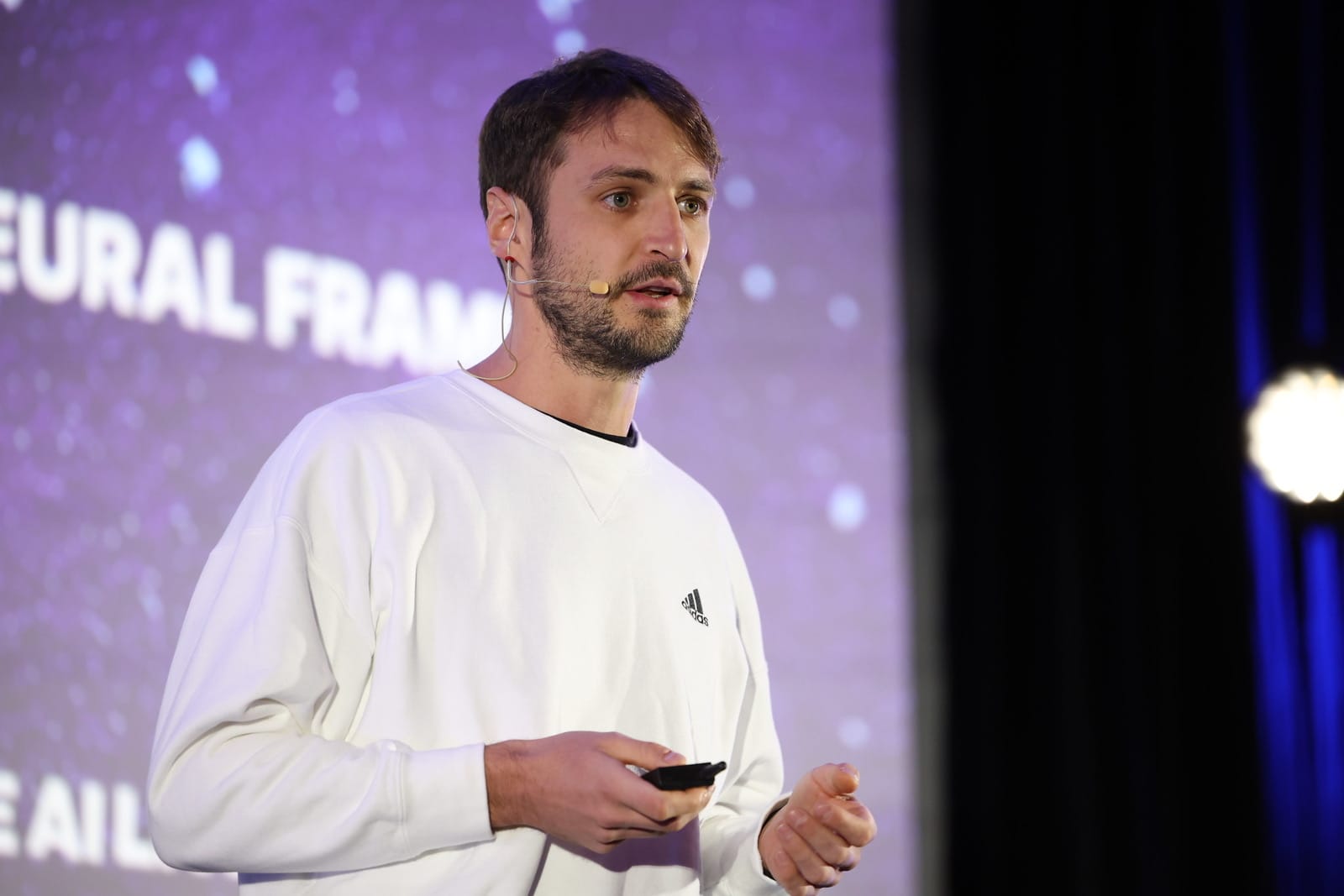
Dr. Nicolai Klemke is the Founder and CEO of neural frames, an AI-powered platform that turns audio into cinematic video content at scale. With a PhD in physics and a background spanning deep-tech AI and music production, he approaches generative AI from both an engineering and a creator’s perspective. He founded the AI music video generator neural frames in 2022 after experimenting with AI-generated animations, and today leads the fast-growing company used by thousands of creators worldwide to generate music videos and audio-reactive visuals.