

By Steve Bolch of BlackTape
There's a moment every music fan hits eventually. You open a platform, you search for something new, and everything it gives you feels like something you've already heard. Not bad — just familiar. The algorithm knows what you like, and it keeps handing you more of it.
At some point you realize you're not discovering music anymore. You're just being manipulated, and your discovery is being managed for you.
I hit that wall years ago. I co-founded a minimal techno label in Berlin in 2004. I've put out 28+ releases as Theatre of Delays. Finding music I didn't expect to find has been the thing that keeps me going — in shops, on forums, through friends, through hours of just digging.
"Those artists aren't failing. They're invisible — by design."
But somewhere along the way the tools changed, and the digging stopped working. Not because the music dried up. There's more being made right now than at any point in history. It stopped working because discovery got optimized for engagement, and engagement rewards familiarity.
Here's the number that made me actually build something: 87% of artists on major streaming platforms have fewer than 1,000 monthly listeners.
Those artists aren't failing. They're invisible — by design. The systems that are supposed to connect listeners to music are structurally biased toward artists who already get attention. The long tail is real, it's enormous, and almost nobody can see it.
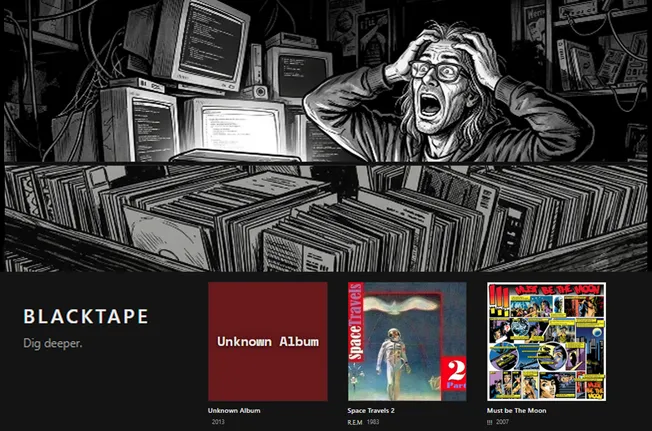
So I built BlackTape.
+Read more: "From Genuine Story to Repeat Exposure: How Listeners Become Fans"
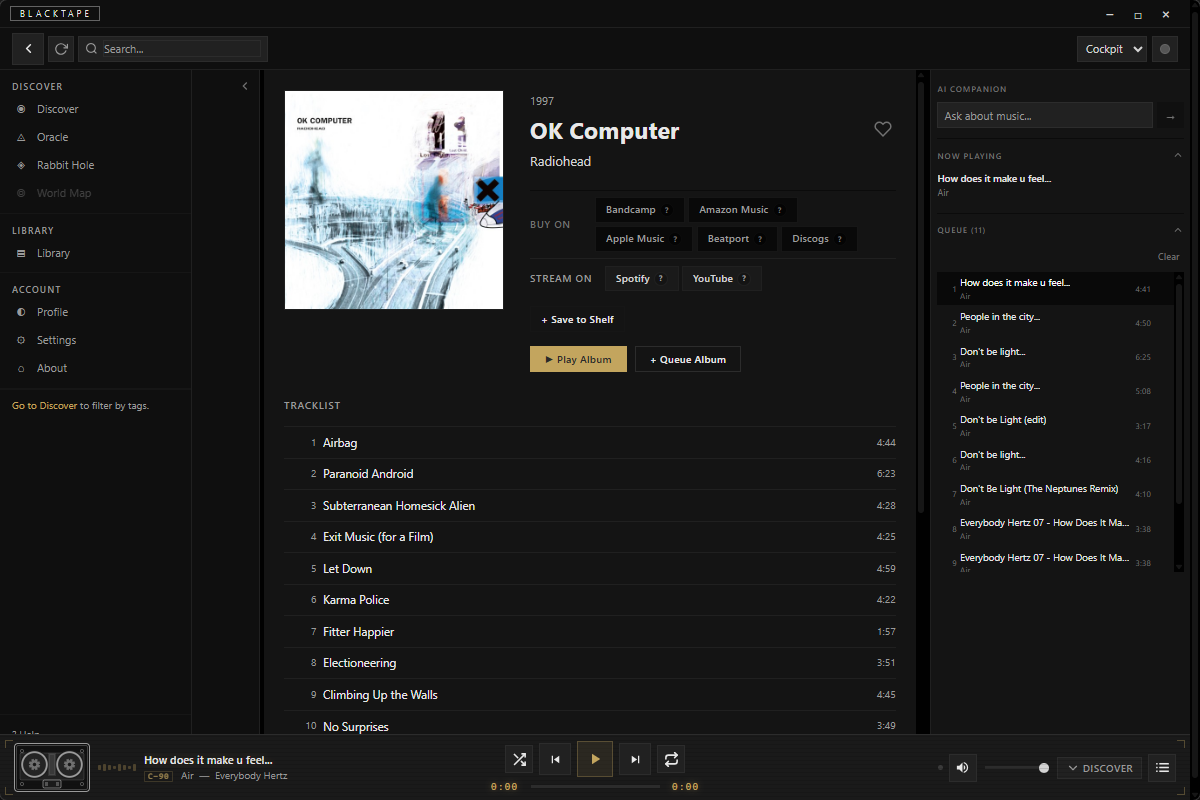
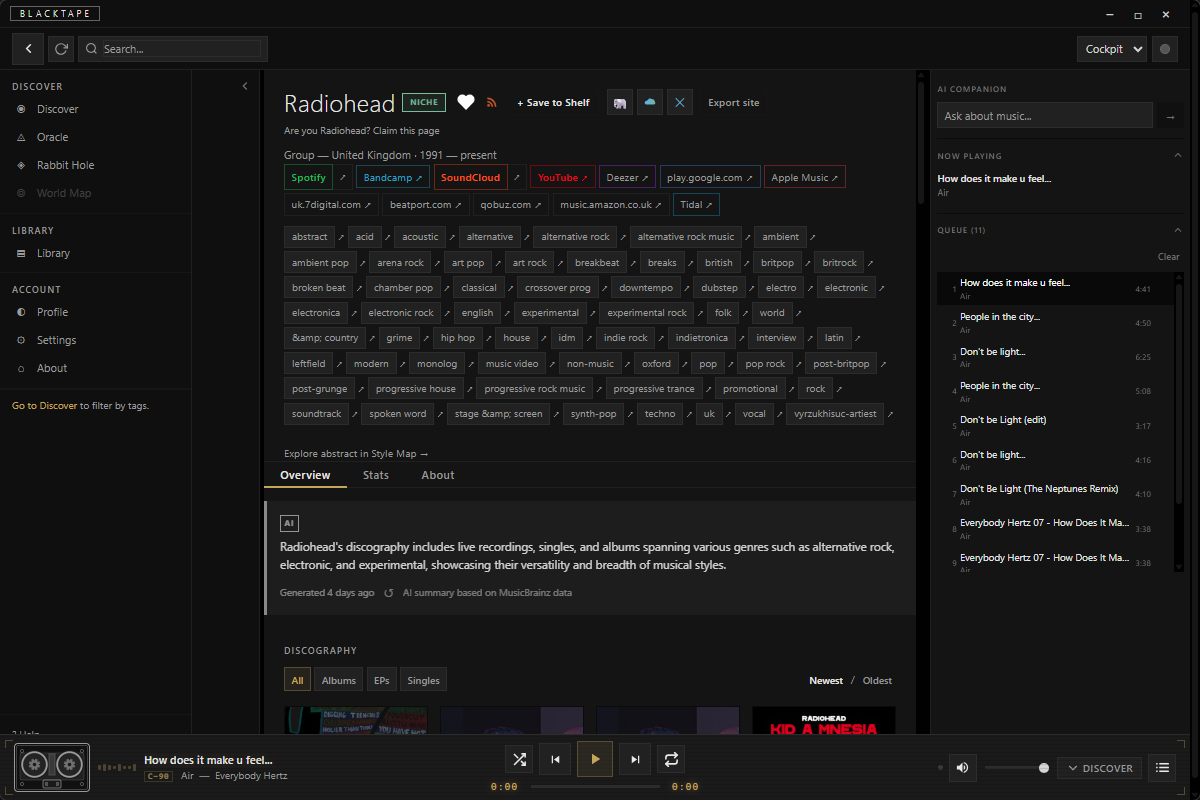
BlackTape is a desktop app that indexes 2.8 million artists from MusicBrainz, an open music database maintained by a volunteer community that's been cataloguing recordings for over two decades. The core mechanic is simple: instead of ranking by popularity, BlackTape scores artists by how unique they are within their genre.
The more niche the artist, the higher they surface. That one inversion changes everything about what discovery feels like.
Search for "post-punk" and you don't get the names everyone already knows first. You get artists from scenes you didn't know existed — in cities, countries, and micro-genres that never made it into any editorial playlist. The familiar names are still there. They're just not blocking the view anymore.
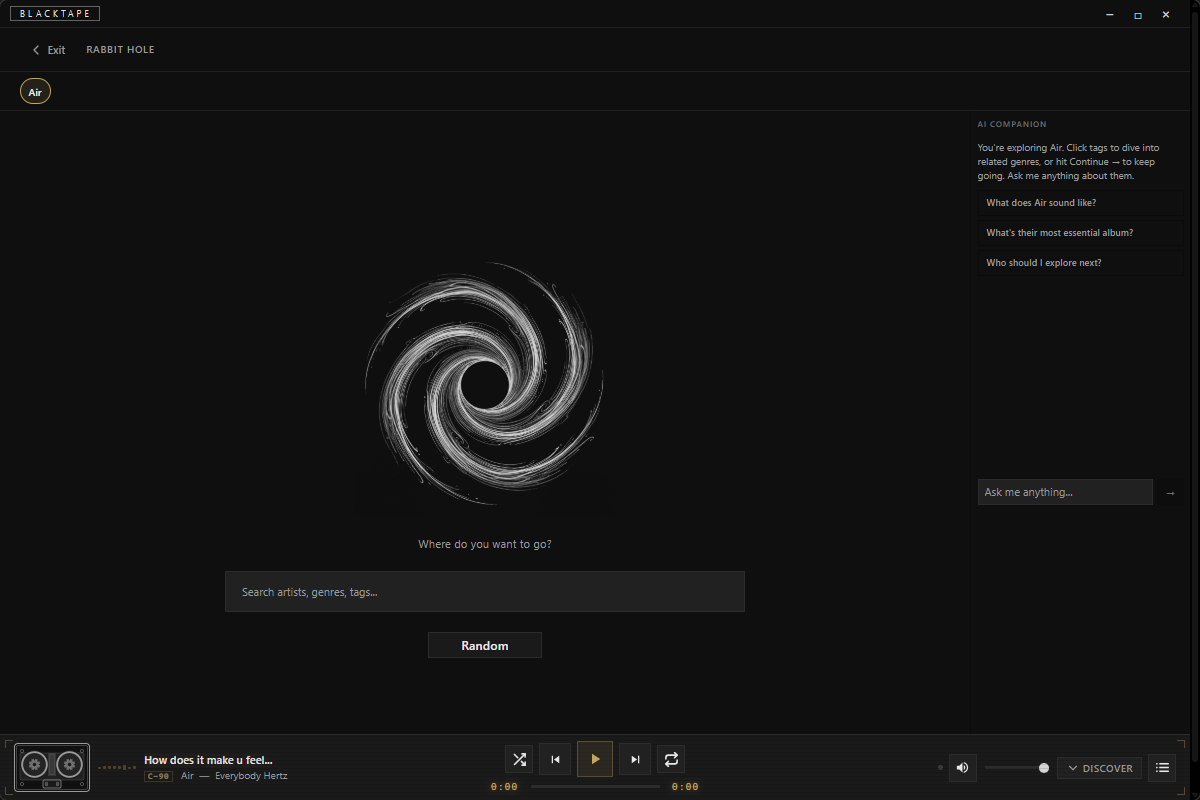
I wanted to understand how music connects — not just find individual artists but see the relationships between them. How post-punk revival differs from traditional punk. How hyperpop relates to mainstream pop. How vaporwave and lo-fi hip-hop share roots but diverge. BlackTape lets you trace those lines. Search by genre, by country, by decade. Follow influences. Explore discographies. See how a sound evolved from one scene to another.
"The more niche the artist, the higher they surface. That one inversion changes everything about what discovery feels like."
There's also a local AI layer — it runs entirely on your machine, no cloud, no tracking, no accounts. You can ask it things like "electronic music from Southeast Asia with gamelan influences" and it searches with context, not just keywords. It's not a recommendation engine that learns your habits and narrows your world. It's a search tool that understands what you're actually asking for.
The decision to build this as open source wasn't ideological — it was practical. The data is open. MusicBrainz exists because thousands of people contribute to it for free, because they care about music being documented accurately. Building a closed product on top of that felt wrong.
So BlackTape is free. Anyone can use it, fork it, build on it.
+Read more: "Is Personalized Music Discovery Organic When It's Driven By AI?"
If you find something through BlackTape and want to support the artist, buy the record. Grab it on Bandcamp. Or just keep listening. The app doesn't care how you engage — it has no business model that depends on keeping you inside a walled garden. That's the freedom you get when discovery isn't a feature of a platform but a tool that belongs to you.
I built this for the people I've been around my whole career — the ones who go to the shows, run the small labels, write the blogs, trade records, and keep underground music alive when nobody's paying attention. The DJs digging through genres that don't have playlists. The listeners who hear one track and spend three hours mapping a scene they just stumbled into. The artists making work that matters deeply to 500 people instead of vaguely to 500,000.
Music discovery like that used to just happen. It can happen again. The data is there. The community already built it. We just need tools that get out of the way and let people find what they're looking for.
Steve Bolch has been in electronic music since the late '90s — DJing underground parties in Munich, living in an artist community in a former military compound, throwing illegal raves, and eventually co-founding the Berlin label Vakant, which helped shape minimal techno through the late 2000s. As Theatre of Delays he's released 28+ records on labels including Gomma and Recordmakers, hit #1 on Hype Machine three times, and composed the soundtrack for The Entropy Centre (Playstack). BlackTape is his open source music discovery app. blacktape.org