

_______________________________
Guest post by Chris Castle of Music Technology PolicyWhile Spotify’s technocrats may be breathing a sigh of relief after the company’s most recent multimillion dollar settlement with songwriters, it is well to remember that the company is probably not anywhere close to out of the woods. As others have learned the hard way, once you replace the rights of songwriters and artists with your own lust for IPO riches, the lawsuits can go on for a very long time indeed. You would think that after nearly 20 years of massive infringement online, the obvious answer would suggest itself to the “get big fast” group: Don’t use music you don’t have rights to use.Yes, that’s right. Just say no.The typical reason given by interactive services about why their need to offer unlicensed music exceeds their desire to offer only licensed music is because of competitive pressure from YouTube. Why do they feel this competitive pressure? Because their investors tell them at every board meeting that they should feel it. But let’s be clear–I doubt that Tim Cook gets Eddie Cue in a headlock over the issue over at the Infinite Loop. If you agree, then that kind of narrows it down.But entertain that idea for a moment, however ill founded. Why is YouTube able to sustain this competitive position that supposedly makes otherwise licensed services soil themselves with fear of being undercut and overrun by YouTube?That’s right–the “DMCA license”, or YouTube’s absurd use of the “safe harbors” granted to them under the U.S. Copyright Act which YouTube likes to think makes them bullet proof. (Which is also what Cox Communications thought until they weren’t and is probably what Facebook thinks, too.)So get that straight–some would say that The Golden Child (aka Spotify) is to be allowed to limp their way to the increasingly inexplicable goal of some kind of big financial reward (or “exit”) in an IPO of whatever stripe while we are all asked to look the other way and allow them the same shite arrangements that YouTube enforces through lobbying, litigation and unprecedented monopoly position (aka crony capitalism).And you thought it was all about the “Value Gap”? Apparently not.We are being told that the licensing practices of interactive services should be allowed to look more like YouTube’s widely loathed safe harbor and YouTube tries to make us believe that they are really pro-artist. We are asked to hold the proposition “A” and the proposition “not A” in our heads simultaneously. It can be done, but it is rather uncomfortable and it is uncomfortable because in this case it is unnatural. Not to mention, it is, of course, all bull. Irving Azoff crystalizes the view no doubt held by everyone who has ever dealt with any of these people:“The truth is that, despite having to compete with services like YouTube who hide behind outdated, safe harbor protections, legitimate services like Spotify and Apple Music are attracting more subscribers than ever,” he continued. “If YouTube had the same level of commitment, their subscription service would be more than a head fake—and they’d be working hard, like Spotify does, to convert users to the paid tier for unlimited music. Maybe Google should do a study on that.”The difference is that Irving is actually looking out for the best interests of his clients and is not afraid to tell the truth. The one clarification I have to his assessment is that Apple doesn’t seem particularly worried about their competitive position–it is Spotify that runs to the Nanny State at every turn and files mass “address unknown” NOIs all the livelong day.And then, of course, the whole “Value Gap” concept is only half right–it should really be called the Pinto Gap, because it’s not just that Google decided to make money off the backs of artists and songwriters through a distorted loophole. Google also made that choice to be a knowing mass infringer the same way Ford decided to knowingly sell consumers its Pinto model with an exploding gas tank. It profited them to do so, just like it profits them to trade in terror recruiting videos.So the Pinto Gap is not much of an excuse for either a competitor service, the DMCA safe harbor, or as a policy the industry should support. (And that goes for Facebook, too.)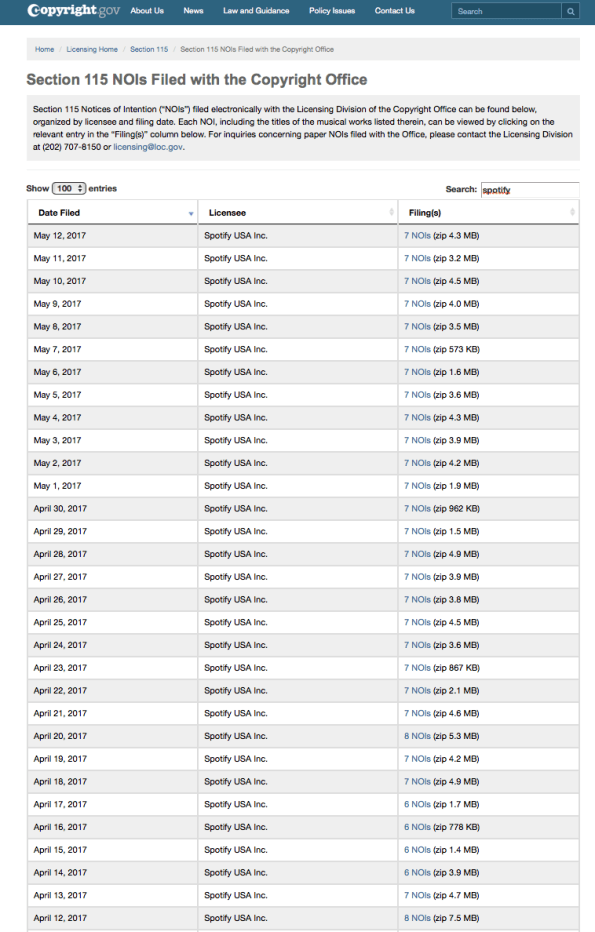
Related articles