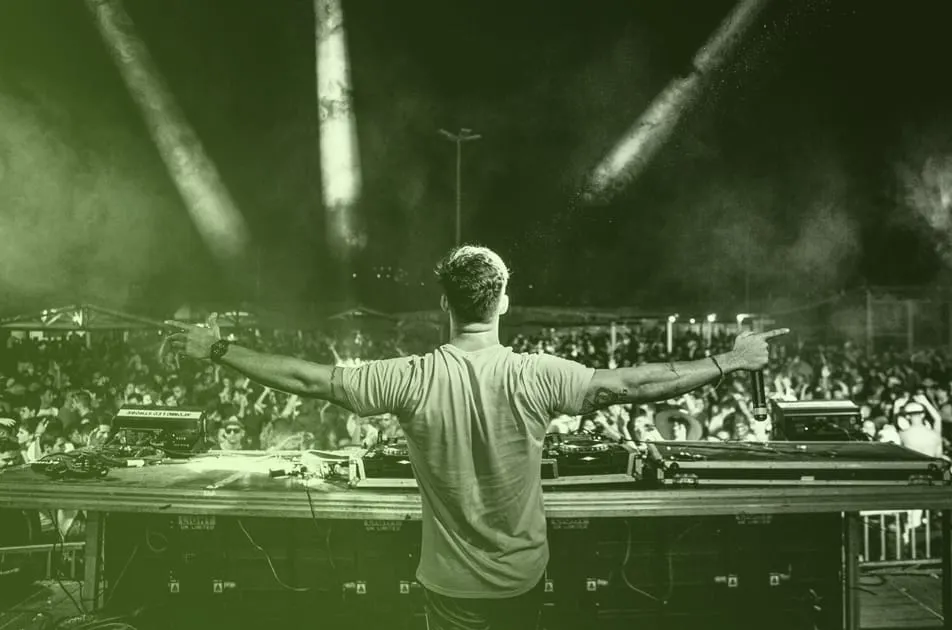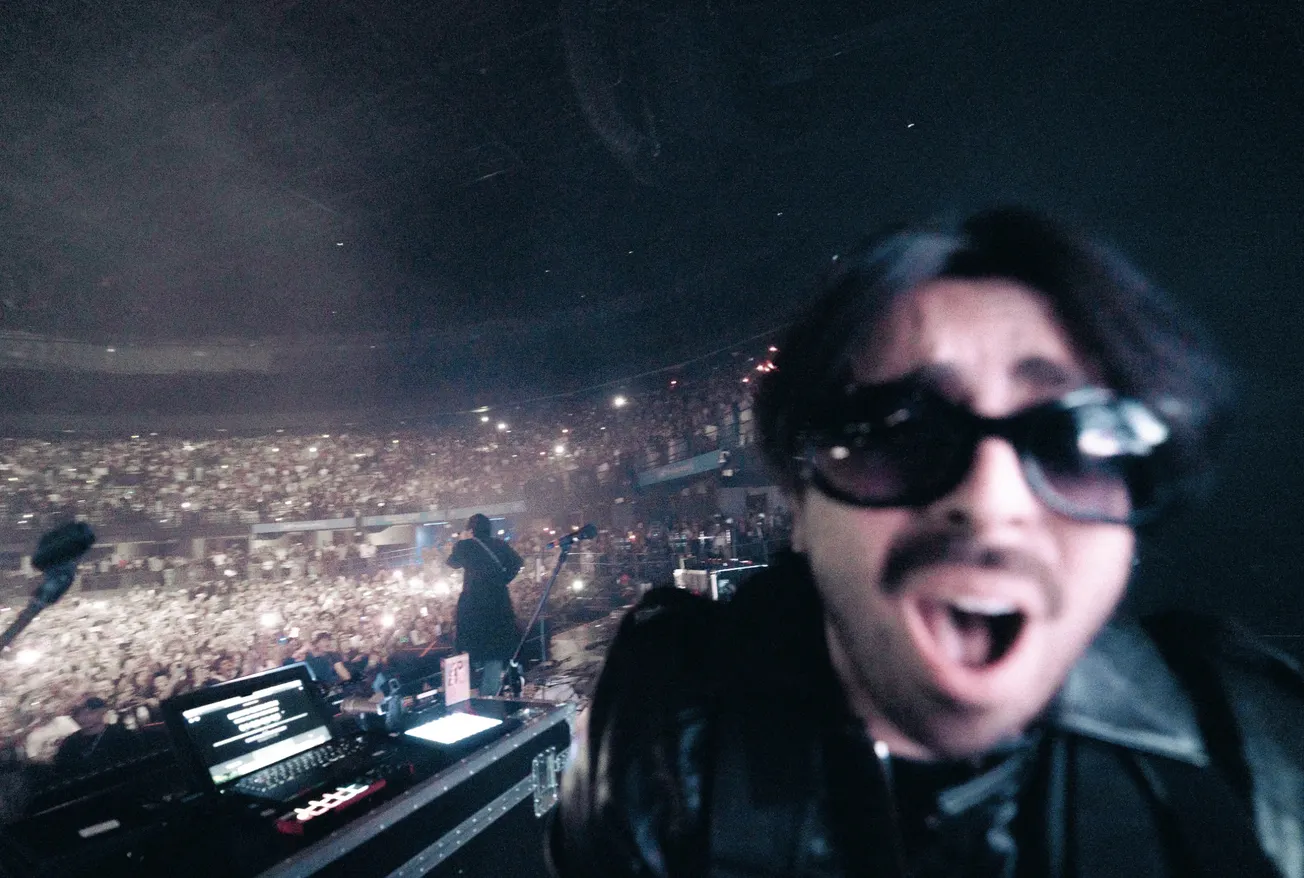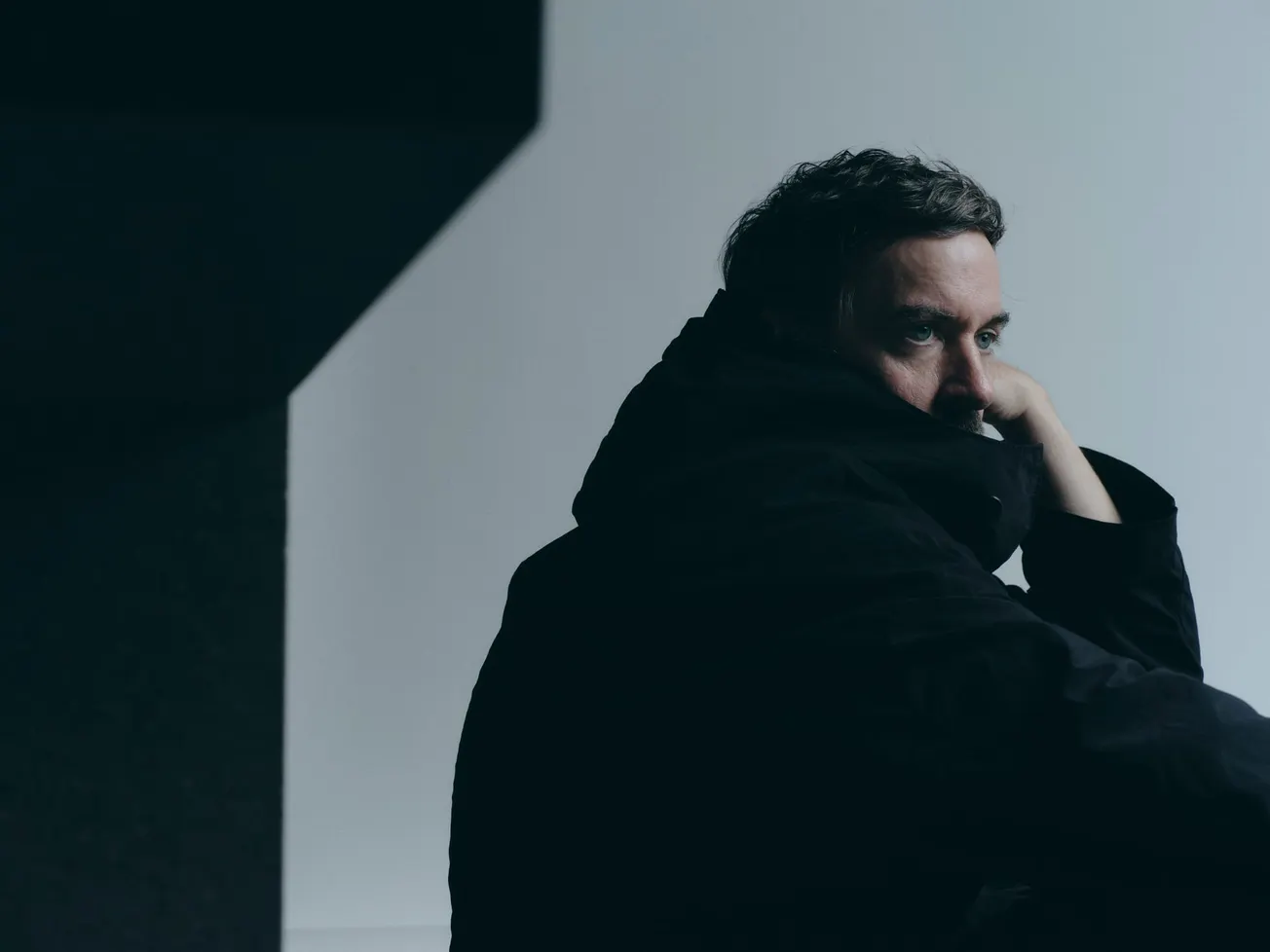


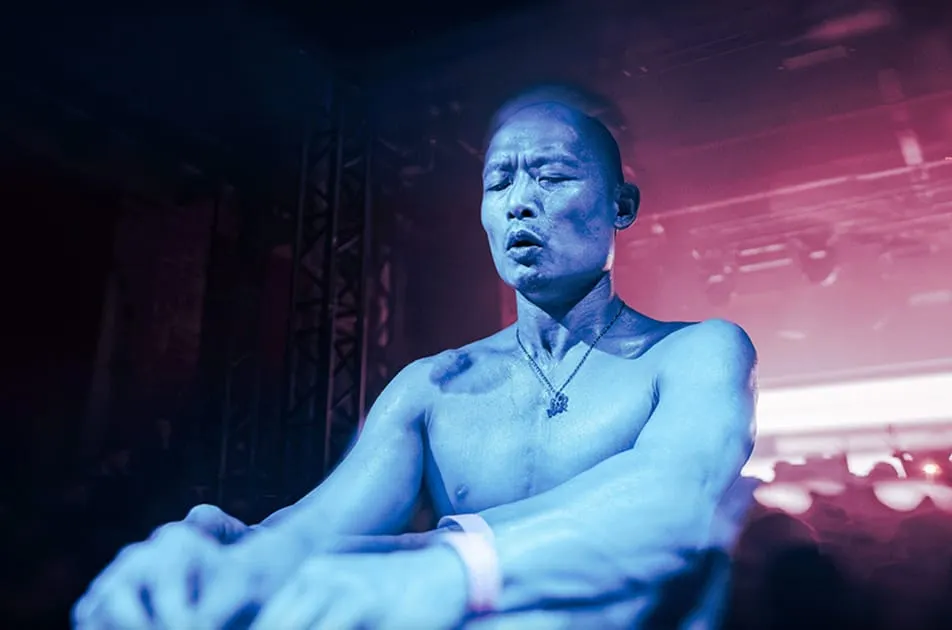
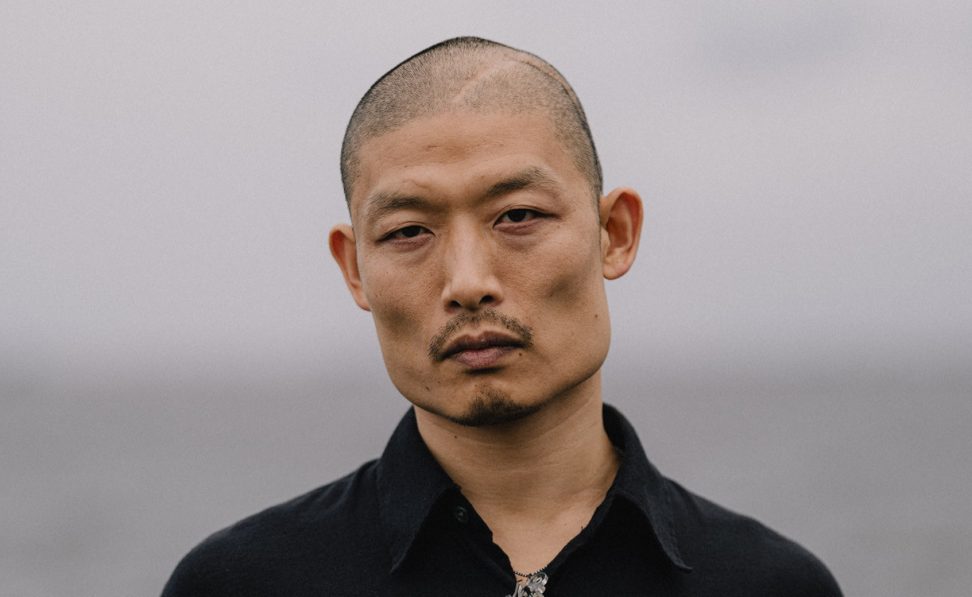
There’s a reason electronic music fans — and increasingly, other DJs themselves — speak about ¥ØU$UK€ ¥UK1MAT$U with the kind of reverence usually reserved for underground legends.
His vivacious, unpredictable EDM sets don’t just mix genres. They collapse timelines, emotional registers, tempos, and expectations in real time. It's like someone going through your entire 10-CD changer in a matter of minutes.
Last month, Yousuke Yukimatsu delivered one of the most coveted assignments in live electronic music: a sunset slot at Coachella Valley Music and Arts Festival. And somehow, the symbolism fit perfectly. Few DJs embody transition and instability quite like Yukimatsu.
His performances are built on constant change — euphoric trance colliding with hardcore techno, J-pop dissolving into ambient melancholy, pop hooks interrupted by industrial chaos. Watching him DJ can sometimes feel like he's selecting from the internet’s entire emotional archive with a bricolage mindset.
+Read more: "Fred again..’s Dropbox Photo Dump Understands the Moment"
That unpredictability is precisely why the electronic music world has become obsessed with him. In a recent interview with Billboard, Yukimatsu described his approach as intentionally genre-defying, leaping between styles rather than settling into a fixed identity.
And this also has to do with the fluid, improvisational, and unplanned ways he messes with the mixer's EQ settings as he's both building transitions between songs and mixing two tracks audibly at the same time. It takes on an otherworldly sound that has many fans asking whether that song really was the original version or not.
Yukimatsu says:
"I’m balancing the highs, middles, and lows with the mixer. I’m just playing what feels good to me, but maybe that changes something in the music. But I don’t remember the position of the high, mid, and low knobs for each transition, so I just try and find what feels good to me."
Resident Advisor framed his work as bewildering and emotionally overwhelming in equal measure — an apt description for sets that can feel simultaneously violent, tender, funny, nostalgic, and transcendent. His rise from Osaka underground parties to fixtures like Berlin Atonal and now Coachella is well earned, but also fascinating from an outsider's perspective.
For years, electronic music performance became increasingly optimized: smooth transitions, tightly branded aesthetics, algorithm-friendly microgenres, predictable BPM arcs. Yukimatsu represents the opposite instinct. His sets embrace rupture. Sudden emotional pivots. Abrasive texture. Sentimentality. Humor. Risk.
In an era where streaming platforms encourage passive listening and playlist continuity, Yukimatsu’s popularity suggests audiences are craving DJs who feel unmistakably human again.
Part of Yukimatsu’s mythology comes from how physically present he is during performances — shirtless, drenched in sweat, moving erratically behind the decks as if the music is happening to him in real time. That rawness resonates in a cultural moment increasingly defined by AI anxiety, automated discovery systems, and frictionless recommendation culture.
His sets feel alive because they are unstable. You cannot predict them. You cannot playlist them. You cannot replicate them with software logic. That’s why so many other DJs admire him.
He makes electronic music feel dangerous and emotional again.
+Read more: "Is the Streaming Model Failing EDM Producers?"
In the coveted "sunset set" placement at Coachella, Yukimatsu's performance unfolded as daylight disappeared, mirroring the kind of constant transformation that his music puts forth.
Nothing stays fixed for long. Beauty becomes chaos. Chaos becomes catharsis. Then suddenly, somehow, the dancefloor finds itself emotionally synchronized again.
His pacifist politics are wrapped up in that same point of view. Always with a message of peace, Yukimatsu strives to bring everyone together to feel what community feels like, to feel what joy and togetherness sounds like.
Personally, I see a lesson in this for artists.
BE. NOT. BORING.
Audiences increasingly respond to performers who feel singular rather than optimized. Yukimatsu’s rise wasn’t built through clean branding or algorithmic consistency. It came out of fully committing to unpredictability and emotional honesty in performance, not giving a hoot what genres people might like him to play. He played the "music" he liked, and people dug it.
In a music economy obsessed with frictionless consumption, his popularity suggests that friction itself — surprise, discomfort, contrast, volatility — may actually be becoming one of live music’s most valuable assets.
And he's redefining what being a "selector" means.
Follow ¥ØU$UK€ ¥UK1MAT$U on Bandsintown.
¥ØU$UK€ ¥UK1MAT$U 2026 Tour Dates
JUN 20 — София, Bulgaria @ AURA Festival 2026
AUG 08 — Brooklyn, NY @ Under the ‘K’ Bridge Park
AUG 22 — Milton Keynes, United Kingdom @ The National Bowl
AUG 23 — London, United Kingdom @ All Points East presents Outbreak
SEPT 26 — Jakarta, Indonesia @ Jakarta International Stadium
SEPT 27 — Jakarta, Indonesia @ Jakarta International Stadium
NOV 4 — Kuala Lumpur, Malaysia @ TM Stadium National
![MUTEK Elevates Live Electronic Music Performance Yet Again [PHOTOS]](https://storage.ghost.io/c/3a/95/3a957c06-c825-4057-9939-0a274cc16d23/content/images/size/w1304/format/webp/2026/09/MUTEK27_20260827_Korea-Town-Acid---Ajeebsir_credit_Fre--de--rique-Me--nard-Aubin-1506.jpg)