

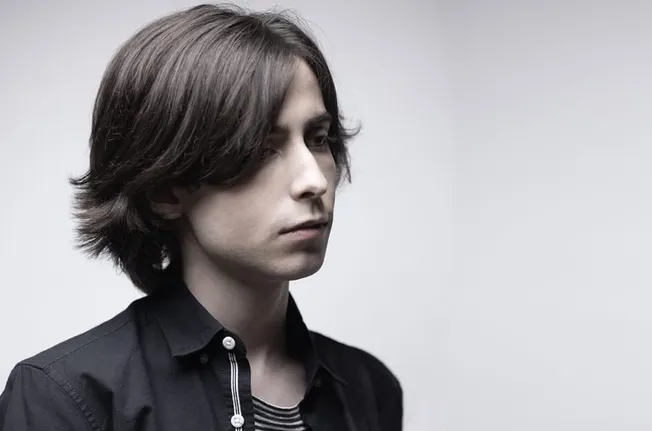
Aidan Gallagher is a Seattle-based, self-produced singer-songwriter who makes cinematic pop — introspective songs about working through heartbreak, the kind of music that soundtracks the moments you don't forget. But that's probably not how you know him.
He's better known as Number Five in Netflix's The Umbrella Academy.
Yup, that Aidan Gallagher. Would it surprise you to learn that he's been writing, producing, and performing songs himself (not unlike Finneas, Charlie Puth, or Elliott Smith) for years? Would it also surprise you to hear how powerful, emotionally rich, and gorgeously recorded his songs are?
Gallagher's new album arrives this fall, but his latest single, "Dream," dropped this morning. Check it out, and enjoy our conversation below.
Hypebot: Hey Aidan, thanks for taking the time to answer some questions. Congrats on finishing your debut full-length record. You home-recorded this, but it sounds rich and layered. How was this process for you?
Aidan Gallagher: "First off, thank you! In terms of the process, it was a matter of translating what I had in my head. The whole time I could feel what it wanted to be, and it was difficult to translate an acoustic demo into a final mix that represented the emotional core of each song. But I'm making it sound less fun than it was."
I don't think anyone would put this much effort into something creative without that joy being a part of it."
H: Most folks might know you more through your work as an actor. However, these songs and their execution may surprise a lot of fans that music is not just a hobby for you — it’s the next frontier. Why is music so important to you at this moment?
AG: "It's always been important to me. I'm endlessly surprised by anyone who says music is not a major role in their life. For me it's been an ongoing and powerful part of my everyday. It's the quickest way to my heart."
H: Who would you say are your biggest influences in songwriting and production, and how did you transmit these artists’ influence on these tracks?
AG: "My taste is a blend of many different influences, so it’s hard to explain how that shows up in the music. Besides, I don’t think you can recreate something you idolize — part of that obsession doesn’t exist in reality. The feeling is what’s important, and there’s different ways to get there."
My goal is to support the songs rather than try and emulate something. Everything is a tool towards accessing emotion, and the song is in charge."
"You're trying to access emotion, and every now and then the clouds part and you get a gift. But you have to follow it. You can't lead it. It's like digging up a fossil. It's discovery."
H: To take this further, you’ve spoken about the influence of Thom Yorke in particular, who uses common phraseology and colloquial language to get to deeper sensibilities of human emotion and interaction. Can you talk a bit about why this is a powerful source of inspiration for you, and a working writing model?
AG: "You might write a song and ten years later, be a completely different person. If you've made the emotional truth powerful, but the specifics abstract, then the song can grow with you over those ten years. And it becomes accessible to everyone who hasn't had the exact experience which created the emotion you're feeling."
Furthermore, when I play a strange group of notes on an instrument, I'll feel something, and it might not have anything to do with my personal life. Sometimes it does. But you're trying to access emotion, and every now and then the clouds part and you get a gift. But you have to follow it. You can't lead it. It's like digging up a fossil. It's discovery. It's not creation in the way that people might think."
H: What is the most meaningful song on this collection to you, and why?
AG: "They all mean different things. And because of that, they're powerful from different angles. I can't say one is better than another. And to be completely honest, I've never dealt with a question of favorites in a suitable way. I don't have a favorite in anything. It's constantly changing depending on what my last favorite was."
I hate the question of favorites. I don't think that's how humans exist, really. I think people should be allowed to grow. Maybe I change more often than most people. But I have never really had a favorite. There's too much good stuff."
H: On “Dream” I swear I hear police sirens in the background (but then again it could be a synth) — what’s going on there? 🤯
AG: "That song has hundreds of layers. I built an entire city. If you listen in headphones, you can hear it in the intro and the outro. That song exists halfway between reality and a dream, and certain things are inside the narrator's head and other things are echoes of the external world."
H: Are you planning tour dates around the launch of the album?
AG: "We're still working that stuff out. I would like to go on tour at some point in the near future."
"If you sit down in front of a piano, even if you're not a musician, right there in front of you is every song that has ever been written, and every song that will ever be written. And it's up to anyone to find the ones that haven't been written yet... When you uncover something, it's a thrill."
H: And will these songs have to be changed or adapted to the live concert environment in any way? Can you talk about taking songs from the studio to the stage?
AG: "When I recorded the album, I wasn't concerned with recreating the songs live. I just wanted to make something that someone could put on headphones and melt into."
For a live show, there’s a few ways I’d approach it. There's a version of these songs acoustically, and there's a version of them with a 3 piece band or a 5 piece band, and I'll do what makes sense logistically for a tour."
I look at music from the perspective of rhythm, melody, texture, and lyrics. If you present those elements in an interesting way it doesn’t matter if it’s two tracks or two hundred. The songs will have to change for a live show, but I think that can be really interesting."
H: What’s something you’ve learned through music over the years?
AG: "I think the best shows are somewhere between being prepared and being present. You can’t ignore the energy in the room. My default approach to everything in life is to try and be open and honest and in the moment."
H: Between writing, recording, editing, and performing, what is your favorite aspect of music-making and why?
AG: "Writing is by far the most fun. It's kind of like a mirror maze where you're following the idea and you hit walls, but then you find your way through, and you have no idea where it's going to go. It's an absolute thrill to be a writer. But you can't do it all the time. An idea presents itself. You can try and force a great song, but you won't get a great song."
If you sit down in front of a piano, even if you're not a musician, right there in front of you is every song that has ever been written, and every song that will ever be written. And it's up to anyone to find the ones that haven't been written yet. It's all right there on the keys. Or on the fretboard. When you uncover something, it's a thrill."
H: What’s the most beautiful thing on Earth to you?
AG: "I think love is the most beautiful aspect of being alive."