

Artist advances are no longer just for major label artists whose music charts even before it's released.
In fact, it's always been lower-earning artists who really need the power of an advance to create aspirational work, artists who don't have access to easy borrowed capital from a gatekeeping third party. Now we can firmly say that financial assistance, in the form of "royalty financing," is here.
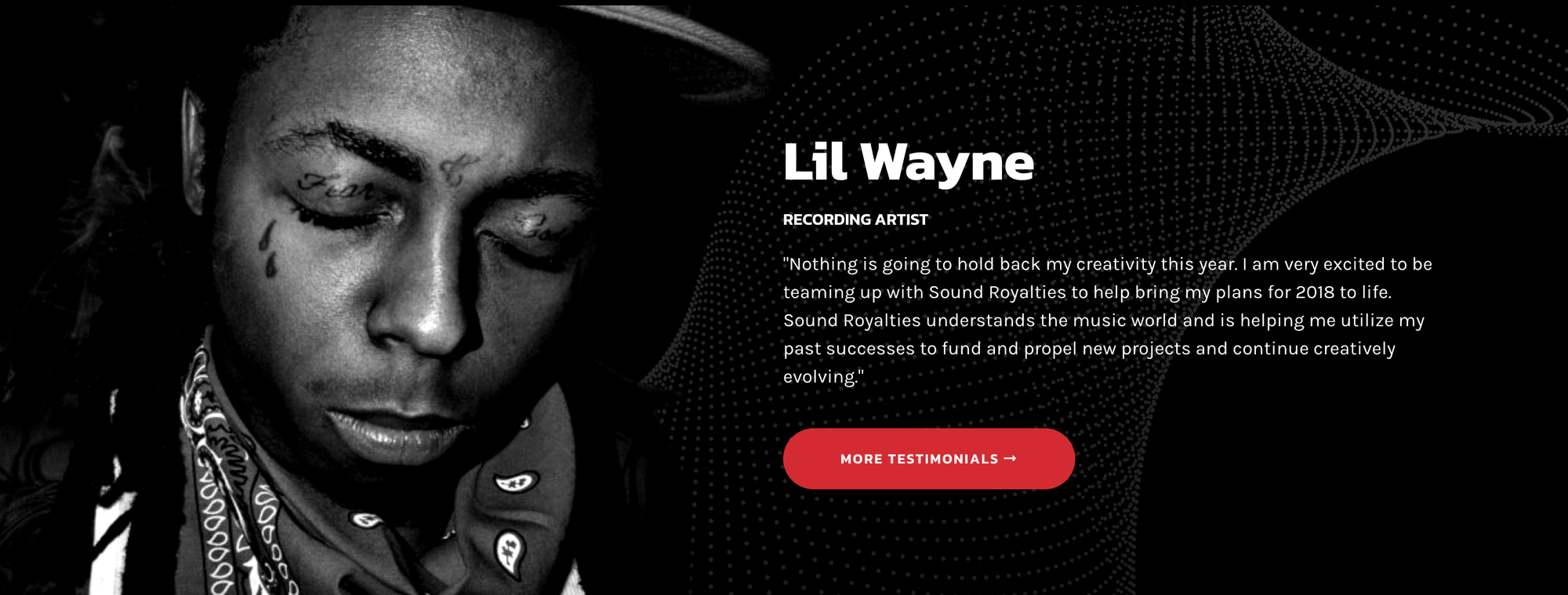
Sound Royalties is a company founded on the principle mission of providing creative-friendly funding solutions for the music industry, in which artists do not ever need to give up ownership of their copyright. That said, while this is built on servicing artists at all income levels, top charting artists like Lil Wayne, DJ Khaled, Sonia Leigh, and Wyclef Jean have all leant their support of Sound Royalties for helping to reshape the landscape around funding to better suit working musicians' and songwriters' needs.
I talk to Sound Royalties' CEO and Founder Alex Heiche about how he sees the music industry landscape today and why this is the perfect time for this catalyst to exist.
Here's our conversation.
Hypebot: For those who don’t know, what is “Royalty Financing?”
Alex: "Royalty financing is a funding model that gives artists, songwriters, and producers access to money so they can further pursue music careers and business ventures — and in the case of our Sound Royalties business model, they can do this without giving up ownership of their copyrights."
Royalty payments are fundamental to any music creative – but those payments can often be delayed or don’t provide the upfront capital required to invest back into a project, album, or overall career. By providing flexible advances based on royalty streams, we allow creatives to unlock the value of their royalties, while retaining full control of their creative decisions, their catalog and overall IP. Advances are different from loans in that they do not carry an interest rate and do not require personal guarantees, financial statements, or credit checks."
Instead, the repayment is structured as fixed payments over a fixed time period, made on a declining annual basis, with all terms agreed with the creator at the outset. We understand that creators have different business plans, priorities, and income profiles, so each advance is structured according to the performance of the royalties, and the personalized goals of the creator."
When Sound Royalties was founded more than ten years ago, the idea of offering financing without taking copyrights or claiming a percentage of future royalties was still new, and somewhat “unheard of.” But over the past decade, our approach sparked a shift in the industry. What was once uncommon, has been adopted by music professionals as a strategic way for creators to invest in their momentum and build sustainable careers."
Today’s creators want to balance independence and ownership, while still leveraging essential tools like marketing, global distribution, radio promotion, sync pitching, and creative strategy. That’s where Sound Royalties fits. You steer the journey, while getting the fuel to grow on your terms."
Brent Faiyaz is a perfect example. Early on, he didn’t come to us for millions, just enough to have the financial backing needed for his Sonder Son tour in 2018. That step helped fuel his music career, now surpassing four billion streams, the launch of his own independent label, and a top‑two Billboard album. That’s what can happen when artists get support without giving up control."
"We allow creatives to unlock the value of their royalties, while retaining full control of their creative decisions, their catalog and overall IP. Advances are different from loans in that they do not carry an interest rate and do not require personal guarantees, financial statements, or credit checks."
H: How does Royalty Financing help preserve the value of an artist's catalog?
A: "Royalty financing allows artist to retain full control of their copyrights, long‑term earning power and strategic value of their catalog."
A music creative might decide to sell their catalog for several reasons – to fund a new venture, estate planning, or personal reasons – but it's so important creatives do so when the time is right for them, and not because they feel they have no other options. Because there are other options."
Royalty financing provides another route; one that allows them to access the money they are wanting at a given time. Whether it’s creating new music, touring, marketing, or investing in strategies to expand their audience, those activities will contribute to the growth of their brand and career, steadily increasing the catalog’s value over time."
Preserving ownership also means artists maintain full creative and business control: they decide how their music is used, when to license it, and whether to sell it later for a potentially higher valuation. By keeping these options open, royalty financing not only protects the current value of a catalog, but positions it for stronger opportunities in the future."
H: Sound Royalties also offers Tour Financing. We all know about the rising costs of touring — how can this really help artists looking to get out on the road more?
A: "The price of touring has increased exponentially in recent years and artists have been hit hard with the pressure of rising production, rehearsal, visa and travel costs."
Our concert touring advances work very much like our traditional royalty‑based advances, but they’re customized specifically around touring income. A performer with a tour agreement from a major promoter can access our funding and use it to support their tour. This could be to build and rehearse their show, invest in production, hire the team they need, or cover all the upfront expenses that hit long before a performer takes the stage."
Alejandra Guzmán is a great example. Accessing upfront capital for the Perrísimas tour gave her the flexibility to create the high-quality show she wanted to deliver. That’s exactly what this program is designed to do - give artists the ability to focus on the art and the experience - not the financial strain."
H: How did you get involved in this personally, what’s your background?
A: "Before launching Sound Royalties, I spent decades working in finance. But I’ve always had a special interest in music – something that traces back to playing the saxophone as a kid and dreaming of being in a band. While working in finance I began to explore the music industry and how it worked, and in that exploration period I had the privilege of connecting with GRAMMY‑winning songwriters, platinum-selling artists, and respected executives."
Those experiences gave me a deep understanding of both the financial challenges creators face and the enormous value of protecting their rights."
That realization became the foundation for Sound Royalties. I saw an opening to make a positive impact. Banks at the time didn’t understand a creative’s unusual income patterns, and as a result many creatives were left without traditional financial options. I had feet in both worlds and saw the opportunity to bring them together. Since then, we’ve supported thousands of creators across over 30 countries and have recently expanded into both financing for YouTube creators and TV production."
I’m still a vocal advocate for creatives and this is what drives Sound Royalties to this day. As a company our focus is on building strong, long-lasting relationships with the creatives that use our service. We genuinely want to help and that’s why our services are tailored specifically to each person to ensure they get the right support for them."
H: What do artists typically do with the financing they get through Sound Royalties?
A: "A lot of creators put that funding straight back into their work. Sometimes they use it to make and release new music, helping them to cover recording costs, paying collaborators, mixing and mastering services. They also use it to finance the promotion of their releases — marketing, video shoots, digital campaigns, playlisting or PR, or for touring — as we have already discussed."
Many music producers have chosen to come to us to finance building out their own music studio, whether private or commercial. For some, it’s about growing their team and treating their career like a business: bringing on a manager, creative director, publicist, or social strategist."
Other creators use the support to invest in bigger long‑term projects, such as starting a label or investing in a project outside music, such as film, fashion or beauty, which opens up more opportunities for them down the line. And sometimes, life just happens. Funding can bridge financial gaps and support artists in times of change."
In short, artists use Sound Royalties financing in bespoke agreements, but it almost always comes down to giving themselves more freedom."
"Business and art don’t have to be in conflict – they can actually feed into each other when you approach them intentionally."
H: If this model is the wave of the future, what does that mean the industry looks like in your future?
A: "I don’t only see this model as the future; I see it as the present. We’re seeing a real shift in how creators think about money, ownership, and control."
The most famous example of this is Taylor Swift. When she announced seven years ago, she was planning to re-record her first six albums after being denied the chance to buy her masters, it brought a lot of attention to the issues around ownership and copyrights in the music industry. Something that many people, including young artists, were not aware of."
Now, more and more artists are taking note and making educated decisions about the long-term ownership and control of their music."
Artists today want flexibility, transparency and most importantly, they want to stay independent while still having the resources to operate at a high level. Royalty financing fits perfectly into that future, because it lets artists keep their copyrights and still get the financial support to create, tour, and scale."
Our model didn’t create that shift; it grew out of it. We simply built a solution that supports what artists were already demanding."
H: Music from international markets is growing globally, but this is paired with limited access to capital and industry infrastructure. How is Sound Royalties engaging with artists and communities in these emerging markets to support sustainable growth while safeguarding their rights?
A: "We are seeing an increasing number of artists interested in our services in international markets, which has driven our expansion into the European and Latin America markets."
One of the challenges in these markets is that success can often come before infrastructure and financial options. Audiences and streaming numbers grow rapidly, but access to capital, education, and trusted partners doesn’t always keep pace, which is where we can help."
Equally critical is education and transparency around rights. We place a strong emphasis on helping artists understand the value of their catalogs, how royalties flow globally, and what protections are available to them. Protecting IP is about empowering creators to make informed decisions as their music travels across borders and platforms."
As we continue expanding our reach, we’re focused on building trusted, long-term relationships within these communities — working alongside local partners, managers, and advisors who understand the cultural and business nuances of each market. Our goal is to ensure that artists in high growth regions aren’t just participating in the global music economy, but truly benefiting from it on their own terms."
H: Hot take: Are musicians naturally bad with money?
A: "No! Musicians are not naturally bad with money. The reality is that the industry can be complicated for creators to understand and manage the various incomes streams. And that's why having strong partners you can trust (like managers, collection societies and Sound Royalties) is so important."
There is the pressure to invest in your own growth without the safety nets other industries take for granted, so it’s no surprise that many artists feel like they’re constantly playing catch‑up. That’s not a personal flaw — it’s a structural problem."
From what I’ve seen, working with thousands of artists, songwriters, and producers, creators are often fantastic entrepreneurs. Think about Rihanna with Fenty, Jimmy Buffett with Margaritaville, Jay-Z with Roc Nation, or Selena Gomez with Rare Beauty. When creators have access to capital in the same way as other businesses, they can plan around real numbers and make smart, strategic moves."
Musicians deserve better tools and better partners. That’s a big part of why Sound Royalties exists. We’re here to level the playing field so creators can make decisions from a place of knowledge and empowerment; not pressure or panic. When artists have that, they thrive."
"Live music is so special because it’s a real physical experience, whether it’s feeling the vibration of the bass or the collective experience the whole audience feels; it’s the music that brings everyone in the together."
H: Do you have any advice for artists looking to invest in the sustainability of their careers while they’re still independent?
A: "Business and art don’t have to be in conflict – they can actually feed into each other when you approach them intentionally."
- Firstly, ownership is the foundation of long‑term sustainability. When you control your music rights, you continue to receive income from those rights long after the moment you create them. Even if you partner with labels, distributors, or publishers down the line, entering those conversations with ownership puts you in a stronger negotiating position."
- Second, understand your revenue streams. Even a basic understanding of how royalties flow from streaming, performance, mechanical and sync, puts you in a stronger position. When artists understand where their money comes from, they can make smarter choices."
- Third, use capital strategically, not reactively. Many artists wait until they’re exhausted creatively or financially before seeking support. But sustainability comes from planning ahead. When you leverage financing at the right moment, especially financing that doesn’t cost you your rights, you can accelerate your growth instead of scrambling to stay afloat."
- Finally, play the long game. A sustainable career isn’t built off a single release or viral moment. It’s built on consistency, community, ownership, and smart financial decisions."
H: What was the last great live concert you saw?
A: "Seeing Grammy-winning CeCe Winans perform at the Grand Ole Opry was incredibly special. I live in Nashville, so I’m lucky to have access to great live music any night of the week, but experiencing it in such a historic venue always feels different. You can’t help thinking about all the legends who’ve stood on that stage before."
Live music is so special because it’s a real physical experience, whether it’s feeling the vibration of the bass or the collective experience the whole audience feels; it’s the music that brings everyone in the together."
I’m grateful that through Sound Royalties I can play a little part in making that happen."
H: I whole-heartedly agree with that statement about live music. It's just like Olivia Newton-John said, "let's get physical!" Thanks Alex.