

The Necks: From Secret Band to Cult Legends
By Oliver Kemp of deep cuts
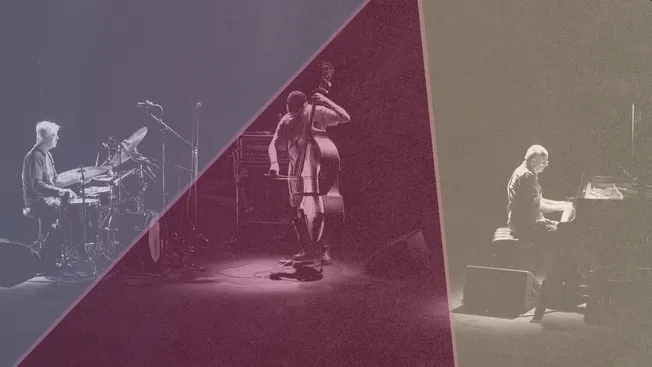
A piano chord dissolves. Hi-hats sizzle under the pluck of a double bass. The music shifts almost imperceptibly, settling into a circular, shimmering rhythm. A full ten minutes later, the piano joins the swell, fingers dancing across the keys as the texture thickens into something layered and expansive.
It ends in a slow exhale, the trio loosening the mood they’ve sustained for the best part of an hour.
It’s called Aether, the sixth record by Australian improvisational trio The Necks. Released in 2001, all three members cite it as one of their favourite projects.
For the uninitiated, it’s a great place to start. A word of warning, though – should you get hooked, you’ll be tapping into a band with a discography of more than 20 records, many of them well over an hour long. If that sounds enticing, then your new obsession is well timed: preparing to embark on a spring tour of Europe, pianist Chris Abrahams, bassist Lloyd Swanton, and drummer Tony Buck have already recorded their follow-up to last year’s Disquiet (a record that made my Albums of 2025 list), which they plan to release later this year.
I sat down with the three of them early one morning – evening for Lloyd and Chris, still on Sydney time – to discuss four decades of improvisation and tapping a creative vein that defies categorization. It’s not ambient, jazz, minimalism, or even post-rock.
It’s all of the above. And more. And less…
+Read more: "Which of These 4 Models of Creativity Works for You?"
Have you ever been in a secret band? I have. It’s a wonderfully liberating experience to make music with no intention of producing something marketable. In a world that demands artists feed the capitalist machine, a secret band encourages creation for the sake of creating, for your own pleasure and that of your friends.
These were the conditions under which Chris, Lloyd and Tony found themselves one day in 1986. In a room in the Old Darlington School, now subsumed into the grounds of Sydney University, the three of them took up their instruments and began to explore a potential connection.
According to double bassist Lloyd, the ‘secret band’ intention put them in a creative headspace far removed from the more traditional groups they had played in: “There was no pressure to try to work up some sort of product that we could offer to the listener. Ironically, we actually came up with something more identifiable than we could ever have imagined simply by striving to not deliver anything.”
Tony can still recall sitting behind the kit in the Old Darlington School room all those years ago, peering at the other two above his toms: “In those days of just playing for ourselves, there was really no pressure to be entertaining or to be impressive. We really wanted to see what we could do with the three instruments, how they sounded together.”
Sometimes when musicians begin jamming, a tangible electricity is felt between them. Chris, a virtuosic pianist in his own right, sensed the crackle: “For about six months we just kept playing, and each time I entered this zone with the music, it was a place I’d never really experienced before. It’s very difficult to verbalize.”
The secret band would not stay a secret for long.
In April 1987, the school’s performance space was hosting a small music festival, and the trio was invited to perform.
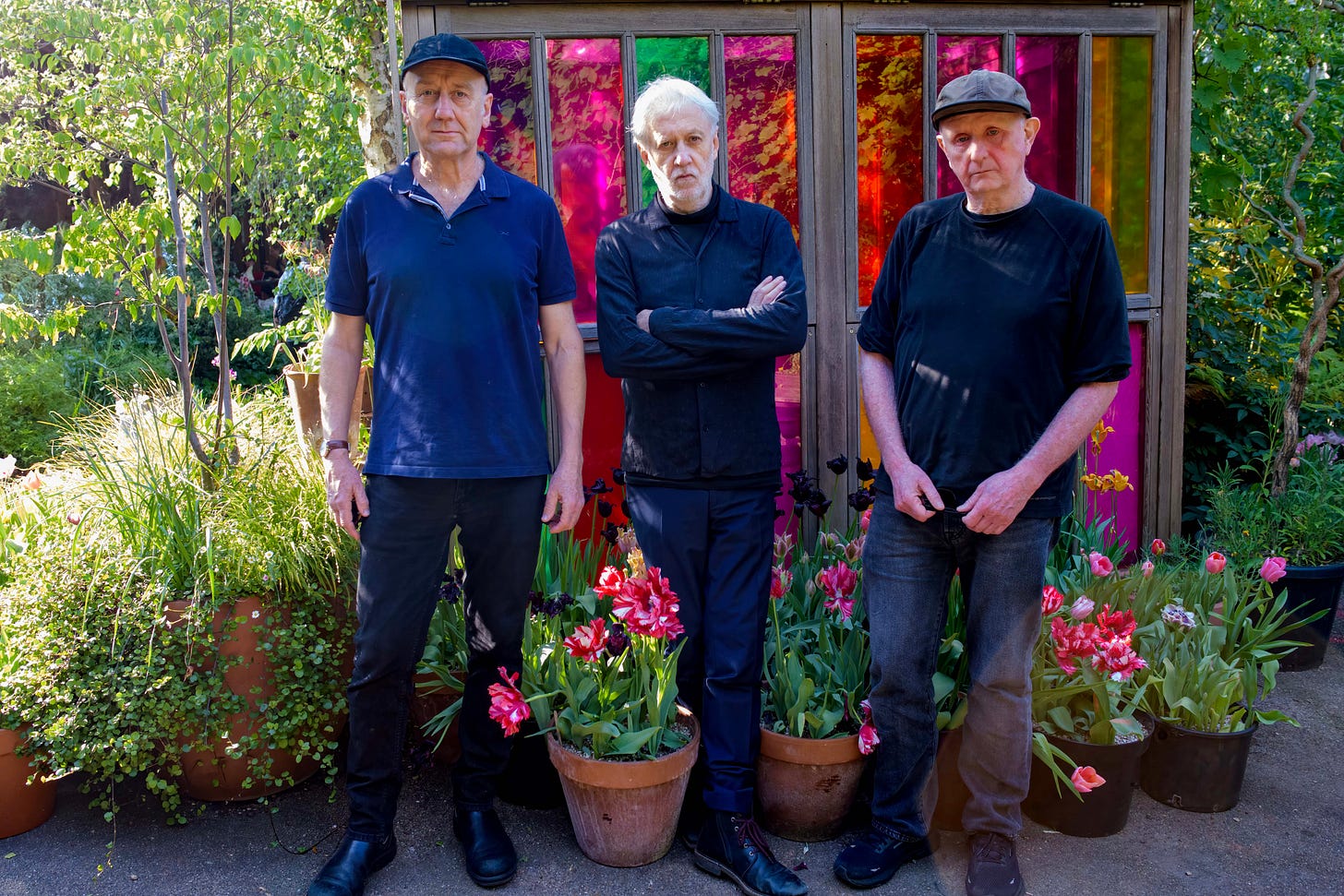
“It’s become our Woodstock, that first concert”, Lloyd said. “We’re in a room with a capacity of about 110 people – I reckon there’s probably 500 people that claim to have been there now. It’s quite flattering that so many people have insisted that they were there.
“We were chuffed because we didn’t even know if anyone would come along.”
What made the audience reaction all the more gratifying, the trio said, was that they hadn’t prepared a note. In the same way they’ve approached every live set ever since, they got up on stage and allowed their improvisational senses to kick in. For many musicians, the prospect of going off script can be daunting. Bands cling desperately to the setlists they cart out night after night with minimal changes, offering a near-identical experience whether you happen to catch them in Adelaide or Zagreb.
With The Necks, you never know what to expect – and neither does the band. That’s where the magic lies. The band’s lack of obligation to repeat a song from a previous night or to perform an encore of the big radio hit is something the trio find liberating.
“It’s the most comfortable place for all of us”, Lloyd said. “Maybe not necessarily at the very beginning, but I’m more comfortable playing with The Necks than anything else I do. It just feels free.”
Chiming in, Tony added: “To me, the opposite is true when I’ve done those things where you have this obligation to do the same thing the same way every night. To me that is really challenging.”
"Each time I entered this zone with the music, it was a place I'd never really experienced before" ~ Chris Abrahams
And after a gig? There’s no analysis of what just transpired, no academic conversation about the piece they just cooked up for the crowd in front of them. “If it was a really good piece, we'll go, ‘wow, that was something, wasn't it?’”, Lloyd said. “But we don't say, ‘let's then take that and use it tomorrow night’. It’s done, move on.”
Tony added: “Before a performance, the idea of having any parameters set or thoughts articulated… you can't play this music with that sort of agenda. Afterwards, maybe it's like, ‘I like that thing where we did this cross-rhythm’ or something, but then it's like, ‘oh yeah’, or ‘I didn't notice’.”
This attitude keeps their music flowing freely. All three musicians have played in bands where the chief currency was to prove your skill as a performer, using the space as a spotlight for your white-hot soloing skills or impressive rhythmic chops.
This is anathema to The Necks.
Across their 20+ records, musical ideas are given space to blossom. Take Aether, the record I began this feature with: the changes are minute across its 63-minute running time. When something does shift, the process is deliberate and gradual, encouraging the listener to sit with the idea rather than ripping them away to something else. “We just don’t have that many ideas!” laughed Lloyd.
“I'm being tongue in cheek, but coming from the jazz background there's some phenomenal musicians who are phenomenal composers and they don't self-edit at all. It's such a barrage, not only when they're soloing, but the actual compositions. I'm often sitting there and thinking that every one of those motifs I could make into a tune and I'd be happy with it.”
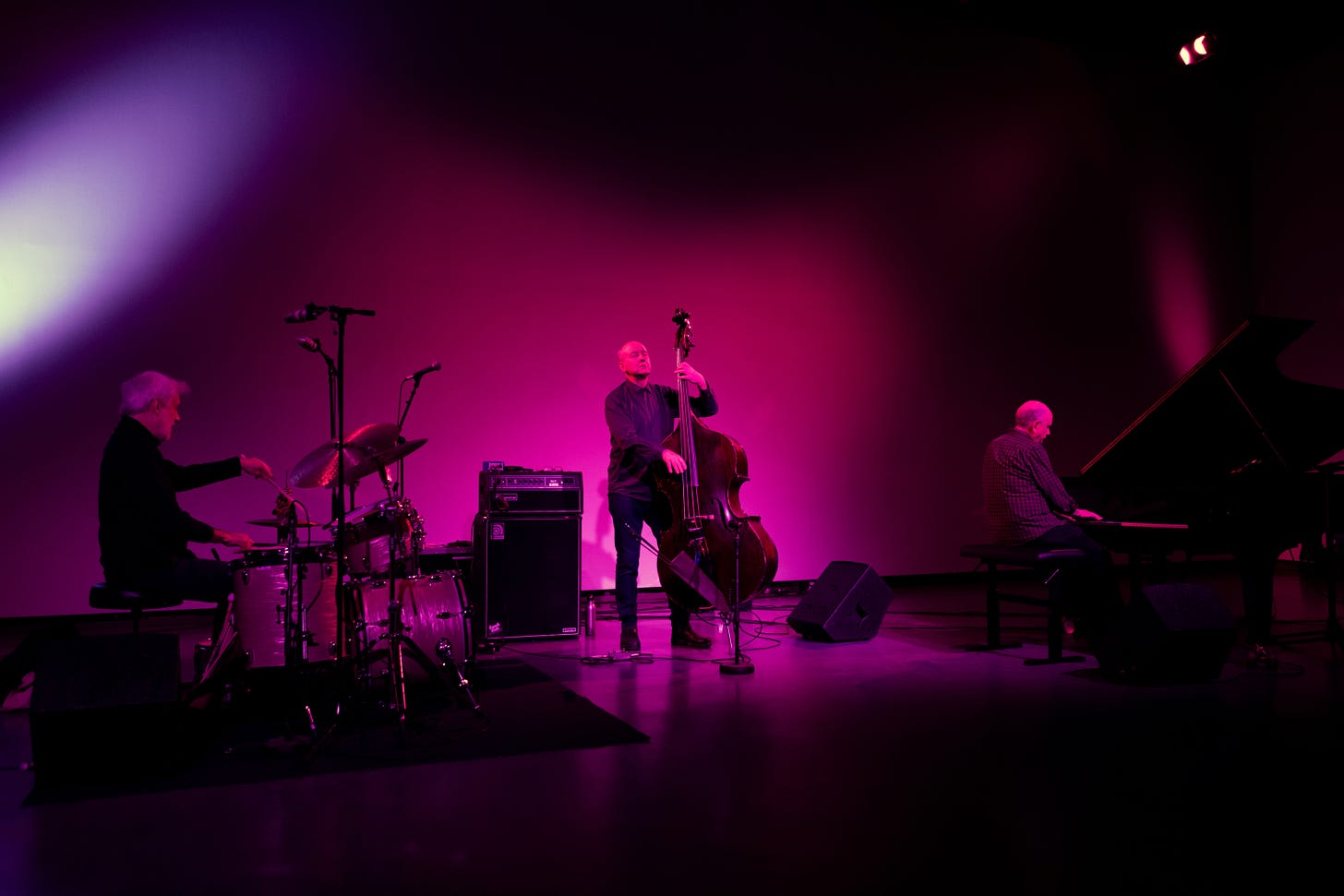
Following a smattering of gigs in the school performance space, the shift from secret band to tireless touring and album recordings happened gradually. But they struck gold early with first album Sex in 1988.
There’s nothing of a ‘rough start’ or ‘promising first try’ with Sex, it’s straight up the real deal. Across 56 minutes, Lloyd, Tony, and Chris build a mesmeric soundscape, unhurried in its execution, a jazz piece gently drifting along in the wind. Tony’s light shuffle is punctuated with Lloyd’s syncopated bass notes, leaving wide-open space for Chris to paint gorgeous motifs with his keys.
Lloyd was once told by a heart surgeon that he played Sex when he was operating on his patients: “It was the one thing that he and the theatre nurses could agree on to play!”
It’s also become enshrined in the canon of hallowed baby-settling records – new or expectant parents, take note.
“I did that myself when we had a kid and I got thoroughly sick of it and could not stomach it for a little while,” Lloyd added. “But I'm quietly proud of that one, it's stood the test of time.”
Tapping such a rich seam of creativity on your first go around is very rare, but it speaks to the inherent connection the trio discovered during those first few rehearsals, the crackle and hum Chris could sense between them. And the seam is at no risk of running dry – from records like two-hour Silent Night (another band favourite) to the calming stillness of 2013’s Open, Necks records possess an inherent familiarity that also allows the group to experiment and take the sound to new places. In one sense, there are some guard rails to their sound, even if they’re difficult to define in words.
But here’s also a relaxed fluidity to the project. “It’s a bit like how the music unfolds in one piece,” Tony said. “That’s sort of how the whole career of the band unfolded over nearly 40 years.”
Lloyd added: “We don’t want to be looking at each other going, ‘oh God, this routine again’.”
"I'm more comfortable playing with The Necks than anything else I do. It just feels free." ~ Lloyd Swanton
Along the way, the trio realized that they could use the studio in a different way to the live setting. The basis of pieces could be free-flowing and organic, but the magic of overdubs gave them the opportunity to introduce other instruments and additional textures to their sound.
Even on that very first record, a saxophone winds through the trio’s groove, at times erupting into frantic, distance bursts of sound. Tony said: “Unlike a lot of jazz musicians or improvising people that would go into the studio to document something, we straight away decided to use the studio for what it had to offer, which was reflection and refinement and overdubbing and shaping.
“The studio isn't a documentation of an improvisation. It would seem a wasted opportunity not to take advantage of those things.”
By treating the studio as a space for creation, rather than simply recording, Tony emphasized the freedom of their production process. I wanted to know whether that same sense of enjoyment carries over when they listen back to their old recordings.
While Lloyd and Tony said they occasionally go back to the older Necks records to gather an impression of a past project, Chris admitted that he doesn’t find it pleasurable, likening it to authors who can’t stand to read their own books.
He did backtrack a little, not wanting to give the wrong impression: “There are occasions where inadvertently a Necks record is put on some audio system that I happen to be near and I hear it. I've never had an unpleasant experience, it's not like I hate the sound of The Necks or anything like that – I just want to point that out.”
Lloyd laughed aloud. “Hell of a thing to tell us after 39 years!”
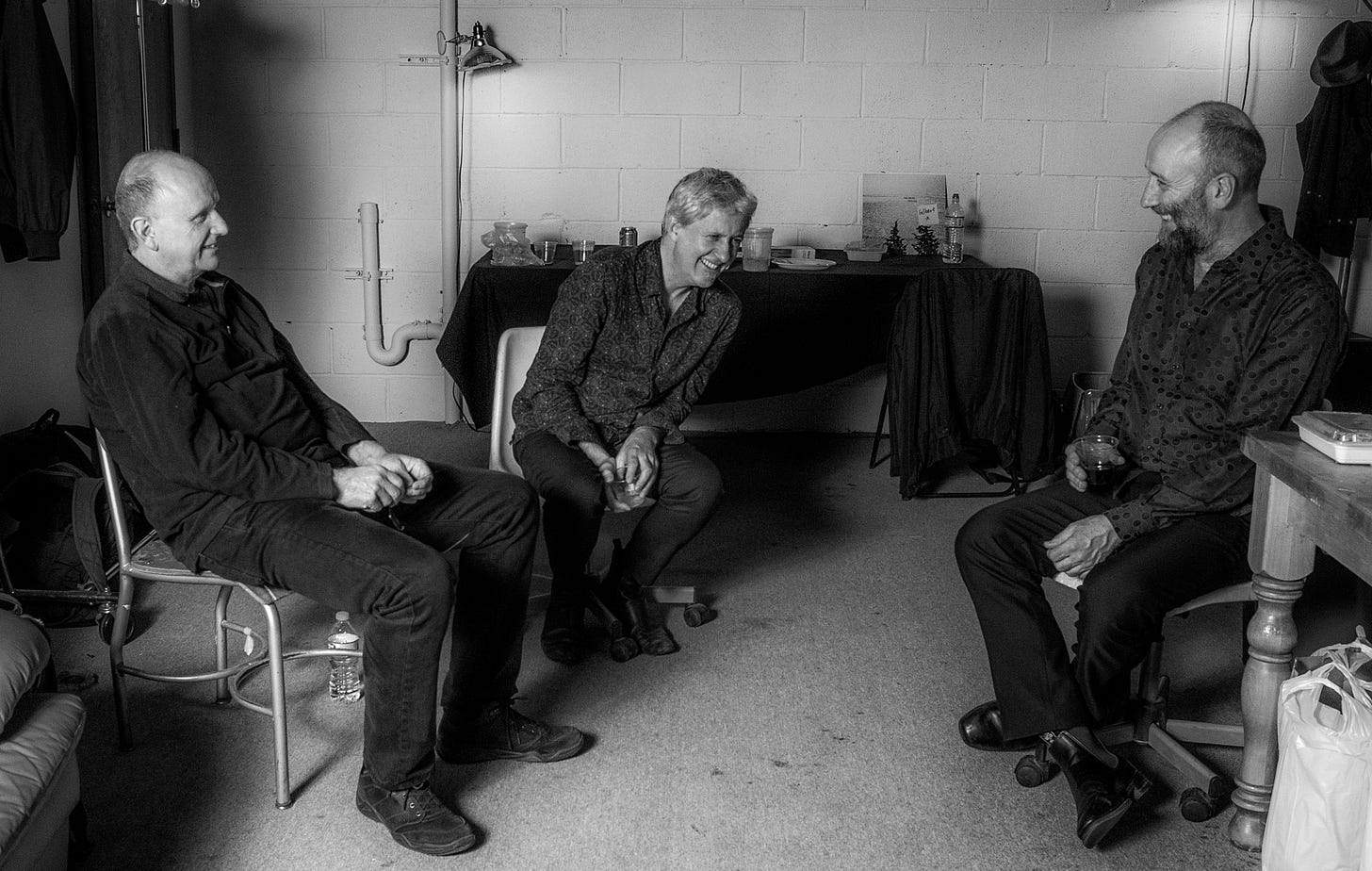
In a sense, the spirit of that secret band never left The Necks. Every performance, every record, is still born from the same playful curiosity that guided them in that Old Darlington School room. Even after nearly 40 years, the magic is in the thrill of discovery, the joy of music for its own sake.
deep cuts is a reader-supported publication. To receive new posts and support it, consider becoming a free or paid subscriber.
The Necks 2026 Tour Dates
APR 9 — London, UK @ Cafe OTO
APR 10 — London, UK @ Cafe OTO
APR 11 — London, UK @ Cafe OTO
APR 12 — Hamburgsund, Sweden @ Rörane Studio
APR 13 — Malmö, Sweden @ Inkonst
APR 14 — Copenhagen, Denmark @ Christians Kirke
APR 16 — Brest, France @ Club Carene
APR 17 — Tours, France @ Le Petit faucheux
APR 19 — Amsterdam, Netherlands @ Minimal Music Festival
APR 20 — Madrid, Spain @ Sala Villanos
APR 22 — Gent, Belgium @ MIRY Concertzaal
APR 24 — Gdansk, Poland @ Monk
APR 25 — Tallinn, Estonia @ Paavil Kultuurivabrik
APR 26 — Riga, Latvia @ Hanzas Perons
APR 28 — Athens, Greece @ Scenius residency
APR 29 — Athens, Greece @ Scenius residency
APR 30 — Oslo, Norway @ Victoria
MAY 2 — Piacenza, Italy @ Conservatorio Nicolini
MAY 4 — Zagreb, Croatia @ Mochvara
MAY 5 — Ljubljana, Slovenia @ Kino Siska