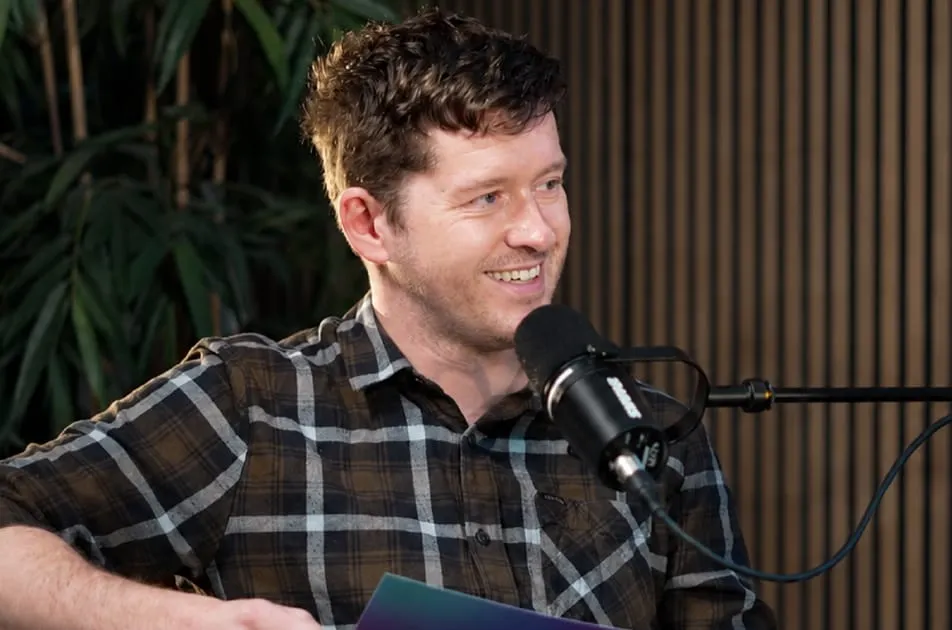


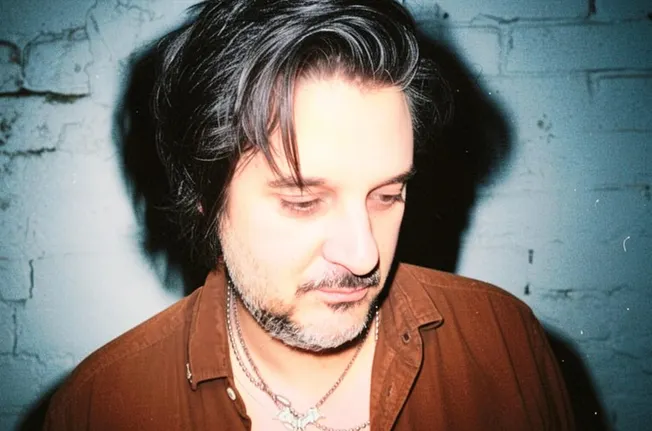
This extended interview with Sebastian Vidal, CEO and Founder of the platform BookedKit, is part of Hypebot’s Backstage Pass series. Here, we'll feature conversations with people working behind the scenes to help artists navigate and streamline live music booking, tour logistics, finances, and campaign management.
Backstage Pass is sponsored by venue, festival and promoter marketing solution Bandsintown PRO.
As an artist himself, Sebastian understands how friction caused by bands having multiple, decentralized platforms and pages can get in the way of bookers and talent buyers considering them for gigs. He also understands there have been a lot of bad, ugly, unoptimized EPK creators out there. So he set out to change that.
Here's our conversation — a masterclass for artists looking to put their best foot forward and book better gigs. Enjoy!
Hypebot: Can you introduce our readers to BookedKit?
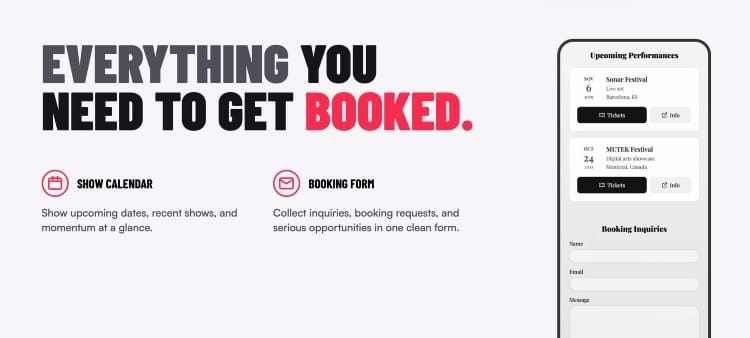
Sebastian Vidal: "BookedKit is a platform that helps musicians, DJs, and creative professionals create a clean, professional, booking-ready page in minutes."
The idea is simple: when someone is interested in booking you, reviewing you, featuring you, or collaborating with you, they should not have to dig through five different links to understand who you are. BookedKit brings the important pieces together in one place: bio, music, videos, photos, upcoming shows, links, contact information, press materials, and anything else that helps someone say, 'Okay, I get this artist.'"
A lot of artists already have the raw materials. They have the music, the photos, the videos, the social links, maybe a PDF or a Dropbox folder. But it is often scattered. BookedKit turns all of that into one focused destination that feels professional and easy to share. It's somewhere between an EPK, a link-in-bio, and a booking profile, but built specifically for artists who want to be taken seriously by promoters, venues, press, and industry people."
H: In your past life, you were a musician. Tell me about that life of yours.
SV: "Yes. Music has been part of my life for a long time. I grew up in Buenos Aires, and music was always around me. I became a teenager in the '90s, so I was shaped by that era of alternative music, electronic music, post-punk, indie, and club culture."
I’ve been in bands, written songs, played live, rehearsed in tiny rooms, carried gear, sent emails to venues, and experienced that mix of excitement and frustration that comes with trying to build something as an independent musician. And I’m still very connected to it today. I produce music with projects like Black Lush and SECA, and I also DJ when I can."
Balancing all of that with work, family, and building a company is not easy, but that is also part of why I understand the problem so deeply. Most independent artists are not just making music. They are also managing their own promotion, materials, communication, booking outreach, and online presence, often with very limited time."
What stayed with me is that being an artist is not only about the creative part. You also have to present yourself clearly, organize your materials, and constantly prove that you are worth someone’s attention. That can be exhausting, especially when you are doing it without a manager, agent, label, or team."
So even though my professional career moved into design, product, and technology, I never really left that world. BookedKit comes directly from that intersection: my experience as a musician and my experience designing digital products."
H: What are the inherent problems with the unorganized current state of booking gigs for independent artists?
SV: "The biggest problem is fragmentation."
An independent artist may have music on Spotify or SoundCloud, videos on YouTube or Instagram, photos in a Google Drive folder, show dates somewhere else, contact info in a bio, and maybe an old PDF press kit that is already outdated. None of those things are wrong individually, but together they create friction."
For a promoter or talent buyer, friction matters. They are reviewing a lot of artists. If they have to work too hard to understand who you are, what you sound like, what you look like live, where you are based, what your audience is like, and how to contact you, they may simply move on."
The decentralization also hurts artists because they often do not control the full story. Social platforms are designed for feeds, not for professional presentation. Streaming platforms show the music, but not the full context. Instagram shows personality, but not necessarily booking information. Link-in-bio tools are useful, but they often send people away into more disconnected links."
For artists trying to book themselves, presentation becomes part of the opportunity. Talent is essential, of course, but clarity can be the difference between being considered and being overlocked."
"A studio recording shows the music, but live footage shows the experience. It shows how the artist performs, how they hold the room, what kind of energy they bring, how they interact with the audience, and whether the project makes sense for a particular venue or event."
H: How did you initially figure out how to tackle those problems?
SV: "The Eureka moment came from personal frustration. I remember being asked for a rider and more information about one of my music projects, and what should have been a simple reply turned into a lot of work. I had to collect the bio, links, photos, past shows, music, videos, and other details from different places just to answer one email properly. It took way longer than it should have."
That made me think: There has to be a better way."
At the same time, I was frustrated with the tools that already existed. A traditional website builder felt too heavy for what most artists need. Most musicians do not want to become web designers, deal with layouts, hosting, resizing images, or spend days maintaining a website just to look professional."
On the other side, link-in-bio tools were useful, but too flat. They give you buttons, but not much hierarchy. They do not really help you tell your story or guide someone through the information a promoter, venue, journalist, or booker actually needs to see."
I also started noticing this with artists I admire. Some incredible artists had only a basic Linktree or an old website that looked like it was from the 2000s, and it did not represent how good they actually were. Their music, visuals, shows, and identity were strong, but their online presentation was not doing them justice."
So the idea became: what if artists had one focused, booking-ready destination that gave structure to everything? Not a complicated website builder, and not just a list of links, but a professional page designed around how artists are evaluated. That was the turning point. BookedKit is not trying to be everything. It is trying to help artists look organized, credible, and ready when an opportunity appears."
H: What’s a great example of a successful artist case study on BookedKit?
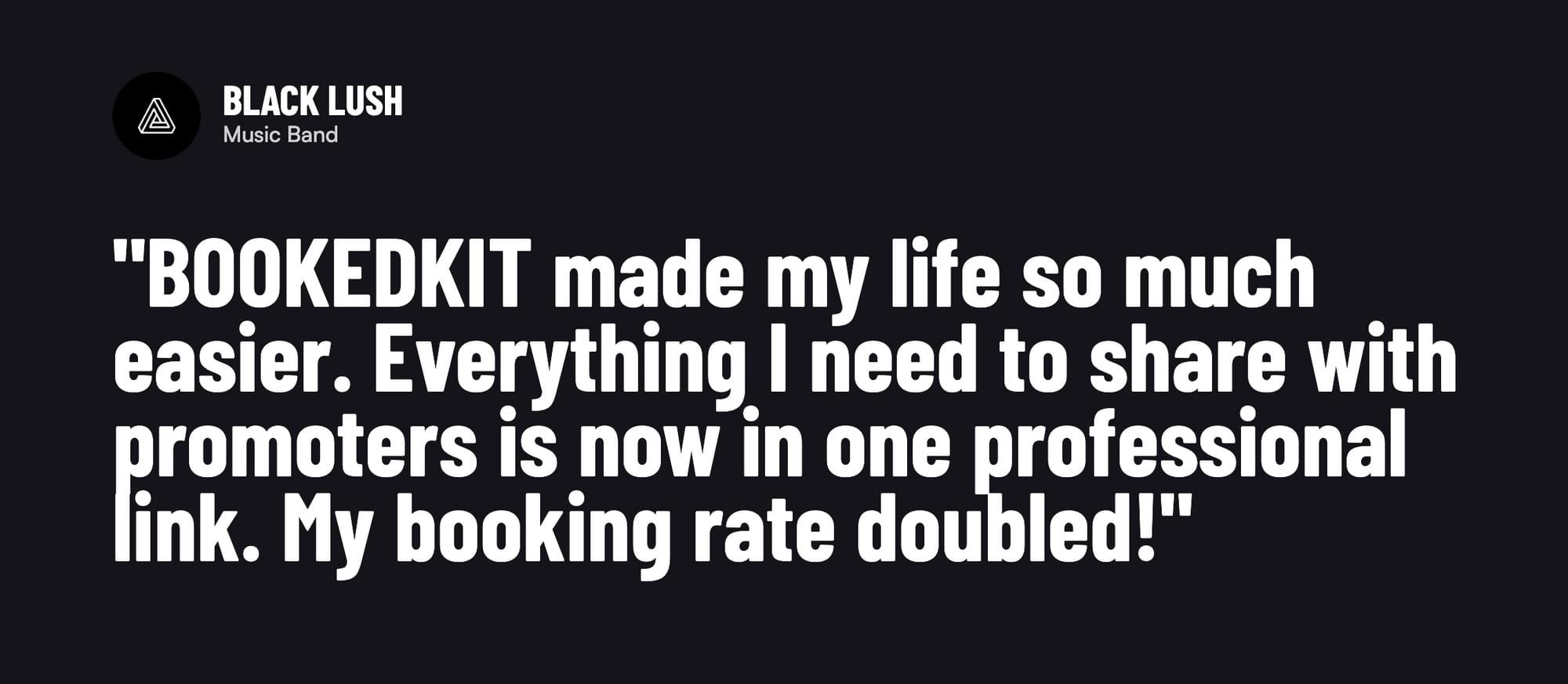
SV: "BookedKit is still early, so I am careful about making big claims. But one thing I have already seen is that artists immediately understand the value when they see their materials organized in one clean page."
I personally review many of the published pages, and some of them are already really strong. You can see artists using the platform not just as a place to drop links, but as a real presentation layer for their project. The best pages feel branded, intentional, and easy to understand. Within a few seconds, you get the artist’s identity, their music, their visuals, their videos, their upcoming shows, and how to contact them."
I have also seen some pages getting healthy traffic, which tells me that artists are not just creating these pages and forgetting about them. They are actually using them. They are putting them in their bios, sharing them with people, and making them part of how they present themselves professionally."
So the case study at this stage is not one dramatic overnight success story. It is seeing artists take control of their presentation and turn scattered materials into something that feels clear, credible, and ready to send. For me, that is a meaningful early signal."
H: What was the first show you ever booked yourself?
SV: "One of the first memorable shows I booked was at Kingsland Bar in Brooklyn a while ago."
We probably sounded horrible, to be honest, but the energy was there. We were excited, nervous, and just happy to be part of the night. I remember trying to bring people over, putting together a pretty bad flyer at the last minute, and realizing we barely had any social presence yet. Everything felt improvised."
We opened for other bands that sounded great to us, and that was part of the experience too. You start realizing how much you can learn just by being in the room, watching how other artists prepare, perform, promote themselves, and carry their project."
It was messy, but it was fun. And it stayed with me because those early shows teach you that music is not only about writing songs or playing live. It is also about presentation, communication, promotion, logistics, and showing up prepared. That experience definitely connects to BookedKit. A lot of independent artists are talented, but they are still figuring out how to look organized and professional when opportunities come their way."
H: Is it important for artists to have live footage or audio recordings of their live gigs to send to talent buyers and promoters?
SV: "Yes, absolutely. For many booking situations, live footage can be more convincing than a polished studio track."
A studio recording shows the music, but live footage shows the experience. It shows how the artist performs, how they hold the room, what kind of energy they bring, how they interact with the audience, and whether the project makes sense for a particular venue or event."
It does not always have to be a huge production. A clean, honest live clip with decent sound is often better than nothing. Promoters are trying to reduce uncertainty. They want to know what they are booking. Live footage helps answer that quickly."
That said, I think artists should be intentional. Do not send ten random clips. Choose one or two strong examples that represent you well. Make it easy for the buyer to understand your live presence without having to dig through your Instagram feed."
"Think like the person receiving the email. Venues and talent buyers are busy. A short, clear message with one professional link is usually stronger than a long pitch with ten links. Make it easy for them to understand who you are, what you sound like, where you are based, what kind of show you can deliver, and why it makes sense."
H: What are a few pieces of advice you can give artists looking to get on the road more in 2026?
SV: "First, make your materials easy to understand. Before reaching out to anyone, make sure you have a clear bio, good photos, music links, live video if possible, past shows or highlights, and a simple way to contact you. Do not make a promoter assemble your story from scattered links."
Second, make sure people can actually reach you. It sounds basic, but many artists only have an Instagram DM as their main contact point. That can work sometimes, but it is not enough. Have a clear email, a contact form, or both. If someone is interested in booking you, do not make them search for a way to start the conversation."
Third, think like the person receiving the email. Venues and talent buyers are busy. A short, clear message with one professional link is usually stronger than a long pitch with ten links. Make it easy for them to understand who you are, what you sound like, where you are based, what kind of show you can deliver, and why it makes sense."
Fourth, treat your EPK almost like a resume. You would not send the exact same resume for every job, so artists should not think of their materials as one fixed thing forever. The core identity can stay the same, but you may want different versions depending on the opportunity: a local venue, a festival, a support slot, a press feature, or a brand collaboration."
Fifth, build relationships before you need something. Support other artists, go to shows, connect with local scenes, and be useful. A lot of opportunities still come through trust and community."
And finally, be realistic and strategic. Start with the rooms and cities that make sense for where you are now. Build proof. Document your shows. Make every gig create material for the next opportunity. Presentation is not separate from the work. It helps people understand your work faster."
H: You’ve got one day off on tour, but the next gig is 15 hours away, you’re a four-piece. Drive there by van or take a plane?
SV: "Van. No question."
I know the “correct” adult answer is probably to fly, sleep, hydrate, and protect your lower back. But come on, if you are a four-piece band with a day off and the next gig is 15 hours away, that sounds like a van story waiting to happen."
That is where half the mythology of being in a band comes from: terrible gas station coffee, someone controlling the aux cable too aggressively, weird roadside food, an argument about who packed the snare stand, everyone half asleep, and then somehow arriving at a bar in the middle of nowhere ready to play like your life depends on it. Hell yeah!"
H: Who are a few great artists you’ve seen live lately?
SV: "Recently I saw Machine Girl and Sextile, and both reminded me how exciting live music can be when it feels a little dangerous."
Machine Girl was pure chaos in the best possible way: electronic, punk, noise, rave energy, everything colliding at once. Those kids can make noise. Sextile had that post-punk, synth-punk, body-music energy that feels both nostalgic and futuristic. I love shows where you feel like the room is being pushed a little past its normal limits."
But I also recently went to see Vivaldi’s The Four Seasons performed by the Fort Greene Orchestra at St. Joseph’s Co-Cathedral in Brooklyn. It was a completely different experience, but just as powerful. The venue, the orchestra, the light design, the drama of the music."
That contrast is what I love about music. The format changes, the volume changes, the audience changes, but the best performances still do the same thing: they make you feel present."
H: What’s next for the platform?
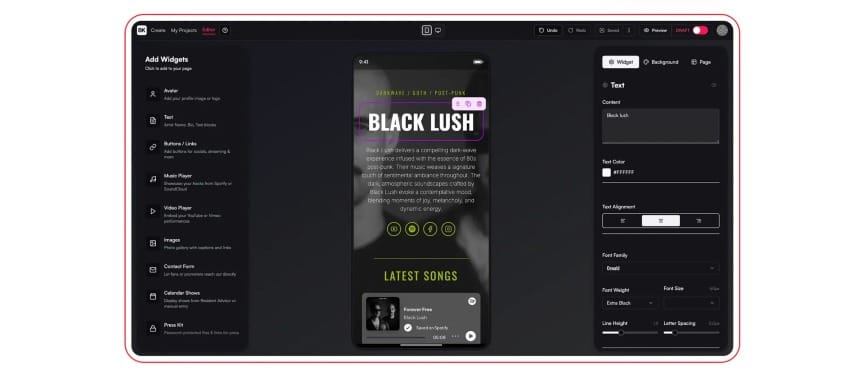
SV: "In the short term, we are working on a few things that artists have already asked for. We are adding Bandsintown integration so artists can bring their show dates into BookedKit more easily, YouTube Music support for the music section, and we are also working on the iOS app. A lot of artists manage everything from their phones, so making BookedKit easier to use on mobile is important."
We are also expanding the content side of the platform with a blog/learning section focused on practical advice for artists: booking, presentation, EPKs, promotion, and how to think more professionally about their music career."
Medium and long term, I am very interested in discovery."
Today, BookedKit helps artists create a professional page they can share. But eventually, I would love for people to be able to explore, search, and discover artists through BookedKit as well. The exact format is something we are still thinking through, because I want it to be useful and fair, not just another directory. But the idea is exciting: if artists are already building strong, booking-ready profiles, there should be ways for the right people to find them."
We are also doing things offline. We are sponsoring an open decks night at Danger Danger in Bushwick every second and last Wednesday of the month, where people can come play a 30-minute set, meet other artists, and build community. That is important to me because BookedKit should not only exist as software. It should be connected to real artists, real scenes, and real opportunities."
So what is next is really a mix of product, content, discovery, and community. The mission stays the same: help artists look clear, credible, and bookable, but also create more ways for them to be seen."
Hypebot’s Backstage Pass series is sponsored by venue, festival and promoter marketing platform Bandsintown PRO. Join leading live event professionals saving time and selling more tickets with their automated, self-serve and custom solutions.