

It's no secret that music from non-imperial parts of our globe are majorly on the rise these days. One platform has put itself right at the center of these transmissions, and that's Audiomack.
As a streaming platform, Audiomack simply keeps growing. But so does its influence and the artist community it's been representing and championing.
As someone who lives in the so-called "West," I've been delightfully intrigued, thoroughly entertained, and overwhelmingly impressed by the diversity of music that we're now importing here to North America. I love how much the past 10 years has reversed the course of the stories we tell ourselves here in North America, that we export the best and most influential music to the rest of the world.
If it ever was true, it certainly isn't anymore. Because nowadays, your ears are just as likely to hear an artist from Korea, Nigeria, Jamaica, India, Brazil, or Japan, as they are to come across new domestic music.
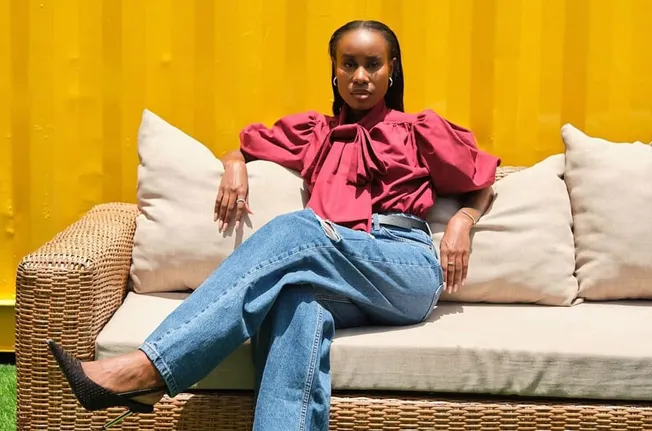
Someone who has been in the driver's seat of this fascinating evolution is Charlotte Bwana, the VP of Marketing for Africa, EU, & MENA at Audiomack. Charlotte has overseen the global streamer’s growth across the continent and was just named to Billboard's 2026 Global Power Players list. Her taste in music is wildly eclectic, and her wealth of knowledge about artist growth and marketing is simply unparalleled.
I was so excited to be given the chance to chat with Charlotte. Here's our conversation, enjoy!
Hypebot: Hey Charlotte, thanks so much for taking the time to answer some questions. You’re a busy human! You’re the VP of Marketing for like half the world at Audiomack, what does that job entail exactly?
Charlotte: "Haha! 'Half the world' feels about right some days. Essentially I oversee marketing across Africa and emerging markets globally, so we're talking strategy, artist relations, partnerships, cultural programming, brand presence. The role is about making sure Audiomack isn't just available in these markets but actually resonates and that artists and fans feel like this platform was built with them in mind, not just exported to them."
Every market has its own texture, its own gatekeepers, its own way music moves. My job is to understand that and make sure our marketing reflects it honestly."
H: How did you get your start in the music industry in Kenya? The industry has blown up in Nigeria and Kenya in recent years but back a decade ago I imagine opportunities may have been hard to find?
C: "Honestly, it fell on my lap. I was at an advertising agency when I got an offer to join Coke Studio Africa as the Digital Content Manager. I worked with so many artists through that experience and from there, the rest is history."
I loved African music the way people love oxygen, so when the opportunity came knocking, I grabbed it and ran. The industry back then didn't have a clear path that said 'music career, this way,' but Coke Studio Africa was this incredible intersection of brand, culture, and creativity that gave me a real foundation."
It taught me how to tell stories around artists, how to build digital presence, how to think about music as a living, breathing brand and all of that translated directly into what I do now at Audiomack."
H: Speaking of your career, I read that you backpacked across Africa doing artist masterclasses while Audiomack was being built. Can you talk a bit about that experience?
C: "To be clear 'backpacking' was just a phrase used but in reality of course I flew into these cities. That period was transformative. I was moving through cities Nairobi, Lagos, Accra, Dar es Salaam sitting in rooms with artists who were making incredible music but had almost no infrastructure around them."
No distribution knowledge, no understanding of metadata, no sense of how to own their masters or think about streaming revenue. And yet the talent was just staggering. The disconnect between the quality of the art and the tools available to protect and monetize it was big."
But what I also found was that artists across the continent were hungry not just for opportunity but for information. They wanted to learn. Those sessions were amazing and continue to be electric."
"We wanted to be the platform that noticed you before you blew up, not after."
H: And was the feedback you got in those sessions essential to how Audiomack functions and takes care of artists?
C: "Completely. You cannot build for a community you haven't listened to. What we heard consistently was that artists felt invisible to platforms, like they were uploading into a void. They wanted acknowledgment, editorial support, data they could actually understand and use. They wanted to know someone was paying attention."
That feedback shaped so much of how Audiomack approaches artist relations today. We now host over one million active creators, all of whom can upload unlimited music for free. And the analytics tools we've built for the moment-level listener insights through Audiomack Pro, the Boost capabilities for targeted reach, came directly from listening to what artists actually needed."
We even built tools like Connect and Audiomod that allow fans to remix and directly engage with tracks, turning passive listeners into active collaborators. We’ve partnered with local Telcos/Fintechs to help with monetization and have flexible subscription options daily/weekly/ monthly plans all with the consumer in mind."
We wanted to be the platform that noticed you before you blew up, not after."
H: What makes Africa a different environment for streaming and developing rising artists than North America or Europe?
C: "A few things. First, mobile is everything, most listeners are on their phones, often with limited data, sometimes intermittent connectivity. Audiomack allows free downloads and offline play and that's not a small thing in markets where data costs are real."
Second, the gatekeeping structures are different. In the US or UK there's a whole ecosystem of labels, managers, publicists, radio pluggers. In many African markets, artists are often doing all of those jobs themselves or with one trusted person. That means the platform has to carry more weight in discovery and development."
We're now the number one music app in 21 countries across Africa on both the App Store and Google Play and that's because we took those realities seriously from day one."
Third, and this is the exciting part, the music is moving outward with tremendous force right now. Afrobeats, Amapiano, sounds from East Africa, these are genuinely shaping global pop. Nigeria alone recorded 58 billion streams between 2020 and 2024 on our platform. The opportunity is enormous, but the infrastructure on the ground still needs to catch up to the ambition of the artists."
H: What is it that streaming platforms typically get wrong about artist development and relationships today?
C: "They treat artists as content suppliers rather than creative partners. The relationship becomes very transactional, upload, stream, get paid. There's very little genuine investment in helping an artist understand how to build a career using the platform. What we've tried to do differently is invest in human-powered curation."
Our Tastemakers program brings together over 350 independent curators from Lagos and Accra to Kingston and São Paulo people who are actually embedded in their local scenes, who know what's bubbling before any algorithm does."
Look at Seyi Vibez; he's now crossed 2.2 billion streams on the platform, and his rise was fueled by local curators who identified his street-pop sound long before global algorithms could find a category for it. That's what human curation does that automation can't. The platforms that will win long-term are the ones that make artists feel like collaborators, not just suppliers."
"Own your data and understand it. Your streaming analytics are telling you a story, where your listeners are, what songs connect, what time of day people come to your music. Use that."
H: And to turn to independent artists, what’s some advice for artists looking to compete in the digital distribution or marketing space?
C: "Own your data and understand it. Your streaming analytics are telling you a story, where your listeners are, what songs connect, what time of day people come to your music. Use that."
Second, consistency beats virality almost every time. A viral moment is a gift but it's not a career, showing up regularly, releasing with intention, building a relationship with your audience over time, that's what compounds."
Third, lean into the interactive features that platforms are building for you. Audiomod alone has powered over 260 million fan-made plays from 30 million different users that's fans who are engaging with music, not just passively consuming it. If your music is on Audiomack and you're not thinking about how fans interact with it beyond a stream, you're leaving something on the table. And finally, treat your metadata like your legal paperwork."
Get it right from day one. The artists who get paid properly are the ones who took the administrative side seriously."
H: Who are some platform artists you’re excited about right now?
C: "I'm always hesitant to pick favorites publicly because I genuinely love so many people and I don't want anyone to feel overlooked!"
H: Fair enough, ha! Last question, what’s your favorite food to eat after a night out?
C: "Anything warm and a little greasy, if I'm honest. After a long night especially if I've been at a show or an event depending on where I am. It could be a warm bowl of beef noodle soup in London, or a shawarma in Lagos, or Kelewele in Ghana or grilled chicken and chips at 5am on the streets of Dar es Salaam."
H: I'm getting hungry just thinking about all that!