

Australia's live music industry is making almost as much money as it ever has. But that doesn't necessarily mean Australia's musicians are doing particularly well.
Two major industry reports released on October 20 paint a strikingly contradictory picture of the country's music economy: enormous consumer spending, strong demand for major concerts and festivals, and growing royalty revenues on one hand; weakening mid-tier tours, rising ticket prices and declining domestic music consumption on the other.
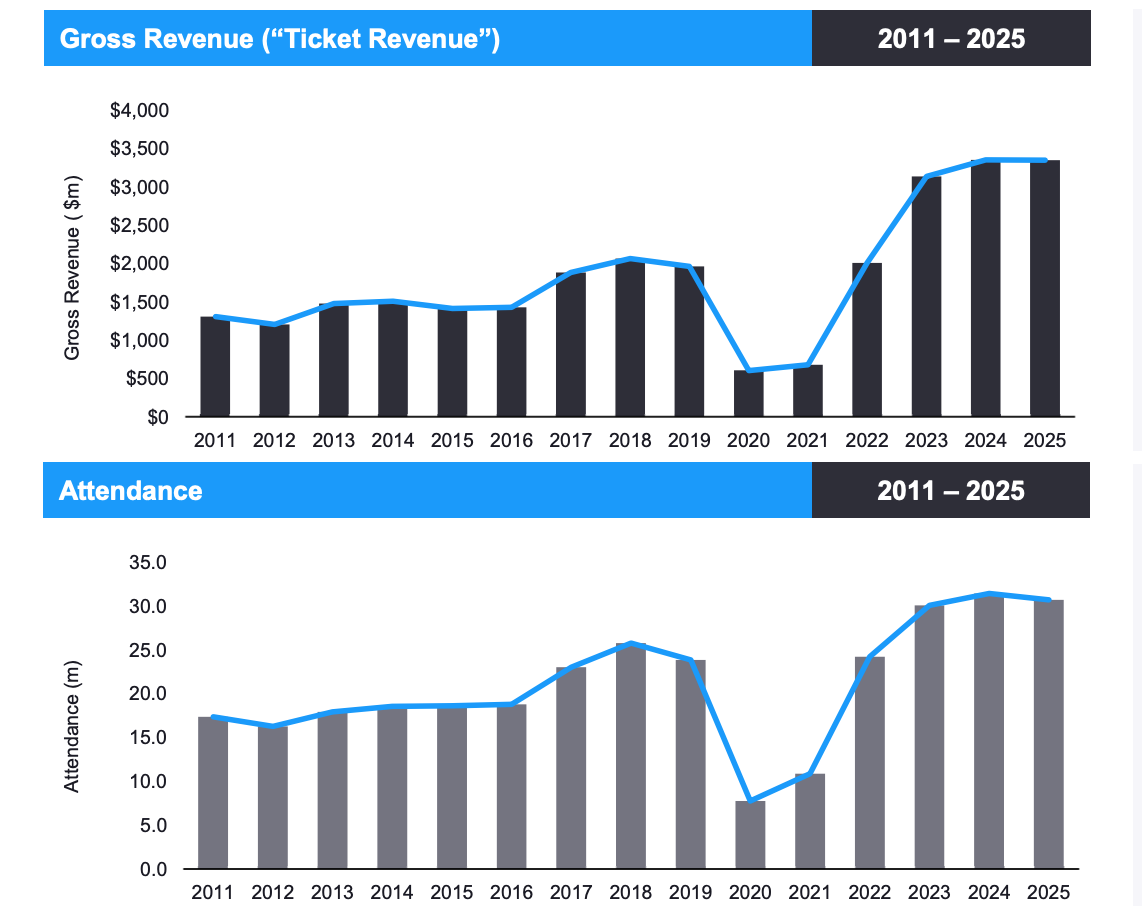
According to Live Performance Australia's 2025 Attendance and Revenue Report, the country's live performance industry generated AU$3.4 billion in ticket revenue last year, just 0.1% below its all-time record in 2024. Attendance declined 2.4% to 30.7 million, but both figures remained the second-highest recorded since the organization began tracking the market in 2004.
That's an impressive amount of money flowing through an industry that continues to face rising production costs, inflation and changing consumer habits.
The question is where is that money going?
Bigger shows, bigger prices
Contemporary music concerts and festivals remain the country's biggest live performance categories, together accounting for more than 65% of industry revenue. Contemporary music festivals performed particularly well in 2025, with revenue jumping 20.7% to nearly AU$400 million. But attendance increased by only 4.9%.
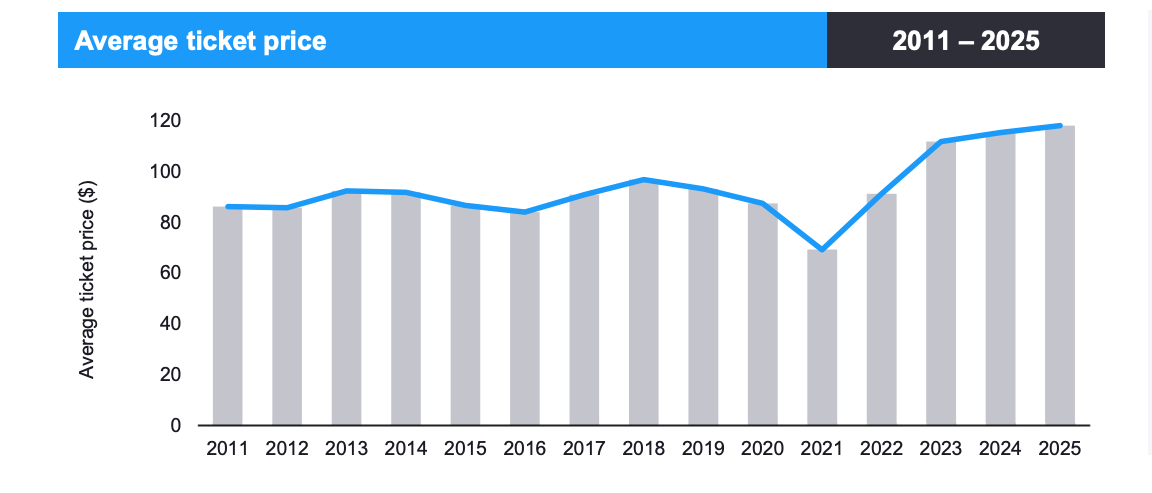
The difference was partly explained by ticket prices. The average contemporary festival ticket climbed 14.1% to AU$206.17, its highest level on record.
For promoters, that revenue growth is encouraging, although rising production costs also mean that higher ticket prices don't necessarily translate into bigger profits.
For audiences, however, the numbers suggest that attending major live events is becoming an increasingly expensive proposition. And with consumers facing their own financial pressures, that raises questions about what happens to the shows that aren't considered essential purchases.
+Read more: "Who Needs a Festival Anyway?"
The missing middle of Australian music
In its newly released 2025–26 Year in Review, Australian music rights organization APRA AMCOS reported record group revenue of AU$857.4 million, up 8.8% year over year.
Public-performance licensing revenue also increased 10.9%, with concerts and events contributing to that growth alongside other businesses that use music.
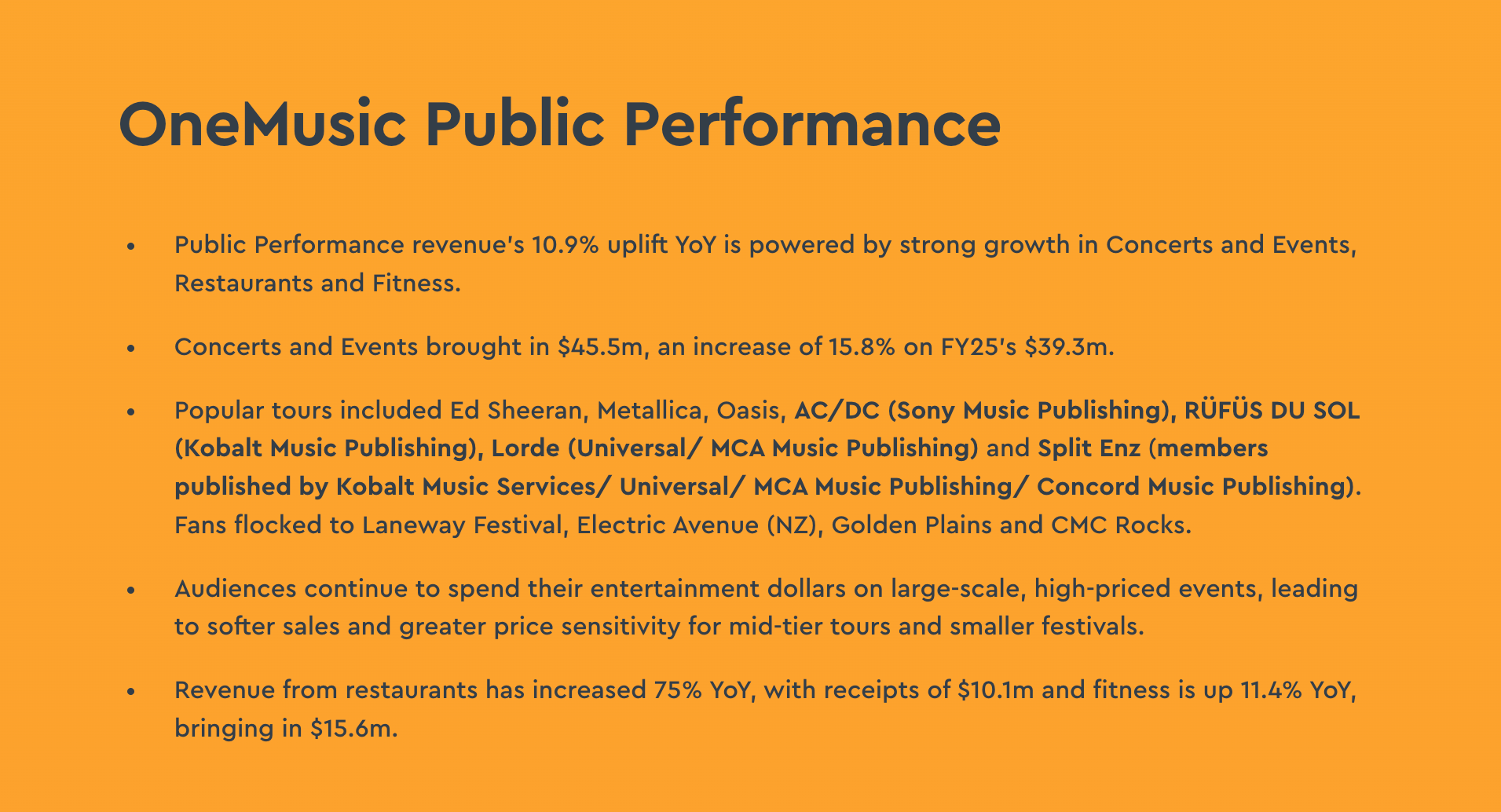
But APRA AMCOS identified a troubling divide in consumer spending. Large-scale, high-priced events featuring artists such as AC/DC, Ed Sheeran, and Oasis are continuing to attract audiences, while mid-tier tours and smaller festivals are experiencing softer sales and greater price sensitivity.
That's a significant distinction.
A healthy stadium concert market isn't necessarily evidence of a healthy touring ecosystem. Established international artists can fill enormous venues and command premium ticket prices, while developing domestic acts may struggle to build an audience large enough to justify a regional tour.
And that middle tier matters enormously. It's where promising acts become sustainable touring businesses, where independent promoters take calculated risks, and where tomorrow's headliners learn how to headline.
If that segment becomes increasingly difficult to sustain, the consequences won't necessarily appear in national ticketing revenue immediately. They'll show up several years later, when fewer artists have successfully made the leap from small venues to larger stages.
Australian artists are losing their home-field advantage
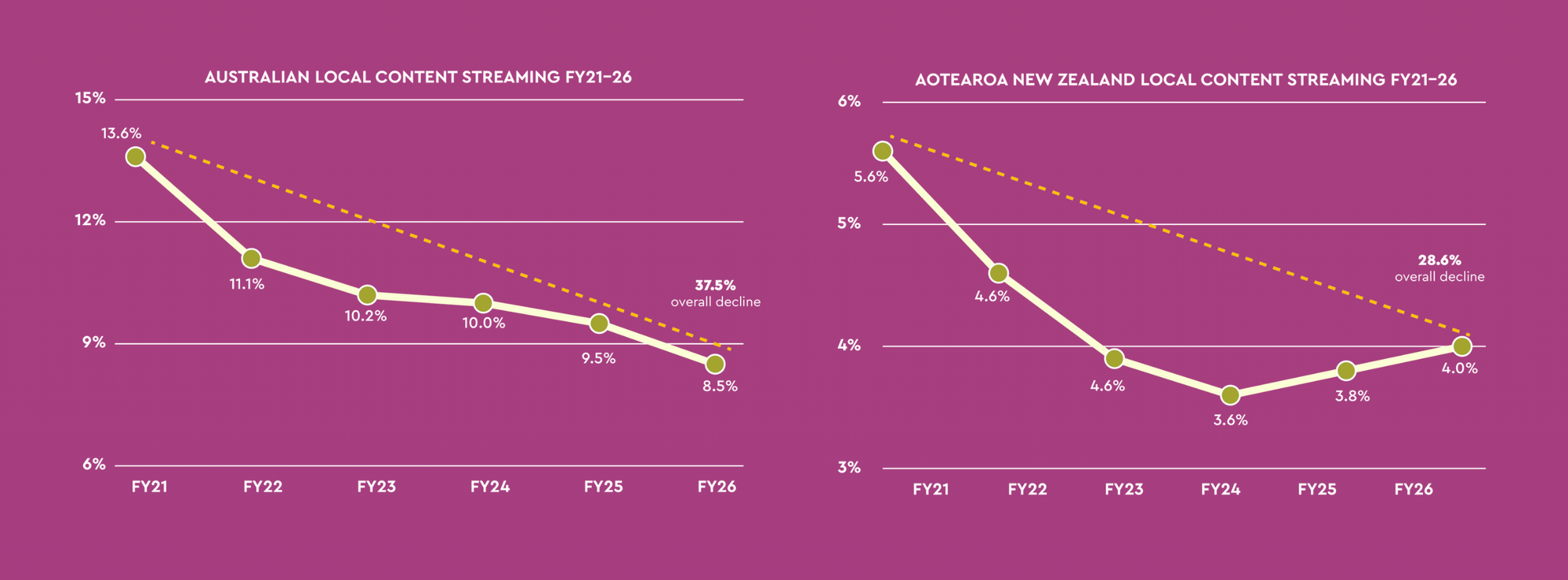
Perhaps the most concerning statistic in the APRA AMCOS report has nothing to do with ticket sales. Australian members' share of domestic audio streaming has fallen to just 8.5%, down from 13.6% five years ago.
That's a 37.5% decline in market share, meaning more than 91% of the music Australians streamed during the 2025–26 financial year came from outside the organization's Australian membership.
The picture is similarly troubling on user-generated content platforms, where Australian members accounted for just 3.6% of consumption. That doesn't mean Australian artists aren't succeeding internationally. In fact, APRA AMCOS reported record international revenue, helped by globally successful Australian and New Zealand music. But it suggests that local creators are having an increasingly difficult time competing for attention at home.
And streaming discovery doesn't exist in isolation from the live music business.
An artist who struggles to reach listeners online faces an even greater challenge converting those listeners into ticket buyers. Smaller audiences mean riskier tours, fewer opportunities for promoters to invest in developing talent, and a more difficult climb toward the kinds of concerts that currently dominate Australia's revenue figures.
APRA AMCOS CEO Dean Ormston put the problem succinctly:
"Music creators are squeezed on the platforms where fans first find them, and then on the stages where that support grows."
The organization is advocating for a federal live music tax incentive and minimum Australian music requirements on digital platforms to help reverse the trend.

+Read more: "How Music Tourism Is Becoming a Growth Lever"
A record-sized industry needs a future
None of this means Australians have stopped loving live music. Quite the opposite. The country's appetite for major concerts remains enormous, its festivals are generating substantial revenues, and its most successful artists continue to find international audiences.
Nor do the reports establish that spending on stadium concerts is directly taking money away from smaller shows. Different audiences, rising operating expenses and broader economic pressures all complicate that picture.
But together, the findings point toward an uncomfortable possibility: Australia's live music economy can remain financially successful while becoming less effective at developing the next generation of Australian headliners.
It's just something to watch, and to see how the country makes efforts to alter the course of these trends going forward.