________________________________________
Guest Post by Mike McDearmon on SoundflyGot your band’s new album on Spotify? Great! That’s the easy part… You are a musician, and perhaps you’re in a band that already has music available through all the major stores and streaming services. Getting to this point is actually pretty simple and most distributors/aggregators can hook you up in short order (for a reasonable fee, of course). So what’s the hard part then?Getting visible.Just because your music is on Spotify doesn’t mean anyone can find it. If music was a product people still bought in stores, you’ve basically just done the equivalent of handing your CD to a store owner who agreed to keep it in the stockroom and only sell it if someone asks for it. Major bummer.It can often feel like you have no power as an independent musician to get any visibility online (outside of spamming your friends and family who are hopefully good sports about it). However, there are things you can do to widen your band’s digital footprint.The magic is in the metadata.Like anything else on the Internet, your music becomes more visible when the number of places it appears increases, as well as the number of links to those places. Popular web applications like Spotify, Deezer, and Last.fm all aggregate information about your music (metadata) from a variety of third party databases and often share their own data with even more applications.What happens is the snowball effect. If information about your music is entered into a database that dozens of websites and apps are connected to, your visibility increases substantially. Repeat several times in other databases, and now you effectively have a lot of robots doing free advertising for you.Where to start?While several music databases will accept your entries without any hassle, others (like Rovi/AllMusic) are carefully managed and can take weeks for your submission to be approved — if it’s accepted at all. The returns for getting your music into Rovi’s databases are huge, however, andsubmitting your data to them is one of the first things you should do after any release.The chart below shows examples of all three types of databases and some of the apps and services that pull data from them: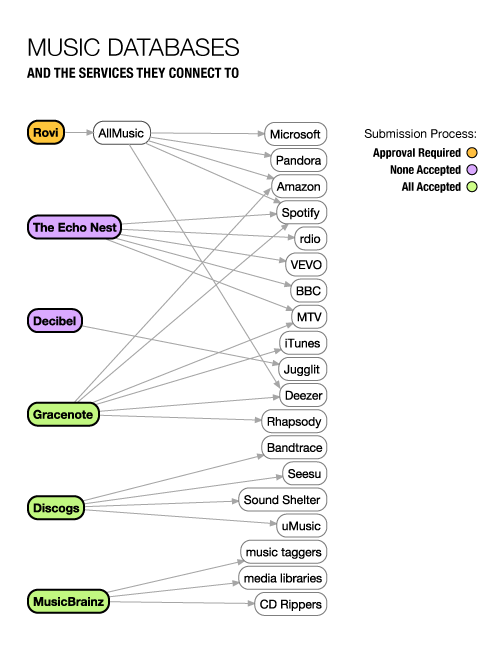 Look complicated? It is. It’s also almost impossible to create a fully accurate picture of the relationships between databases and services as they are constantly evolving.That said, one of the first things to notice from the graph are the big industry names that pull data from Rovi. Rovi’s database powers AllMusic.com, which feeds metadata in various flavors to Spotify, Pandora, and many others. Which data goes where, exactly? It depends, but for example, Rovi supplies Spotify with artist biographies, and Microsoft products like Windows Media Player with CD and track information.After Rovi (keeping in mind that they may not ever accept your submission), it gets easier. The following databases are connected to countless other applications and will accept submissions almost instantaneously:
- Musicbrainz
- Discogs
- Gracenote – accepts CD data via iTunes or QMP.
- Freedb – accepts CD data from a variety of applications.
Related articles