

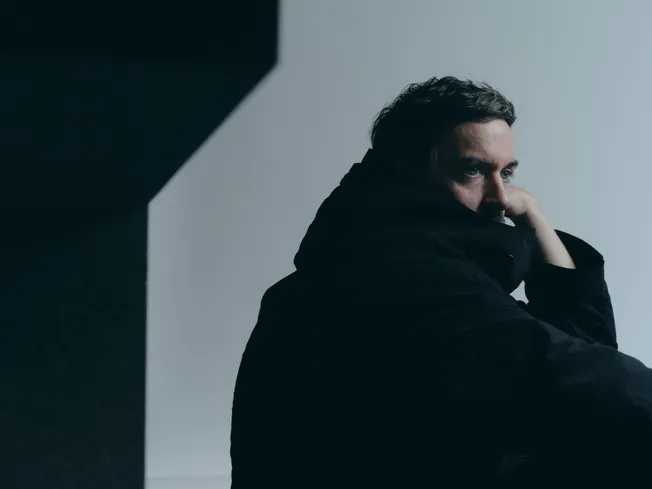
Bonobo (Simon Green) has spent over 25 years as a recording artist, and one of the leading voices in electronic music. It’s a career that has seen him release two Top 10 Albums, rack up billions of streams, collaborate with the likes of Erykah Badu and Damon Albarn, and be both BRIT and GRAMMY-nominated.
It's also taken him on tour all over the globe.
His pioneering live show – built around a full live-band, guest vocalists and immersive visuals – has also set the blueprint for how and where an electronic musician can translate their records into the live arena. He has performed to millions of people with sold-out shows at prestigious venues like the Sydney Opera House, Alexandra Palace, and Red Rocks Amphitheatre – in some cases as one of the first electronic artists to do so – and the world’s biggest festival stages including Glastonbury, Coachella, and Fuji Rock.
His last tour also included co-headlining London’s Field Day (with Aphex Twin), and a historic sold-out 5-night residency at the Royal Albert Hall, which I ask about. Now he's heading back out on the road in support of his new record, Distance in Static, out September 11, 2026, on Ninja Tune.
Take a listen to some of the singles below, and read our conversation. Catch Bonobo live in 2026 via Bandsintown.
Hypebot: How did your new album Distance in Static come together?
Simon Green: "I rarely set out to sort of make a full record. You know, conceived from the start to finish. I know some people do that, but I tend to just sort of work on music until there's a sort of critical mass and a record sort of takes shape. But kind of it really sort of comes into focus towards the end, really, like, I don't know what the record is going to be until it's sort of almost at the deadline."
I think the first thing is like not having deadlines, just working on music and just sort of seeing how I feel about what it is I'm trying to do. And I think at that early stage, I'm always trying to second guess what I need to do next. You know, I had these concepts at the beginning of like, Maybe this is just going to be a trip hop record, or: Maybe this is going to be just like a kind of more experimental electronic instrumental record, or maybe it's going to be something else."
But I think, um, as it started coming into focus, I realized there's kind of quite a few things I was trying to say. So it really, it takes shape towards the end and then then we start to see what kind of a record it might be."
H: When and where was the Distance in Static recorded?
SG: "A little bit everywhere, I think with all my stuff... I mean, the record before this obviously was quite different because it was in the pandemic, but like this one, you know, there was songs that were recorded on tour in like Europe, on tour buses and hotel rooms. There's there's a lot of stuff."
I spent a lot of time in Japan, London, we recorded a lot of stuff. I did a lot of instrumentation tracking in London and over the last couple of years and L.A., which is where I've been living. And also this studio in the Redwoods in California, which was Neil Young's ranch and Broken Arrow Ranch."
And I spent some quite intensive time there at the beginning of the year, just really kind of focusing on finishing the record. And, you know, I sort of was locked in there for, for a good couple of months. So it was a little bit of everywhere."
"I think some of the most special moments of my life have come from doing this live show. So, we're back. We'll see where, we'll see where it lands, I guess."
H: How did it come about that you could produce in Neil Young’s famous Broken Arrow Ranch Studios?
SG: "It was a really nice, lucky opportunity to get to sort of spend some time working in there. And it's pretty much like it's really well preserved. Although the studio has been sort of modernised with, with kind of a lot of digital stuff now. But as an experience, yeah, this place is super isolated and it's definitely like a homage to him and his time there."
You know, there's these pictures of like Crosby, Stills and Nash on the wall, all sort of like jamming on this platform, which is right outside the studio and you look out the window and there it is, and it's all in the redwoods. So it's pretty magical place. Really in nature surrounded by, you know, it's in the trees, it's by the river."
It's just really, it's just a really kind of peaceful experience. I didn't I didn't want to leave, actually, but yeah, the studio itself was in this cabin. There's a log fire. The old Neve console is still in there. It's really beautiful."
H: You famously played Royal Albert Hall on your last tour. How do you look back on that and how do these monumental shows effect your upcoming tour?
SG: "Yeah. Royal Albert Hall was crazy. It was five nights. It was a five night residency, which was the longest run of a single artist in in their history. I think the longest consecutive run of an artist in the history of the Royal Albert Hall. And each night became more sort of emotionally intense, and it culminated with this, this moment of the organist joining for the end of the set, which just blew people's faces off, really. It was insane. So, yeah it's like, Where do we do where do we go from there?"
The new show is actually going to be really insane because we have the stage design by Pierre Claude, who's been working with recently with sort of Gesaffelstein and The xx and the Air 'Moon Safari' tour as well. So he's, he's come up with some really cool ideas. I think the next step of the show is to do something more, leans more into the visual. And is a bit more sort of structural and architectural and multi-dimensional, I suppose.
There's a North American tour which is going to be at the end of the year. And then there's plans for the live show to be sort of everywhere next year in Europe. The first part of 2027 we'll be out in Europe. So I'm just kind of putting that together now and figuring out what that's going to look like. But I'm excited. I mean, I didn't think I'd do this again, honestly, the live show, because it's such a sort of strain and it really sort of takes its toll physically and mentally after 18 months on the road."
It's very disruptive for your soul doing these. You have these huge highs and these crashing adrenaline after. But it's really special. I think some of the most special moments of my life have come from doing this live show. So, we're back. We'll see where, we'll see where it lands, I guess."
"The live show feels really important because I feel like these records are rooted in musicianship, and they are about sort of, you know, fingers on instruments. So the live show is sort of something I feel I really needed to do and really need to say."
H: Do you sometimes consider exclusively being a DJ? Because a tour is such a big enterprise and you earn less money with it in these times...
SG: "Well, that's absolutely true. Yeah, DJing s easier money. And I love deejaying. I love how immediate it is. So I think doing both is the balance, right? And I think the live show has sort of cemented a kind of reputation on the project as well."
I don't know if I could have done what I've done without having the live show as well. And the live show feels really important because I feel like these records are rooted in musicianship, and they are about sort of, you know, fingers on instruments. So the live show is sort of something I feel I really needed to do and really need to say."
But the DJing is not a compromise for me either. It's a different thing, and I think there are some people in my fan base who are not really nightclub people. They only engage with the sort of the recorded music and the live show, and they sort of come to the DJ shows and they're a bit confused. But for me it's a really different thing."
H: Now that the album comes out do you still feel a certain pressure after all those years of releasing music?
SG: "You know there is this sort of sense of what's gone before and expectation and how well the last ones have gone, I don't know. I mean, people say that none of this stuff matters, but I think, of course it matters. It's going to bear a weight on you if you've kind of have this perception of what you've done before. But it's fine."
I feel like I'm sort of really happy, I feel like I don't have as much to prove anymore. So it's just kind of like, I think I've said everything I need to say musically at this point. So anything from this point on I can just sort of do for the sense of joy and exploration."