

________________________________
Guest Post by Chris Castle of Music Tech SolutionsIn Washington, DC yesterday, I was honored to participate in a symposium on the subject of “moral rights” sponsored by the U.S. Copyright Office and the George Mason University School of Law’s Center for the Protection of Intellectual Property. The symposium’s formal title was “Authors, Attribution and Integrity” and was at the request of Representative John J. Conyers, Jr., the Ranking Member of the House Judiciary Committee. (The agenda is linked here. For an excellent law review article giving the more or less current state of play on moral rights in the U.S., see Justin Hughes’ American Moral Rights and Fixing the Dastar Gap.)The topic of “attribution” or as it is more commonly thought of as “credit” is extraordinarily timely as it is on the minds of every music creator these days. Why? Digitial music services have routinely refused to display any credits beyond the most rudimentary identifiers for over a decade, and of course the pirate sites that Google drives a tsunami of traffic to are no better.Yet these services frequently rely on government mandated compulsory licenses (in Copyright Act Sections 114 and 115), near compulsory licenses in the ASCAP and BMI consent decrees, and of course the sainted “safe harbor”, the DMCA notice and takedown being a kind of defacto license all its own particularly for independent artists and songwriters without the means to play. They get the shakedown without the takedown.Moral rights are typically thought of as two separate rights: “attribution”, which is essentially the right to be credited as the author of the work, and “integrity” the author’s right to protect the work from any derogatory action “prejudicial to his honor or reputation”. They can be found most relevantly for our purposes in the Berne Convention, the fundamental international copyright treaty to which the U.S. signed on to in 1988. (Specifically Article 6bis.)It is important to understand that the United States agreed to be subject to the international treaties protecting moral rights and that these rights are different and separate from copyright. Copyright is thought of as an economic right, while moral rights continue even after an author may have transferred the copyright in the work. Even so, both the moral rights of authors (and the material rights) are recognized as a human right by Article 27 of the Universal Declaration of Human Rights. Or as Gloria Steinem said, artist rights are human rights.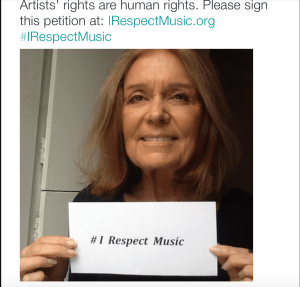
Related articles