

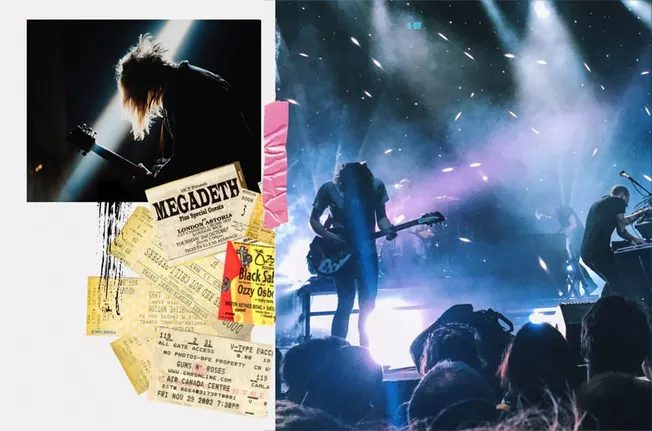
Concert tickets are basically the new airline miles. At least that's what we took away when we read Live Nation’s new Return to Real report, which argues that access to live music is becoming an increasingly valuable tool for brands trying to attract and retain customers.
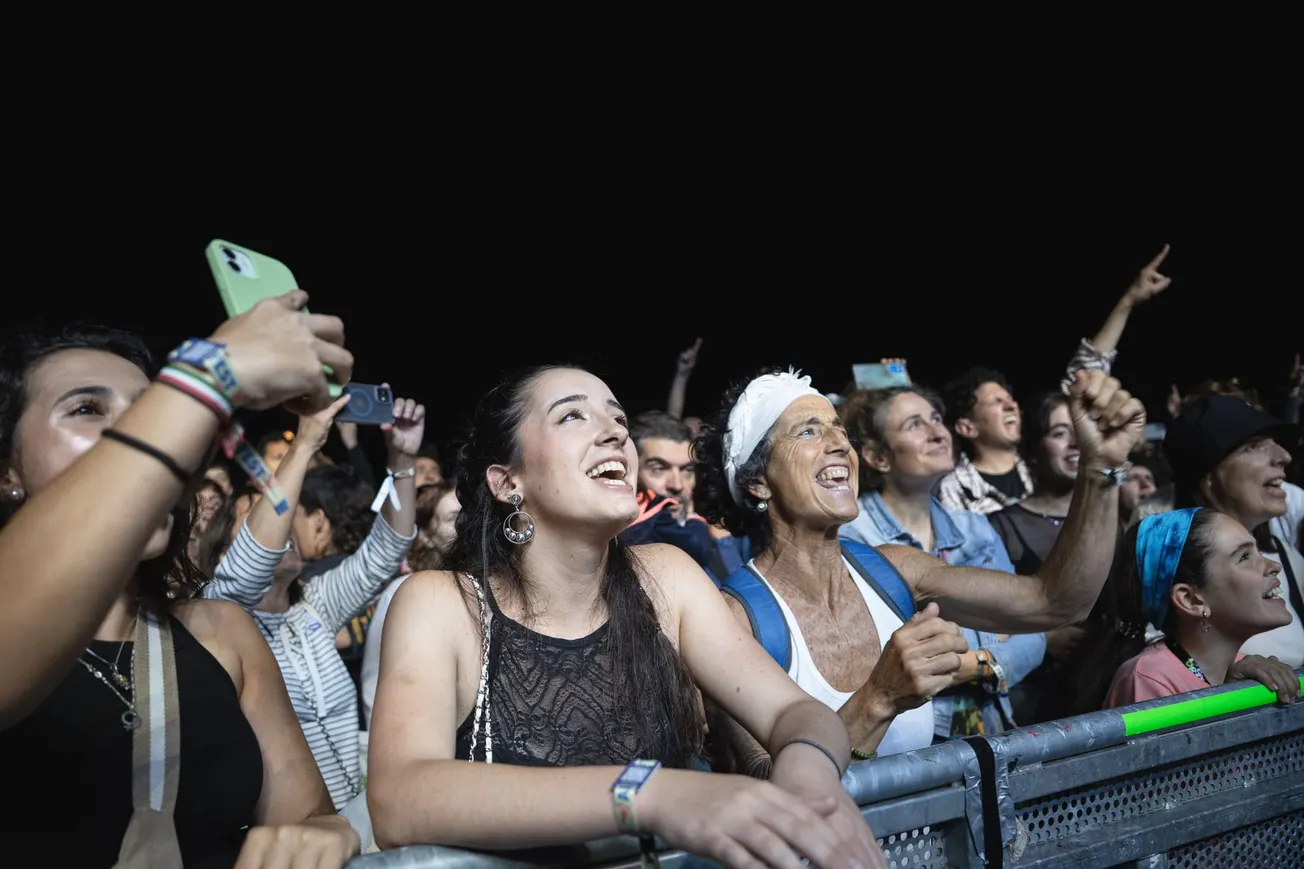
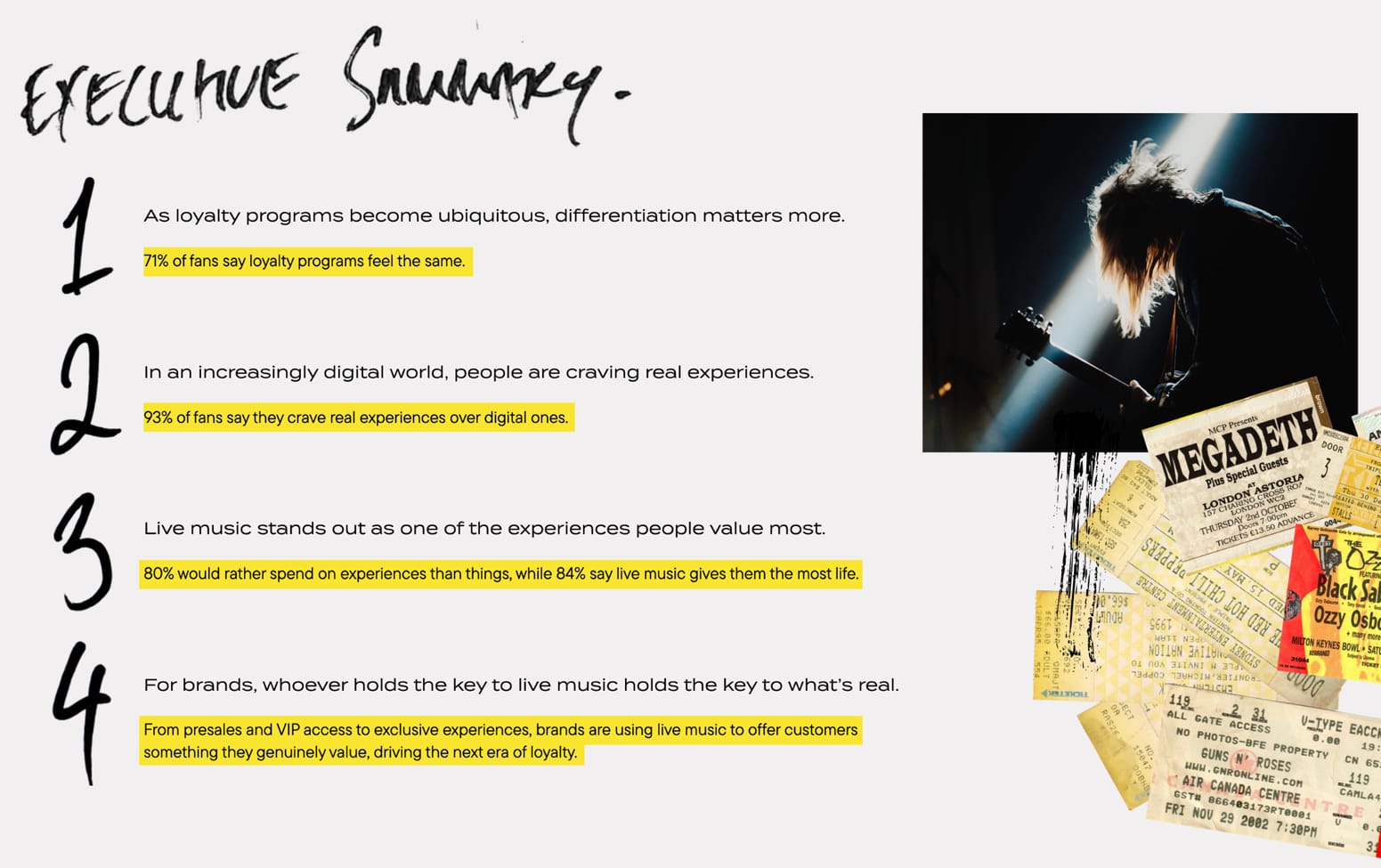
According to the global survey of 40,000 respondents in 15 countries (aged 18-54) at the heart of this study, live music is the world’s favorite form of entertainment, ahead of sports, and even sex. 93% of music fans crave real experiences over listening digitally, and 80% would rather spend their money on "experiences" than objects.
Brands are responding by bringing live music experiences into their loyalty programs, understanding that fans can still engage with a company's ethos even when they're not necessarily buying their products. What's more interesting though, is how live music is becoming its own kind of currency.
Read the full report here.
The reward is no longer a product
Loyalty programs have pretty much always been built around transactions. Buy coffee, collect stamps, get another coffee. Spend money with an airline, earn a flight. Use a particular credit card, accumulate points that can eventually be exchanged for something with an identifiable dollar value.
That model still exists, but consumers are apparently finding it increasingly uninspiring. Live Nation’s global research found that 66% of respondents engage with loyalty programs more than they did a year ago — even as 64% feel less loyal to individual brands and 71% say most programs feel the same.
Hence, brands need something more exciting than yet another discount code. Live music gives them access to an experience customers will plan around, travel for, post about and remember. Some case studies:
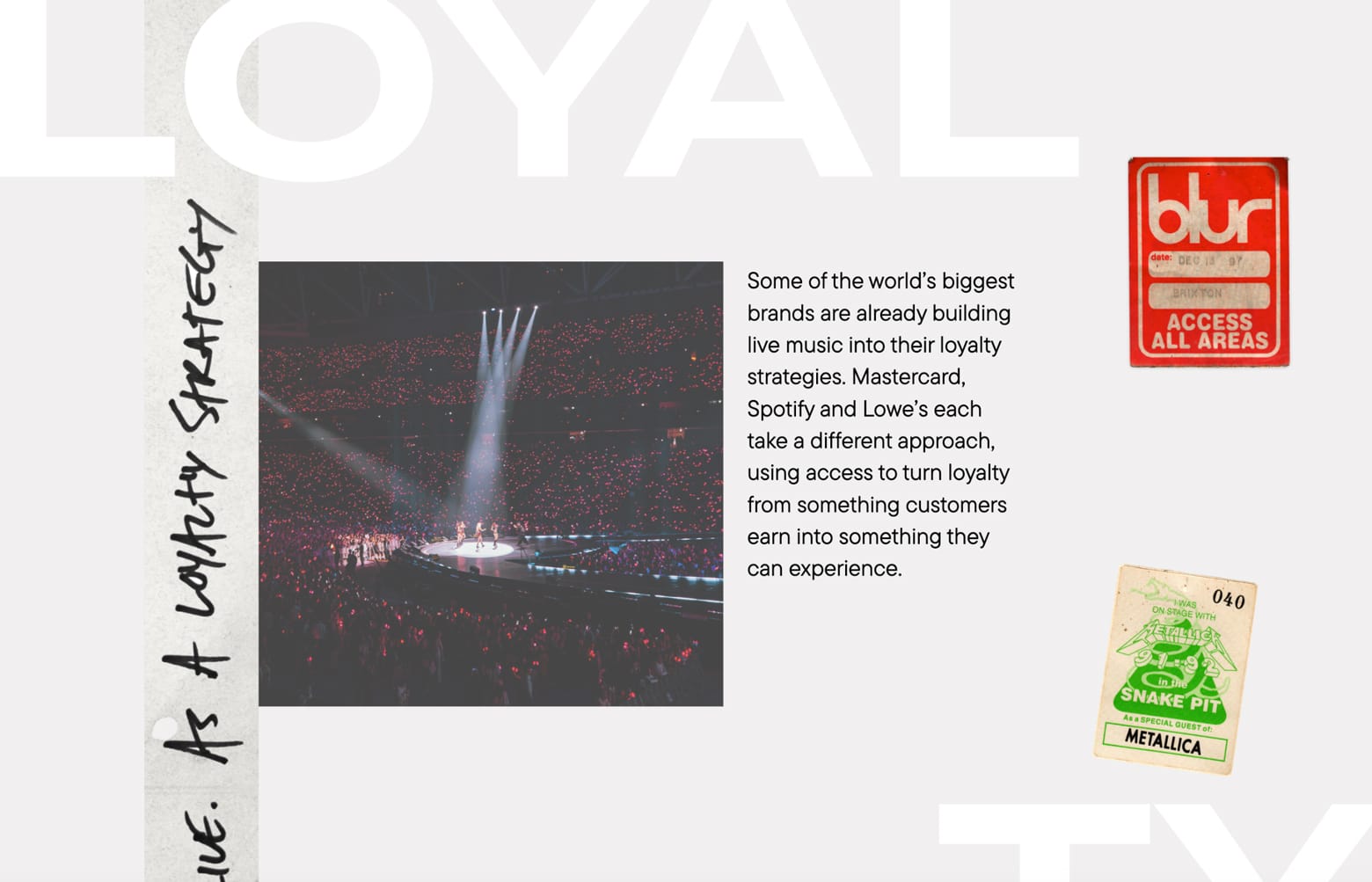
Mastercard already offers cardholders concert presales, premium tickets and VIP experiences through its Priceless partnership with Live Nation. Lowe’s provides rewards members with benefits at 20 Live Nation amphitheaters, including discounted children’s tickets, complimentary lawn chairs and sweepstakes. In Australia and New Zealand, DoorDash has entered a three-year partnership spanning Live Nation concerts, festivals, and venues.
None of those companies primarily sell music. And nobody cares. A customer probably does not feel emotionally attached to their credit card, hardware store, or delivery app. They are emotionally attached to artists.
Brands have discovered that helping customers get closer to that artist can be more powerful than getting them through another checkout lane.
+Read more: "How NYBA Back-Designed a Cirque du Soleil Ticket Sellout (and Succeeded)"
The new music fan is increasingly mobile
The airline-miles comparison works in another way too: contemporary fandom is becoming less geographically fixed. There was a time when seeing your favorite artist largely depended on whether their tour came through your town. If they skipped the market, or the local show sold out, you probably did not see that band.
One's location is no longer an obstacle. Fans now travel to destination festivals, multi-night residencies, reunion shows, and major tour stops. They compare ticket availability across cities and sometimes discover that flying elsewhere is easier—or even cheaper—than buying resale tickets at home. “Gig-tripping” turns a concert into the organizing principle for an entire vacation.
Live Nation says fans collectively traveled more than 40 billion miles for concerts in one year. Its research also found that 80% would rather spend money on experiences than things, while 85% attend live music to feel part of something bigger. The company’s global announcement says more than nine in ten respondents would consider joining or switching loyalty programs for live music benefits.
+Read more: "'Human-Made' Is Doing for Music What 'Made In Italy' Did for Fashion."
Spotify’s Reserved program takes the idea further by turning listening behavior into a loyalty signal. The platform uses streams, saves, shares, location and other activity to identify an artist’s most engaged listeners, then holds two tickets for eligible Premium subscribers to purchase before the general sale.
Spotify said nearly 100,000 tickets had been reserved through the program by August. In this model, fans are no longer collecting miles through purchases. They are accumulating evidence of fandom.
That can be framed as a fairer alternative to bots and indiscriminate presales. It also means that ticket access may increasingly be determined by an ecosystem of memberships, cards, subscriptions and behavioral data. The old obstacle was that a show had sold out. The emerging obstacle may be that too many portions of the room were made available first to different categories of insiders.
Artists are powering the loyalty economy
There is real upside here. Brand partnerships can help fund tours, subsidize useful amenities and create memorable experiences for fans. Early access can also reward committed listeners instead of professional resellers.
But artists and their teams should recognize what they are contributing. The artist creates the music, community, scarcity, and emotional connection that make the reward valuable. The participating brand may receive new members, customer data, increased spending and years of continued business.
If concert access becomes a major customer-acquisition tool, artists should be asking how much ticket inventory is involved, who controls the resulting data and how the value created by their fan relationships is being shared.
Note: Live Nation’s report draws from a 2025 survey of 42,000 respondents across 15 countries and a 2026 loyalty study of 3,450 respondents across 12 countries. The report provides limited information about recruitment, weighting and country-level sample sizes, and its findings should be understood as Live Nation-commissioned brand research.