

By Markus Hetzenegger, CEO of NYBA Media,
For most of my career, live entertainment marketing has worked the same way: you book the show, you commit the budget, and then you wait. Money goes into billboards, radio and paid social, some of it sells tickets, and nobody can tell you which part did the work.
My company, NYBA, has spent the last six months testing whether that has to stay true. The answer, based on real campaigns with real money at stake, is no. We've run performance marketing for live entertainment for the past twelve years, for artists and productions from Bad Bunny, Rosalía, and Bob Dylan to Cirque du Soleil. Every one of those campaigns left data behind: what was spent, where, on which audiences, and how many tickets it moved.
This year we turned that archive into software. NYBA OS, which launched publicly on August 14, is the operating platform our clients book and run their campaigns in. Campaigns go live out of the system and are optimized against live ticketing data. Forecasting is one of ten modules, let me tell you about it.
The Test Case
Before we launched our platform publicly in August, we ran it in a closed beta with existing clients. One of those beta cases was Cirque du Soleil ALIZÉ.
When the event went into the system, the model compared it against our full campaign history: 75 million tickets sold, roughly 1,200 campaigns a year across 25 markets, about 400 million euros in analyzed ad spend. It looked for comparable productions, venues, markets, price points and audience overlaps, and produced a forecast before the campaign started: projected ticket sales, sellout probability, and a budget split across channels.
That forecast held, and the show sold out along the curve the model had drawn. During the same beta phase, the model ran on Helene Fischer's tour, a run of almost 750,000 tickets, with the same result, and most recently on campaigns for elrow in Málaga and for ANYMA in Madrid, which took the test from family entertainment and German pop into electronic music and international club culture.
Cirque du Soleil ALIZÉ is the company's first European resident show, which plays year-round in Berlin. A resident show has no tour hype to lean on; it has to sell night after night in a city with one of the densest entertainment offers in Europe, which makes it a more demanding test than a one-off arena date.
What mattered under those conditions was that the spend was traceable against the right number. Ad platforms grade their own homework: Meta, Google and TikTok will happily claim the same purchase, and if you add up their reports, every show sells 300 percent of its tickets. We measure against real ticket sales from the ticketing systems instead.
On that basis we knew at any point which channel was converting at which cost and which creative was fatiguing, and budget moved week by week. The creative side runs on the same logic: the system finds which ad assets performed on comparable shows, generates variations for human approval, and cuts underperformers live.
Measuring against the box office rather than the ad account also produces findings that surprised even us. We have worked closely with TikTok since 2019, as one of its first performance partners worldwide, and assumed we knew its role. Yet, the beta showed the channel to be more of a discovery layer than we had thought: the first contact with a show happens there, and once TikTok enters the mix, sales on the other platforms rise disproportionately.
The discovery happens on TikTok while the purchase often closes on Google or Meta. An effect that stays invisible in ad-account attribution but is unmistakable in the real ticket sales. It is also why I would tell any promoter not to optimize on dashboard metrics, even though our best-known case is a ROAS of 130, awarded by TikTok. CTR, CPM and platform ROAS are the ad platform's arithmetic, and the box office often disagrees. In our experience, only two numbers really matter, real tickets sold and the speed at which they sell at the start.
The first 72 hours of an on-sale will tell you more about a show's outcome than anything in a dashboard. The practical effect of all this is speed. Campaign planning that used to take our teams weeks now takes about 15 minutes, simply because the first draft of every plan already exists in the data of the thousand campaigns that came before it.
+Read more: "From Aircraft Carriers to Delis: Live Music Promoters Are Betting on Unusual Venues"
What I Expect Over the Next 12 to 18 Months

Across markets and genres, the beta showed that ticket demand follows patterns stable enough to plan against. Artist type, venue, market, price point, audience overlap: similar combinations keep producing similar demand curves, and the forecast recalibrates daily once sales start. That turns forecasting into a planning method, and once a forecast exists before an offer is signed, decisions change well beyond the marketing department.
Some of what follows is already visible in our beta data, some is speculation:
Already happening: Forecasting is moving upstream, from marketing into booking. Once a promoter can see a sellout probability before signing an offer, venue sizing and routing become data decisions. The question shifts from "can we market this show?" to "should this show be in a 4,000-cap or a 6,500-cap room, and in which city first?"
Already happening: Additional shows stop being a gamble. When demand signals from the first on-sale feed back into the model, the decision to add a second night becomes arithmetic. That was where beta clients changed their behavior fastest.
Already happening: The model regularly advises spending less. When sellout probability is high, the recommendation is to cut budget on that show and move it to one that needs the push, early, while demand is still cheap to build. Every euro spent on a show that sells out anyway is a wasted euro.
Speculative, but I would bet on it: Budgets get gated, released in tranches against forecast milestones instead of committed up front, so campaigns adjust before the money is gone.
Also speculative: Agents will start showing up to negotiations with forecasts. As prediction tools spread, ours and others, demand curves stop being a promoter's private edge and become a shared negotiating document, the way streaming data reshaped A&R conversations.
The group with the most to gain here is not the major. It is the independent promoter. Live Nation and AEG could always afford to be wrong about a show; an independent betting the company on a 6,500-cap room cannot.
For most of my career, the data advantage sat with the biggest players, because they saw the most campaigns. Prediction tools break that logic: the patterns from a thousand campaigns become available to a promoter running ten shows a year. And the model’s most frequent advice, spend less on the show that sells anyway, matters most when every euro is borrowed against the next on-sale.
I expect independents to adopt forecast-first planning faster than the majors, because for them a wrong venue call is not a variance in a portfolio, it is the year.
+Read more: "9 Live Music Marketing Trends Selling Out Shows In 2026"
What the Industry Should Prepare For
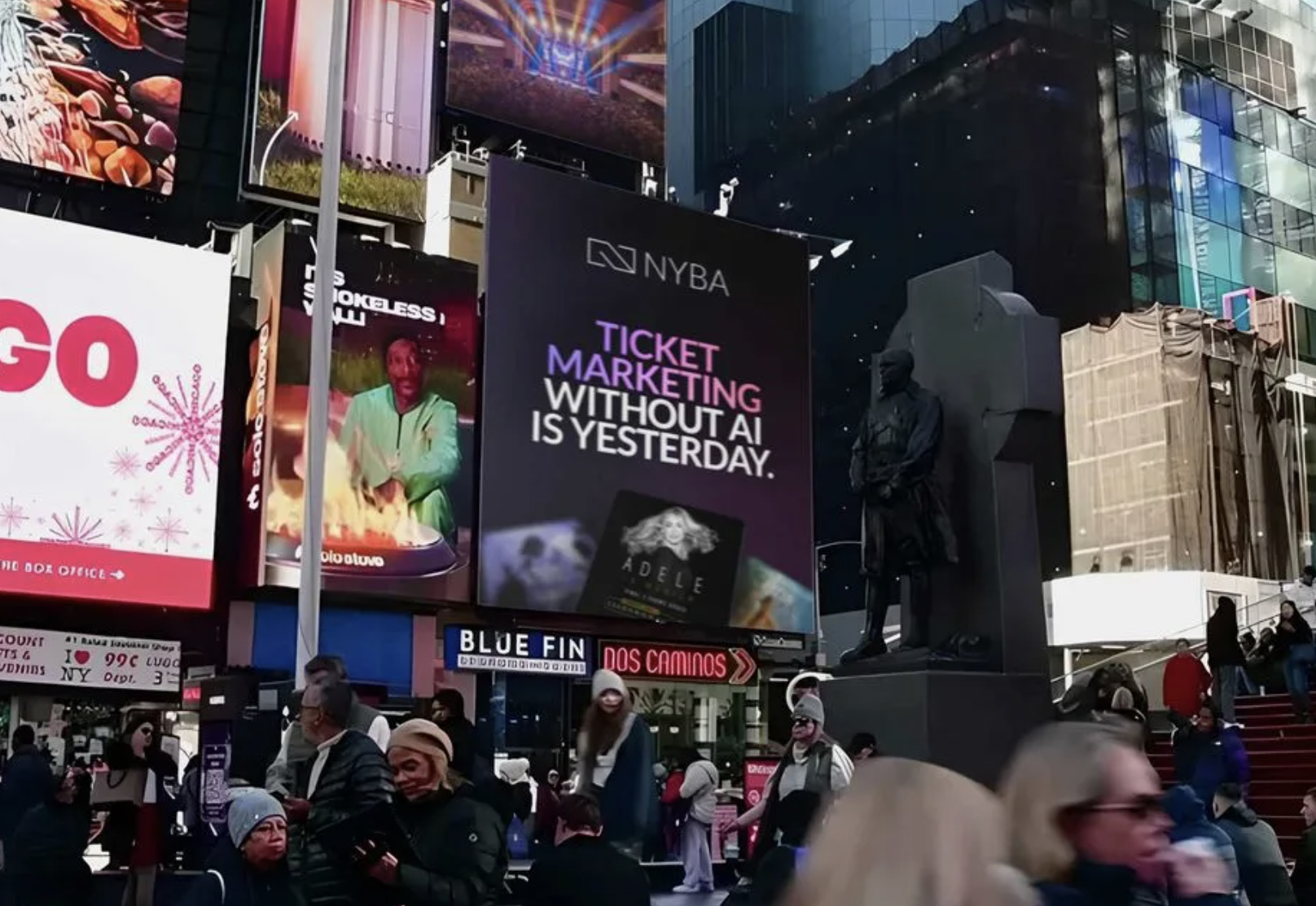
Concretely, three shifts. First, the division of labor becomes explicit. What gets automated is the part that repeats: budget allocation, channel weighting, geo splits, audience segments. What stays with people is everything creative: marketing strategy, brand decisions, campaign concepts, and the judgment on whether an ad fits the artist, the brand and the tour.
In practice, the AI generates and optimizes creative variants, but nothing goes live without approval by the team and the client; that is a brand decision, not a performance question, and it doesn't get automated. For marketing teams, hiring and evaluation shift accordingly: away from manual media buying, toward strategy and creative.
Second, decision windows move forward. When a deviation from the expected sales curve shows up eight weeks before the date instead of one, pricing, capacity and budget shifts become decisions made early in an on-sale, not in the final stretch. Organizations that route those calls through slow approval chains will lose most of what the forecast gives them.
Third, measurement discipline becomes a competitive factor. A forecast is only as reliable as the number it is checked against, which is why everything should be tied to real sales from the ticketing systems rather than ad-account reports. And forecasts should be read as what they are: where comparable data is thin, the output is a wider range, not a precise-looking number.
Promoters who treat their own sales data as an asset and build their planning routines around live forecasts will compound that advantage, because the tools are no longer the bottleneck; the adjustment that remains is organizational.
*Catch Markus' workshop with Bandsintown CEO Fabrice Sergent in London on September 8, 2026, at the International Festival Forum London. More info here.
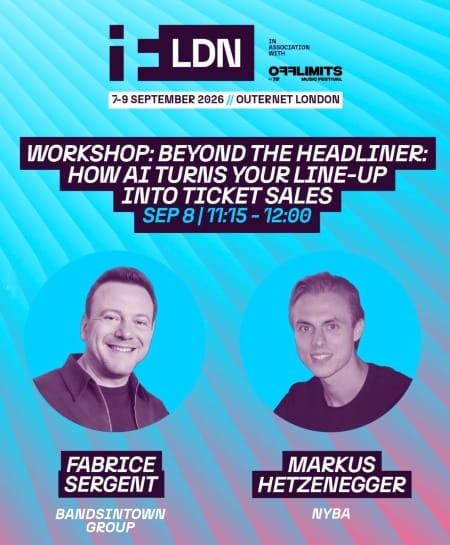
In this innovative workshop, live event discovery and marketing platform Bandsintown will show how AI-powered discovery helps festivals unlock the full value of every artist on the bill and turn casual listeners into engaged fans. Digital ticketing and marketing specialist NYBA will then unpack how to convert that attention into real ticket sales, using AI across creative, campaigns and audience targeting. An invaluable, practical 45 minutes for festival teams who want growth beyond the headliner.
Learn more about this workshop at IFF London.
Markus Hetzenegger is the CEO of NYBA Media, a data-driven company that works with artists, brands, promoters, and high-profile event organizers to sell more concert tickets using AI, behavioral psychology and audience metrics, and a keen understanding of social media algorithms and trends.