

Welcome to Lalu's Corner, a monthly column by music and brand partnership agent Lauren Thackray, exploring commercial music applications and sync placements, and the most pertinent takeaways for independent artists.
Mk.gee barely posts. He gives almost no interviews. There's no BTS reel, none of the constant visibility that artists are increasingly expected to maintain. And yet he's become a "musician's musician," the kind of name that seems to spread because other musicians keep saying it, rather than because a feed put it in front of you.
The instinct is to call this mystique.
Frank Ocean’s spent years between albums, a handful of appearances, no interviews, and when he finally resurfaced to headline Coachella in 2023, it needed no comeback narrative, no explaining where he'd been. The silence was never read as absence.
Alex G has been a critical favourite since his 2014 breakthrough, DSU, and largely stayed off social media the entire time. Djo took a different route, playing his first shows in a wig and sunglasses, keeping some distance between the music and the much louder fame he already had from Stranger Things.
Different scenes, similar instinct: a little distance can leave more room for the work itself.
For most of music history, silence wasn't a choice.
Think "Video Killed the Radio Star," a song about sound-only media giving way to sound-plus-image. Two years later, MTV launched and played that video first and turned the title into a mission statement:
The channel would decide who got seen.
That's the media world Prince and, later, Daft Punk operated in, and it's worth being precise about what their mystique actually meant within it. Prince told Rolling Stone flatly, "I don't do interviews" — and when he did occasionally grant one, he was known to restrict tape recorders and note-taking, leaving journalists to reconstruct conversations afterward.
Daft Punk spent years performing behind helmets, at a time when an artist's public image still moved through a much narrower set of outlets; MTV, magazines, television appearances, radio. Their mystique was deliberate, but the conditions that made it possible weren't theirs alone to create.
Distance was easier to preserve when there were fewer places an artist was expected to appear, and when labels, programmers, editors and broadcasters controlled much of what audiences saw. You could choose how much to reveal, but the infrastructure did some of the withholding for you.
Then the infrastructure flipped.
Arctic Monkeys are usually cited as where this really starts. In 2004 and 2005, fans ripped and shared the band's homemade demo CDs across MySpace and file-sharing sites — no label push, barely even a MySpace page the band controlled themselves. By the time their debut single came out in October 2005, it entered the UK chart at No. 1 off an audience that had already built itself. Press and label showed up after the fact, not before it.
"Gangnam Style" showed just how powerful that route could become. It became the first video in YouTube history to reach a billion views in December 2012. A few months later, Billboard changed the Hot 100 methodology to include YouTube streams, recognizing that songs could now become enormous hits in places its traditional measures weren't fully capturing.
That's the reality underneath everything since: an artist can reach people directly now, in whatever volume they choose. Sombr's "Back to Friends" had been out for months before it caught on TikTok in March 2025; by April, it had reached the Billboard Hot 100 for the first time.
And Bieber —who broke, originally, through his mother's YouTube uploads of him singing covers — launched a Twitch channel in October 2025 and said he'd stream "pretty much every day": rehearsals, studio time, hanging out, eventually a "Daisies" run-through as he prepared to headline Coachella.
Nobody is rationing his exposure anymore. That's entirely his own call to make. Which is the shift underneath. For most of music history, restraint was the default because the infrastructure enforced it. Now that nothing enforces it, restraint is simply a "choice."
The real skill now isn't restraint. It's knowing which room you're actually in.
There are more ways to reach an audience today than at any point in music history, which sounds like an advantage until you realize it also means there's no single right answer to "how much should I post." The right amount depends entirely on who's listening, and what they signed up for.
Charli xcx's audience wants to feel like they're inside a group chat with her - the chaos, the confessions, the in-jokes are the relationship, not a distraction from the music. Going quiet on that audience wouldn't read as mystique, it would read as her leaving the group chat. Phoebe Bridgers' audience is the opposite bet entirely: they came for songs that sound like they cost her something to write, and a steady stream of content would work against exactly what they're there for.
Silence, for her, isn't a gap. It's part of the same sincerity the music is selling. None of these artists is more correct than the others. They're just different rooms, with different terms of entry.
And for an unknown artist, posting constantly, trying things, following trends, moving between platforms isn't a failure to understand restraint. Often it's how you find out who's listening in the first place. You can't really know what kind of room you're in until there are people in it. Everyone gets to be a little too online on the way to figuring that out.
Even the same room changes shape, on purpose
Charli xcx usually keeps a fairly open line to her audience — the jokes, the posts, the sense of being somewhere inside the conversation. However, before Music, Fashion, Film was released, that same closeness briefly took a different shape. She previewed the album through one-night-only listening events at independent cinemas in 25 cities around the world, turning the first album listen into something you had to be in a particular room to experience.
It wasn't really a retreat from the relationship she'd built with her audience. If anything, it was a more concentrated version of it: fewer people, less access, but more significance attached to being there. And it was temporary. The album came out two weeks later, the wider machinery started moving again, and this fall she's taking it into arenas.
The skill isn't choosing intimacy or reach as a permanent identity, or treating them as opposites. It's knowing which shape the relationship needs to take, and when.
K-pop's four biggest labels built themselves a permanent version of the same lever
Four of K-pop's biggest labels are now building an entire festival together, with ambitions to rival Coachella. On one level, it's simply a very large event. But it also creates something the feed can't quite replicate: a finite place and time that audiences can orient themselves around, year after year. Instead of having to create a new reason to pay attention every time, the event itself can become the reason.
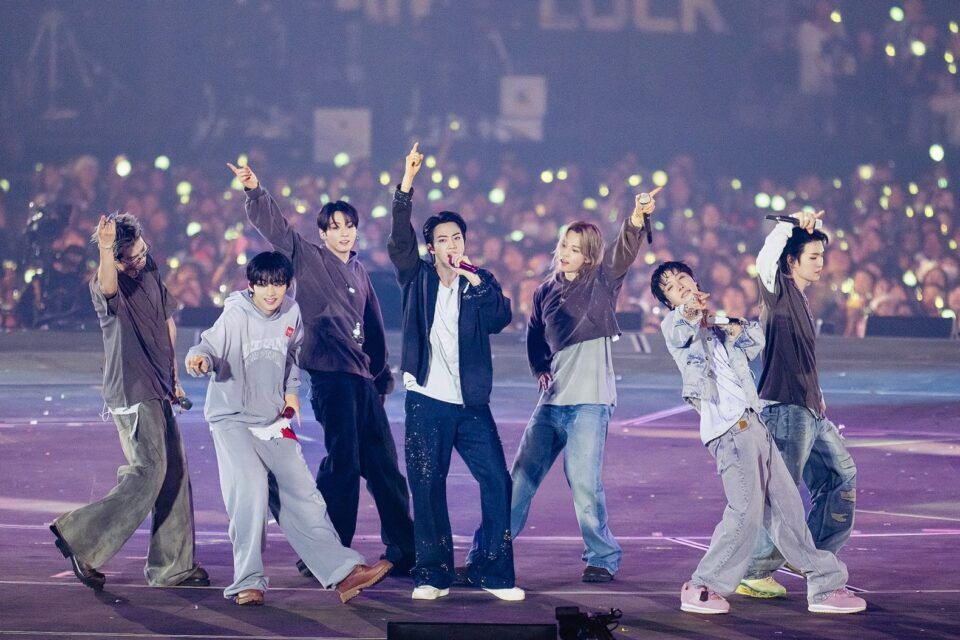
An individual artist can create that sense of occasion for a moment — a particular show, a listening party, an album cycle. A festival can build it into the calendar for an entire roster at once. They're not just creating another room. They're trying to build a room people already know they'll want to come back to.
What's the takeaway in all this?
If you're the artist: There's no universal right amount to post - the real questions are which room you're actually in, and where you are in your own cycle. Early on, posting constantly while you find your audience isn't a compromise, it's the job - and if you're lucky enough to find or build that community IRL instead, that works just as well.
If you're the manager: The job is spotting which community your artist is actually tapping into — the group chat, the loyal few hundred, the other musicians who won't stop talking about them — and understanding what that community values about being there.
Sometimes the next move is more access; sometimes it's a smaller room, a one-night event, or simply giving people a reason to show up somewhere together. If it works, it's worth asking whether to rebuild that room from scratch next cycle, or turn it into something permanent the audience already knows to come back to. Build on the relationship that's already forming instead of importing a content strategy designed for somebody else's room.
If you're on the licensing or brand side: Look for artists whose communication and experiences feel native to a community they've built. The opportunity isn't always to give that artist more reach. Sometimes it's to help them make the room they're already in more meaningful — fund the experience, create the occasion, or give the community something it couldn't have had otherwise.
Lauren Thackray is the Founder of LALU&CO, a music culture agency helping brands build artist partnerships and cultural strategy. Her clients include Unilever, L’Oréal Paris and Heineken amongst others. And via her Substack newsletter, LALU Dispatch, she writes about brands and music.