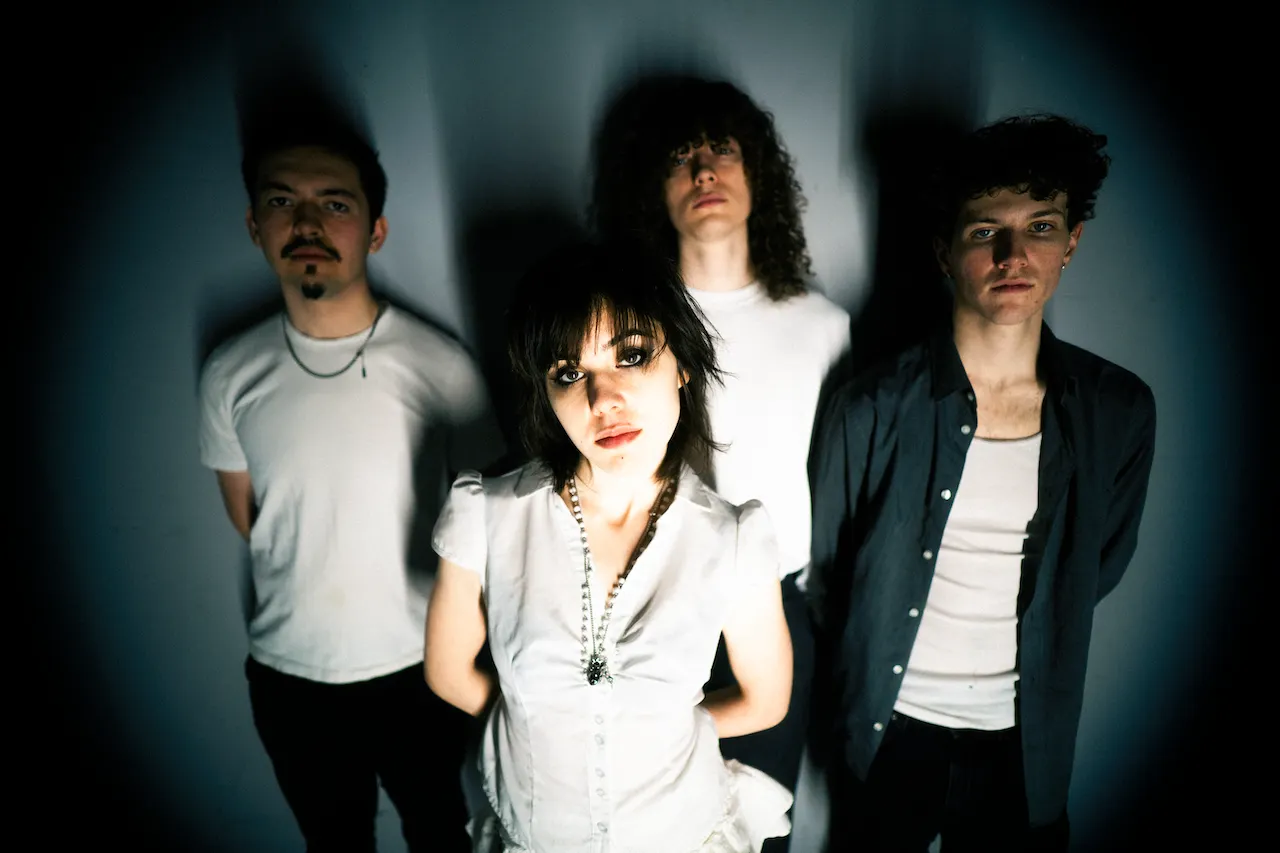


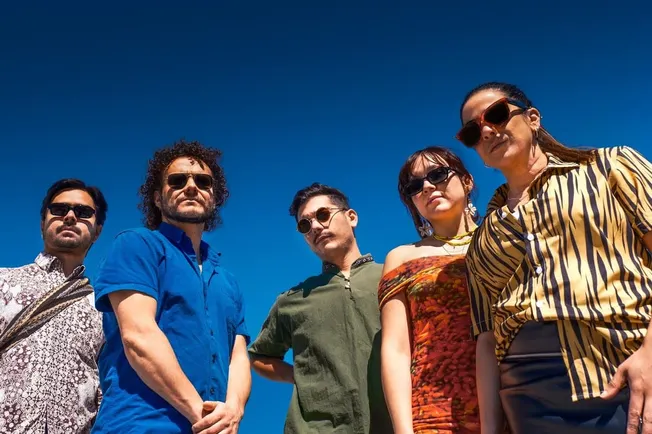
Empanadas Ilegales are a trip.
Their unique sound combines the psychedelic elements of Brazilian Tropicalia with the dance grooves of Colombian cumbia and jazz/funk chops to tighten it all together.
It's danceable, infectious, and weird, and truly built for the live stage; which the band acknowledges in the below conversation. They believe they arrived at this fusion of genres and sounds just by playing together over the years and feeling out what worked. It's a powerful experience, and more than anything, it's fun.
I got the sense from our chat that it's still fun for them too. After four albums and a lot of touring, they continue to hit the road hard. And this summer is no different — as they traverse the festivals and stages of North America, Empanadas Ilegales brings a familiar yet refreshing sound to audiences hungering for a good time.
Here's our conversation. Enjoy!
Hypebot: Hey Empanadas Ilegales! You’re on the road all summer playing some of Canada’s most prestigious festivals. In terms of building your audience was it difficult to find a listening community over time that enjoys your modern spin on cumbia rhythms and electric funk?
Empanadas Ilegales: "Thank you very much! We're humbled to perform on some very special stages across Canada and Colombia. Since the beginning, we've created music that inspires us, drawing from classic Colombian big-band cumbia of the late '50s and '60s, folkloric Colombian music, Peruvian, Ecuadorian and Argentinian cumbias, Brazilian music, West Coast psychedelia, jazz, and all kinds of other influences."
Our goal has always been to make people dance while blending a ‘not-necessarily-commercial’ psychedelic mix of rhythms, sound effects, and textures."
Somehow, following our instinct to mix these genres while keeping our Latin rhythms and roots intact has resonated with different audiences in Vancouver and beyond. From the punk scene to jazz, folk, and indie, we try to play for everybody, and we've been incredibly lucky that people connect with the sound."
H: In terms of fan base growth, was there a moment when everything changed for Empanadas Ilegales, and what if anything was the catalyst?
EI: "Not really... in a sense, our growth has been very organic. We've been at this for several years now, consistently releasing music and playing as many shows as we could. What started with local gigs around Vancouver has gradually grown into touring across Canada, and now we're beginning to play internationally as well. We're now onto our fourth album."
One specific moment when we all went, 'Oh wow,' was playing Place des Arts during the Montréal International Jazz Festival, the biggest jazz festival in the world. It wasn't necessarily the catalyst for our growth, but it definitely felt like a milestone and a moment where we reflected on how far the band had come."
H: Empanadas are both crispy on the outside and fluffy on the inside, stuffed with flavour. Do you consider your sound to be crispy, fluffy, or stuffy?
EI: "That's a good question. I think beyond those textures, what we really celebrate is the fact that the empanada is universal. Every country has its own version. Whether it's crispy, fluffy, or whatever, we're all empanadas."
H: What would you call your genre and why? Haha!
EI: "Our music sits somewhere between psychedelic cumbia, salsa, and tropical fusion. The most accurate description we’ve landed on is probably ‘Psychedelic Cumbia & Tropical Fusion’."
"Looking back, that approach probably explains why the music feels so alive on stage, it was never designed on paper, it grew naturally through playing together."
H: How did this sound get developed? In a way it feels BUILT for the live stage, it’s groovy but not boring, always changing.
EI: "The sound developed organically. We were following our desire to connect more deeply with traditional Latin American music and its incredible diversity of rhythms and sounds."
At the same time, we're based on Canada's West Coast, where we've been influenced by the local jazz, experimental, and psychedelic rock scenes. Those influences naturally blended with our musical foundation. Rather than trying to invent a new genre, we simply followed the music that excited us. Looking back, that approach probably explains why the music feels so alive on stage, it was never designed on paper, it grew naturally through playing together."
H: Speaking of the live stage, how different is the experience of playing a festival stage versus a club stage?
EI: "Truthfully, we approach every show in a similar way. Whether we're performing in a club or on a festival stage, our goal is always to deliver a powerful, danceable performance that gets the audience moving."
Sometimes that means we invite some guest performers playing Congas, Saxophone, Tambora. However, since last year, we've solidified as a live-quintet: guitar, bass, drums, maracas/percussion, and trumpet, which has allowed us to build a strong, consistent lineup that works equally well in both settings."
H: What changes do you make to your music when adapting songs from the studio to the stage?
EI: "When we're recording, our philosophy is simple: make the best possible piece of recorded music."
We create the foundational sound and then bring in additional musicians to add performances: congas, saxophone, Colombian folkloric percussion like tambor alegre and tambora, whatever helps the song become its best version; in our upcoming album we even feature a harp."
Naturally, since we're a five-piece live band, we've had to adapt those recordings by having certain members do double duty. For example, our trumpet player, Jocelyn, also plays a mini Korg synth, adding effects and mirroring melody lines while performing her trumpet parts. Both guitar and bass players contribute psychedelic textures through their pedalboards, and our drummer also uses a microphone to interact with the audience and guide transitions throughout the set."
H: With such a large band, is touring difficult or do you have the logistics down to a science?
EI: "Our latest five-piece lineup has actually made touring much easier… We now fit into a standard car! So thankfully, logistics haven't been much of a headache."
"If music is your thing, and you're surrounded by the people you love, and it keeps motivating you, then you're in the right place!"
H: What do you all like to do on your days off on tour?
EI: "We try to enjoy the local landmarks, play tourist, eat at local restaurants, catch other performances at the festivals we're playing, and, if possible, squeeze in a swim or a workout."
H: How important is live performance and touring to this band, is it something you prioritize and look forward to or is it all part of the same lifecycle as recording and publishing?
EI: "Absolutely. Live performance has always been central to this band. From the very beginning, our goal was to make music for the dancefloor, and that's something you can only fully experience by playing live."
That said, we equally love the recording process. Getting into the studio, listening back to old recordings / voice memos, experimenting and workshopping those ideas into songs is something we all genuinely enjoy."
H: What advice would you give amateur bands looking to spend more time on the road?
EI: "The most important thing is to make sure you're doing what you truly love. Your motivation should come from your love of music, not fame, not money, and not your ego or image."
If music is your thing, and you're surrounded by the people you love, and it keeps motivating you, then you're in the right place!"
H: What’s the one festival or venue you would love this band to play one day?
EI: "We don't have one specific festival or venue we've always aspired to play, but we've all talked about bringing our music to the European festival circuit. We'd also love to make the trip down to Seattle to play KEXP and hopefully a few US festivals... maybe sometime soon?'
H: Now, I have to ask: which empanadas are your favorite? Argentinian, Chilean, Ecuadorian, Mexican, Colombian or Venezuelan?
EI: "ALL OF THEM!!!"
But we’ll give a special shout-out to the unique Ecuadorian ‘Empanada de Verde,’ its dough is made with green plantains, which is unusual but incredibly delicious. If you don't know it, look it up, and if you're lucky enough to find one at your local Latin grocer, definitely give it a try."
Laboratorio Tropical by Empanadas Ilegales comes out August 28th. Pre-order or Pre-save here.