

Australia’s international touring circuit may be growing, but it remains profoundly uneven. An analysis published by streetwear company Culture Kings examined 29,665 shows by 1,121 international artists across 264 Australian cities and towns between 1954 and 2025.
The results put numbers behind a familiar complaint: where a fan lives still has an enormous influence on whether a tour ever reaches them.
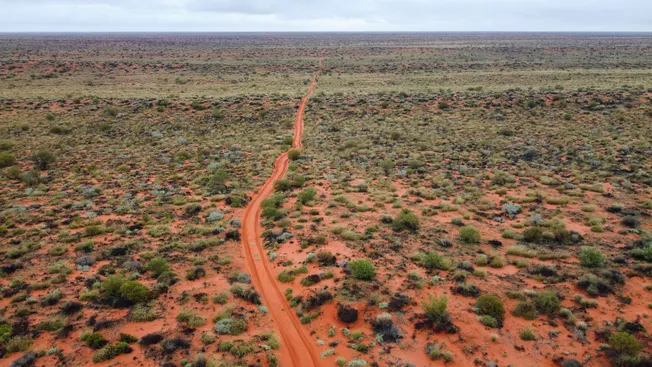
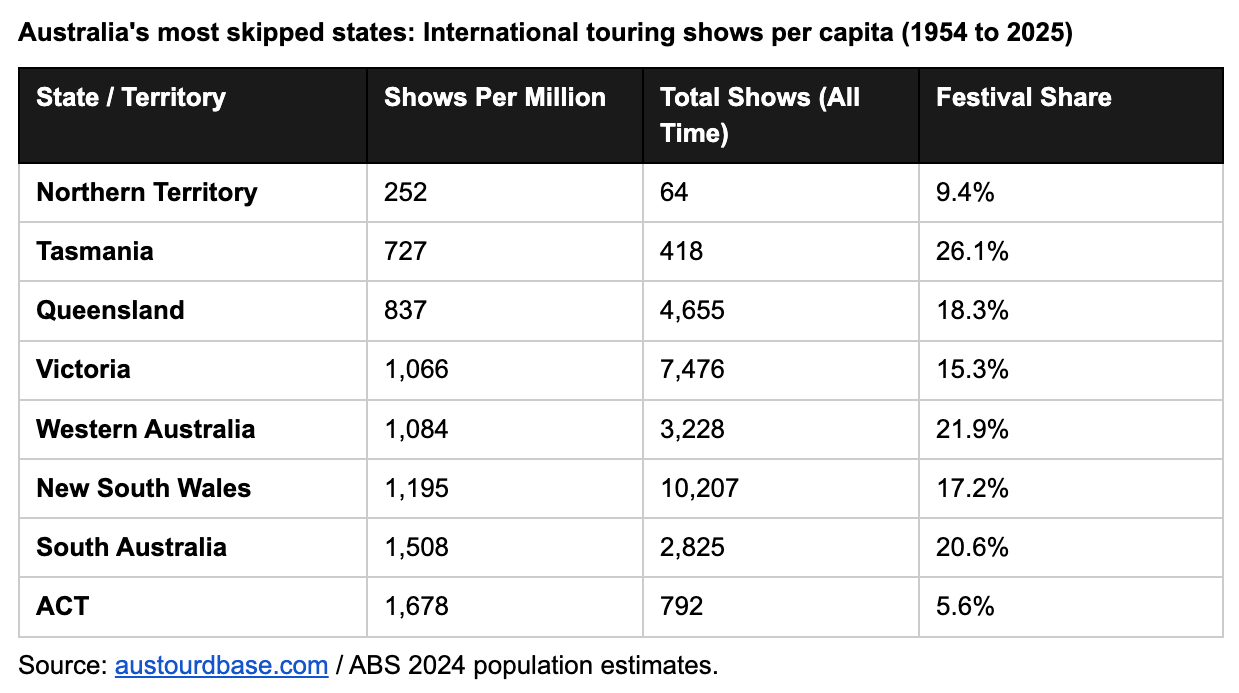
The Northern Territory sits at the bottom of the study with only 64 documented international-artist shows across the entire 70-year period. That works out to 252 shows per million current residents, compared with 1,195 in New South Wales.
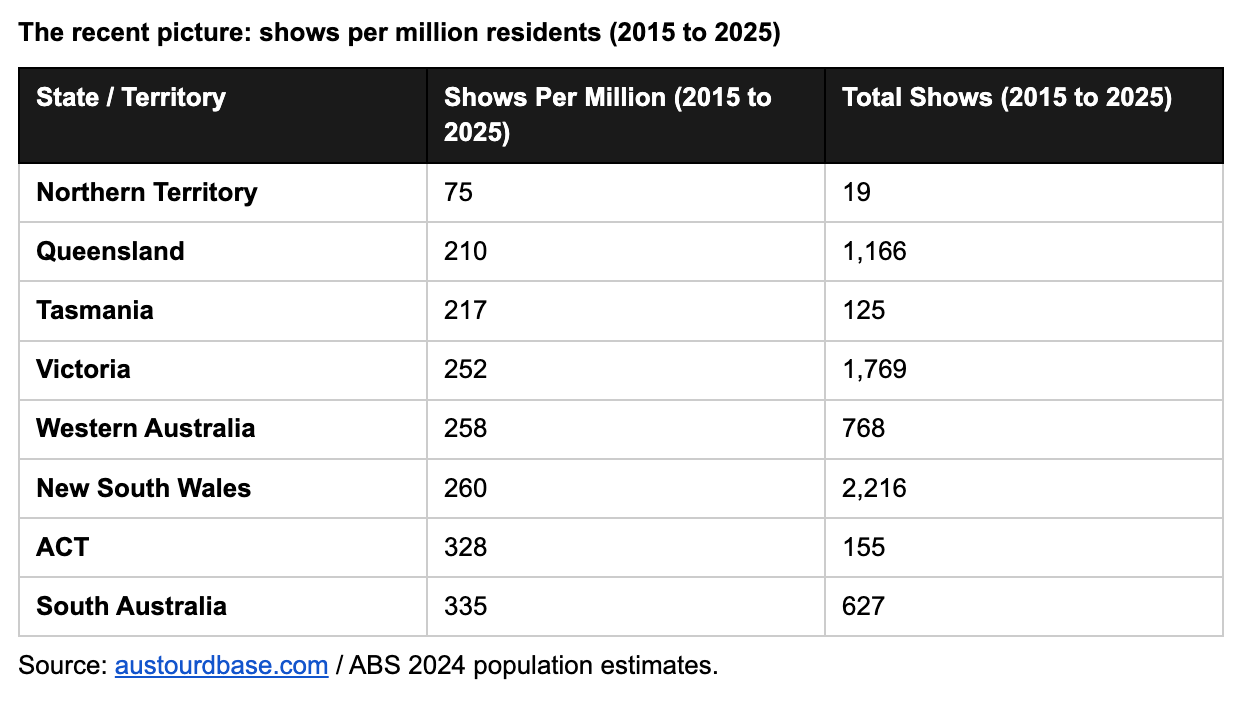
The gap has not disappeared in the modern touring era. From 2015 through 2025, the Northern Territory hosted just 19 international shows, or 75 per million residents. Queensland recorded 210 per million during the same period, while Tasmania received 217.
At the other end, South Australia logged 335 shows per million residents over the past decade, followed by the Australian Capital Territory with 328.
+Read more: "Tasmania Is Live Music's Most Confusing Frontier"
Sydney and Melbourne still dominate
Raw show totals reveal just how concentrated the Australian touring business remains. Sydney accounted for 7,783 international performances across the full dataset, while Melbourne received 6,836. Brisbane ranked third with 3,676—less than half Sydney’s total.
The drop becomes sharper outside the largest capitals. Newcastle recorded 601 shows, Wollongong had 286 and Hobart accumulated 270. Launceston received only 79.
Some of that concentration reflects the practical realities of touring Australia. International productions must contend with long distances, expensive freight, domestic flights, limited venue options and uncertainty over whether smaller markets can sell enough tickets to cover the additional stop.
Those constraints can make the familiar Sydney–Melbourne–Brisbane route considerably easier to justify than adding Darwin, Hobart or regional cities. But repeated across thousands of tours, individual routing decisions create a national access problem.
Queensland is an especially revealing case. Despite having more than 5.5 million residents, it ranked near the bottom of the per-capita table. International artists regularly visit Brisbane and occasionally the Gold Coast, but the state’s large regional population remains comparatively difficult to reach.
Festivals are the only route into some towns
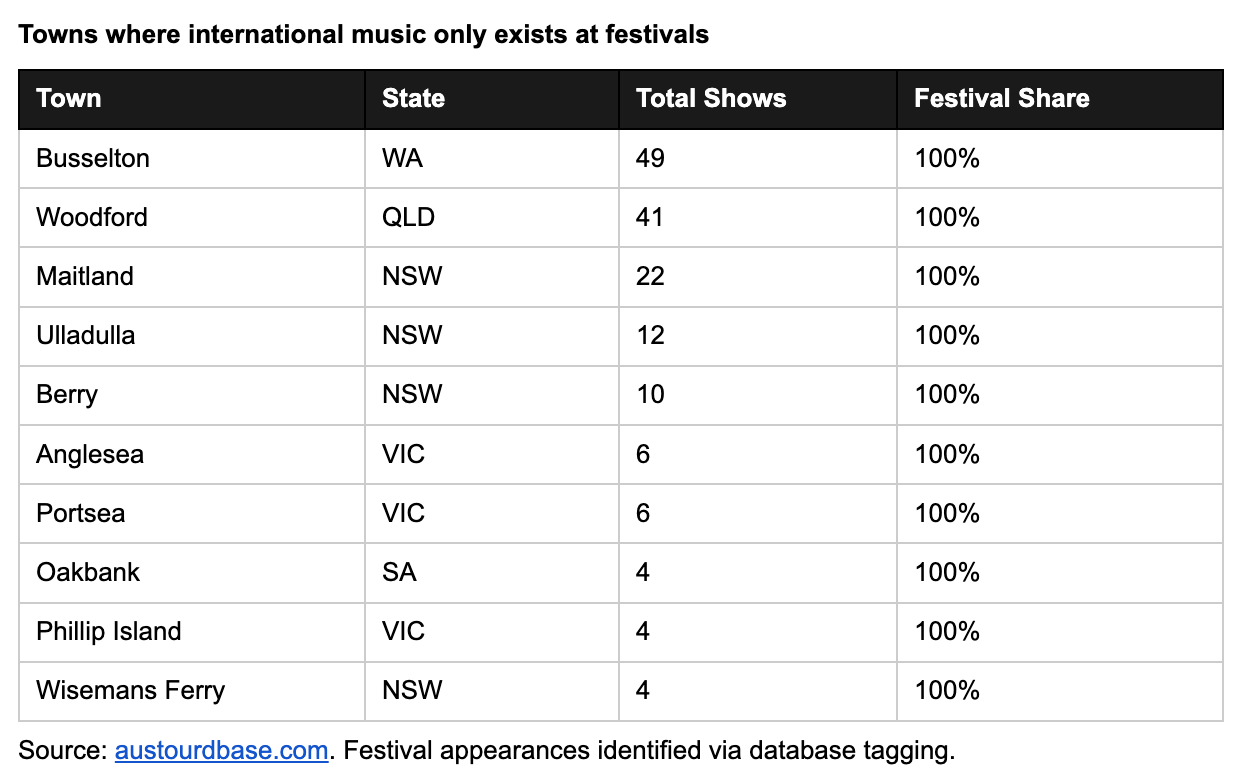
The study’s most consequential finding may be the role festivals play outside conventional touring markets. Every documented international performance in Busselton, Western Australia, was connected to a festival. The same was true of Woodford in Queensland, Maitland and Ulladulla in New South Wales, and several smaller towns.
Busselton’s 49 appearances were all tied to Southbound Festival, while Woodford’s 41 came through Woodford Folk Festival. In these communities, festivals did not merely supplement the local touring calendar. They created its entire documented international component.
+Read more: "Can Cheap Beer Save Australia’s Opening Bands?"
Tasmania received 26.1% of its historical international shows through festivals, the largest share of any state or territory in the study. That dependence makes the loss or suspension of a major festival more than a hole in the summer calendar: it can remove one of the region’s few reliable connections to international touring.
For promoters and policymakers, that finding strengthens the case for treating regional festivals as touring infrastructure. A festival can combine audiences, production resources and multiple artists in a way that makes a geographically difficult destination economically possible.
The data does require some caution. The Australian Concert Tour Database is community-maintained rather than a complete government record, and cities without documented activity cannot be identified as definitive zeros. The historical per-capita calculation also compares 70 years of shows against 2024 population estimates, so it should be understood as a broad measure of geographic concentration rather than a resident’s annual likelihood of seeing a concert.
Even with those limitations, the pattern is difficult to miss. Australia’s appetite for live music is national. Its international touring network still is not.
Culture Kings stands at the forefront of a worldwide streetwear phenomenon, showcasing a unique blend of music, sport, and fashion. These core foundations represent the three pillars from which Culture Kings is built.