

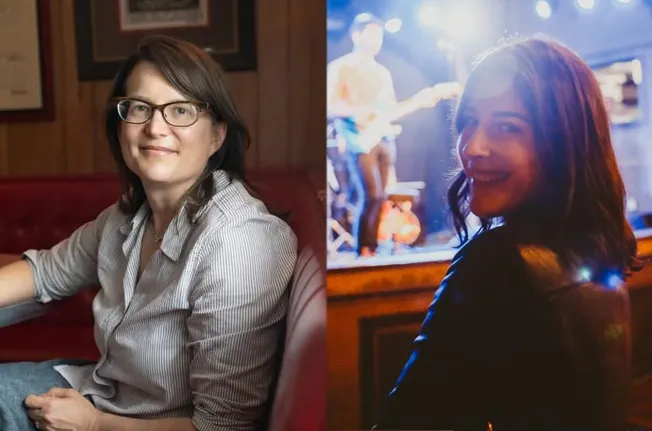
Welcome back to our new interview series, Manager of the Month, in which we spotlight the work of successful pros in the artist management space, and ask them to share (just a few of) their coveted trade secrets... shhh!
Manager of the Month is supported by Bandsintown Pro, the smarter way to promote live concert events.
Team Spirit is an artist management company headquartered in Chicago and New York City, that was founded in 1999 by former A&R executive and independent record label owner Andrea Troolin. Manager Victoria Roe joined the team in 2010, and the firm has celebrated over 25 years of being independently owned and woman operated. Not just that, their work extends far beyond the typical borderlines of "artist management" to include an array of special projects that are artist-forward and community-oriented. We talk about some of those projects below, you can find more information here.
Here's our conversation. Let's dive in. Enjoy!
Hypebot: Hey Andrea and Victoria. We’re talking now because of all the recent changes to your agency. You’ve changed the name, from Ekonomisk to Team Spirit, you’ve launched a new office in New York, and Victoria became a partner. What does this mean to you after 27 years in the industry?
AT :"Well, technically, it’s been 32 years in the industry for me — the party got started for me doing A&R at Rykodisc in the mid 90s where Andrew Bird and I crossed paths. What this new launch represents is a happy expansion of a vision of the management team I wanted to be part of when Ekonomisk Mgmt began, tiny but mighty, in 1999. Now having an incredible team around to share the thrills with, learn from, and be inspired by has been a true gift."
VR: "The new name represents how we operate… as a team and with plenty of spirit. Simple in concept but in practice is where it shines. Everyone on the team has a seat at the table for ideas and input, and the success of one’s client is a win for us all. After being in this biz for a long time, that feels pretty special."
H: Talk about meaning-making, TSM is a proudly independent, women-founded and operated firm. In fact… unless I’m mistaken this firm is 100% women-staffed, no? What does that say to an industry which has been dominantly gatekept by men for most of its existence?
AT: "Yes, we are currently 100% women-staffed. We’re not trying to say anything to the industry, we’re just working to build something different and true to our ideals."
VR: "Simply put: we built the kind of company we would want to work at. Everyone is welcome to a seat at our table."
H: In the “spirit of team,” what do you look for in an artist, and how do you work closely and in tandem with the talent to build opportunities that will be worthwhile to them personally?
AT: "I look for an artist or band that I can visualize performing at Carnegie Hall when they are 80 years old. That kind of lasting songwriting. We want to build such a sustainable career that that becomes possible for them. We work with every client in a completely different way, depending on what they need from us. The how involves deep listening and then bringing the art into the tangible, physical world."
VR: "Fans first and foremost. Whether it’s 5 or 5,000+, the ability to move people through song. Building a sustainable career is about zooming out, not just looking at the goals for this year or this campaign, but the goals 10 and 20 years from now. It’s about crafting a plan to get the artist where they actually want to go, not where they think they should be."
"The role of a manager these days involves being part of every corner of an artists ecosystem and business. We all owe it to our communities to bring energy and advocacy back into them and beyond. Music is a perfect conduit."
H: Looking back, where did the passion for music come from for you? And how did it grow?
AT: "I always loved music from the get go. I was a cellist, then played bass in a band and along the way started an indie-pop label (Grimsey Records), worked at record stores, DJ’d at college radio, promoted shows, and it grew by staying honest to my ideals, being unafraid to take risks, make some mistakes, and get my hands dirty."
VR: "I was a failed musician. Self-aware enough to know I didn’t have ‘it’ but opinionated enough to think I had a shot on the biz side. That, and the only thing I wanted to do beginning at age 13 was go to shows. I started showing up early to help flyer, load in merch, whatever needed to be done to make the show happen. Then I realized there might actually be a job in it."
H: You’ve been a producer on more events than we have time to talk about but I wanted to pull a couple out in particular. First, CAROLINADAZE is amazing. It’s a non-profit music festival tied to local business development, political action and advocacy, and civic engagement. Tell me a bit about this event. And why does a “manager” take this kind of thing on? Why should others?
AT: "The role of a manager these days involves being part of every corner of an artists ecosystem and business. We all owe it to our communities to bring energy and advocacy back into them and beyond. Music is a perfect conduit."
VR: "All of our clients make music in community and giving back to that community is essential to their business. Their job is incredibly hard, and finding purpose is important when the going gets tough. The pendulum swings between ‘artists must speak up’ and ‘shut up and sing.’"
In any case, I think we’ve all learned that action beats anguish… And I’m proud that our clients get their hands dirty with projects like CarolinaDaze – a first-of-it’s kind music + arts festival that galvanized young voters and where 100% of the proceeds benefited organizations working to protect voting rights, abortion access, and civil liberties. I learned fast that I have NO business being a festival buyer, but boy was I deeply honored to be on that ride."
I’ll never forget watching Janelle Monae take the stage and cheering for our beneficiaries."
H: Were there any growing pains getting into producing/organizing “live” events versus operating and executing publicity campaigns? How does it change the workflow to deal with live event production?
AT: "It’s not a dissimilar skillset or workflow — organization, communication and perseverance are crucial. Having been hands on in our client’s touring worlds for so long makes live production simply an expansion of something we’re already used to doing."
VR: "What’s that saying ‘how you do one thing is how you do everything?' That resonates here. It’s an extension of what we do on a day-to-day basis… Just with a bit higher stakes but so much meaning. But in any case, watching an artist's vision leave the ether to be realized on a stage in community is the most meaningful part of what I get to do."
H: Another project that embodies the collaborative spirit of this firm is Andrew Bird's Hope This Helps Fund, which supports environmental justice, music education access, mental healthcare, and gun violence prevention. What does Team Spirit do in this project specifically?
AT: "We work with Andrew to find incredible organizations to partner with that are a natural fit for the types of advocacy he wants to bring about in the world. It’s one of the best parts of the job, getting to know about the fantastic work so many folks are doing to make the world better."
VR: "$1 from every ticket sold on all of Andrew’s headline tour dates benefits the fund. And over the years, in addition to the donation, we’ve partnered with many of the beneficiary organizations like the campaign with Everytown for Gun Safety and more recently, an LA show at Largo benefiting Healthcare worker’s mental health."
"Always lead with honesty. People get starry-eyed when musicians enter the room, it’s hard not to. But as the manager it’s your job to be a pillar of honesty. When it’s hard to point out ugly truths or difficult situations, navigating with integrity and transparency earns trust."
H: What does a typical day look like for you?
AT: "Seems cliche, but there’s no typical day. I like to talk on the phone from my garden as much as possible, though I’m often lured inside for meetings or to tackle my email mountain. Best days are at the show."
VR: "The best part of management is that no two days look alike. I always try to hit my non-negotiables bright and early so that no doubt when chaos ensues, there’s time to problem solve."
H: Better pizza, Chicago or New York? And why? (Uh oh...)
AT: "The Chicagoan votes for NY for sure. A perfect NY Slice is one of the greatest foods known to humanity. I often travel home with a few foil wrapped slices that my daughter and I reheat in the cast iron skillet to get nice and crispy."
VR: "Our NYC office is in the same building as L’Industrie… Need I say more?"
H: What is the biggest thing you’ve learned working with artists over time?
AT: "It’s the long game so be patient, never go against your gut, make sure there are decent snacks to be had, do what you say you’re going to do."
VR: "Always lead with honesty. People get starry-eyed when musicians enter the room, it’s hard not to. But as the manager it’s your job to be a pillar of honesty. When it’s hard to point out ugly truths or difficult situations, navigating with integrity and transparency earns trust."
H: When was the first time in your life that a concert blew your mind? And the last time?
AT: "It’s impossible to pick or remember a first, I was spoiled seeing so many amazing shows in high school growing up in Minneapolis, First Avenue was an expressway to all things cool, I remember Sonic Youth really blowing my young 16 year old mind on the Daydream Nation tour. I never used to like large shows but two blew my mind this year both at United Center in Chicago — Rosalia and Phoebe Bridgers — Hands down some all time favorites."
VR: "Something Corporate when I was 13. It was the first show I bought my own ticket to, and the first time I felt like a real fan. That band, its fans changed my life in many ways. More recently, Janelle Monae at SXSW. Janelle’s integrity as an artist, and activist and her creative vision expanded what I value in a performer. She came out on a stretcher… Enough said."
To learn more, visit Team Spirit Management.
Join the leading live event professionals saving time and selling more tickets with Bandsintown Pro.