

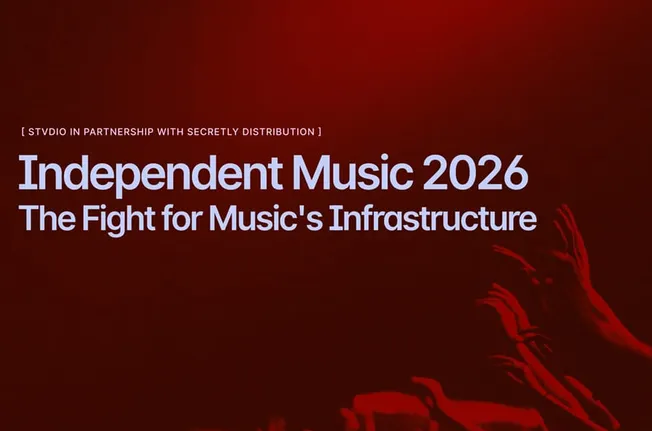
Research company STVDIO has released its first quarterly report, Independent Music 2026: The Fight for Music’s Infrastructure, with support from Secretly Distribution.
Written by STVDIO founder Benjamin James, the report examines who controls the tools and services independent artists rely on — and where the sector has opportunities to build alternatives.
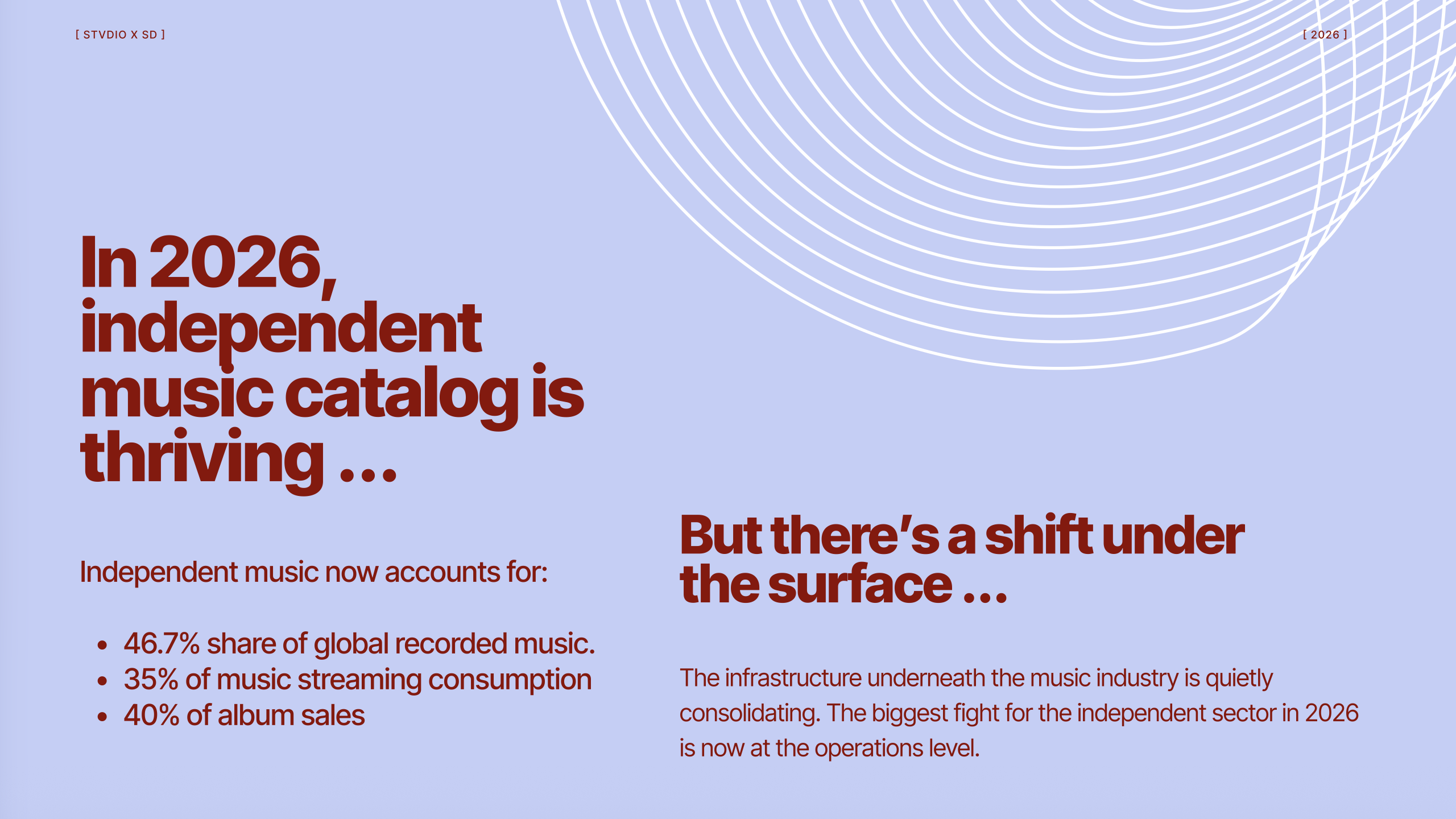
Its starting point is encouraging: the report puts independent music’s share of global recorded music revenues at 46.7%. But its central argument is that a growing share of the music doesn’t necessarily translate into greater control over the business surrounding it.
Drawing together industry deals, platform developments, and artist examples, the report identifies several issues worth watching.
1. Keeping your masters is only part of the independence question.
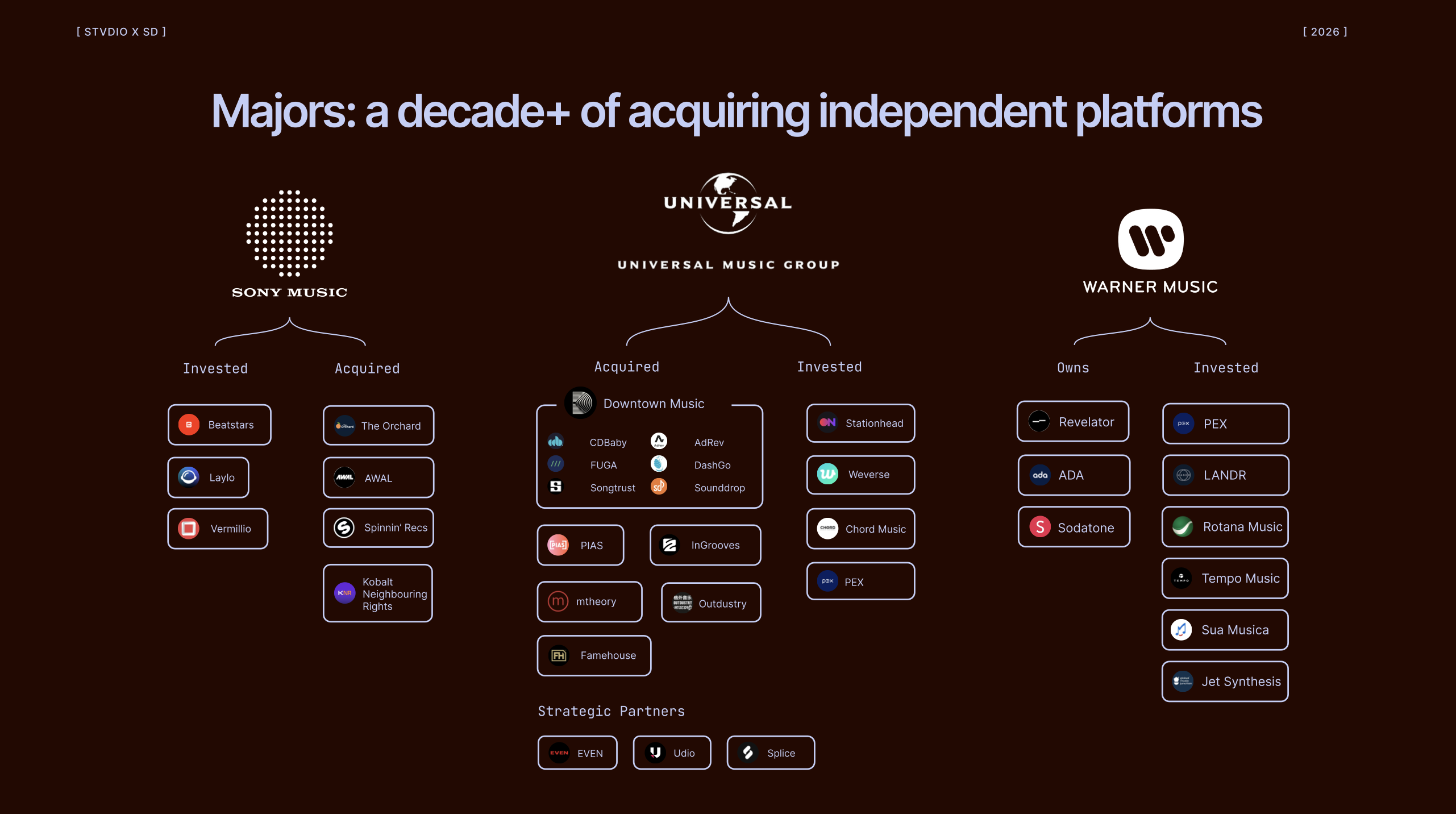
An artist can retain their copyrights while relying on distribution, royalty accounting, or publishing administration systems controlled by a major music company. The report traces how acquisitions — including Sony’s purchases of The Orchard and AWAL — have expanded major-label involvement in independent releases.
For artists, that makes the ownership behind a service worth understanding alongside its pricing and features. The report argues that control over these systems brings access to valuable data and influence over how music reaches the market.
2. AI licensing offers an opening, with plenty still unresolved.
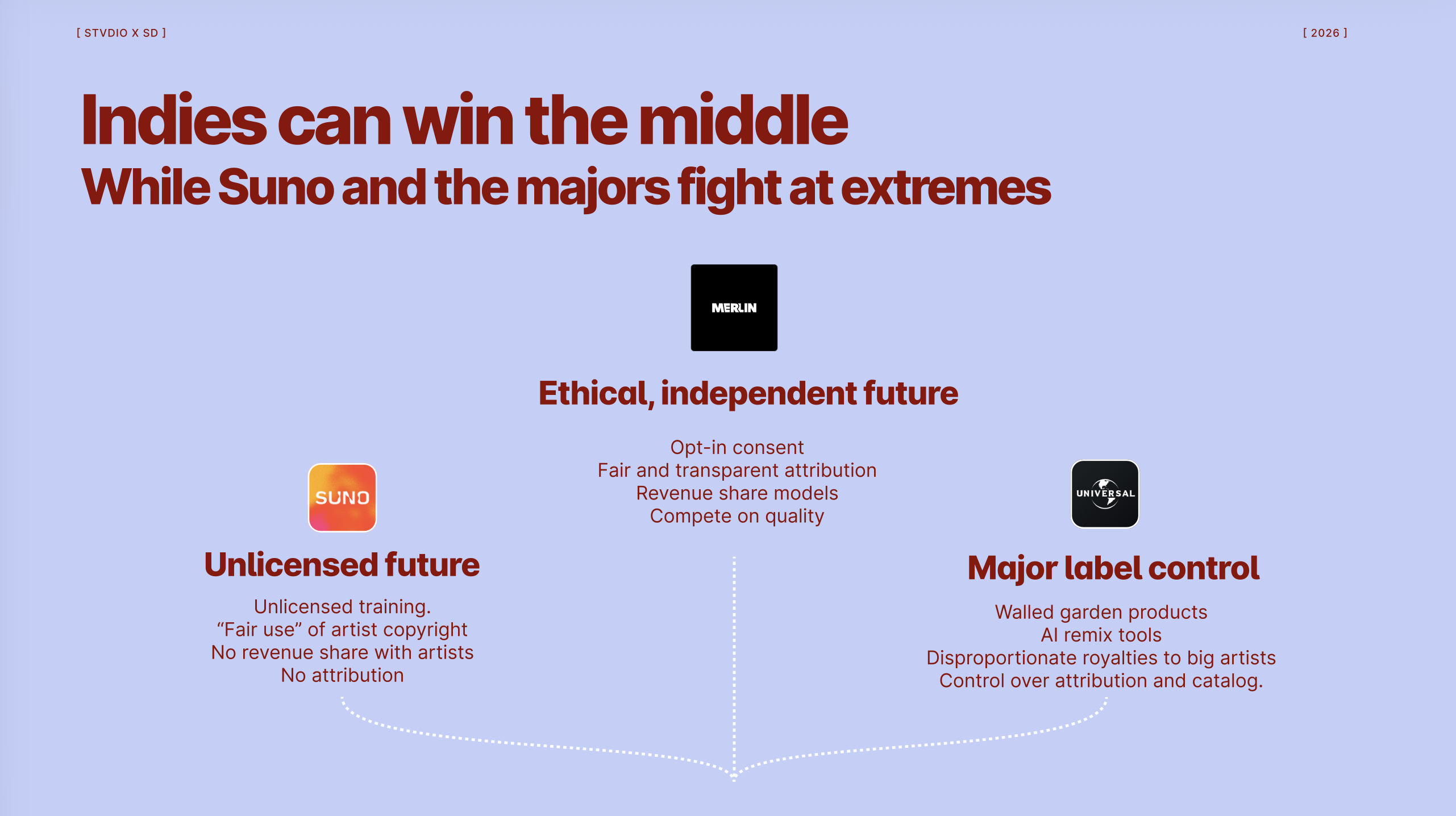
STVDIO argues that independent organizations have an opportunity to help establish consent, attribution, and payment standards as AI music licensing develops. It highlights Merlin’s and Kobalt’s agreements with ElevenLabs as examples of opt-in arrangements that allow participating rights holders to share in revenue.
But the report also acknowledges how much remains unsettled, including how a catalog’s contribution to a model should be measured and how payments should be calculated.
Participation is another question. According to the report, Secretly Distribution offered the license to more than 100 label partners; only three labels and seven artists opted in. The potential business opportunity clearly hasn’t resolved artists’ concerns about the technology.
3. Independent companies can build more together.
The report points to collective investment as one way to preserve alternatives to major-label and investor-controlled services. Among its examples: 24 independent labels investing in streaming platform Cantilever through an effort organized by ORCA, and Merlin partnering with Jamen Capital to acquire Curve Royalty Systems.
The argument is practical: independent businesses can pool resources to support the services they need, including the less visible systems that track and distribute royalties.
4. Smaller streaming services have room to serve specific audiences.
Rather than assuming every platform needs to offer everything to everyone, STVDIO highlights services built around particular listening habits, genres, or markets.
Cantilever, for example, offers a rotating selection of roughly ten handpicked albums per month and allocates each subscriber’s royalties to the albums they actually hear. The report also discusses Qobuz, Audiomack, and specialist services such as classical platform Idagio, examples of opportunities for discovery and listening experiences tailored to particular communities.
5. Direct fan relationships are becoming tangible business assets.
The report cites Mitski converting more than 200,000 fans to her mailing list through Instagram tour announcements, and Japanese Breakfast collecting hundreds of phone numbers per night using venue QR codes.
For working artists, this may be the most immediately useful takeaway: releases and concerts create moments when listeners have a reason to stay connected. Giving them a clear way to subscribe can help turn that attention into an ongoing relationship an artist can maintain directly.
Read and download Independent Music 2026: The Fight for Music’s Infrastructure through STVDIO’s reports page.
Get the latest Live Music & Industry News updated continuously from across the web under the Hypebot Industry News tab here.