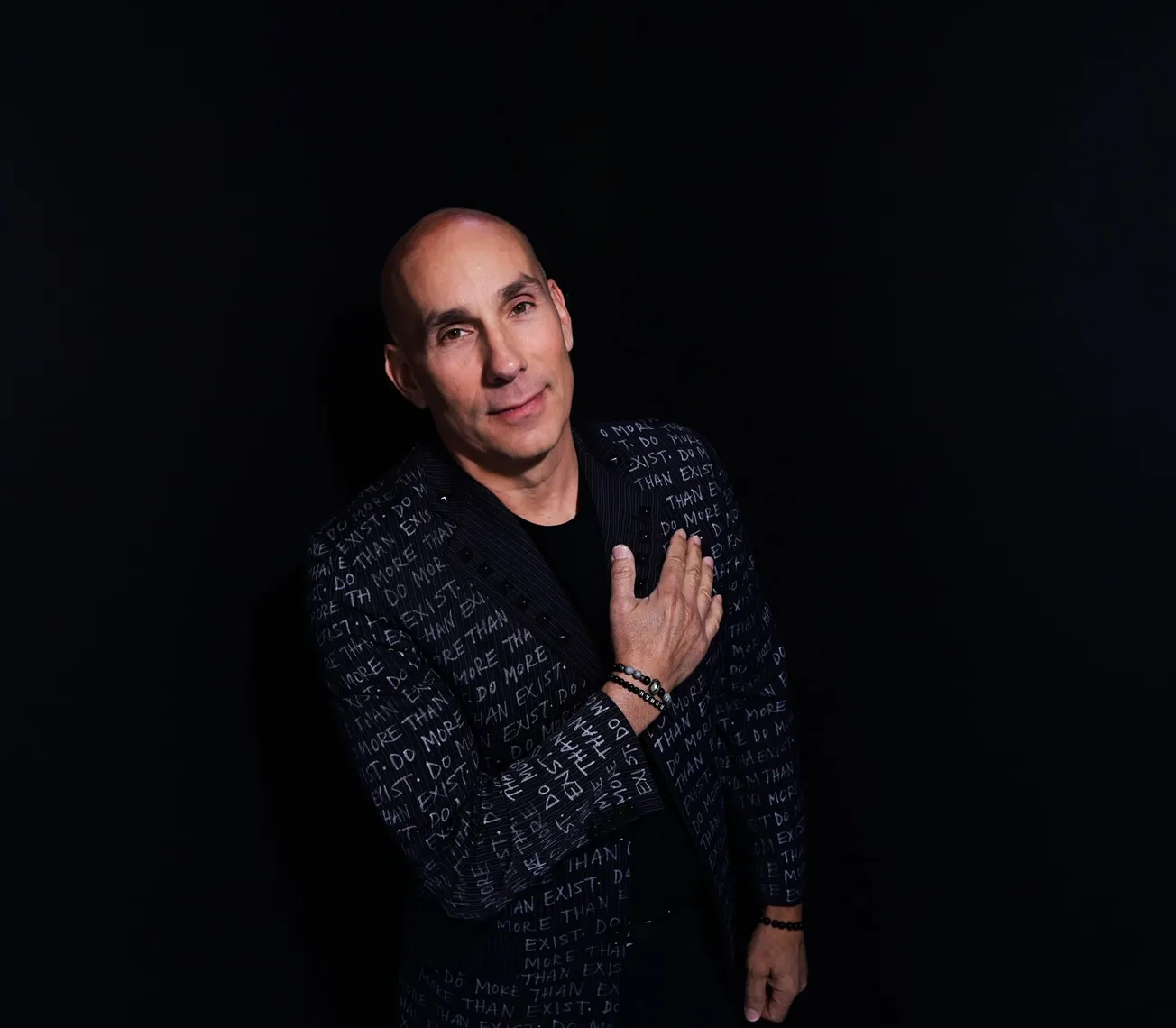


By Ian Temple of Soundfly Weekly
*Follow Ian Temple's Substack, Soundfly Weekly for more essays on creativity.
I’m obsessed with a moment in history roughly 5.3 million years ago.
Basically, for half a millions years or so, the Mediterranean Sea was disconnected from the Atlantic Ocean that feeds it. The water evaporated, and what we now know as a massive body of water was more of a desert-y basin full of large soggy puddles and salt flats.
Then, at some unknown point and for some unknown reason, it all changed. A little stream broke through the land bridge between what’s now Spain and Morocco. The little stream became a big stream, and the big stream became a massive deluge. The water from the ocean came rushing in with the ferociousness of a billion feral hogs.
This is called the Zanclean flood (or megaflood), and it sounds geologically bananas, at least according to the fun scientists who let us dream (less so the pedantic ones who insist that some of this evidence is contested). Usually when we’re talking geology, something happening “fast” means a few thousand years or so, but the Zanclean flood may have happened in the geological equivalent of a blink of an eye, a few years or months even. Some people estimate the water level in the Eastern Mediterranean raised by 10 meters a day at times.
I asked my stepdad, who is a geology professor, to fact check this intro, and he added that the water volume entering through the straits may have been 400-500x that of the Amazon river. “It must have been a hell of a sight!” he adds.
Is this the greatest “un-blocking” in all history? It’s gotta be top ten at least. I feel like there must have been a similar moment in the primordial soup when the first cell buzzed into something approximating “life,” or later when the first cells bunched themselves up into a cute little squidgy network that became slightly “brain-ish.” But the sheer imagery of a gazillion gallons of ocean water plowing through a small strip of land to reclaim the Mediterranean for its watery dominion is tough to beat.
Somewhere else on that list is probably the first Blues man who realized that he could play a broken guitar by sliding a knife along the strings and make it sound like the tears of an entire people.
This week, I was reminded of the outsized power certain blocks can take on in the creative process.
Tell me if this sounds familiar. You’ve got an idea you’re excited about, but there’s something fairly small holding you back from executing it. Maybe it’s a song that requires recording vocals, and you don’t have a good vocal mic. Or it requires a software update that means remembering an old password you’ve forgotten. Or you’re a little uncertain about the third measure of the B section, and that’s preventing you from recording the whole song. Or you don’t even know why you’re not doing it — there’s just some vague, unexpressed, and unidentified assumption in your mind that’s holding you up.
Then, over time, that small thing seems to build and build, as it takes on the increasing weight and pressure of your missed deadlines and expectations. It grows to monstrous proportions in your brain, like the shadow of some small thing blown up on the wall via projection. What was initially a 20 minute project of organizing your patch bay or finding your favorite pen or figuring out a part becomes this ironclad excuse, this endless reason not to move forward. It stacks on other more ethereal and eternal reasons, like fear, vulnerability, perfectionism, etc. It takes on swamp monster dimensions.
Meanwhile, your project starts to resemble the desiccated salt flats of the evaporated Mediterranean. But as with the Mediterranean, so with your project! Perhaps your own Zanclean flood isn’t far away!
The solution here seems extremely simple: 1) identify the obstacle, 2) remove the obstacle. But somehow it’s not anywhere near that simple in reality.
For one thing, the obstacle is not always obvious. I was talking to a member of my Draft // Echo accountability group this week, and for her, the obstacle turned out to be discomfort. She’s trying to learn an EWI (electronic wind instrument), but every time she played, it was a little uncomfortable. And without fully realizing it, that pain was creating this negative association and barrier to practicing. When she finally figured out that’s what was happening, she was able to adjust how she played, reduce the discomfort, and since then it’s all gotten a lot easier.
Often, for me, this requires explicitly writing down what I think the obstacle might be as a first step. Writing has a power of forcing your assumptions into the light, as I’ve written about before.
This is especially true if the obstacle is mental, rather than physical. With mental blocks, I have an advisor who used to tell me to give it a name, express gratitude for how it might have protected me in the past, and then place it gently on the metaphorical shelf. “Thanks, Perfectionism, for pushing me to be my best self, but I don’t need you right this second, so I’m going to put in this corner of my brain for now, cool? Great.” Corny, but it works in a way.
But also, even once you know what the obstacle is, there’s a reason you’re not doing it, especially once it starts to grow in size in your head. That’s why I think it’s important to shrink it back down to its actual size before starting in on it.
Once again, writing can help here. Sometimes, the barrier has multiple steps to it, and the multiplicity becomes the thing that’s getting in the way, giving it this vague cloudy form that’s tough to puncture. Once you take that cloud and turn it into a list of clear, simple steps, it becomes much easier to take action. Step one: Figure out what type of cable is needed. Step two: Order said cable online. Step three: Plug cable in. Step four: Beauty!
And sometimes, what you need is simply to sit down and do the thing. The challenge is that many of us don’t have a lot of time for our creativity, and so we guard it very carefully. If you only have 30 minutes of time to spend on your creative pursuit this week, who wants to use it figuring out some logistics thing?
In these cases, it’s often a mindset switch that’s needed. You need to recognize the Zanclean flood-iness of it all, and decide that it’s totally OK that your creative time this week is going to be spent on pulverizing an obnoxious land bridge instead of working on your craft because the payoff is worth it.
These days, the entrance to the Mediterranean Sea is sometimes called the Pillars of Hercules. I like that because it nods toward the Herculean effort that it can take to remove even a fairly small (geologically speaking) obstacle.
And yet, at the same time, the Ancient Greeks also imagined that it could be done by a single dude.
This week, I challenge you to try to identify any obstacles that may be blocking you. Take a piece of paper, and write them down, one sentence to each. Then, figure out which of them will have the greatest creative impact, and resolve it.
NEW: 1:1 Coaching Sessions Available
I just built my first website (with help from Claude Code): a new coaching service I’m going to be offering with some great teachers and musicians. There will be an official launch at some point in the near future, once I’m sure the bugs are worked out, but if you want to be among the very first to try it, please be my guest!
In particular, if you want coaching with me on the creative process, on piano, on writing songs for piano, on making experimental music, or on music theory stuff, feel free to visit my profile and set up a free intro call here. I’m only going to take on a few students, so spots are limited!
Five Interesting Things
- If you want more Zanclean flood content, I recommend Tomas Pueyo and his Uncharted Territories substack piece on it (as well as his YouTube video of it). You’re welcome.
- Synthesist Jeremiah Chiu has a new album out called Edge Conditions, and it’s awesome. I’m a big fan of his collaborative project SML. I enjoyed this interview with him by Philip Sherburne on Futurism Restated. In particular, it makes me want to collaborate a lot more. Chiu also talks about a time they played a concert in a van but broadcast to different parked cars via FM transmitter? Wild stuff.
- I was listening to Chuck Klosterman on Derek Thompson’s podcast today, and he talked about how people come up with three reasons why something’s popular: 1) explainable merit (e.g. something in the mechanics of the music that can be learned that’s awesome), 2) unexplainable merit (e.g. music is magic, and sometimes it just hits), and 3) luck (e.g. something needs to be popular, and it’s this thing’s turn). He says music writers often focus on 1, musicians themselves on 2, and people turn to 3 when they discount the other two. I tend to think it’s some combination of all the above.
- I’ve been reading Stefan Zweig’s The World of Yesterday, and it’s wild just how much the European artists, writers, poets, and playwrights used to meet up and connect pre-WWI. Like, he’d visit a new town, and just go knock on the door of some other famous writer there because, as far as I can tell, they’re both writers. And then they’d start a correspondence for life. Maybe we’re doing the same thing today just via Instagram, Discord, and DMs?
- Steve Reich comes up a fair amount in these essays. Well, apparently he’s turning 90, has a new piece coming out that sounds wonderfully Reichian, and is still a legend.
Ian Temple is the Founder and CEO of Soundfly. Follow his Substack, Soundfly Weekly for essays on the creative process, or join the growing community of musicians and educators on Soundfly for free today.