

By Kirill Smetkov, Co-Founder ande CEO of 0to8
For years, brands have built their social media marketing strategies around a pretty simple assumption: if you want attention, you need to collaborate with influencers. The logic behind this is understandable — brands find creators with reach, pay them to talk about their product, and hope that their audience catches on. Sometimes, entire marketing budgets are built around this model.
But as always, the landscape of short-video content — TikTok, Instagram Reels, and YouTube Shorts — is rapidly changing. In addition to creators’ personalities, it’s now also the sound that is driving user behaviour.
Audio trends are spreading much faster and often more organically than individual influencers. Entire communities are forming around sounds long before marketers even notice. And in a lot of cases, the sound itself is becoming the main trend rather than just accompanying the content.
"Most marketers assume influence flows from the top down, but increasingly, platform culture works the opposite way."
Why Audio Has Become Cultural Infrastructure
Short-form video platforms work differently from traditional social networks. Instead of merely following creators, people participate and recycle ideas. Crucially, they recreate content using the same visual language, editing style, and the same audio.
An individual creator might kick off a trend, but what actually makes that trend scale is often the sound attached to it. Once the audio starts resonating inside a specific community, it becomes a shared cultural asset. Thousands of creators can use it while making completely different content, and the audio becomes connective tissue linking it all together.
That's why sounds often travel further than the creators who originally used them. At 0to8, we've seen this pattern repeatedly — communities don't necessarily gather around shared interests or based on demographics. They gather around the universal language of content, and audio is one of the strongest markers defining these languages.
Unsurprisingly, the numbers support this trend. TikTok's 2024 Music Impact Report indicates that 84% of all songs that entered the Billboard Global 200 in 2024 went viral on TikTok first. In general, social media plays an integral role in music discovery for people age 12-34: 63% use Instagram, 58% use TikTok, and 18% use Facebook as sources to stay up to date with music.
By comparison, Deloitte's Digital Media Trends study found that 82% of Gen Zs and 70% of millennials find out about new artists or music through social media or UGC video sites, while only 23% discover new music through streaming service recommendations.
+Read more: "What Is a Sonic Identity and Why Every Brand Needs One"
The Porsche Lesson: Communities Validate Sounds Before Brands
One of our artists, Udiennx, released a track called "Vision." The track wasn't made for automotive brands and wasn't a part of any advertising campaign, but nonetheless connected with a community of luxury car enthusiasts. Creators were producing cinematic videos featuring Porsches, Ferraris, AMG models, and other high-performance vehicles accompanied with the song.
Over time, it featured in thousands of edits, firmly embedding the song within the car community.
Porsche noticed the connection between the song and its community and used it within their own campaign. By jumping on a trend, formed naturally by the community, they were able to take advantage of the momentum that would be difficult to manufacture through paid promotions.
The Santa Fe 2 Effect
A similar pattern emerged with "Santa Fe 2" by our artist qaraqshy. The track initially took off inside Brazilian creator culture, particularly among comedy creators producing absurdist short-form content.
Similar to the “Porsche song,” nobody planned a global campaign, no major influencer seeded the trend. The sound simply fit the content and the dynamic being created inside that community, and thousands of creators adopted it.
Only later did larger personalities enter the conversation. Eventually, KSI featured the track during one of his biggest streams, helping amplify the trend alongside his beverage brand PRIME. In both of these examples, sequence matters: it’s the community first, creators second, brands and celebrities third. Most marketers assume influence flows from the top down, but increasingly, platform culture works the opposite way.
What Football Marketers Understand That Many Brands Don't
Some social media teams already understand how important the sound is for reach and engagement. For example, football clubs and leagues are particularly effective at monitoring rising sounds because they know much audio affects performance. Videos using trending sounds see significantly higher engagement rates than those using original or non-trending audio, according to the Sprout Social Index 2025.
Even if the content is pretty simple, using a trending sound can make a huge difference for discoverability and engagement. That's why football marketers often move quickly when a track begins to gain momentum.
+Read more: "How We Built a Tour Identity for Fred again.. That Fans Made Their Own"
Today, they are still an exception to the rule as most consumer brands haven't adopted this mindset. Most social listening dashboards track hashtags, keywords, mentions, and influencers, but very few track audio behaviour with the same level of discipline.
Sound Monitoring as a Core Marketing Capability
In addition to monitoring creators, competitors and sentiment, brands should incorporate monitoring sounds into their routine. This provides a valuable opportunity to identify what's becoming viral inside relevant communities before it reaches mainstream feeds. By the time a trend appears everywhere, most of the upside has already been captured. The advantage comes from spotting adoption patterns early and participating while a community is still shaping the trend.
The data shows that the payoff is substantial. Brands that use TikTok's music-driven, sound-on ad solutions see a 120% awareness rise, and a study found that brand linkage and recall increase by over 8x when distinctive brand sounds are leveraged in ads compared to slogans and logos.
Another TikTok study revealed that 68% of users remember a brand better when it features songs that TikTokers like in their videos, and 58% are more likely to talk about the brand or share the ad.
The scale of short-form video makes this even more critical. YouTube Shorts now generates more than 200 billion views per day.
The brands generating disproportionate reach over the next few years won't necessarily be the ones paying the largest creators, but rather identifying the right sounds at the right moment and understanding which communities are building around them. In an era of short attention spans, catchy sound helps create culture.
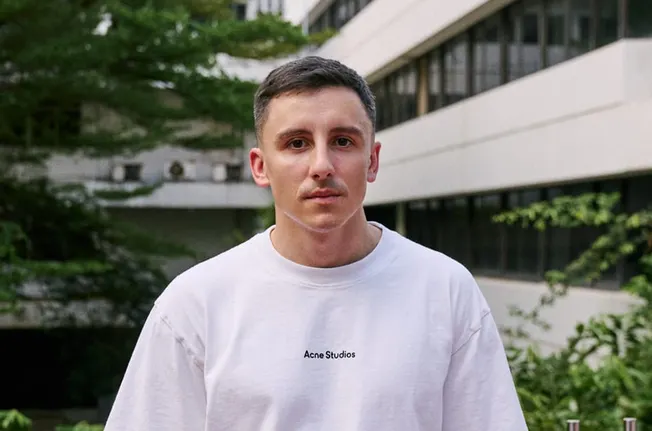
Kirill Smetkov is the Co-Founder and CEO of 0to8 (Zero to Infinity), a next-generation music label that builds scalable, data-driven artist growth systems through TikTok and other digital platforms. Kirill oversees operations, internal processes, and the development of the label as a scalable, digital-first business. Today, the project is expanding in the MENA region with a strong focus on international growth.