


By Simon Lodge of Team
Last year, 88% of tracks on streaming platforms received fewer than 1,000 plays.
Let that land for a second.
Luminate's 2025 year-end report painted a picture that anyone working in music should be paying close attention to. There are now 253 million tracks sitting on streaming services. Another 106,000 arrive every single day. And of everything that's out there, almost half received fewer than ten streams in an entire year. Not ten thousand. Ten.
The default reading of those numbers is that there's simply too much music. The market is saturated, the algorithms are overwhelmed, and most artists are fighting a losing battle against sheer volume. That reading is understandable. It's also wrong.
Because here's the other side of the same data: 5.1 trillion streams happened in 2025. Global recorded music revenue hit $31.7 billion, the eleventh consecutive year of growth. 837 million people are paying for streaming subscriptions. The demand for music has never been higher. People are listening. People are paying. The audience is enormous and growing.
So you have a $31.7 billion industry with record demand on one side, and 88% of its output barely registering on the other. That gap tells us something important, and the answer has very little to do with the quality of the music.
The Noise Is Real, But It's a Distraction
It's worth acknowledging the obvious: the volume of new music being uploaded every day is staggering, and a growing portion of it is noise. Deezer recently reported that 75,000 AI-generated tracks hit their platform daily, making up 44% of all new uploads. Of the streams those tracks generate, 85% are flagged as fraudulent. That's a real problem, and platforms are right to be tackling it.
But the AI flood is a separate conversation. Strip it out and you're still left with tens of thousands of legitimate releases from real artists every single day. 96.2% of daily uploads come from independent and DIY artists. These are real people, making real music, putting it out into the world. And the vast majority of it sinks without a trace.
The industry tends to frame this as a discovery problem. If only the algorithm were smarter; if only the playlist editors cast a wider net; if only listeners were better at finding new music. But discovery is the end of a chain, not the beginning of one. A track has to be positioned before it can be discovered, and pitched before it can be playlisted. It has to have a campaign around it before any of the downstream mechanics can kick in.
And that's where most releases come up short. Not in the studio. Not even on the platform. In the gap between finishing the music and getting it in front of the right people, at the right time, in the right way.

+Read more: "What Are Music Curators Actually Looking For? Insights From 100K Submissions"
Where Releases Actually Fall Apart
There's a common assumption that the difference between a release that connects and one that disappears comes down to budget, or connections, or luck. Some of that is true, some of the time. But the data points to something more structural.
Artists who pitch editorial playlists 10 to 14 days before release are three times more likely to receive editorial consideration than those who pitch last-minute or not at all. Accurately tagged metadata leads to twice as many algorithmic playlist placements in the first 30 days. Pre-save campaigns built around countdown pages generate six times more saves than off-platform links.
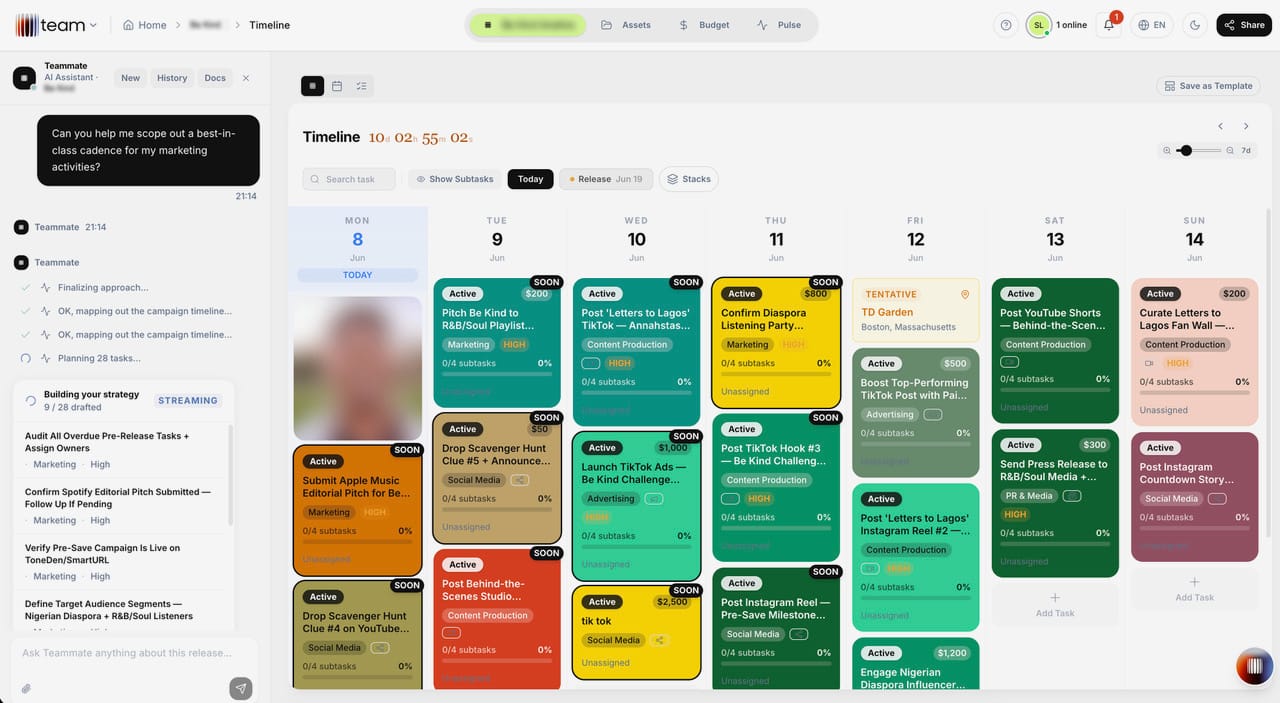
None of these things require a major label budget. They require planning. Someone building a timeline that starts weeks before the release date, not days. They require the kind of structured, sequential campaign thinking that most industries treat as table stakes but that music still treats as optional.
When you look at the 88%, the pattern becomes clear. These aren't tracks that failed because the music wasn't good enough. They're tracks that were uploaded and then, effectively, abandoned. No pre-release build. No pitch strategy. No coordinated push across platforms. No plan for what happens after the song goes live.
The music was arguably the easy part. Everything around it was where it fell apart.
The 75% You're Leaving on the Table
If there's one stat that should reshape how artist teams think about release campaigns, it's this one: 75% of a release's first-year streams happen after the first month.
That means the vast majority of a track's commercial life plays out long after the launch buzz fades. And yet, most independent release campaigns are designed almost entirely around release week. The social posts go out, the playlist pitch lands, a few blogs get a DM. Then the team moves on to the next thing, and the track is left to fend for itself.
This is backwards. The teams that consistently break through the noise are the ones who treat release day as the midpoint of a campaign, not the finish line. They keep feeding the track with new content angles, retargeted ads, secondary playlist pushes, sync pitches, and live tie-ins. They stay on it because they understand that streaming algorithms reward sustained engagement over spikes. A track that gets a burst of plays on day one and flatlines by day ten is algorithmically dead. A track that builds steadily over weeks and months keeps getting pushed to new listeners.
The math is simple. If your campaign ends at release week, you're optimising for 25% of the opportunity and walking away from the other 75%. For most independent artists spending $200 to $500 per release on marketing, that's not a budget problem. That's a structural one.
The Compounding Problem Nobody Talks About
There's a deeper issue underneath all of this that rarely gets discussed, yet I think it's the most consequential one: Every release starts from zero.
Think about how most artist teams work:
A new single is coming out, so someone builds a rollout plan. They figure out the timeline, the assets needed, the platforms to target, the pitch list. They coordinate across the team through messages, emails, shared folders, and calls. The release goes out. Some things work, some don't. And then the whole process resets. Next release, new plan, built from scratch. The insights from the last campaign — what content performed, which audiences engaged, where the drop-off happened — all of it lives in someone's head or buried in a thread somewhere. It never compounds.
Compare that to how any other industry thinks about campaigns. A consumer brand running product launches doesn't throw away its playbook after each one. It builds frameworks. It tracks what worked. It iterates. Each campaign gets sharper because it's built on the data and learnings from the last one.
Music doesn't work that way. At least, not yet. And that's a significant part of why 88% of releases end up in the same place, regardless of how good the music is. The teams behind them aren't learning at the pace the market demands, because the infrastructure to capture and reuse those learnings simply doesn't exist for most of them.
The managers, project coordinators, and marketers doing this work are talented and hardworking. But they're also operating without systems. They're rebuilding the plane mid-flight, every single cycle, and the result is that momentum gets created and lost in equal measure. The compounding effect that separates good marketing from great marketing never gets a chance to take hold.
What the 12% Actually Look Like
So what separates the releases that break through? Having spent a lot of time studying this, a few patterns stand out, and none of them are about having more money.
- They work to a release timeline, not a release date. The campaign starts four to eight weeks before the track goes live and runs for at least that long after. Everything is sequenced: pre-save, content rollout, pitch windows, launch, post-release pushes. Yes, the release date is an important beat in the campaign, but it's one among many.
- They treat metadata like a distribution strategy. Genre tagging, ISRC accuracy, songwriter and producer credits, mood descriptors. This is how algorithms categorise and surface music. Getting it right is one of the highest-leverage things a team can do, and the good news is that it costs nothing.
- They don't abandon the track after launch. Post-release activity, whether that's continued ad spend, content repurposing, secondary pitching, or sync opportunities, is planned in advance and resourced properly. The campaign keeps running because the team designed it to keep running.
- They build feedback loops between releases. What audiences responded? What content formats drove saves? What playlist placements converted to followers? These questions get asked after every release, and the answers get folded into the next one. Over time, this creates a compounding advantage that's difficult for competitors to match.
This is just disciplined campaign management. The same principles that drive success in any other market. The difference is that most of the music industry still operates without the structure to do it consistently, release after release.
The Opportunity Hiding in the 88%
On the face of it, the stat I opened with for this article sounds like bad news. I actually think it's the opposite.
If the majority of releases are failing not because of the music but because of the campaign infrastructure around them, then the barrier to standing out is far lower than most people assume. You're not competing with 253 million tracks. You're competing with the small fraction that actually have a structured, sustained plan behind them. Do the basics well, maintain them over time, and build on what you learn, and you're already ahead of most of the market.
The recorded music industry is worth $31.7 billion and growing. Streaming alone accounts for nearly $22 billion. That's not a shrinking pie where you need to elbow your way in. The audience is there, the revenue is there, and new listeners are entering the ecosystem every day.
The question for managers, labels, and artist teams is whether the systems around their releases are set up to capture that demand, or whether they're leaving it on the table. The 88% is not a reflection of the talent in this industry. It's a reflection of the infrastructure.
And infrastructure can be fixed.
Simon Lodge is Head of Go-to-Market at Team, a release management platform built for labels, managers, and artist teams. Before joining Team, Simon spent over a decade in growth and marketing leadership roles, and now spends most of his time thinking about why the music industry's best work so often falls through the cracks between creation and consumption.