

Every week artists fire off tracks to people running Spotify playlists, bloggers, radio hosts. All kinds of curators are out there hunting for stuff to add, new releases, and fresh names; songs that might actually cut through. If you want yours heard, you have to know what these people are reacting to.
We looked at what happens across 2,200+ curators and more than 100K submissions. The thing that separates a "Yes" from a "No" is usually pretty simple. It's not your pitch, not how many followers you've got, not whether your label knows somebody, not the streams from that thing you put out last year.
It comes down to the song.
Yup, who would've thought?
The music itself is what decides if you get added — and it decides where you land too, which matters more than people think. Same goes for your branding and your engagement numbers. You can have a massive reach online and it won't rescue a track that just isn't done yet.
Are curators really looking for music?
In case you thought otherwise, curators are eager to find a great song to add to their playlist. They're also proud of being the one who spots the next unknown hit. It's easy to say "curators on submission platforms are just in it for the money," but 99% of them aren't. They're looking to bring in the best songs and to make their playlist one that listeners keep coming back to.
Why so many people get a "No"
These curators are busy. A lot of them run more than one playlist. They're going through dozens of submissions a week, sometimes more. After a while you build instincts. You know in seconds. If a song doesn't grab them in the first 15 seconds, that's it. Gone.
Here's what they actually tell us when they pass on something:
- The production wasn't there
- It didn't fit the playlist's vibe or genre
- Weak hook, or the intro dragged
- The mix sounded amateur next to everything else on the list
See what's missing? Follower count. Label. Who you know. Your budget. None of it. Independent curators especially could not care less about any of that. Indie star or total beginner, doesn't matter to them. The only question is whether your song makes their playlist better.
How they decide where to put you
This part is interesting. Getting added is one thing. Landing at the #1 or #2 spot on the playlist is a whole different deal. That's where people are actually paying attention and where the streams come from.
When we ask curators how they pick positions, the answer keeps coming back to the same thing. They put a track high because they love it. Not some formula, It's a gut thing. The harder they react, the higher you go.
+Read more: "Indie Playlist Pitching Is Broken. Here’s How to Know if You’re Getting Played"
So what does "good" even mean to these people
Yeah, "good" is subjective. But there are patterns that show up over and over in the feedback on One Submit. Certain things keep coming up whenever a track lands a strong spot.
Production that matches the room. Good curators live inside their own playlists. They've heard them a thousand times. They know exactly how everything is supposed to sound. If your track comes in cheaper or rougher than the songs already there, they won't let you in. Doesn't matter how good the writing is. Unless it's a weird alternative playlist, this applies to all music genres.
A hook that shows up fast. Most of them have made up their mind in 15 to 20 seconds. Long intro with no payoff? Skip. The tracks that do well kick in early. Some energy right away, an interesting sound, a melody that grabs. Those climb.
Actually being the genre. Most curators are niche curators, and they're very protective. Lo-fi study beats, Latin trap, acoustic folk, whatever. They guard the feel of it. Sending a pop song to someone running dark ambient just wastes everybody's time. When you target right, it shows you respect the work they put in. It's important to know your music genre before you submit your track. If you're not sure, look for a similar artist and research their genre.
It makes them feel something. This one's slippery. But curators bring it up constantly. Does the song hit? Is there a moment in there? Decent production gets you in the door. The feeling is what puts you near the top. It's not easy bringing emotion and authenticity to a song; but it could turn the track from okay to fantastic.
Where you land on the playlist
It's simple, really. When a curator genuinely likes your track, you're going near the top, first three spots, and that's not him being polite about it. He means it. But if he's just trying to support you, being a decent guy, you'll end up somewhere near the bottom of the list. Still a yes, technically, just not the same kind of yes. Sticking you up high is a real vote of confidence, and most of the time that's where your streams and saves come from too, since that's where people are actually listening.
The pitch
It all comes down to who you're submitting your music to. Bloggers, record labels, even radio curators are looking for more detail, more data points they can use for their review. An interesting bio helps tell your story. So do previous releases, any achievements, or any colorful bit about you or the track.
Spotify playlisters and TikTokers are just sharing your song, so the pitch can be shorter and simpler. No need to tell them when you first picked up a guitar.
Once the song's playing, a good note can help frame things. It still can't save a weak track. Nothing can.
Bigger playlist, pickier curator
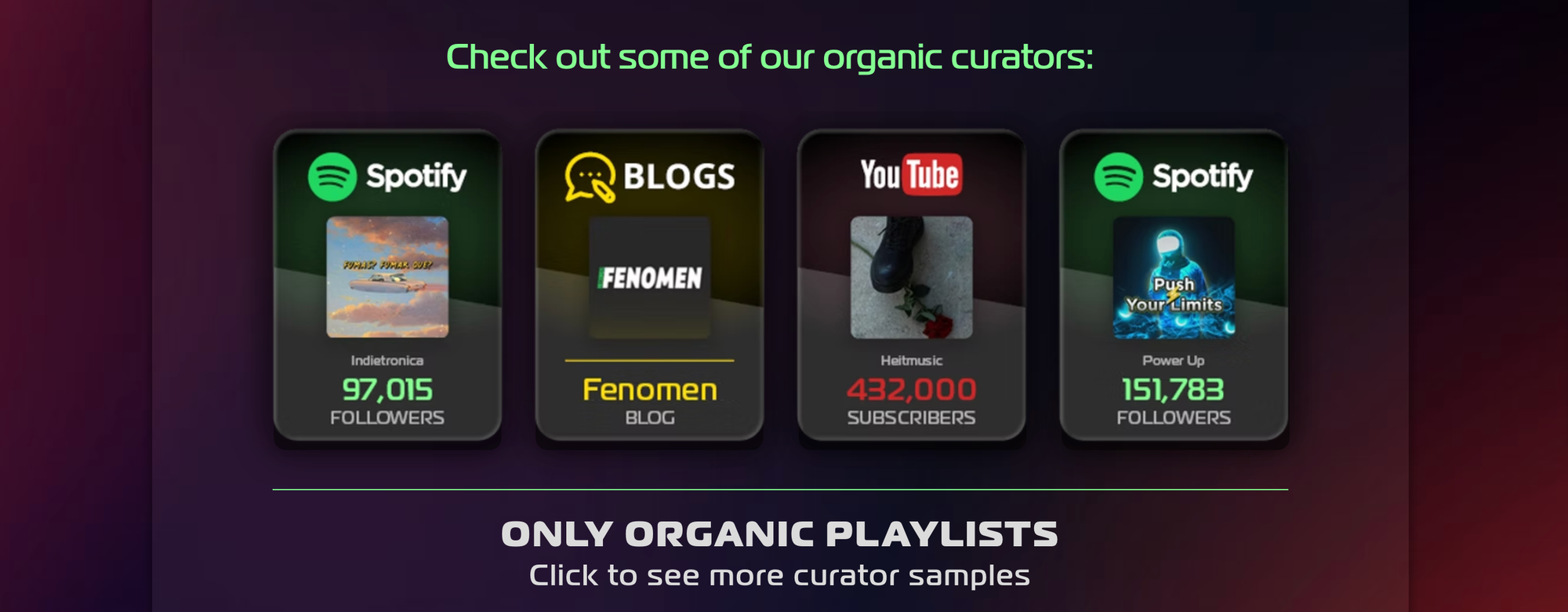
Everyone wants to land their music on a 90K-follower playlist, but what most artists don't know is that the bigger the playlist, the pickier the curator. These playlists usually host the best songs from the biggest artists, so there's little spare room for an unknown indie act.
If they do add a new, unknown track, it has to be on the same level as the major artists' hits. If your music isn't there yet, you'll have better odds with smaller playlists. The approval rate on small ones is usually a lot better. Sometimes it's better to land your song on 10 playlists averaging 8K followers each than on one playlist with 80K.
How to actually bump your odds
It's simple: know your song's genre and make a great song. One of the biggest challenges for any artist is judging their own music with objective ears, but that's a topic for a whole other article.
A few more small things that can help:
Cross-genre tracks can sound creative and original, but say you've made an orchestral hip-hop song and you submit it to both orchestral and hip-hop playlists. The classical curator will think it's too hip-hop, and the hip-hop curator will probably say it's a bit too orchestral for him. In most cases Spotify playlists aren't a great fit for cross-genre stuff, though there are always exceptions.
Master the track before you send it to your music distributor. Unmastered, it lands quiet and thin sitting next to everything else. Curators hear it. So do listeners. That’s a technical thing, and it’s easy to fix.
If you can, listen to the playlist first. Does your song belong there? If you're not sure, it probably doesn't.
And if you're not sure about your genre or whether your song sounds good enough, you can always ask us at One Submit. We're happy to help, whether you've paid for a campaign or not.
Final thoughts
Curators aren't gatekeepers sitting around looking for reasons to turn you down. They're fans. They want to find songs that make their playlists better. Hand them one that does that, and they'll add it. High, too.
The point isn't to beat some system. There's no system to beat. The point is to make something they can't say no to, then put it in front of the right people.
Oren Sharon is the Founder of OneSubmit, an independent music promotion website dedicated to helping independent artists submit music to curators. The site offers Spotify promotion for artists, blogs, online radio, YouTube, and TikTok music promotion.