

By David Geisser, Co-Founder and CEO of ZATAP
For years, the music industry has treated a physical release as a one-time transaction. A fan buys the record, the sale closes, and whatever relationship existed between artist and buyer goes quiet until the next release. That's starting to change, and the shift is less about the object itself than about who owns what happens next.
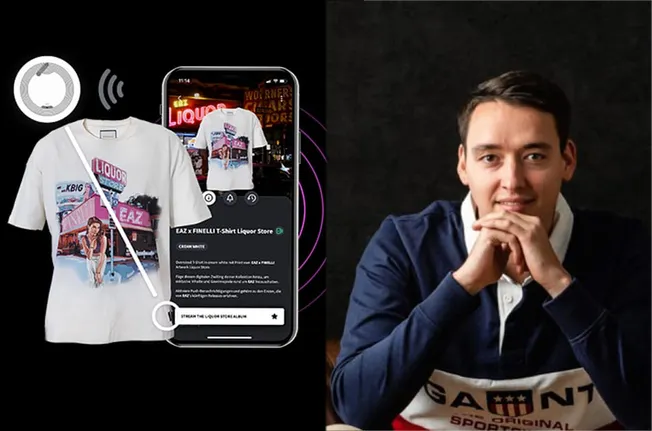
Near-field communication (better known as "NFC"), turns almost any physical music product into a direct digital touchpoint. A fan taps a phone to an embedded chip and enters an artist-controlled experience — no app, no code, no camera.
What matters isn't the tap. It's who holds the relationship it creates, and how long that relationship stays worth something.
The industry needs relationships, not rented reach
Artists and labels can reach enormous audiences through streaming and social platforms, but access to those audiences is usually rented. Algorithms decide who sees a post. Platforms control the data. An artist can accumulate millions of followers without knowing who actually bought the album, attended the show or picked up a piece of merch.
A connected physical product flips that. With a clear value exchange, a fan can choose to register, save a pass to a mobile wallet, or opt into future updates, and that data belongs to the artist and label, not to a platform that can change its algorithm or its terms tomorrow.
It's the difference between an audience you're renting and one you actually know: who they are, what they bought, and how to reach them directly the next time there's something worth saying.
One chip, many jobs
Not every artist needs the same application, and that's the point. The technology adapts to the campaign rather than the other way around. An NFC-enabled card can double as a straightforward access pass: tap, unlock the album and bonus content, done. It can also carry a game built around the record, turn into a numbered collector's item with authentication built in, or sit inside merch and function as a loyalty unlock.
A cassette, a mini vinyl, a credit-card-format PVC card, even an acrylic tile; the format changes, but each is doing a specific job for a specific audience.
That range is what keeps a product's lifecycle worth something. A traditional physical SKU is worth the most on release day and depreciates from there and it sits on a shelf as a static object. A connected one can be built to do the opposite: a bonus drop timed to a tour announcement, a reward tied to a venue, an artist message a year after release.
Each of those moments gives a fan a reason to come back to something they already own, and gives the artist a reason to keep investing in that object instead of writing it off after the first week of sales.
+Read more: "8 Payment Tools Built for Concert Venues"
A tap must earn the next tap
None of this works if the technology is the whole idea. Putting a chip inside an album doesn't automatically make that album more meaningful; the experience still has to answer a simple fan question: "Why should I tap?"
NFC-enabled merchandise for Ben Folds supported a charitable initiative while commanding a $10 premium and becoming the best-selling item in his store — proof that a connected product can carry more perceived value than an identical one without the chip. Fans respond to what the object unlocks and what it's worth to keep, not to the chip itself.
Measurement is changing what counts as an album
The next stage of adoption will also be shaped by industry infrastructure. Luminate's decision to begin tracking eligible Smart Media Albums in the United States and Canada, with Billboard chart eligibility beginning October 2, 2026, is more than a technical rules update: it recognizes that an album can be physical, collectible and digitally delivered at the same time.
Germany has already offered a glimpse of what happens when connected formats enter mainstream release strategy. In 2026, three consecutive No. 1 albums on the Official German Albums Chart carried ZATAP-enabled formats: Electric Callboy's TANZNEID (Sony Music Germany) as an NFC Fancard, reezy's RAHEEM (Sony Music Germany) as a Pokémon-inspired "Battlepass," and Montez's So ist das mit dem Glück (Universal Music Central Europe) as a Mini CD that unlocked the album after a presale window.
Three artists, three different formats, one signal: connected products are moving from novelty into the industry's commercial toolkit.
The winners will design for the full lifecycle
As NFC adoption grows, the industry should resist treating it as another logo on packaging because the opportunity is bigger than that. It's about the full lifecycle of a product: how it's discovered, why a fan buys it, what happens at the first tap, and what brings that fan back a year later.
Artists gain a first-party audience they actually own. Labels get measurable engagement after the sale instead of a one-time revenue line. Retailers and merchandise companies get a product that justifies a higher price because it keeps delivering. And fans get something that becomes more valuable to hold onto the longer they own it, not less.
NFC won't replace vinyl, CDs, cassettes or merchandise. It changes what those formats are worth over time, and who gets to stay in touch with the person who bought them.
The music business has spent the last two decades making music available everywhere. Its next challenge is turning that access into relationships the industry actually owns. The physical product may be one of the best places to start.
+Read more: "Charge More to Cover Your Costs or Charge Less to Help Out Fans?"
David Geisser is a Swiss entrepreneur and Co-Founder & CEO of ZATAP, a company specializing in “phygital” experiences that connect digital and real-world customer engagement. He works with global brands like Universal Music, Sony Music and McLaren Racing to create interactive, data-driven campaigns. David has a background in strategy consulting and holds a Master’s degree from the University of St. Gallen.