

Running an independent live venue involves several distinct kinds of payments. Artists may receive guarantees, percentages of ticket sales, bar splits, deposits, or final balances. Promoters, production crews, DJs, and outside vendors may all submit separate invoices, while tax information and payment records must remain connected to the correct show.
A growing collection of purpose-built software platforms helps venues manage different parts of that process. Some move money directly through bank transfers or digital payment methods. Others calculate settlements, collect payment details, generate invoices, or track what has already been paid. Many combine those functions with booking, contracts, ticketing, and event management.
They are not all payment processors in the strict banking sense. Instead, they represent the wider payment and settlement technology used by venues, promoters, and live entertainment operators.
Here are our 8 favorite platforms addressing different portions of that workflow.
1. Cleo Pay
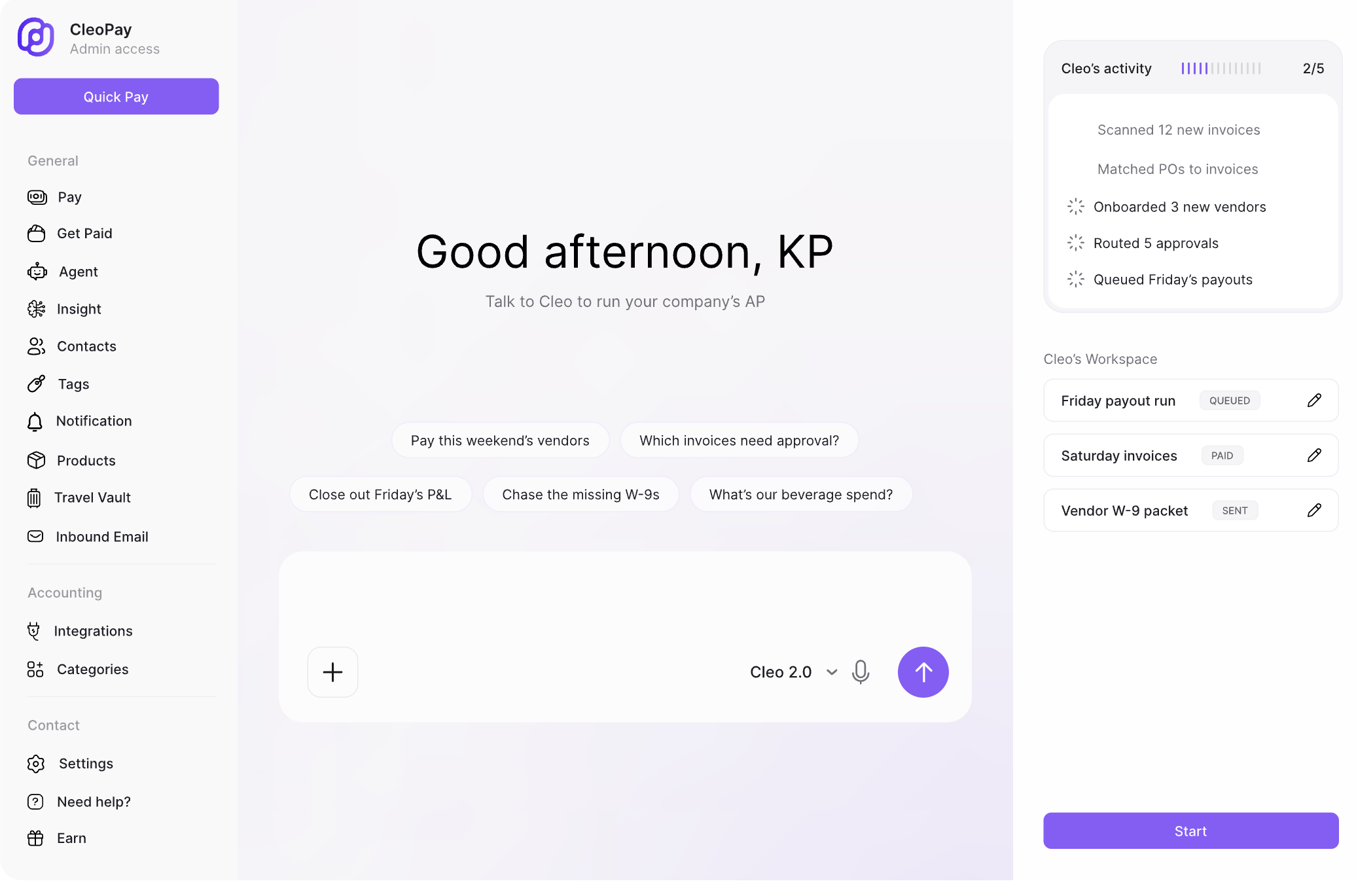
Cleo Pay is an accounts-payable platform designed for hospitality businesses, live music venues, and event operators. Venues can invite artists, DJs, promoters, contractors, and vendors to submit their payment and tax information through a dedicated portal.
The platform collects W-9 forms during onboarding, accepts vendor invoices, supports internal approval workflows, and sends payments by ACH. It also tracks payments throughout the year and prepares 1099 information, placing vendor onboarding, payment processing, and tax records in the same system. Multi-location operators can maintain separate vendor and payment histories for each venue while overseeing them through one account.
2. BeatGig
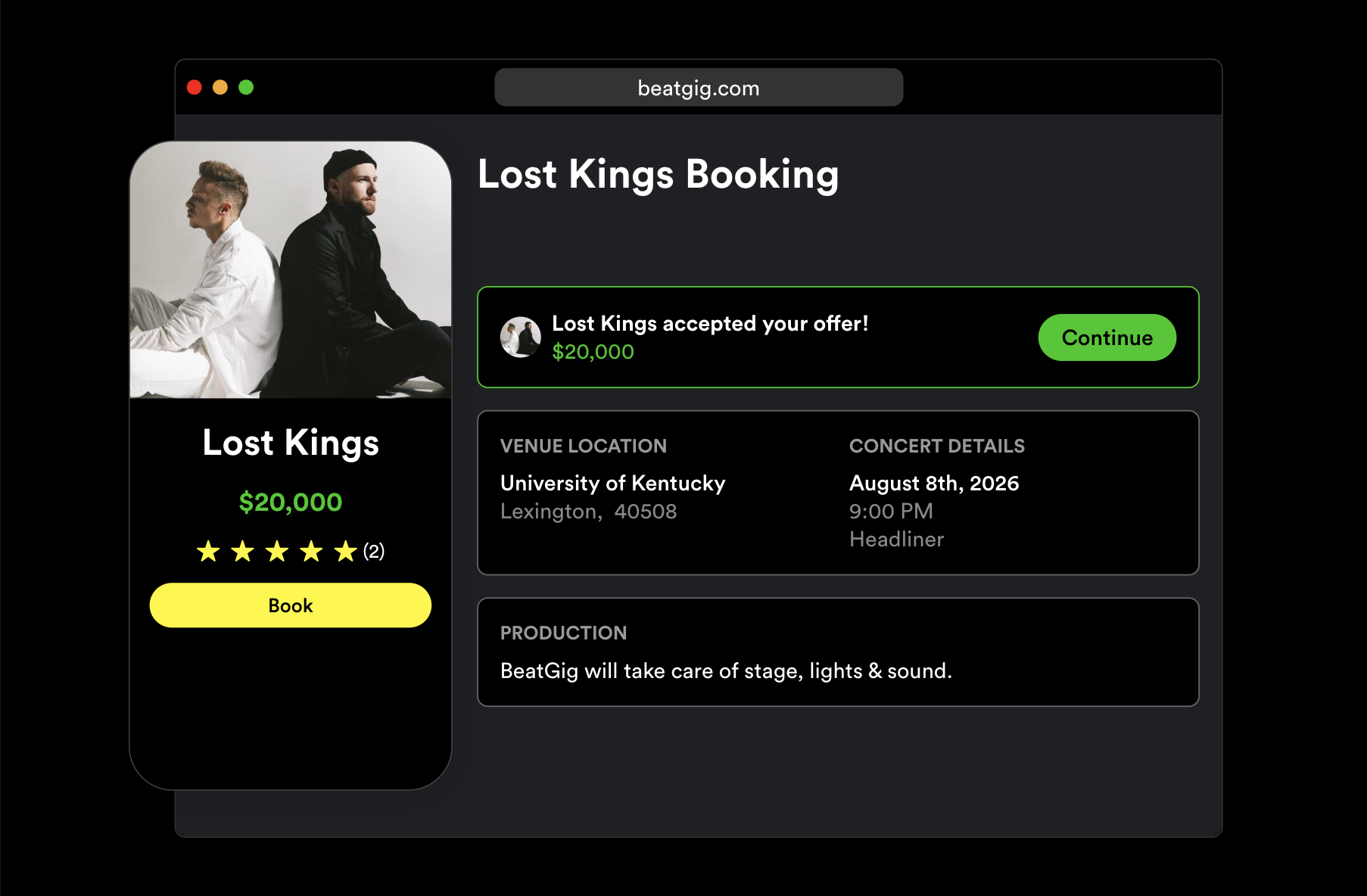
BeatGig combines artist discovery, booking, scheduling, contracting, and payments within an entertainment-focused operating system. Its venue product is designed for businesses that regularly book musicians and other performers across one or more locations.
BeatGig consolidates artist activity into itemized invoices, processes artist payments, and automates 1099 reporting. Venues can also connect point-of-sale information and other performance data to their entertainment programming, giving booking and accounting teams a shared record of each engagement.
3. Muzeek
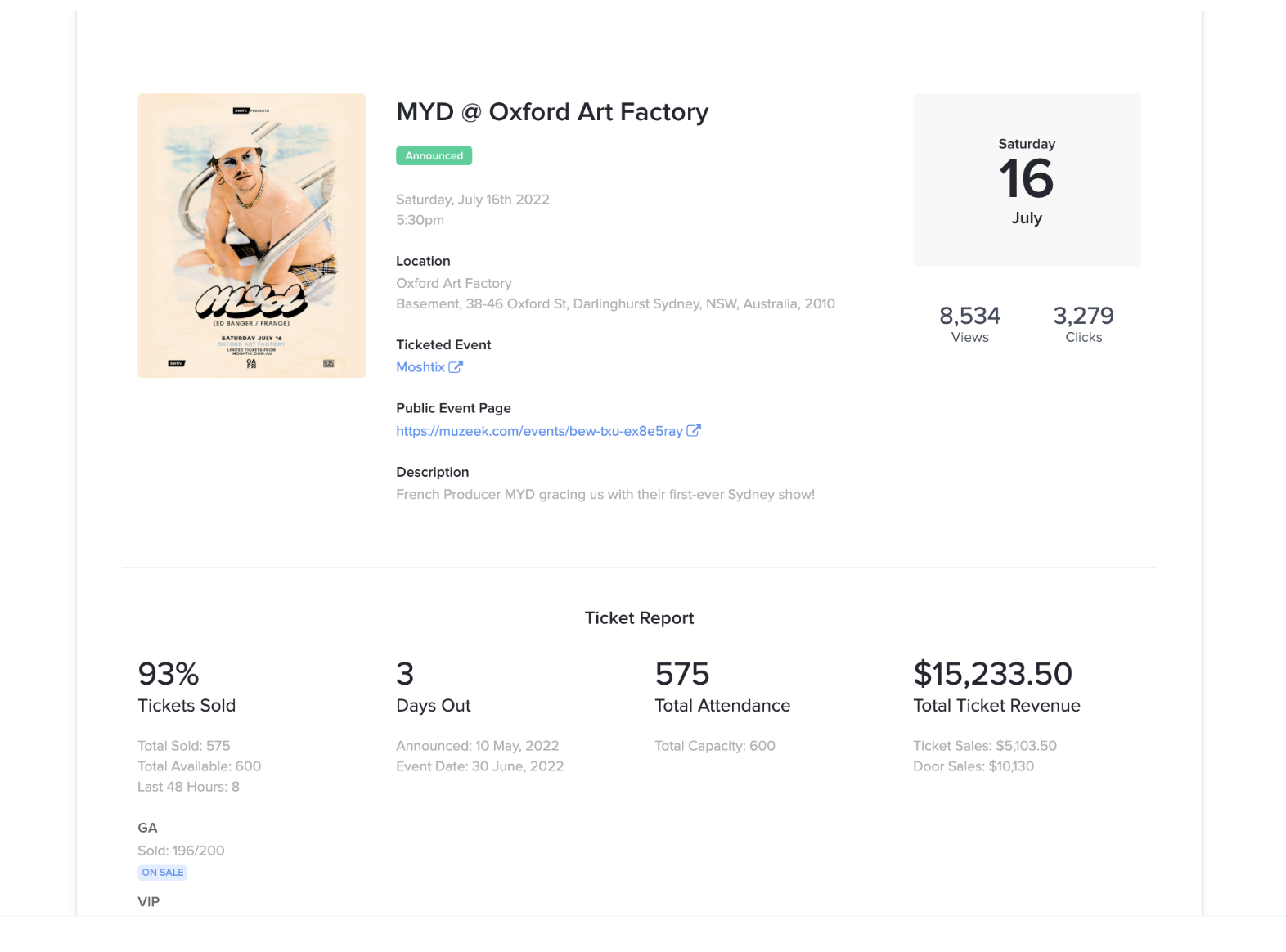
Muzeek is a live music management platform used by artists, venues, promoters, agencies, festivals, and touring companies. Its financial tools begin with the booking itself: when an engagement is confirmed, the platform can automatically generate the corresponding settlement and invoice.
Users can collect deposits, send payments, accept funds, and share payment links through bank transfers or more than 35 digital payment methods powered by Stripe. Muzeek can also calculate custom deal terms using ticketing data from integrated providers and synchronize invoices and payment statuses with Xero. This connects the original booking terms to the eventual settlement and payment record.
+Read more: "Backstage Pass: Tobi Parks of Tour Tech & xBK on Closing the Live Music Data Gap"
4. Surreal
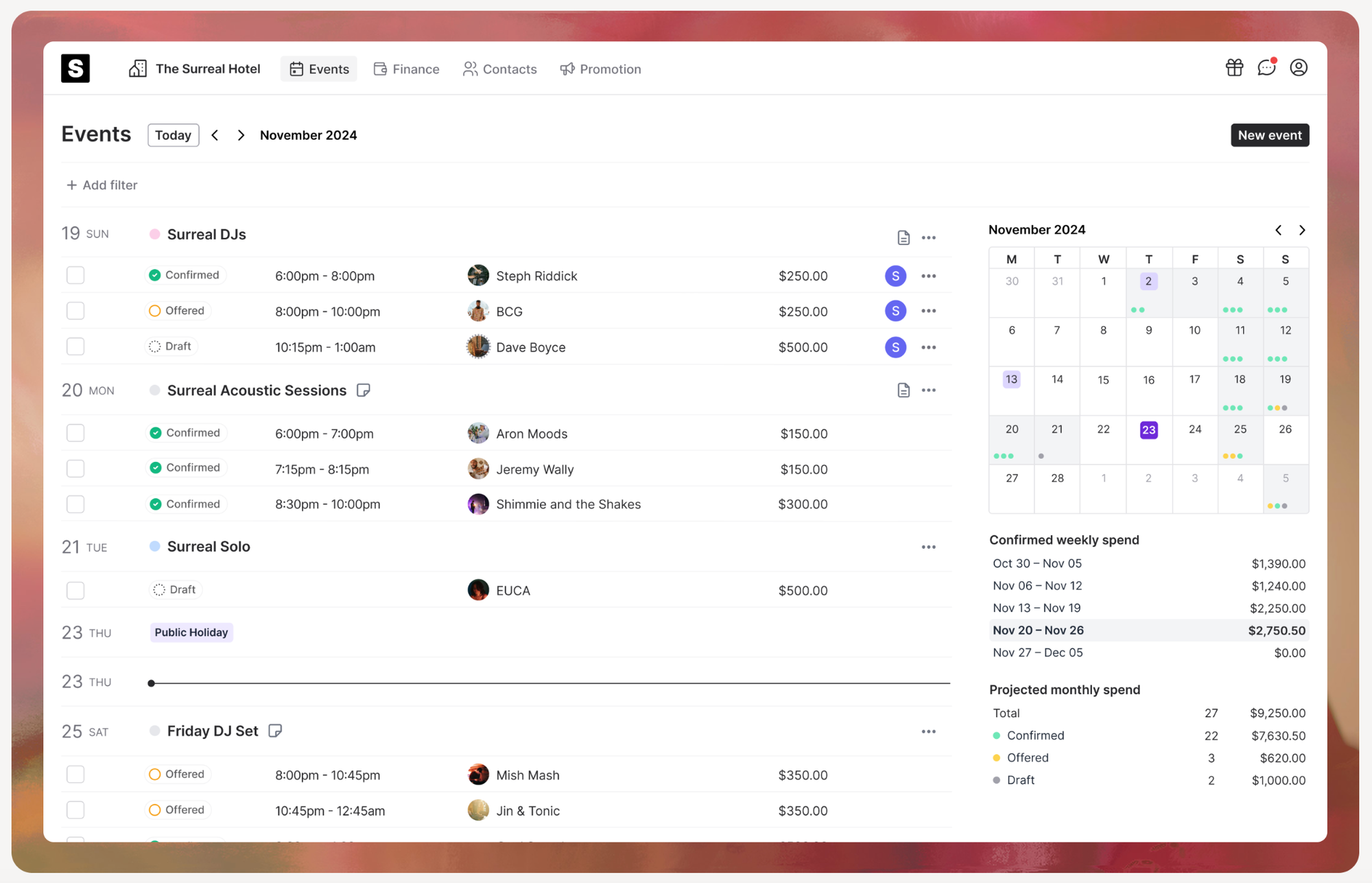
Surreal is a booking, payment, and entertainment-management platform serving venues, hospitality groups, agencies, and performers. Formerly known as Muso, the system is particularly active in Australia, New Zealand, and the United Kingdom.
For venues and hospitality groups, Surreal can consolidate multiple entertainer payments into a single invoice at either the venue or group level. Its finance tools automate venue invoicing, distribute artist payments, track their status, and address applicable local compliance requirements. These payment features are currently available in Australia, New Zealand, and the UK.
5. Prism.fm
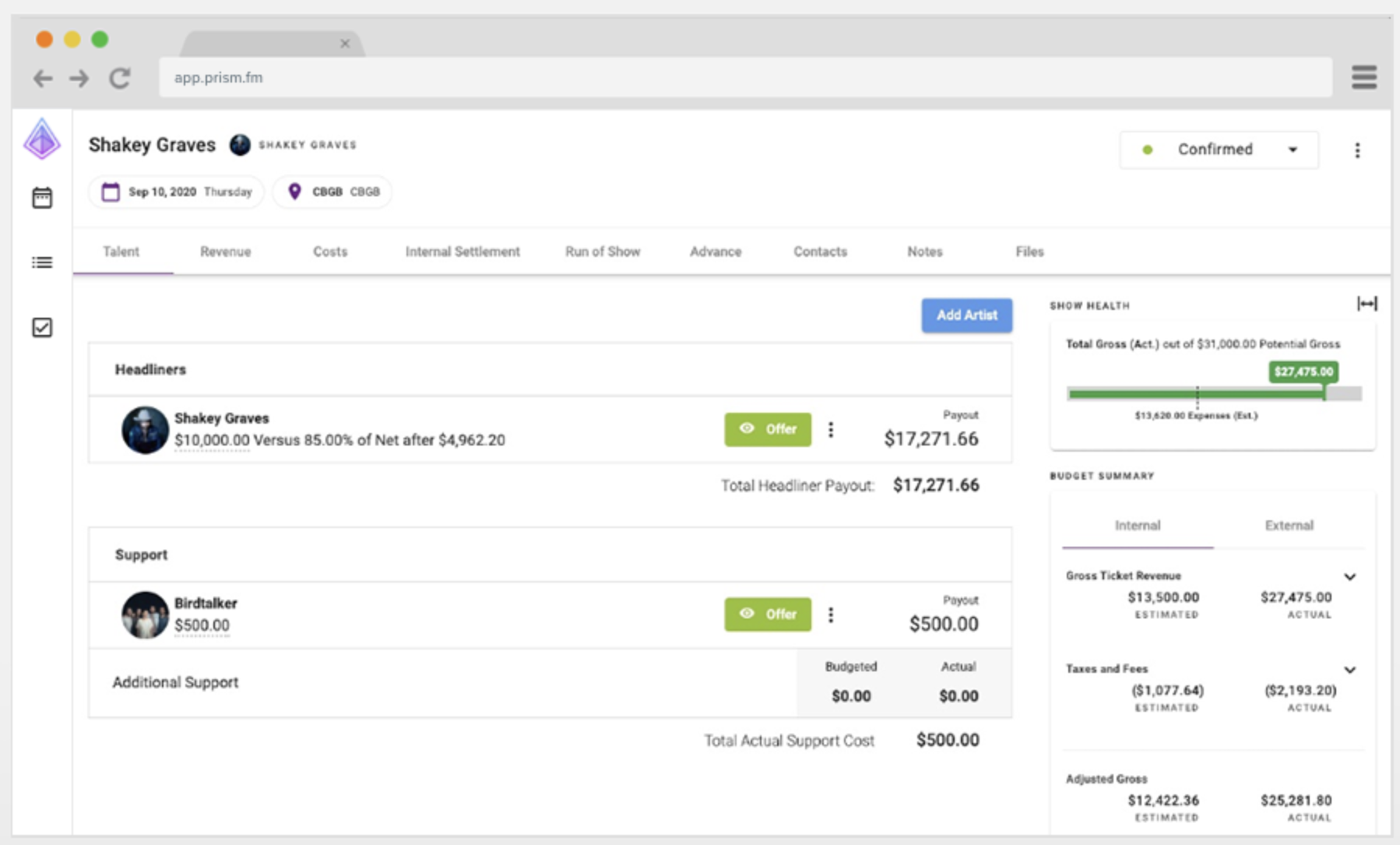
Prism.fm focuses on the operational and financial workflows behind live music bookings. Venues and promoters can use it to create offers and contracts, track deposits and payments, import ticket sales, calculate artist deals, and produce final settlement reports.
Rather than functioning primarily as a payment-transfer service, Prism connects the information used to determine what is owed. Guarantees, percentage deals, expenses, bonuses, ticket counts, and other financial terms remain attached to the show from the initial offer through settlement. Internal and artist-facing settlement reports can then present the relevant portions of that calculation.
6. Gigwell Talent Buyer Pro
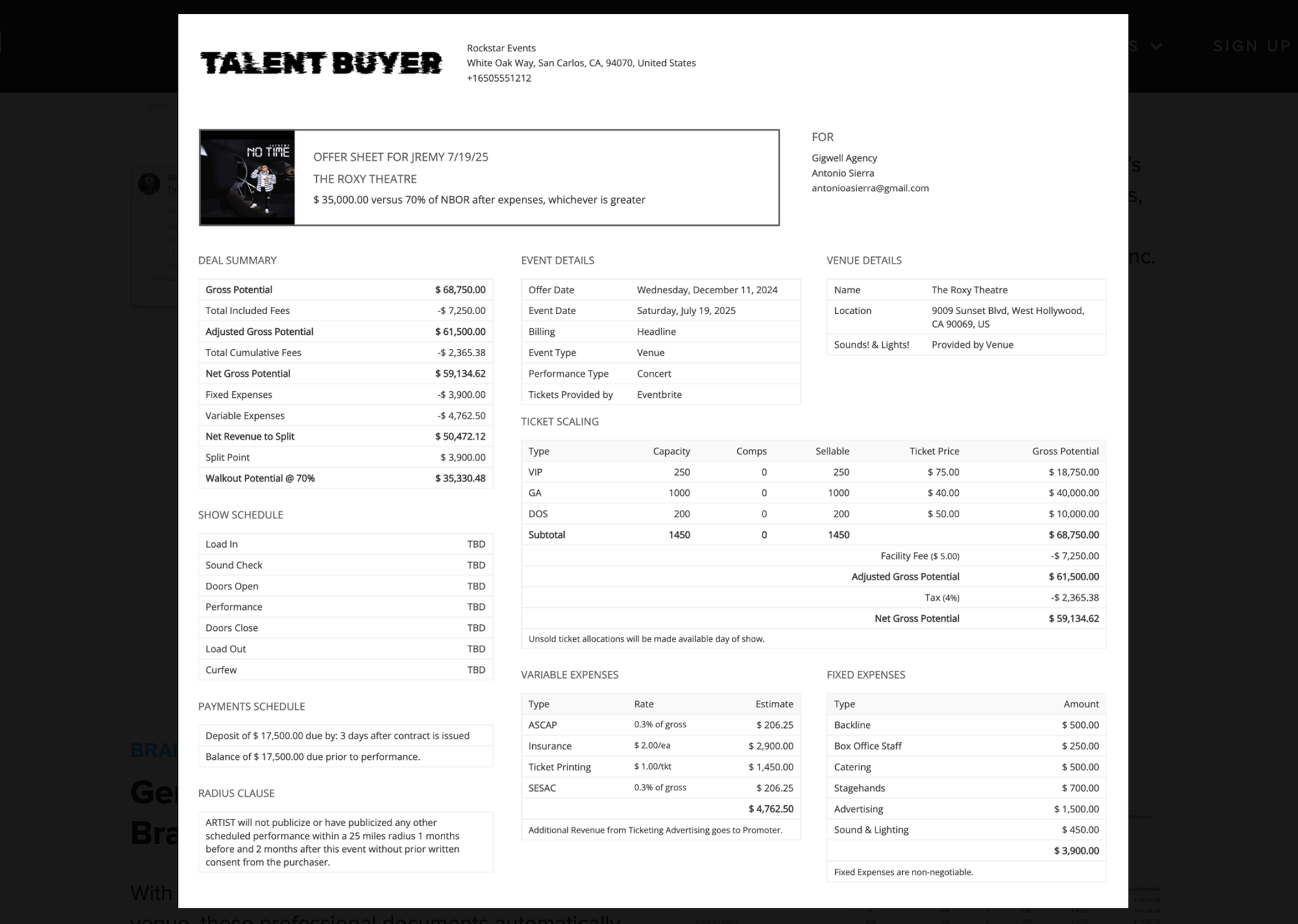
Gigwell Talent Buyer Pro provides venue-management software for talent buyers, promoters, festivals, and live music spaces. It brings offers, contracts, artist advancing, payment information, and show settlements into a centralized booking workflow.
The platform tracks financial details alongside the booking rather than treating payment as a separate administrative task. Venues can review deal terms, payment statuses, settlement information, and past show performance from the same system used to manage calendars and artist communications. Gigwell also supports invoices and online payment tracking for organizations working across multiple engagements.
+Read more: "Concert Merch Is Going Contactless"
7. VenuePilot
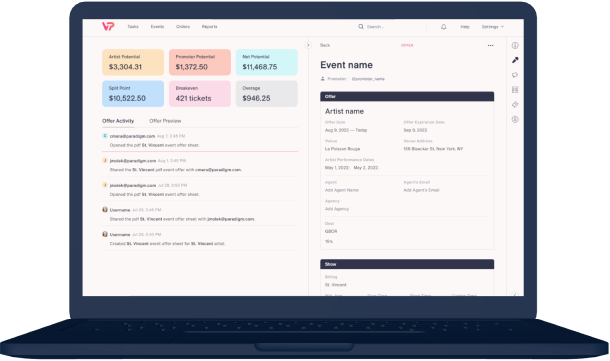
VenuePilot combines booking, ticketing, event management, and artist settlement tools for independent venues and promoters. Its settlement feature can pull ticket sales directly from VenuePilot events or accept manually entered gross box-office receipts from another ticketing provider.
Venues can select from several standard deal structures, incorporate bar or rental percentages, add expenses and adjustments, record deposits or other previous payments, and include relevant tax details. The completed calculation can then be exported as a settlement sheet for the artist or management team. VenuePilot also supports multi-date settlements for engagements spanning more than one performance.
8. Opendate
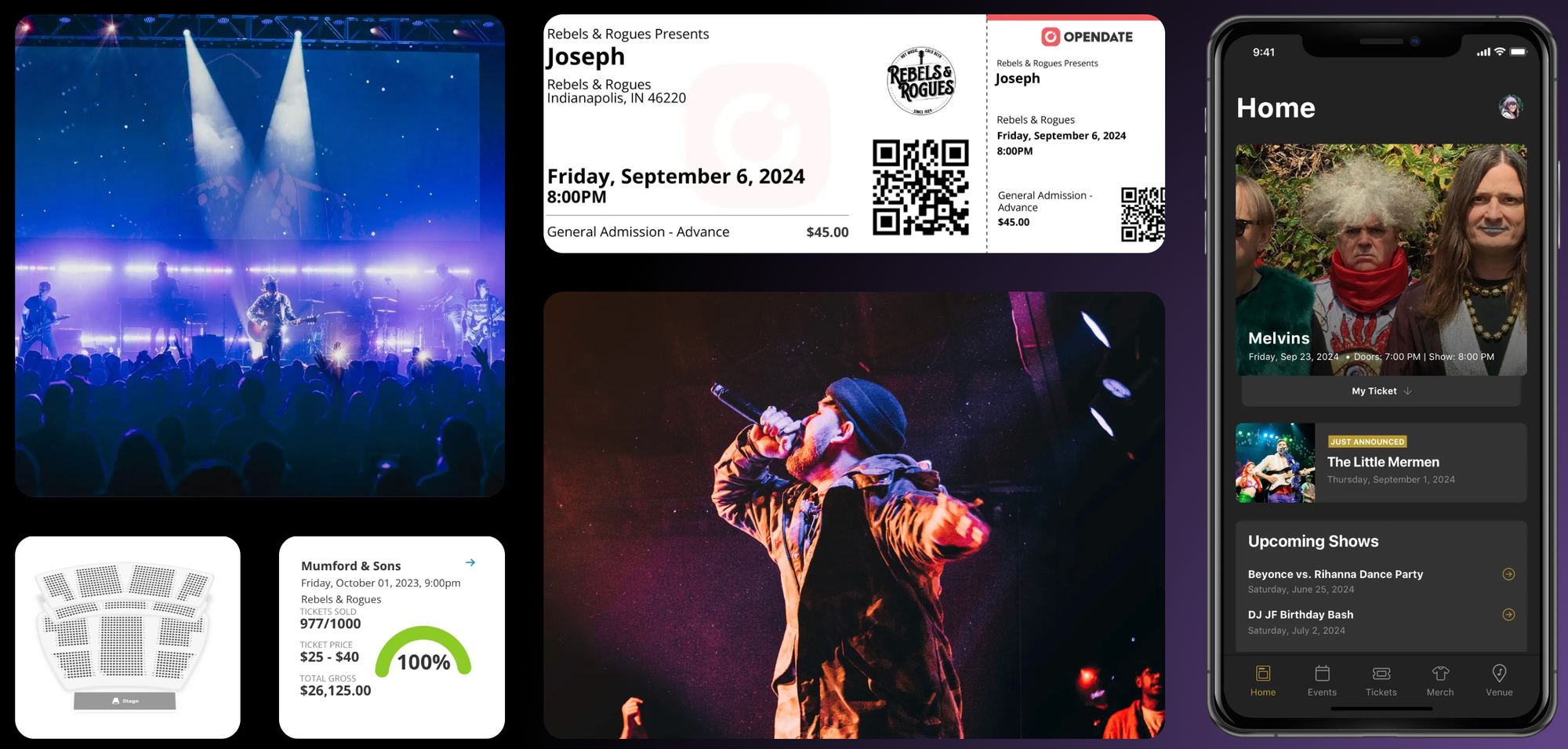
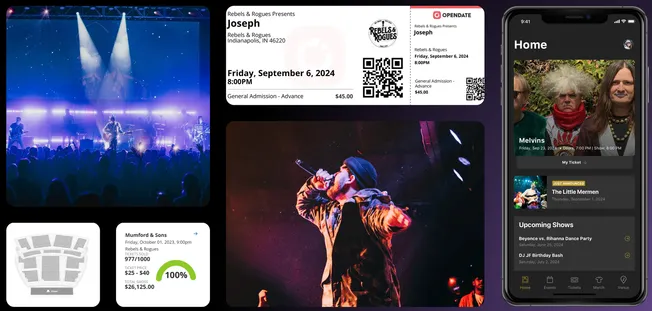
Opendate is an all-in-one venue-management platform covering the live event lifecycle from initial artist contact through final settlement. Its tools include artist discovery, calendar and hold management, offers, event budgeting, ticketing, marketing, and financial reporting.
Because its native ticketing system and event-management tools operate within the same platform, sales and expense information can flow into the settlement process. Venues can create reusable offer structures, track show finances as an event develops, and generate settlement documents after the performance. Opendate can also be used alongside other systems as part of a venue’s larger operational stack.
These eight platforms approach venue payments from different directions. Together, they illustrate the range of specialized technology now available for managing the financial side of live music events.
+Read more: "How to Build a Greener Concert Industry"