

It’s no longer just about securing copyright registration after release.
Increasingly, artists are facing situations where unfinished songs, vocal styles, or even entire identities are being copied, cloned, and uploaded before they have the chance to officially release their own work.
That’s the problem Authentify is trying to solve.
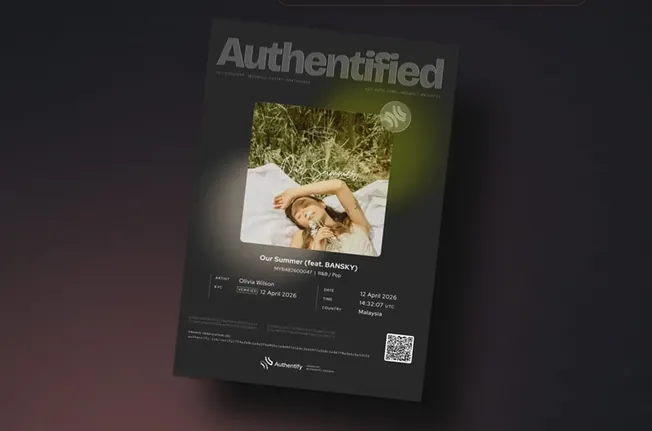
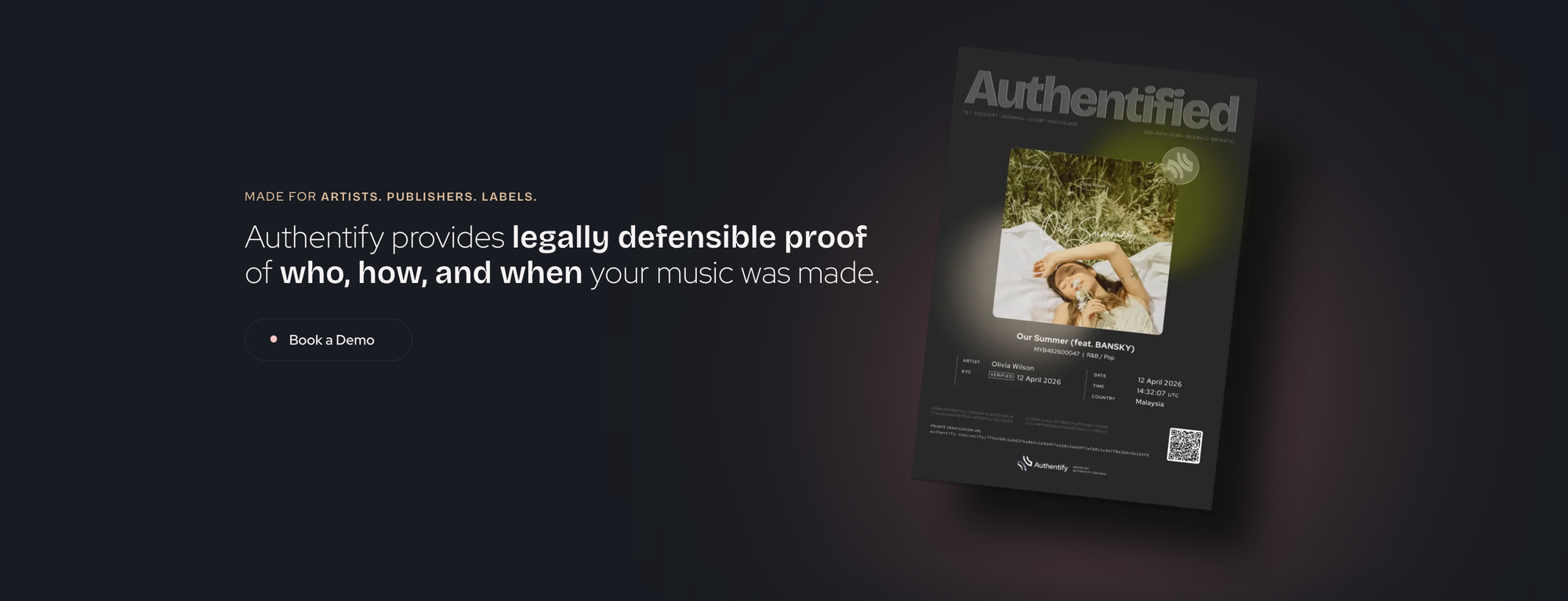
The new platform — which to date has taken zero VC funding — is positioning itself as a proof-of-creation tool for independent musicians, designed to create legally defensible evidence showing who made a song, when it was created, and how ownership can be verified if disputes arise later.
When Artists Can’t Prove They Were First
The idea behind Authentify came after high-profile examples of artists losing control of their own work to AI misuse.
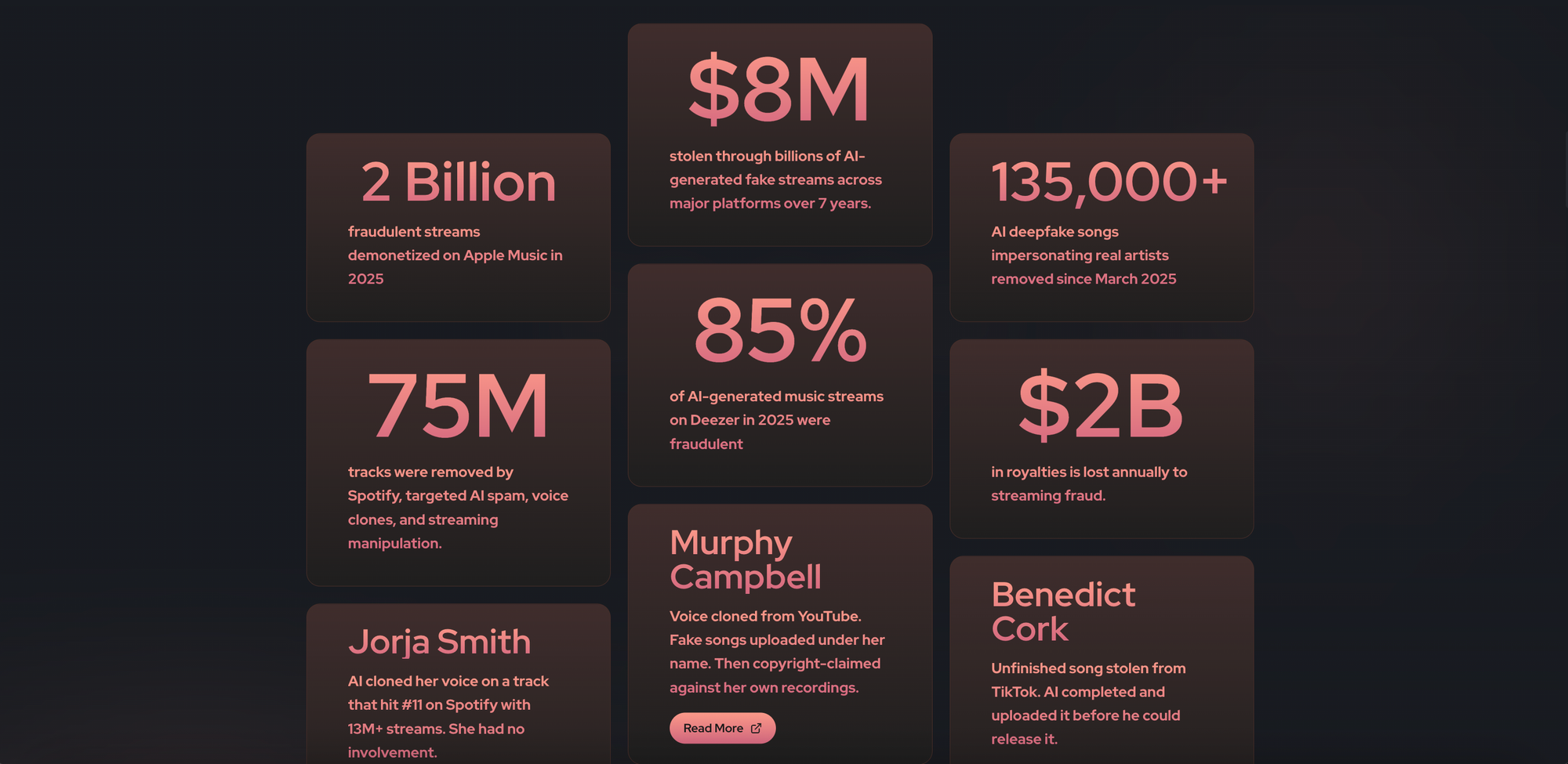
Singer-songwriter Murphy Campbell reportedly had her voice cloned from YouTube uploads, with fake songs later appearing under her name. In some cases, Content ID claims were allegedly filed against her own original work.
Artist Benedict Cork also faced a version of the same problem: an unfinished song shared on TikTok was reportedly taken, completed using AI, and uploaded before he had officially released it himself.
In both cases, the core issue was the same: they had no immediate, platform-recognized proof showing they created the music first. That gap is where Authentify enters.
+Read more: "Music & AI: What Happens When Quality Is No Longer a Differentiator?"
Creating a “Digital Proof of Creation”
Rather than functioning as a distributor or publishing administrator, Authentify focuses specifically on evidence. Artists upload their files before release, and the platform creates a verifiable record tied to that work through several layers:
- Identity verification using government-issued ID
- Cryptographic hashing of uploaded files
- Secure timestamping through DigiCert
- Documentation of who created the work, what was created, and when
The goal is not to replace copyright registration, but to provide something many artists lack during early creation stages: immediate proof. That record can then be used if ownership disputes emerge around AI-generated copies, stolen demos, unauthorized uploads, or false copyright claims.
Why This Matters for Indie Artists
For major-label artists, legal teams and publishing infrastructure often help handle ownership disputes. Independent artists rarely have that safety net.
Many creators share demos on TikTok, post snippets on Instagram, or upload rough versions to YouTube long before formal release. Those same platforms that help artists build audiences can also expose unfinished work to scraping, cloning, and unauthorized AI use.
And once a dispute starts, proving authorship can become expensive, slow, and frustrating.
Authentify is betting that creators need proof much earlier in the process — before release day, before distribution, and before a problem starts.Its pricing reflects that positioning: $12 per song with no subscription, aimed at being a one-time protection step rather than another recurring platform fee.
The New Layer of Music Rights Protection
The rise of AI music has already forced the industry into debates around copyright law, voice cloning, and training data. But for working artists, the problem is often more immediate and practical: "How do I prove this song is mine?"
Platforms like Authentify prove that a new layer of music infrastructure may be emerging — one focused less on monetization and more on verification.
For independent musicians navigating that reality, proof-of-creation may become just as important as promotion.
Check out Authentify to learn more.
+Read more: "Want to Track How Much Money 'AI Slop' Drains From Artist Royalties?"