

Music streaming as we know it needs to be reinvented
This post originally appeared on The Wild Honey Pie Loves You
Here’s the thing: the way we stream music is broken. From how we discover music to how artists are compensated to fan engagement, it’s evident there needs to be a shift both for the sake of artists and fans.
Let’s say there’s a platform that exists where there’s a niche creator. They can share content on the platform, and it can only be viewed by their subscribers. These subscribers or fans would pay to access this content whenever they want. They can even pay a little extra for special, exclusive goodies from the creators, or even videos made specifically for them by the creator.
If you’re thinking, did they just describe OnlyFans?
Yes, yes, we did.
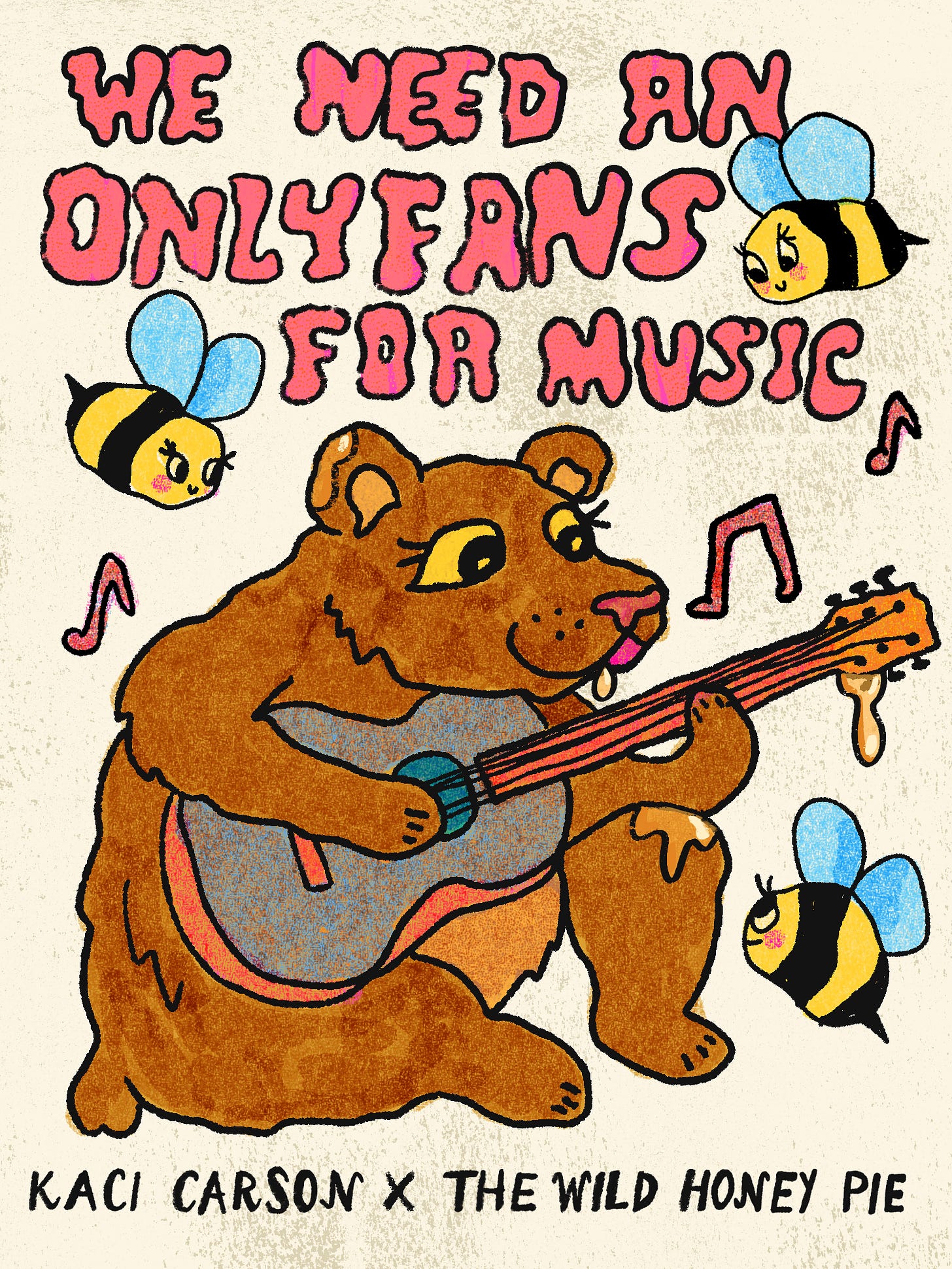
We’re firm believers that there is more that can be done for listeners, more that streaming services and the music industry as a whole can glean from a platform like OnlyFans. Imagine if, like OnlyFans, you can have access to exclusive content from your favorite bands (with their clothes on, of course), and what if it featured full catalogues from your fave artists, similar to Spotify?
Does an OF for music already exist?
Presently, the closest possible thing we have to it is Patreon, which encourages direct-to-fan sales and aspires to be a bridge between fans and all types of creators, including artists. Still, there are some elements Patreon is lacking that can pave the way forward. And if applied, these missing pieces have the potential to transform music streaming as we know it. We’ll get into that in just a bit, but first, we want to tell you why this is needed.
It’s time to ditch Spotify
It goes without saying that we’re all kept on a tight leash by Spotify. So why not ditch it for something new? The answer is simple: for the same reason people are willing to drop their hard-earned cash to pay for their Snapchat memories, the photos and videos that the platform is threatening to delete, which used to be and are supposed to be stored without cost.
A big corporation can get away with these subtle changes: a price hike in exchange for a silly AI DJ, analyzing your listening habits for machine learning, and giving you 15 hours of free audiobooks each month. Advertising their exclusive deals with some of the biggest podcasts out there, like Anything Goes with Emma Chamberlain or What Now? with Trevor Noah, but making them only available on Spotify. Let’s not forget to mention our yearly Spotify Wrapped, which dominates conversations each year at the time it’s released. They’ve got us hooked, and we all know it. There are also the many controversial moves the founder has made in recent times. You would think at least something like this would knock them down a peg, but no, Spotify remains the biggest streaming platform in the world.
For many of us, our unwillingness to change is simply because we’ve been on the platform for so long. Saying goodbye to Spotify means saying goodbye to the 2014 Road Trip playlist you and your family made, your sad boy anthems from your high school emo phase, or the 6 hour nonsensical playlist you and your friends made that features the entirety of the Hamilton soundtrack multiple times over. You’re not just making a switch, you’re saying goodbye to the memories, the playlists that capture self-expression, the curators whose playlists you’ve been keeping tabs on for years that don’t exist on any streaming alternatives. This all keeps you on the platform, unable to change, and causes it to be a one-stop shop for all the things you need. This isn’t exactly a bad thing as a consumer, but for the artists, it’s a different story.
One of the central issues of the platform for artists is the pay-per-stream model. While it works alright if you’re one of the top artists of the world, like Taylor Swift, who earned approximately $103 million from her Spotify streams alone in 2024. Under the pro-rata streaming model, smaller artists receive a small amount of royalty earnings, approximately $0.003 to $0.005 per stream, meaning they need to reach 1 million streams just to earn between $3,000 and $5,000. This means Spotify takes around 30%, and the remaining 70% goes to the master rights holder. The artist will, in some cases, receive a cut from this, depending on their label contract.
When we start listing these flaws one after the next, it does look bad, right? The good news is we know the solution. We know what needs to come next to make streaming a better place both for artists and fans alike.
Patreon is the answer…almost
Let’s get into how Patreon works and why it’s almost what we’re looking for as we call for the evolution of music streaming. Patreon is the closest possible thing we have to an OF for music; it essentially operates like a fan club. Although it hosts creators in podcasting, animation, and education, it still makes space for musicians. Here’s the idea: for a small fee each month, fans can get access to exclusive songs, pre-releases, and in some cases to fan-only merch. When an artist posts their content to Patreon, it allows them to have more autonomy over earnings, all the while paving the way for a stronger connection between them and their fanbase.
So what are the downsides?
For artists, it’s tough to keep up with Patreon. With the way things are set up, it requires a certain level of community management to keep fans engaged and creates pressure for the artist to constantly be creating new music. There are, however, some other ways to maximize the platform that still help connect artists to fans. Let’s take a look at a few artists and how they actively use Patreon to connect with their fans.
For Ren, a rapper who’s most known for songs such as “Sick Boi” and “Hi Ren”, he fosters an interactive experience for fans through offering guitar tutorials, blog access that documents his health journey, chat communities, pre-order codes, and even unused takes from music videos for his paying members.
Another great example is Mel, a soul musician and songwriter, who has several unique offers for paying members. Some of which include BTS content, demos, and an annual serenade she sends to you on your birthday each year. She even offers a Snail Mail club where she and her fans send letters to each other, and it is maybe one of the cutest methods of fan connection we’ve ever heard of. These ideas are just some examples, but they still require some creativity and upkeep from the artist to ensure they are reaching and keeping their fans engaged.
Some artists are already using Discord or social media as their main vessel to connect with fans. The problem here is that these are other platforms that artists need to maintain, and nothing yet exists where you have improved functions all in one place. What makes Patreon an almost-solution is that it is a platform where artists can put out their music and build their community of fans; however, it isn’t yet optimized specifically for musicians to use it. This can be seen specifically with their lack of music content discovery. Patreon’s homepage has a content discoverability function, and one that includes music, but this is an area in which Spotify excels. In comparison to Spotify’s homepage, it’s highly lacking in options and curation.
This, paired with some improved fan club management tools, would allow artists to have all that they need in one place, eliminating the need to divert their time and energy to social media to connect with fans, which, let’s be honest, is hard to do on socials anyways. In a perfect world, we would have a mishmash of the concept of OF and of community and direct-to-fan incentives of Patreon, and then the content system of Spotify with full artist music catalogues. Now that would be the remedy for what’s missing! It would make it simpler for an artist of any scale to know how to reach their fans and to grow their fan base into active, dedicated super fans.
How Patreon can adapt to music streaming
In order for there to be a shift in the way we stream music, there needs to be improvements that incentivize artists and fans to shift to Patreon or something better. OnlyFans itself is a monetization-friendly platform, with fans coming on ready to spend to access content. What makes it advantageous is that the fans on OF aren’t getting access to content anywhere else.
With Patreon, fans can have access to exclusive content or pre-releases, but the majority of their favorite artists’ releases are or will be available on Spotify or other major streaming platforms. It doesn’t help that Spotify also functions as a Marketing platform for artists. However, if an artist instead gave people a taste of their music on Spotify but then released the full single, EP, album, or full catalogue on Patreon, this would cause fans to have more of an incentive for becoming members and active participants on Patreon. It could even cause a mass migration of their fan base over to the platform. If Patreon itself were to offer extra incentives for artists who post exclusively on the platform, it could drive the change we’re eager to see.
At the moment, artists on Patreon can post an MP3 or a voice memo-like audio recording for music, but we have a better idea for them. If Patreon created an iTunes-like content library natively on the platform that hosts all the music a fan subscribes to, it would transform the way we currently stream music. Adopting this type of feature would allow fans to create playlists of all their favorite Patreon artists and be able to access these songs all in one place and at any time. This functionality would easily encourage fans to keep supporting the independent artists on the platform and would incentivize artists to actually release their songs on the platform. The artist has shared ownership of first-party data with Patreon, and the fan is able to support the artist better, all the while having access to the music they love on one platform. In short, everybody wins.
A call for change
It’s about time we bring an end to the streaming era as we know it. We want to encourage you to take a look at the bigger picture: as music streaming platforms evolve, maybe it’s time we also evolve. If platforms like Spotify, Apple Music, or even Soundcloud or Bandcamp were to adapt Patreon-like features, we could see the dawn of a new era, one that we’re calling the superfan era. It’s about supporting the artists we care about, seeing unhindered creativity, and fostering connection in the process. Just think of the musicians you’re a fan of. If you have a different way of consumption that helps the artists you love the most, why not take it?
Subscribe to The Wild Honey Pie Loves You on Substack
We're The Wild Honey Pie: a community and creative studio connecting musicians, chefs, fans, filmmakers & brands. We throw parties for charity and make music videos 🚫 No AI music or art ever!