

On Vinyl's "I Was Here" Era
By Jeffrey Smith of Alliance Authentic
My first experience with physical music cost me $2. Two bootleg cassettes, Michael Jackson's Thriller and Men at Work's Cargo, from a flea market. I still have them.
I jumped back into vinyl around 2010 for the sound. Now it's more about the ritual of intentional listening. Records I dug for in New York, Los Angeles, and Mexico City. Records gifted by friends. Records I spent months chasing. Almost every record carries its own story.
But there is one record that sits above all of them. And it's the reason I do what I do now.
My wife and I were planning our wedding. Our DJ spun vinyl all night. That was never up for debate, which meant "May I Have This Dance" by Francis and the Lights had to exist on wax. If you know the song, you already understand. If you don't, go ahead and listen below (I'll wait).
I had thought Farewell, Starlight had never been on vinyl or any physical format. I found out that 500 copies had been pressed exclusively for Rough Trade, and that was the entire run. Somewhere out there were 500 records, and I needed one before our wedding day.
Someone at Rough Trade gave a shit. They recognized what I was looking for and why it mattered. They helped me find it.
That kind of human care, one person genuinely moved by another person's need, is inseparable from what record collecting has always been. You don't get that from an algorithm. You don't get it from a playlist. It lives in the culture around physical music, in the stores and the people who work in them, in the collectors who understand what a record can mean to someone at the exact right moment.
I have that record. It played at our wedding. It is that night. It is a moment that will never come back. Last time I checked, there's a copy on Discogs for $667 if you want one. I'd never sell mine.
+Read more: "Musician’s Guide to Merch Margins 2026"
You probably have a record like this.
Maybe you know exactly which one it is right now. The one you hunted for. The one with a story you could never fully explain to someone who isn’t into records, but that you would never, under any circumstances, sell. It's not just a record. It never was.
What I've learned, from nearly a decade at Discogs and from watching this market as closely as anyone, is that you are not the exception. You are the market.
And it is not just vinyl. Think about what is already happening everywhere else in collecting. The kid cracking a pack and pulling a Charizard. The Shohei Ohtani rookie card sitting raw in someone's hands in 2018 while they decided whether it deserved to be protected. The Spider-Man #1 pulled off the shelf the day it came out by someone who understood they were holding something meaningful in their hands.
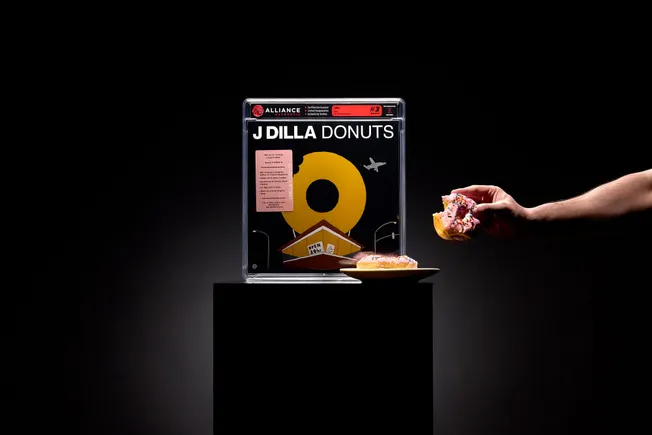
Every major collectible category has built a language for that decision. A trusted way to say: this object, in this condition, at this moment, deserves to be preserved. The things protected from the start became the artifacts that defined those categories.
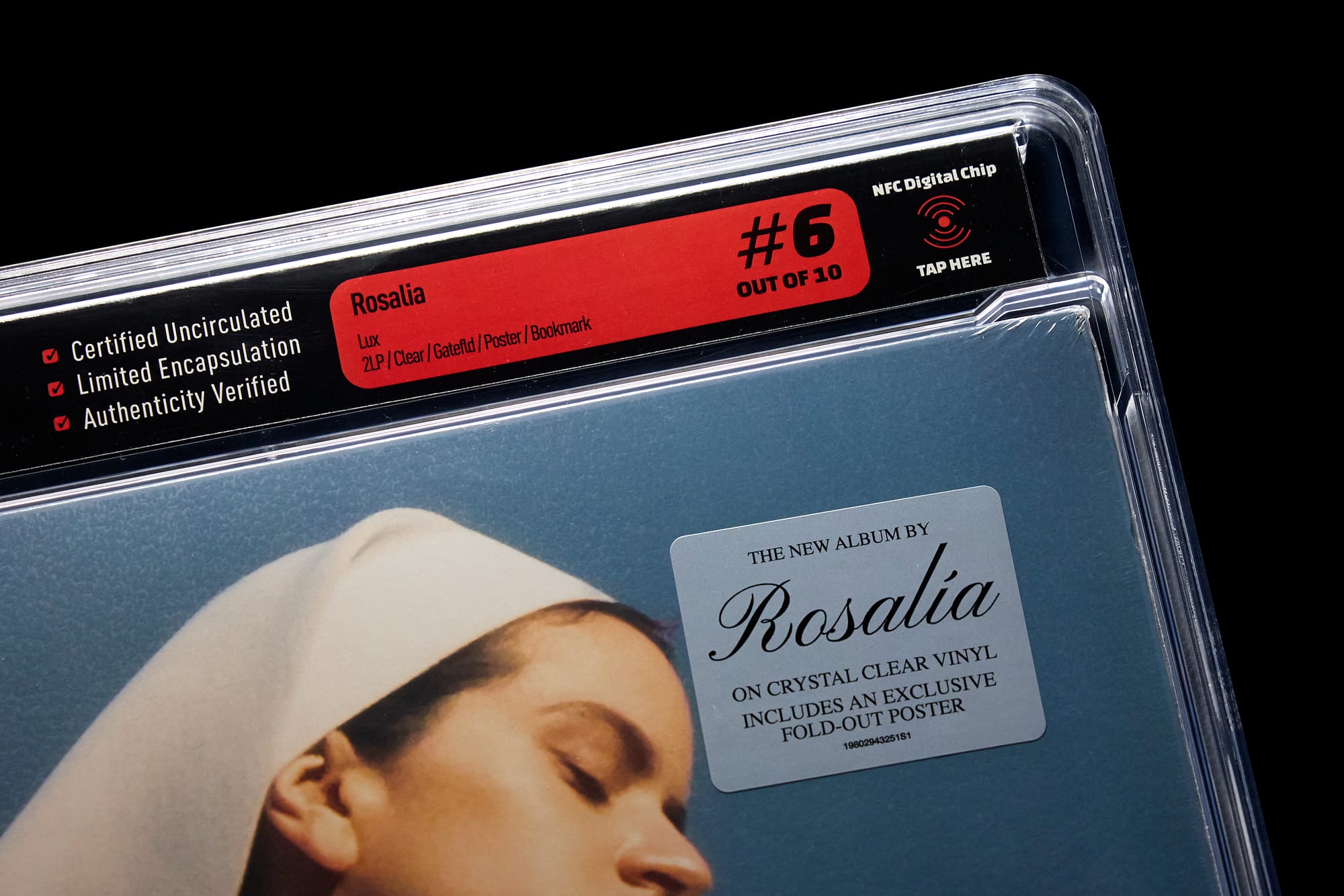
Vinyl has never had that. For a format that carries this much personal meaning, that is the gap worth closing.
The data catches up to the feeling.
The Vinyl Alliance's Gen Z Report landed one number that stopped me: 29% of Gen Z vinyl fans called themselves die-hard collectors. Passionate, buying often, planning to collect for years. That's someone building something. And they're doing it alongside the millennials and Gen X-ers who have been collecting for decades.
Across all of them, the behavior is the same. Collecting is becoming more intentional.
RIAA just reported vinyl's 19th consecutive year of growth, $1 billion in U.S. revenue in 2025, up 9.3%. Globally, physical music hit $5.3 billion, up 8%, with vinyl growing 13.7%. RIAA CEO Mitch Glazier framed it plainly as:
"[a] resurgence of vinyl as both a listening experience and collectable art."
That framing isn't decorative. It names what's actually driving the numbers; numbers which have powered past nostalgia.
The Gen Z data makes the shift explicit:
- 62% buy physical music to support artists.
- 56% cite aesthetic value.
- 47% say it's expensive but worth it.
- 35% see it as a mark of true fandom.
These are people assigning meaning to what they own. The record has become the artifact of the feeling. The proof that you were there, that it mattered, that you chose to mark it in a way that lasts.
A decade ago, Damon Krukowski saw this coming. When he sent me The New Analog in 2017, his argument was that digital music lost everything but the signal. Context, texture, physicality. Collectors have spent years recovering what was missing. The record has stopped competing with streaming. It carries everything streaming can't.
The category that doesn't exist yet
The artists who deeply value their connection to the fans already understand this. They treat vinyl as part of the album's storytelling, with packaging that adds meaning and connection... alongside cost. They know a record has to live in a world where everything else is instant and free.
This is the era Glazier named: a record as collectable art, a preserved object with a permanent place in someone's life and identity. For a meaningful part of this market, vinyl is the "I Was Here" object. The proof of a moment. The thing that says, “This mattered to me, and I chose to own it in a way that means something.”
The industry would be smart to pay attention. The fans already have.
Why Alliance Authentic exists
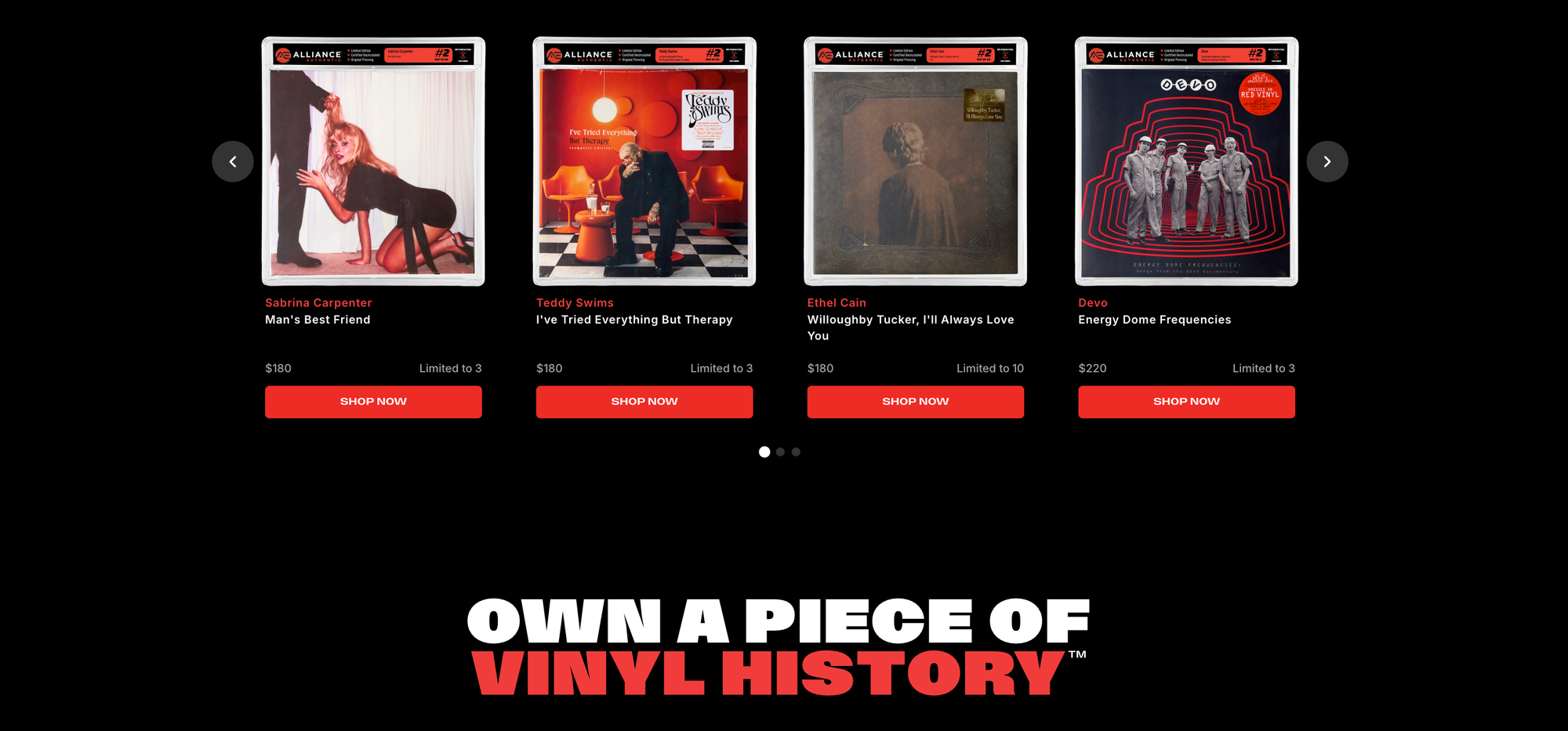
I left Discogs after almost nine years because I kept seeing collectors who were already ahead of the market. Thinking in terms of preservation, authenticity, and permanence. Treating their favorite records as art. What didn't exist for them was a category built around that. A place where the "I Was Here" moment is taken as seriously as the collector takes it.
Alliance Authentic is building that category.
That Francis and the Lights record is the most meaningful thing I own. Full Stop.
The time it took to find it. The person at Rough Trade who gave a shit. The gratefulness I still carry. 500 copies pressed, never on any physical format before, and somehow one of them made it to our wedding.
That moment deserved more than luck. The record that played at the most important moment of your life, still in perfect condition fifty years from now.
Why would I not want to preserve that?
You have one of these. You know which record it is. You don't need me to describe it. It's the one where the music and the moment became the same thing. Where owning it on vinyl stopped being about format and started being about preservation. About saying: this is something I love. This happened, it mattered, and I want proof of that for the rest of my life.
Psychologists have spent decades trying to explain why people collect. Werner Muensterberger got closest when he described it as the gathering of objects of subjective value—things that contribute to your sense of identity, your source of self-definition. Not what something is worth. What it means to you.
That's what collecting has always been. That's what Alliance Authentic is for.
Not every record. The one.
Jeffrey Smith is SVP of Sales and Marketing at Alliance Authentic, where he is launching a new brand for Alliance Entertainment, the world’s leading distributor of physical media. He believes vinyl and physical media sit at the center of culture, where community, identity, and music come together to create lasting meaning. Previously, he led marketing at Discogs, where he helped shape the brand’s voice and growth during a pivotal period and scaled a global marketplace connecting millions of collectors and music fans.