


By Tony van Veen, CEO of Disc Makers and DIY Media Group
Last month, my company's sales director took his high school–senior daughter to a record store to buy the new Noah Kahan album. He assumed she’d pick vinyl. After all, we all know about the vinyl comeback, the analog sound, the aesthetic.
She walked out with the CD.
That moment stuck with me, not because it was unusual, but because it’s becoming typical.
For the better part of two decades, we’ve been told the same story: The compact disc is dead. Streaming won. Vinyl came back. CDs? An uncool relic.
That story is wrong.
Disc Makers has been manufacturing music formats for the majority of America’s self-releasing independent artists for 80 years. We’ve lived through vinyl’s heyday, the rise and fall of cassettes, the CD boom, the digital collapse, and the streaming era. And what we’re seeing now – starting some six months ago, and picking up steam – is not nostalgia, not a blip and not a rounding error.
CDs are growing again. And the people driving that growth aren’t middle-aged collectors. They’re teenagers and college students.
Year to date, our CD revenues are up 9 percent, with growth accelerating – April alone was up 18 percent year over year. Month to date in May? Up 24%. But the more interesting story isn’t the percentage increase, but who is buying, and why.
Gen Z is discovering CDs for the first time. And when you look at how they listen to music, the reasons are straightforward.
Start with price. Vinyl records have become a premium product, often retailing for $25 to $40. For a 17-year-old, that’s a real decision. A CD, by contrast, typically costs $10 to $14 new, and half that in the used bins that still exist in record stores across the country. For a teenager paying for music from their summer job money, price matters.
"Time has taught us convenience isn’t everything. People still want connection. Artists still need revenue."
Then there’s practicality. Many first cars owned by young drivers — older Hondas, Toyotas and Fords — don’t have Bluetooth or USB connectivity. But they do have CD players. For millions of young listeners, the CD isn’t retro. It’s the only physical format that actually works in their daily lives.
And then there’s ownership.
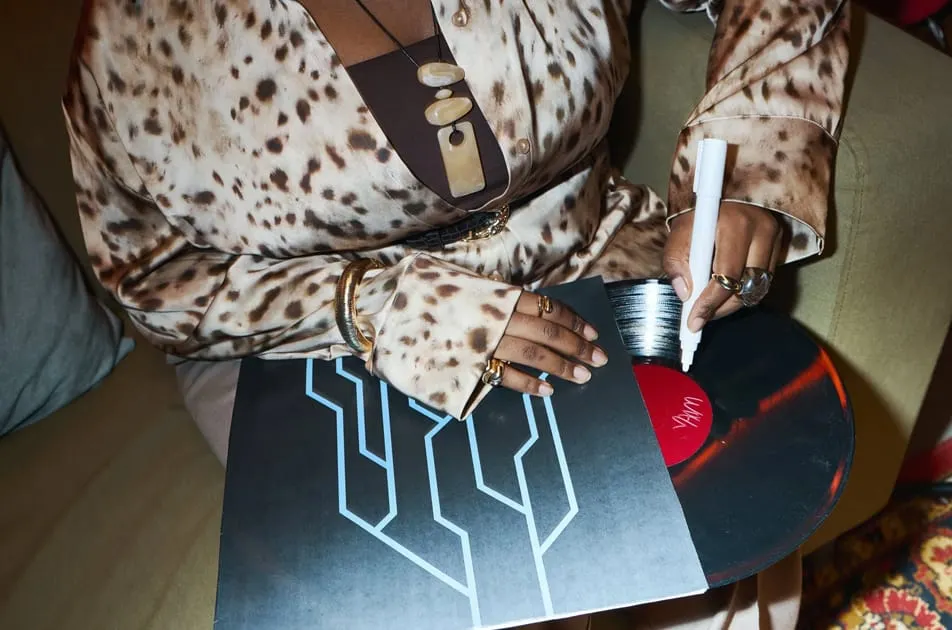
Streaming gives you instant access to everything, but it leaves you with nothing. No liner notes. No credits. No sense of connection to the artist. A CD, like vinyl, offers something different: a physical artifact, something you can hold, display and revisit. And, importantly, for Gen Z discovering live (sometimes all ages) concerts for the first time, that CD purchased for $10 at a merch table and autographed by their favorite artist becomes a memento to cherish forever.
What’s noteworthy here is that there’s a generational split emerging. Vinyl, anecdotally, skews older – listeners 25 and up who grew up with the format or rediscovered it. CDs, by contrast, are increasingly being adopted by listeners in the 16-to-24 range. For them, CDs are an exciting new format that proves their fandom.
Which brings us to the part of the story that gets almost no attention: what CDs mean for artists.
Streaming has trained listeners to believe that music is essentially free. But for artists – especially emerging ones – that model is brutal. A typical stream pays around a third of a cent. It takes hundreds of thousands, even millions of plays to generate meaningful income.
CDs flip that equation.

+Read more: "What Is Multi-Dimensionality? In Music, It May Be Coming Back."
A young band can professionally manufacture a CD for roughly $2 and sell it for $10 or $15 at a show. That drives badly needed artist revenue – the kind that pays for gas, van repairs or the next recording session. The kind that turns music from a hobby into something closer to a sustainable pursuit.
That’s why CDs never actually disappeared from the independent music world. Even at the height of the streaming boom, artists kept selling them at merch tables. They remained one of the few reliable ways to make money directly from fans.
What did disappear over the past two decades was scale. CD revenues dropped by as much as 75 percent from their peak in the early 2000s as the industry shifted to digital. This led to an industry shake out: out of 40 CD replication facilities in the US in 2000, only three remain today.
What we’re seeing now is nowhere close to a return to that 2000 peak. It’s something more interesting: a re-acceleration, driven by a new generation of listeners and a new generation of artists building careers in a very different economic reality.
Independent data reinforces this shift. Research from MusicWatch estimates that 69 million Americans listened to CDs at least once in 2025. More than 40 million listen to CDs in the car, and 23 million say it’s the format they use most often when driving.
None of this means vinyl is fading. It isn’t. Vinyl is thriving. But vinyl and CDs are solving different problems for different audiences.
- Vinyl is a premium experience. CDs are an accessible one.
- Vinyl is a statement. CDs are a tool.
And right now, for a generation of young fans – and the artists trying to reach them – that tool is becoming relevant again.
For years, the music industry has framed the future as purely digital: more access, more convenience, more streaming.
But time has taught us convenience isn’t everything. People still want connection. Artists still need revenue. And physical formats – even the ones we’ve written off – still solve both problems better than streaming ever has.
+Read more: "Musician's 2026 Guide to Responsible Merch"