

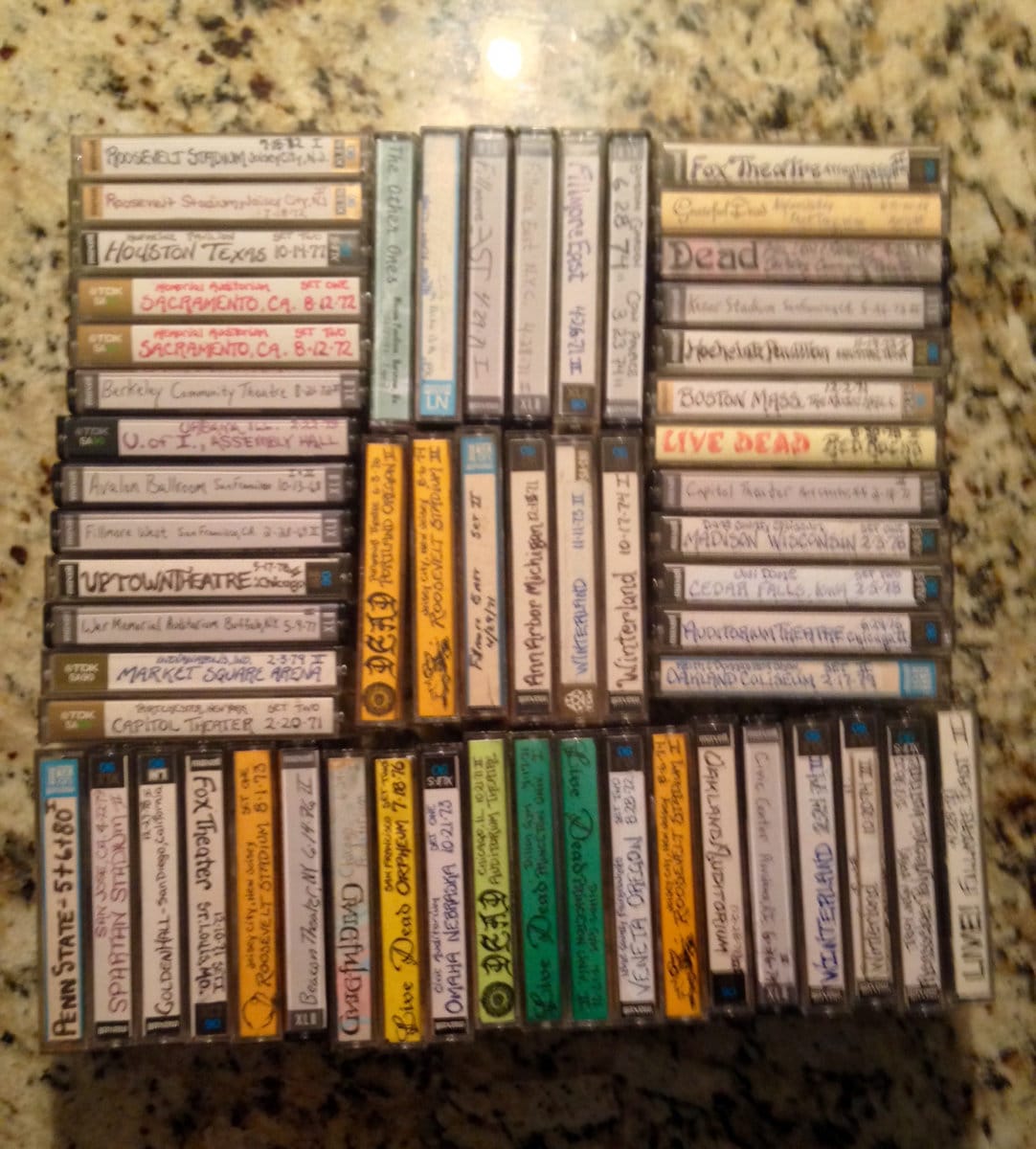
Before mp3s came along, in college, I used to love getting an illicit package of that sweet, sweet stuff in the mail. No, I wasn’t buying drugs through the mail. I was receiving live music bootleg cassettes. These tapes were like audio gold to a music obsessive like myself. I practically wore out these painstakingly labeled cassettes of shows from Tom Petty, Live Aid, Peter Tosh, Willie Dixon, Bob Dylan, and many others.
Then along came Napster.
Today, you can stream thousands of Grateful Dead concerts, buy an official recording of a Bruce Springsteen show, or find a band selling last night's entire set directly to its fans. Services like nugs have turned live recordings into a business, while digital sharing has made an enormous range of performances easier to find.
For bands that change their setlists every night, each concert can be a different piece of musical history. And you really never know what you're going to get from the live stage when a band steps onto it.
But in all of these innovations, did we actually make things better? And if so, better for whom; the artists, the companies building businesses around their performances, or the fans who want to hear a great show again?
To answer those questions, it helps to remember how we got those recordings in the first place. As with buying drugs, it worked best if you knew “a guy,” preferably somebody in the taper community. Most tape traders weren't sellers looking to make a profit. My main connection, a guy named Doc Byrne in New Jersey, asked me to send two blank cassettes for every tape he'd send back, plus postage.
Doc would send me a list of what he had available. His collection reflected his New Jersey roots, with plenty of Boss, but also artists like Peter Gabriel, the Neville Brothers, Willie Nelson, et al. There were, and still are, three main sources of live “bootlegs:”
- Audience recordings made by somebody in the crowd.
- Soundboard recordings captured from the band's mixing desk.
- Radio broadcasts recorded off the air and circulated among fans, often the best-sounding option.
One of my favorite tapes that became a landmark collector’s item and even a later release was a Bruce Springsteen and the E Street Band show at the Fox Theater in Atlanta from Sept 30, 1978. I can’t honestly tell you if this show was particularly magical, or I just had a relationship with it as a collector.
Before E Street Radio or YouTube, hearing Bruce sing “Fire” or “Because The Night,” songs he'd given to the Pointer Sisters and Patti Smith, respectively, was a special experience. The radio broadcast became a seminal tape for collectors.
Similarly, KSAN-FM in San Francisco aired a 1977 Kinks concert at Winterland. The Kinks performances of “Sleepwalker”, “Alcohol” and “Waterloo Sunset,” the clean soundboard sound, and balanced crowd noise made this recording just as good as any commercially released live album.
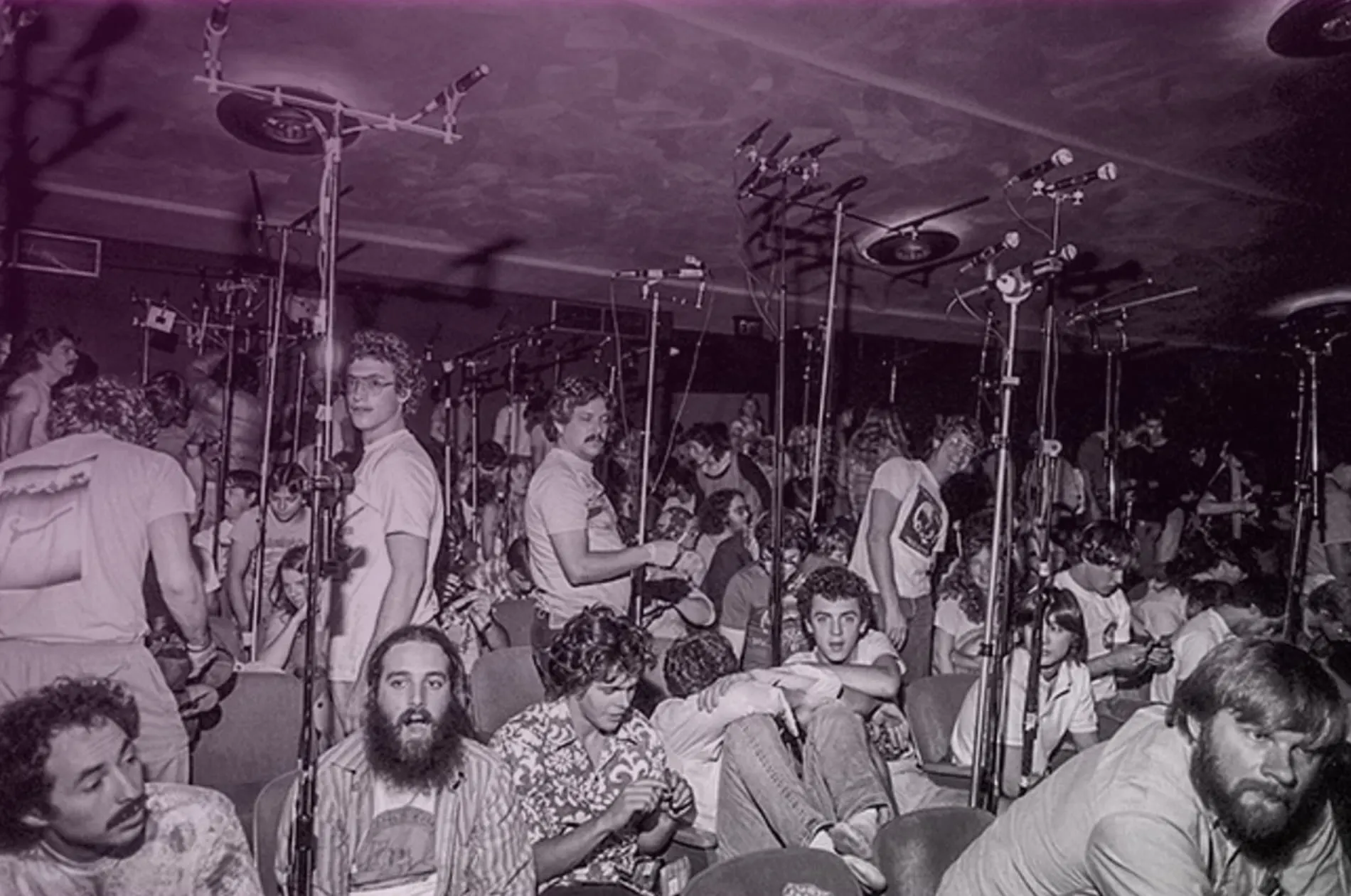
The largest taping community, though, by far, has always been Grateful Dead fans. "Deadheads," myself included, are genuine music nerds. While the band noodled between songs, people like me would speculate, “I think Jerry is teasing Scarlet.” Setlists were everything, and the DeadBase collection of setlists and song statistics circulated well before the Internet.
For those fans, the Dead’s set at Cornell University in 1977 became a must-have tape. If any Deadhead had over 5 shows on tape, one of them was going to be the Cornell show.
Is it universally recognized as their best performance? Not at all; but between the great recording quality, some of the on-stage chatter (Bob Weir playing the game of “everybody take a step ... back”), and just fan popularity, the tape became a standard – even for current teenagers in 2026 who have retroactively discovered the Dead.
The scarcity of great-sounding live bootlegs gave them a cache. But they all weren’t stellar. Tapes could circulate and become the standard with poor sound, missing songs, or all kinds of problems. Digital file-sharing removed some of those problems, but more importantly, it made it so that things were no longer scarce.
And that has changed how we listen.
+Read more: "'The Greatest Show on Earth:' A Brief History of U2’s Biggest Live Gambles"
The Live Show as a Product
Live recordings eventually became professionalized, but the evolution wasn't a straight line from a dude with a box of cassettes at a Dead show to subscription platforms like Nugs. In the early 1990s, groups like the DC Dead Tape Exchange were already finding their way to Internet chatrooms.
The Internet Archive's Live Music Archive had grown to more than 25,000 recordings by 2005, according to the Los Angeles Times. Today, it holds more than 250,000 live shows. Services like Nugs took the next step, offering authorized, professionally recorded concerts for streaming, individual purchase, and livestreaming. Its catalog includes major acts such as Metallica and Bruce Springsteen, alongside jam bands that have long cultivated audiences for live recordings.
In the tape-trading era, fans created and circulated much of the product themselves. Today, artists can control the recordings and build businesses around them, from jam-oriented services like LivePhish to archives and releases from Bruce Springsteen and Metallica, once among Napster's most prominent opponents.
An Opportunity for DIY Artists
Now that we have places like Bandcamp, artists can sell recordings directly to fans, including live albums and full-show recordings. It's not a specialized concert archive like nugs, but it gives DIY artists a distribution and sales channel. Even my own jam band in 2024 and 2025 was releasing live shows on our website for fans. It wasn’t generating downloads in the hundreds of thousands, but the tracking numbers were good.
The key for us was that we were a jam band, with wildly different setlists every night. For a band that plays essentially the same songs every night, a recording may be a souvenir. But when a band changes its setlist, stretches songs, debuts material or improvises, each performance becomes special.
That gives fans a reason to collect recordings and bands a reason to release them: the same old tape-trading impulse to hear that particular show, not just another version of the album.Nugs and similar services have established this business model for known bands, especially those with varied setlists. But is it a practical additional source of revenue for DIY artists?

+Read more: "Is the Concept of Listening Becoming Obsolete?"
Are There Really More Choices?
Digital catalogs can create an impression of endless live music recordings. But are fans getting access to a broader range of artists and performances, or simply more recordings from artists whose fans are especially active and whose management permits or sells them?
Some artists like Prince and Bob Dylan have disliked fan recordings, going so far as banning cellphones from concerts. But how many bands actually vary their setlists enough to make each night's recording a distinct experience anyway?
Are people listening to more live recordings now than before? We can count the recordings. We can track the streams. But whether the audience for live recordings has actually grown or not is a surprisingly difficult question to answer. Most of that is because the history and culture of underground show trading remains, largely, off of streaming platforms. It's a hidden listenership.
I can tell you that even though more music is available to me now just by virtue of having a Spotify account and knowing the URL for YouTube, I’m not necessarily a happier music fan right now. No better, no worse than before, just different. With everything at my fingertips now, more or less, pressing Play on a new release just can’t match up with the excitement of me playing a Bob Dylan & Tom Petty & The Heartbreakers bootleg cassette for the first time and firing up “Positively 4th Street.”
Let's not get ahead of our skis about the old days being better. Audio quality was worse, and a little searching today can turn up recordings of many major artists. We have the technology to distribute far more live music than ever before, even if the digital revolution hasn't made every show available. But it has sparked some renewed approaches to archiving...
What Happened to the Tapers?
While there's really nothing that compares to rewinding and pressing play on a worn-out cassette, the internet is an endlessly vast landscape of possibility when it comes to storing, archiving, cataloging, and curating live recordings of all types of music.
Here are ten of today's most in-demand live show bootleg archives:
- Internet Archive’s Live Music Archive — A vast collection of concert recordings, with setlists, recording notes, multiple sources of the same performance, and frequently lossless downloads. Particularly useful for exploring taper culture and comparing how a band’s show evolves. The collection operates around participating artists’ recording and sharing policies.
- Relisten — A convenient way to browse and play live recordings by artist and date. Its distinction is the listening experience: it draws from Internet Archive and Phish.in rather than maintaining an entirely separate collection.
- The Aadam Jacobs Collection — Jacobs recorded more than 10,000 concerts over four decades. Volunteers are gradually digitizing and restoring the tapes, including early Nirvana, Sonic Youth, Björk, and countless smaller acts. The collection is hosted on Internet Archive; the full tape collection is still being processed.
- NYCTaper — A long-running recording and publishing project founded by Dan Lynch, combining concert audio with reviews, photographs, and recording details. Its continuing coverage makes it useful for discovering working bands as well as revisiting established favorites.
- The McKenzie Tapes — David McKenzie’s recordings, curated by Tom Gallo, document Maxwell’s, CBGB’s, the Ritz, and other rooms, particularly during the 1980s and 1990s. Artists include Pixies, Sonic Youth, the Replacements, Patti Smith, and Sun Ra. The accompanying cassette images, listings, and memorabilia give the recordings valuable context.
- MOSHPIT / the Wolfgang’s Vault collections — For the material historically associated with Wolfgang’s Vault, MOSHPIT is worth checking today. Its catalogs include Bill Graham Presents recordings and performances associated with the Fillmore and Winterland—a strong destination for historic rock, blues, and related music.
- FM Radio Archive — Curated by Kim Paris and hosted on Internet Archive, this collection preserves live concerts, music broadcasts, and airchecks spanning more than 60 years. Especially useful if you enjoy the radio presentation surrounding a performance as much as the set itself.
- Roulette Concert Archive — A particularly rich venue archive documenting New York’s experimental scene since 1978. Its searchable concert listings include audio, video, photographs, posters, and other material; not every listing has a recording. Roulette also offers thousands of recordings free on demand.
- Fugazi Live Series — A remarkable model for documenting one band’s touring life: concert recordings alongside dates, venues, flyers, photographs, and show information.
- nugs — A substantial commercial collection of artist-approved recordings, including Bruce Springsteen, Metallica, Billy Strings, and Goose. Useful when you want professionally recorded shows and current touring catalogs.