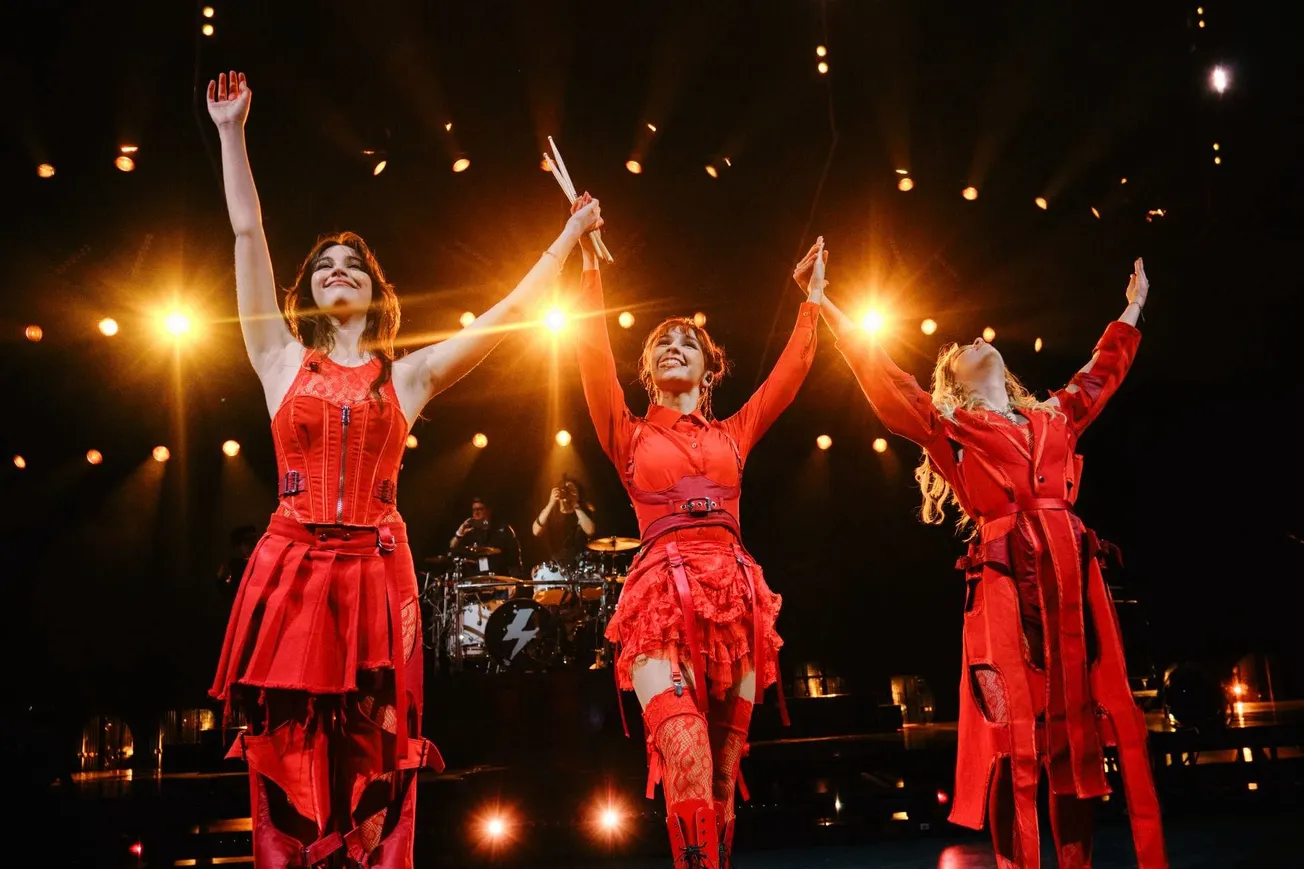
Olivia Rodrigo’s inaugural Daisy Chain Fields festival made several statements that were impossible to miss.
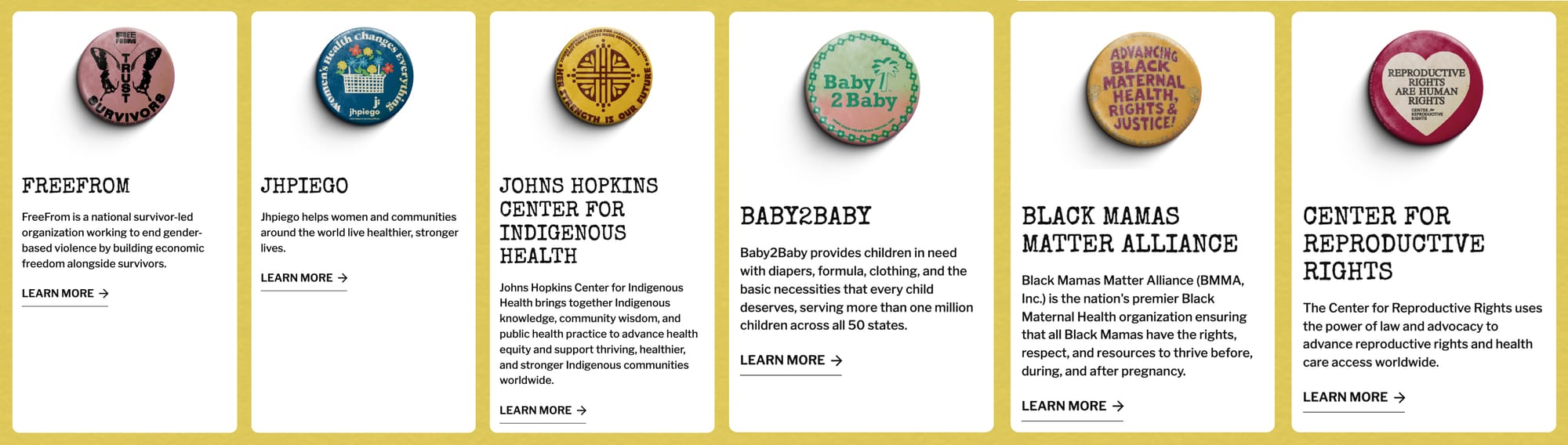
The single-day event brought 45,000 people to Great Park in Irvine, CA, last week. Its women-led lineup stretched across generations, from Bikini Kill, The Breeders, Garbage and Santigold to Mitski, Doechii, Chappell Roan and Rodrigo herself. Every participating artist waived their fee. The festival ended up raising $10 million for ten nonprofits supporting women and girls, and Melinda French Gates matched that amount, which brought the total to $20 million.
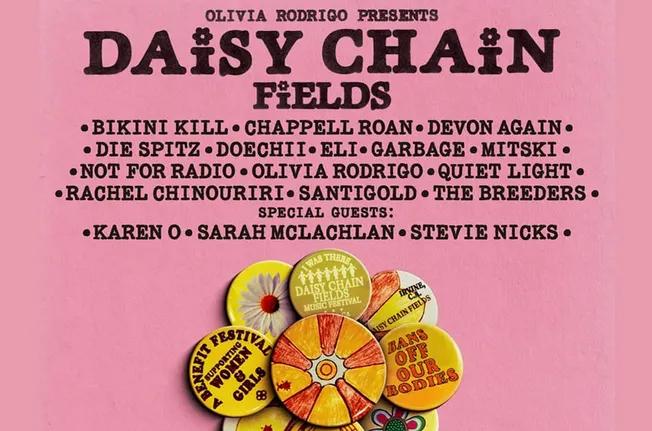
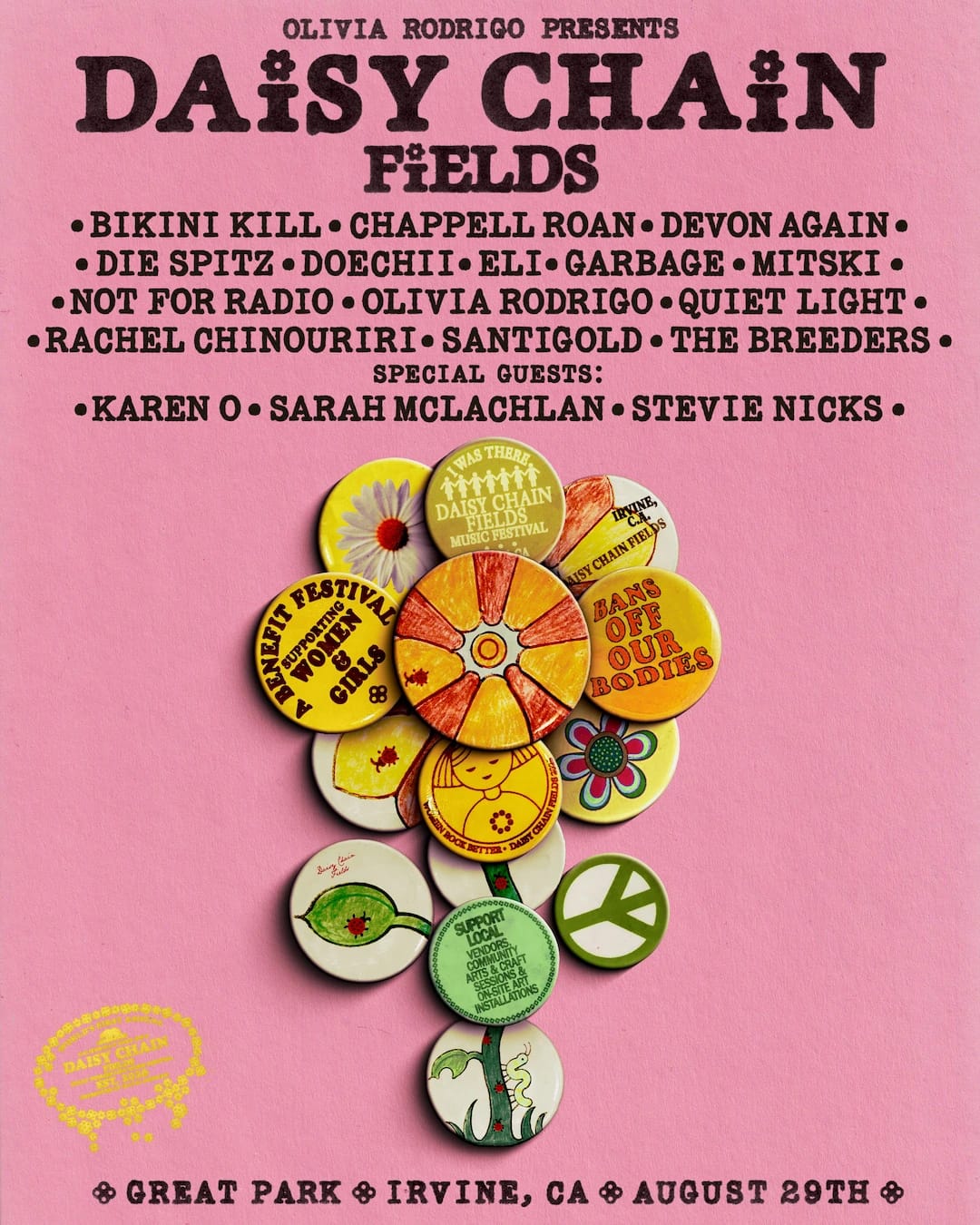
But for Rodrigo and the organizers, this was about more than raising money. It was about visibility and how it interacts with who gets to have a voice in this space. On the festival poster, every artist’s name was presented in the same-sized type and listed alphabetically.
There was no enormous headliner, no second tier and no cluster of emerging acts in print so small it nearly became a disclaimer. Then the schedule carried the idea into the event itself: performances alternated between two stages which never overlapped, allowing attendees to see every artist on the bill.
That invites an incredible question:
Which was more radical — the decision to build a festival around women, or the decision to stop visually ranking them?
A Festival Poster Is a Power Map
The conventional festival poster looks like marketing, but it functions as an industry hierarchy made visible. Font size and placement prominence communicate drawing power, negotiating leverage and perceived cultural importance. The largest names are presented as the reason to buy the ticket. The smallest are framed as niche-attraction additives — valuable, perhaps, but ultimately optional.
Those distinctions do not begin with the graphic designer. They reflect real differences in ticket demand, career stage, set length, fees and contractual billing. Rodrigo still closed the Daisy Chain Fields evening, and equal lettering did not make every artist equally famous.
But design does more than reflect hierarchy. It reinforces it.
Before audiences hear a single note ring out, the poster tells them whose set is essential and whose can be skipped. It gives media outlets an instant shorthand for who “matters” on the bill. I love that this festival simply declined the temptation to use fame as the festival’s organizing visual principle.
What's more, the festival's booking approach to create a no-conflict stage schedule offers the same gesture, in never asking fans to choose between watching better- or lesser-known performers.
Gender Equity Is About More Than Just Presence
The poster also matters because festival gender imbalance has never been only a question of how many women are booked. It is about where they appear. In 2018, Pitchfork analyzed nearly 1,000 artists across 20 major festival lineups and found that women were particularly scarce in the largest-font tiers. Four festivals had no female or mixed-gender acts at all among their top-billed 10%.
That is one reason the work of Book More Women has been so effective, and why we support this group here at Hypebot emphatically. The organization began in 2018 by erasing male-only acts from festival posters, turning familiar lineup graphics into stark pictures of who was missing.
This intervention worked so well because the poster already contained the industry’s priorities; Book More Women simply made those priorities harder to ignore.
Its methodology has since become more exacting. Rather than counting a band as “diverse” because it includes a single woman or nonbinary member, Book More Women now researches the individual musicians who are actually being paid to perform.
Across nine major US multi-genre festivals in 2025, 38% of acts included at least one woman or nonbinary musician under the organization’s original method. Count the people onstage, however, and women represented 21.6% of musicians, nonbinary artists 1.6% and men 77.4%. Across 130 festivals tracked in 2024 and 2025, just 17.3% of booked musicians were women and 1% were nonbinary.
+Read more: "Book More Women: The Data-Driven Initiative Pushing Music Festivals Toward Gender Equity"
This might help explain why Daisy Chain Fields is better described as women-led than strictly women-only.
A poster can show a full slate of female-fronted acts while the personnel onstage tell a more complicated story. Representation must be examined at every level: whose name is advertised, who gets the prestigious slot, who is hired to perform and who holds power behind the scenes.
In her recent OpEd for Hypebot, Andie Aronow, the founder of Women That Rock, argues that despite the notable success at the tippy top of the Pop Music stardom ladder, imbalance still exists in all the lower rungs:
"Every few months, someone in entertainment press declares that it is the “year of women” in music. Taylor Swift, Beyoncé, or Lady Gaga drops another enormous record. Chappell Roan and Sabrina Carpenter dominate summer festivals. Charli XCX owns music branding and reshapes pop culture."
The headlines suggest that "we’ve ‘made it" — that the industry has finally figured out how to support women. It’s a heartening narrative, but it’s also dreadfully incomplete."
Though a handful of women are filling stadiums, thousands of equally talented women are still fighting for something much more basic: an equal shot at getting recognized in the first place."
The Late '90s Might Have Something to Say About All This
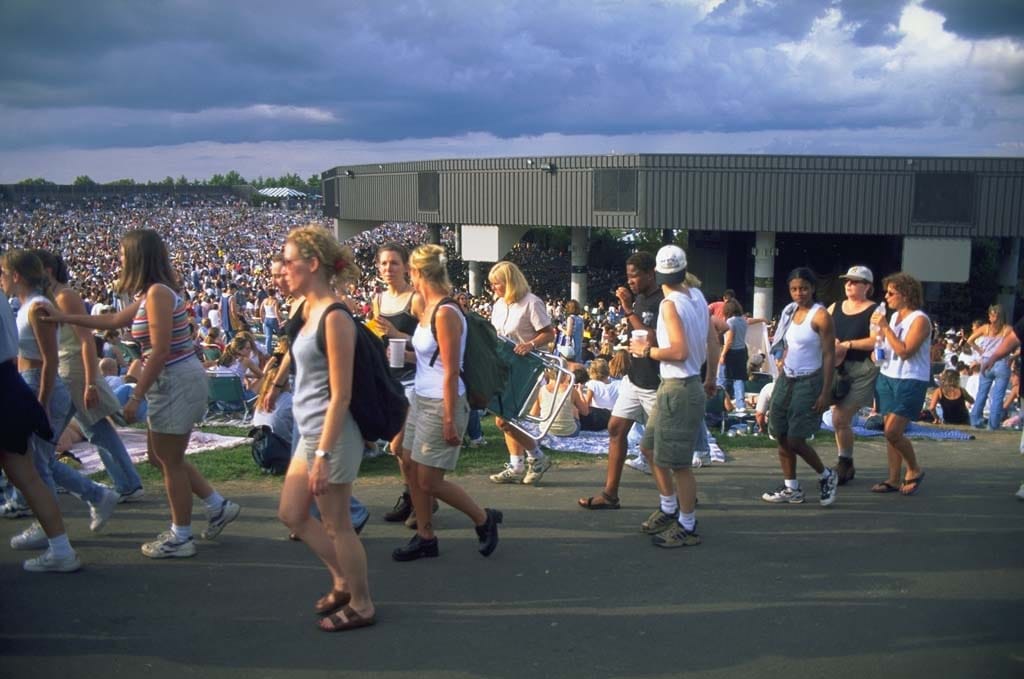
Daisy Chain Fields was inspired in part by Lilith Fair, the late-1990s touring festival created after Sarah McLachlan encountered an industry that resisted booking women back-to-back. Back in 1997, Sarah McLachlan launched Lilith Fair to challenge the stubborn music-business assumption that audiences "wouldn’t turn out for multiple women on the same bill."
Building on successful shows with Paula Cole the previous year, McLachlan brought that challenge on the road as a touring festival showcasing female artists. It became the year’s highest-grossing touring festival, earning $16 million and returning in 1998 and 1999 — a pretty convincing rebuttal to the gatekeepers who doubted the demand.
McLachlan joined Rodrigo onstage Saturday, connecting two generations of artists who turned the "risky" booking decision into a cultural event.
Nearly three decades later, Daisy Chain Fields is asking similar questions. But this time, it's trying to tear down the entire business of hierarchical competition with it.
A male-dominated festival simply cannot typeset its way to gender equity right now. No matter which way you slice it, when male acts appear on a bill, old power structures will be upheld and reinforced. Even if the fonts are the same, women and non-binary artists are still being concentrated in earlier festival time slots and less visible stages.
The money raised, the connection to one of America's most popular touring festivals, the deconstruction of typographic hierarchy, the ambitious and impressive lineup all suggest one thing.
Daisy Chain Fields is tearing down the patriarchy, and all its derivative ills. We hope it comes back for a second year in 2027. 🤞