


By Ken Anderson, Partner at Rimon P.C.
In 1982, legend has it, Barry Manilow was touring in the UK, and added a synthesizer to the band instrumentation, to cover certain string and horn parts. The UK Musicians' Union took a dim view of what they saw as a Yank replacing human musicians (who would otherwise be hired on that tour leg) with a non-human machine.
So they outlawed (on Bob Moog’s birthday) synthesizers and drum machines — a ban that remained in effect for some time. Legend has it that a New York Local 802 union member reacted on behalf of U.S. musicians, saying:
“Who do you think plays those things, accountants?”
Well, that was then, but the current answer, with generative AI, is: “Yes, accountants and quantum physicists,” — but more so, the machine plays itself. With a prompt, generative AI systems not only play themselves, “[they] write the songs” and they have gone to the top of the charts.
This brief article will focus on the current legal and contractual issues dealing with AI-generated songs.
The Basics - Copyrightable Authorship
U.S. copyright law protects two distinct types of works related to music: compositions and sound recordings. The first is based on the organization of musical ideas into a work, the second protects a particular series of sounds (probably not a single, isolated sound or timbre).
Copyright law protects expression, not ideas. Public domain material, licensed material, musical building blocks (e.g. scales, modes, common chord progressions) are filtered out. The work must be fixed in a tangible medium (e.g., written down or recorded). The music must be original (not novel, not of merit, just not copied).
The threshold of originality is low, but it's more than nothing.
Traditionally, the focus for musical compositions was on melody, rhythm, any accompanying lyrics, and to some extent harmony. There are no bright line rules; each case is unique. This is true even with sound recordings. The authors are the people who make a contribution of substance to the sounds. Originality, although easier to establish, is not automatic.
Caselaw from the 1950s belittled anything but melody in the consideration of originality in popular music. Modern thinking is, of course, more inclusive; a song like the wonderful "Zilch" by the Monkees, comprised solely of spoken words in overlapping polyrhythms, clearly qualifies as a copyrightable musical composition, without the need for melody.
Which brings us to monkeys — specifically, a crested macaque named Naruto. In 2018, the United States Ninth Circuit Court of Appeals held that self-portrait photographs taken by Naruto were not capable of copyright protection because Naruto was not an “author” under the U.S. Copyright Act — a designation reserved for human beings.
In addition to being the position of the U.S. Copyright Office, that holding has been followed and applied to AI in Thaler v. Perlmutter, a 2025 decision of the United States Court of Appeals for the D.C. Circuit. That Court decided the issue simply on the language of the Copyright Act, and avoided a second, and potentially useful consideration for future AI copyright questions — that human authorship is plainly required by Article I, Section 8 Clause 8 of the U.S. Constitution itself, in the context of authority to secure exclusive rights to authors (here, composers and recording artists) in order to promote the progress of the arts (here, music).
+Read more: "Music & AI: What Happens When Quality Is No Longer a Differentiator?"
Are Prompts Sufficient to Vest Ownership of Generative AI Output in the User?
The AI computer program and the myriad of possible outputs are entirely different things. The outputs are not works written by the author of the AI program. They are a machine, partially random, response to user prompts.
Basic prompts must stand on their own as the expression to be examined. Since a non-human AI system cannot be an "author," the prompts cannot pass for directions given to an employee by an employer, with the employer owning the resulting work made for hire.
Thus, “write a funny medium tempo song for voice and piano in a major key about my dog” would not result in ownership of the resulting song. Nor would such an unoriginal combination of words support a copyright itself. In addition to ideas, the Copyright Act via 37 CFR § 202.1 prohibits copyright ownership of short phrases, titles and slogans, or plans, except as expressed in a writing. Admittedly, at some point, the instructions may be original enough to support a copyright for the writer but only in the expressed words and not in the result.
From the pre-AI world, John Cage's famous "4'33"" composition is a good tool to probe the boundaries of original expression and copyright’s idea/expression dichotomy in music composition.
Cage's work was originally performed with a designation of three movements, each consisting of silences the duration of which would be selected solely by the performer and the total time of which would become the title of the piece for that performance. The blank score with only a tempo indicated, came with a front-page approximately 77-word NOTE of instructions, leaving virtually everything except silence within the control of the performer. The point of course was in the instructions and even moreso in the random ambient sounds, outside the composer's control, that the audience would hear as the performance.
This arguably gave Mr. Cage a copyright in the text of his instructions; certainly his publishers have thought so. But, as an idea, Cage did not obtain a monopoly on performances of silence, with random ambient sounds. The required creative originality attaching to the result of Cage's instructions would need to be supplied (if at all) by a producer/ engineer who fixed the specific ambient sounds, in a recording, and only if that person exercised some creative effort in microphone selection, positioning and equalization and any added effects.
It might come as a surprise that in 2002 Cage's publisher reportedly made a claim in the UK against composer Mike Batt, for recording a song entitled "A One Minute Silence," consisting of one minute of silence. None of Cage's 77-word text was apparently copied. It seems that Batt had elected to give Cage co-writing credit, and remarkably, he reportedly settled the case for a six-figure sum.
The BBC later reported that the case was a hoax. In any event, there would have been no valid copyright claim in the U.S., but the false credit designation might have come close.
The licensee of a generative music AI system should not expect to own the output of their prompts. To the extent that prompts are very detailed, they may be eligible for copyright protection. To the extent that edits and changes are made to the output, if they are original and substantial, the resulting compilation may qualify for a copyright, but that copyright will not cover the AI output or its components, only the particular creative decisions made in assembly, editing and modifications.
Where Will the Money Go From AI’s Infringing, Authorless Output? Will Taylor Swift Get a Bigger Share?
The time has come, composers and recording artists say, to speak of many generative AI things.
1. The more likely outcome of the growing number of current and future major label and publisher lawsuits, but for the many settlements in progress, would likely be victories for the labels and publishers.
Key factors leading to this prediction are the massive wholesale unauthorized copying of works in AI training and, notwithstanding the strong transformative nature of the process, the overwhelming developing evidence that the market for human-created music is being usurped by machine output.
This danger was first judicially recognized last year in dictum in a literary works case, Kadrey v. Meta, where Judge Vince Chhabria chastised plaintiff's counsel for not marshalling the game-changing market damage evidence which was already building with book e-retailers like Amazon. This factor makes all the difference in the latest copyright cases, and we all know about the recent chart-topping authorless AI R&B, country and pop tracks.
The outcomes of the cases should include permanent injunctions against the continuing use and licensing of the infringing applications.
2. However, many of these cases are being settled on the basis of some form of continuing use, with payment to the publisher or record company for a blanket license of the company's catalog.
In my opinion, the only way to do this without increasing the damage to working musicians, is the so-called "Walled Garden" approach, which confines the generative activity and output to a confined online space. If there is to be continuing use, “Walled Garden” is more consistent with the Constitution’s purpose of promoting the arts.
3. Musicians are also concerned about their participation in the settlement proceeds and the revenue from successful AI recordings.
Catalog licenses raise many accounting issues, the detail of which are outside the scope of this article, but it can be said that a satisfactory accommodation for developing artists and composers may be an uphill trek. Very successful and iconic artists and composers have the leverage to negotiate, but artist representatives note push-back on lesser artists' ability even to opt out of blanket licensing (indie labels and publishers are a better option here).
4. There are AI clauses now appearing in industry agreements. Read them carefully.
Some may appear to be protecting the artist, but actually are new warranties by the artist that the artist has not utilized AI. These need exceptions for AI-powered musician tools clarified.
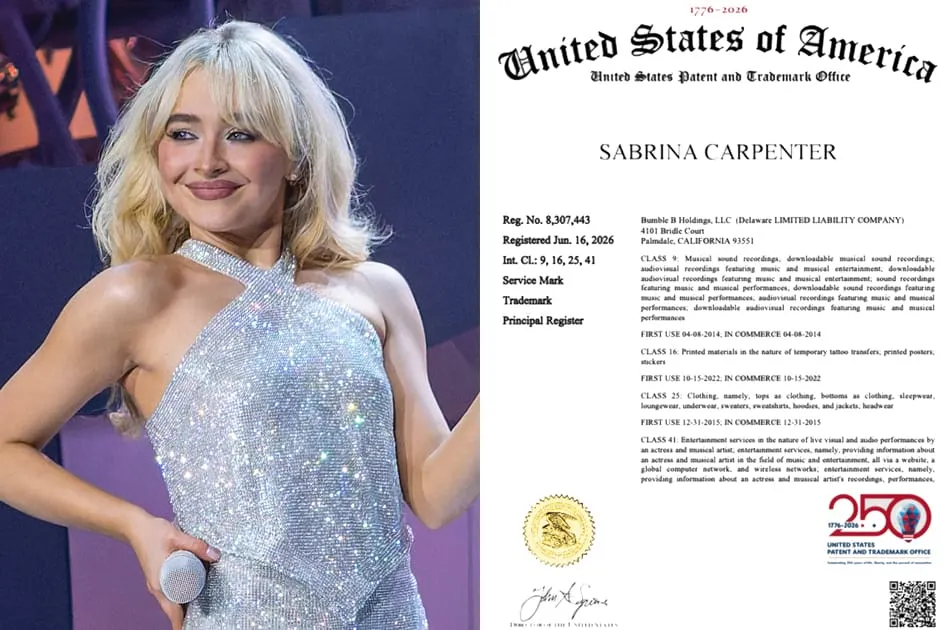
With legislation stalled, what can creators do? They can be bold like Taylor Swift and try new legal strategies like voice trademarks, which although a tenuous legal move, are to be commended for bringing attention to this area of concern. Even better, they can organize and put pressure on Congress to move forward with protections like a uniform federal right of publicity law applicable on a national basis to AI.
Recent attempts of individual states to legislate AI output ownership should be preempted by the express language of the Copyright Act.
Ken Anderson is a partner in the Entertainment, Sports and Media group of Rimon P.C., based in New York City. After working as a musician in his teens, he was a George H. Cook Scholar in electronic music with a bachelor’s degree, with honors, in music from Rutgers University, and was Research Editor of the Rutgers Computer and Technology Law Journal. He is general counsel for numerous Grammy‑winning and Rock and Roll Hall of Fame‑inducted music icons.