

By Mo Chahdi, COO of Muse Group
The conversation around AI in music tends to swing between two extremes, which was also visible at NAMM this year. The industry is either doomed or cautiously exploring what comes next.
At Muse Group, we surveyed 1,200 musicians, active users of Ultimate Guitar, MuseScore, MuseHub, and Audacity, to understand how they feel about AI in their creative process. The results point to a more nuanced picture and raise questions about what comes next.
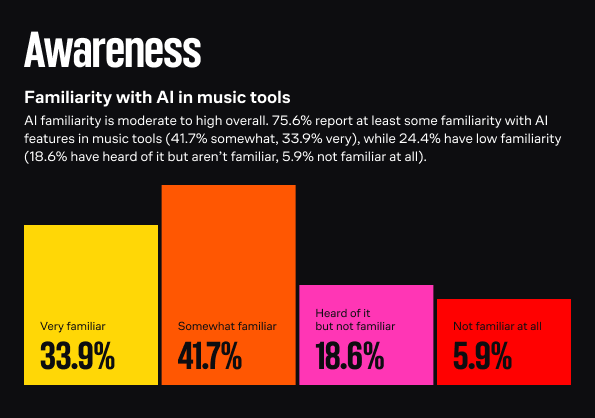
Overall, 78% of musicians are open to AI tools, and 70% already use them in music creation, but the enthusiasm is not evenly distributed.
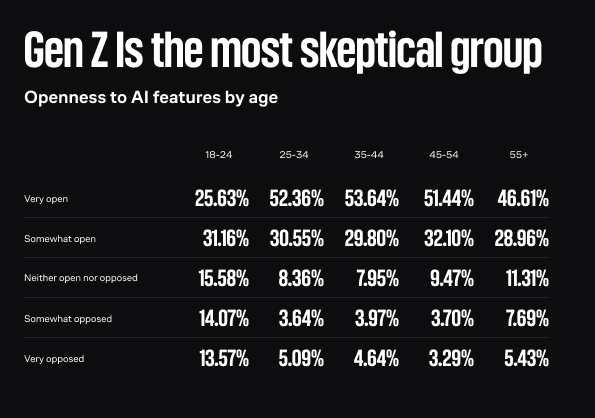
Musicians aged 25–54, many of them professionals and advanced players, are generally positive. Between 36% and 42% describe themselves as excited about AI in music tools, and frustration levels remain low.
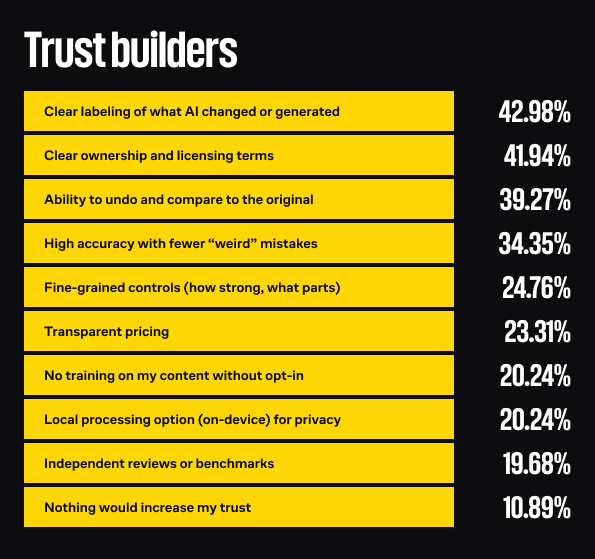
For them, AI is largely seen as a useful assistant that helps remove routine work and frees up time for more creative tasks. At the same time, this openness comes with expectations around transparency and control.
Gen Z (18–24), by contrast, is the most cautious and polarized group. They show the lowest excitement (only 14%), the highest concern (26%), and the highest frustration (21%). This challenges a common assumption that younger musicians would naturally be the most enthusiastic about AI. Instead, they are the most cautious about where it might lead.
Why this gap exists
The difference becomes even clearer when you look at how each age group understands the “AI in music” in the first place.
For younger musicians (18–24 and 25–34), AI is most often associated with content generation (48.3% and 46.9%), a machine that can create melodies, beats or entire tracks.
Older groups (35–54) tend to prefer assistive use (36–38.8%). They see AI as a tool that helps them do their own work better.
Looking at the broader numbers, it becomes clear where the tension comes from:
- 82% of all musicians are against AI generating music
- 93% prefer more control over speed
- 40–41% reject tools that copy an artist’s style without consent or train on others’ work without permission
- 81% believe the industry desperately needs stronger standards and transparency
Musicians are not against technology. They push back on being replaced and want to stay in control of their work and authorship.

+Read more: "How to Use AI to Book and Market Live Shows: a Musician's Guide"
What this means for the next decade
The future of AI in music will depend in part on whether the industry responds to these signals. This becomes more important as Gen Z takes on a larger role as both creators and audiences.
Generative AI, including models like Suno, will likely continue to grow, especially in fast, user-generated formats. But Gen Z, which will shape the market over the next 5–10 years, already approaches this type of output with noticeable skepticism.
Assistive AI tools that support the creative process, such as noise removal, stem separation, or practice support, are more likely to see long-term adoption. However, this depends on whether they can build trust by offering control, transparency, and clear respect for authorship.
Over the next few years, it will become clear whether AI can support the creative process without taking it over. Those who understand this early will have a clear advantage going into the 2030s.
At Muse Group, this is already shaping how we think about product development. We’re focusing on features that are genuinely useful and fit into how people actually make music.
Musicians are asking for clearer boundaries and more control. And if we listen now, we still have time to get it right.
Mo Chahdi is Chairman and Chief Operating Officer of Muse Group, where he oversees global operations, execution, and the company’s strategic agenda across its music and technology businesses. In his previous role as Global Vice President of Business Transformation and Employee Experience at Appen, an ASX-listed AI solutions provider, Chahdhi helped to define and implement the company’s turnaround vision and key value creation strategies, while also leading the implementation of people and culture initiatives.