
Ask musicians how to get a song onto streaming services and the same names tend to come up: DistroKid, TuneCore, CD Baby.
But choosing a distributor involves more than finding an upload button. An artist releasing occasional covers has different needs from a producer managing several aliases, a band splitting income among collaborators, or a small label coordinating an entire roster.
Beyond the familiar names are services offering different combinations of distribution, administration, promotion, and personal support. Some welcome direct signups; others select their partners. These 11 serve independent artists, although their ownership structures and business models do vary.
1. Too Lost
Once you’re managing multiple releases, collaborators, and income streams, distribution becomes an organizational job. Too Lost combines delivery with catalog management, royalty accounting, analytics, and rights protection tools. Its offering includes team access and controls for authorizing or blocking uses on supported user-generated-content services. Artists and small labels with growing catalogs may find those administrative features especially relevant.
2. EmuBands
EmuBands offers both pay-per-release distribution and a Premium subscription with unlimited releases. Its Pro and Premium tiers include a personal account manager, royalty payment splitting, and video-call support. That gives artists a way to compare occasional-release costs with a more supported ongoing service. One detail to check: leaving Premium requires converting releases to its paid “Forever Releases” option to keep them online.
3. iMusician
What happens to your music when you stop paying a subscription? It’s a useful question to ask before signing up. iMusician offers pay-per-release and subscription options, and says releases remain online even after an AMPLIFY subscription ends. Fees and commissions differ by plan, so keeping music available and keeping every royalty dollar are separate considerations.
4. Horus Music
Horus Music offers unlimited DIY distribution alongside publishing and promotional services. It also has a separate, invite-only artist and label services offering for those seeking more hands-on support. Its India-focused services include targeted editorial playlist pitching, giving artists working in that market a specific offering to investigate. The DIY subscription and selective service have different economics; compare them accordingly.
+Read more: "A Guide to Pitching Music to Independent Spotify Playlists"
5. RouteNote
A subscription can feel like another expense before a release earns anything. RouteNote’s free distribution option instead lets artists keep 85% of earnings, with the service retaining the rest. It’s a model worth considering when available cash matters more than retaining every percentage point. As a catalog’s income grows, artists can reassess whether revenue sharing still suits them.
6. Soundrop
Cover artists have an extra administrative task: licensing the songs they perform. Soundrop includes cover-song licensing and automated collaborator splits alongside distribution. Its published price is US$4.99 per track plus 15% of revenue, without recurring distribution fees. For musicians whose release schedules regularly include covers, handling those tasks together gives the service a clear use case.
7. OFFstep
ONErpm’s DIY service, OFFstep, offers unlimited distribution through tiered subscriptions, along with automated royalty sharing, analytics, and promotional tools. Its broader feature set includes music-video distribution and release amendments. Artists should compare the individual plans against their actual workflow: managing collaborator payments or updating a release may matter more than a long list of tools they rarely use.
8. Record Union
Record Union combines distribution with Linkfire smart links, an electronic press kit, and royalty splits. The EPK is a useful addition for artists who also need to introduce themselves to bookers, journalists, or prospective partners. Its pricing includes annual release charges and royalty participation, so the total cost deserves the same attention as the promotional extras.
+Read more: "You Released the Song. Now What?"
9. Symphonic
Symphonic Starter provides a DIY route with distribution, analytics, and payment splits, while its separate Partner service uses a royalty-share model for additional support. That distinction matters: joining the entry-level service doesn’t mean receiving a bespoke artist-development campaign. For artists and labels considering a more involved distribution relationship, Symphonic offers both models to examine.
10. ANGVIS
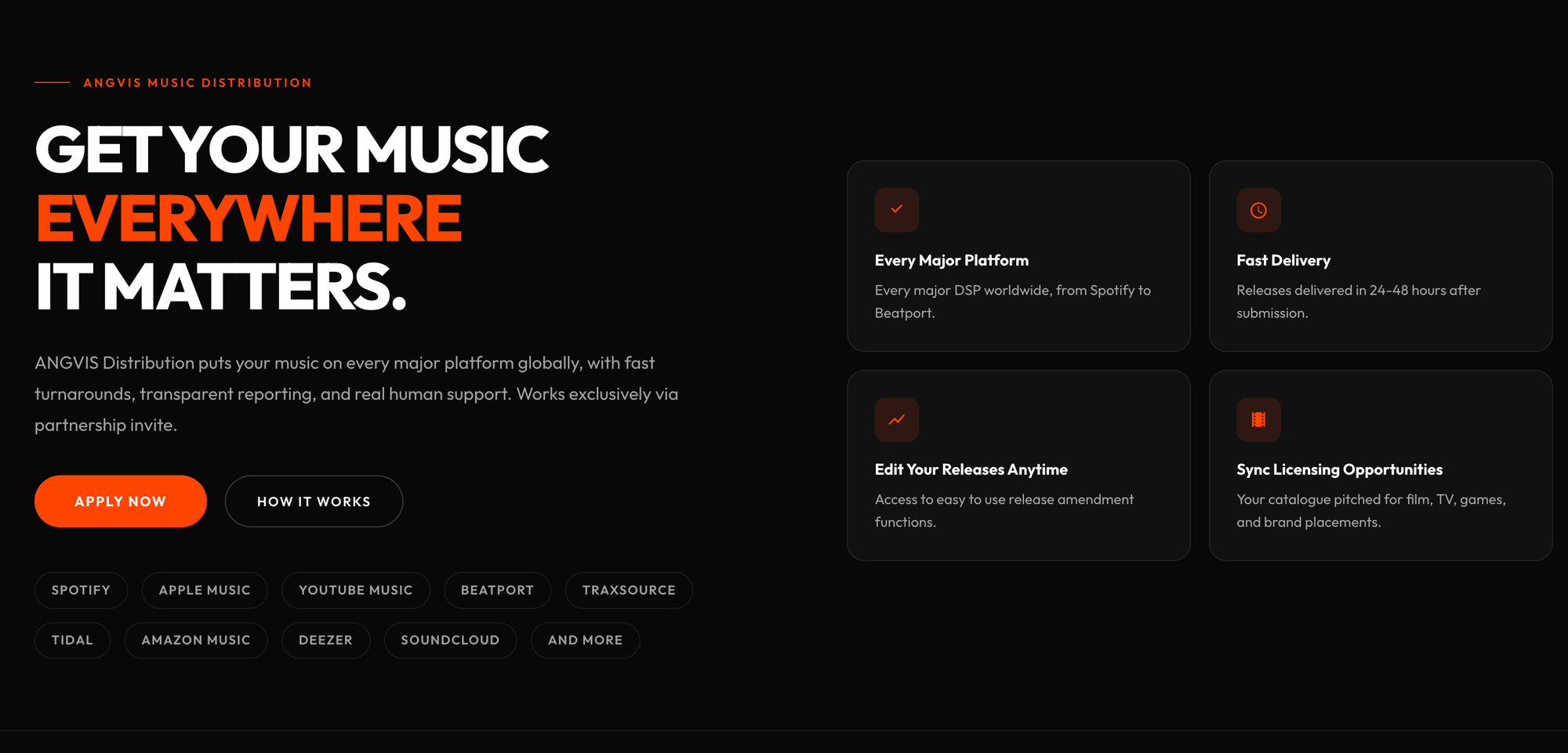
London electronic music label ANGVIS opened applications for its distribution service in April 2026. Its selective offering prioritizes electronic artists. According to its distribution site, delivery runs through a Create Music Group partnership, with no upfront fees, publishing administration, neighboring-rights collection, and access to sync opportunities. The distribution split is disclosed before signing; sync fees are split 50/50. Artists should request the full terms and examples of the support provided.
11. Rebel Music Distribution
Rebel Music Distribution offers standard distribution without upfront fees or a mandatory subscription, alongside daily streaming trends, analytics, and collaborator splits. Its published terms normally allocate 90% of eligible royalties to artists and 10% to Rebel. Optional services include YouTube Content ID, VEVO video delivery, and priority release review. For artists watching their budgets, that provides another route to releasing music — although additional services and release takedowns may carry fees.
A distributor should fit the way you work. Getting the music online is only the beginning.