

I’ve been a band that worked steadily, one that I really liked, and I remember unloading gear from my car in the alley for a show. A woman was smoking outside the stagedoor, and asked me innocuously: “What are you guys like?”
I fumbled around, started stutter out vague sentiments: “We're like The Rolling Stones, but kinda like Beck, with keyboards, but also like The Clash.” The verbal equivalent of my tongue falling down the stairs.
It hit me: We have an identity problem.
There are thousands of bands out there. Competition is huge, whether in your local music community or at the top of the charts. Sure, you can sound good, but nowadays everyone sounds good. How do you go from being just a band on a stage to being a band that people tell their friends: "Dude, you cannot miss this band!"
Mostly, this is about finding your identity as a musical project. And it's not that complicated. In fact, I can sum it up in three words: Don’t be boring.
What’s Boring Anyway?
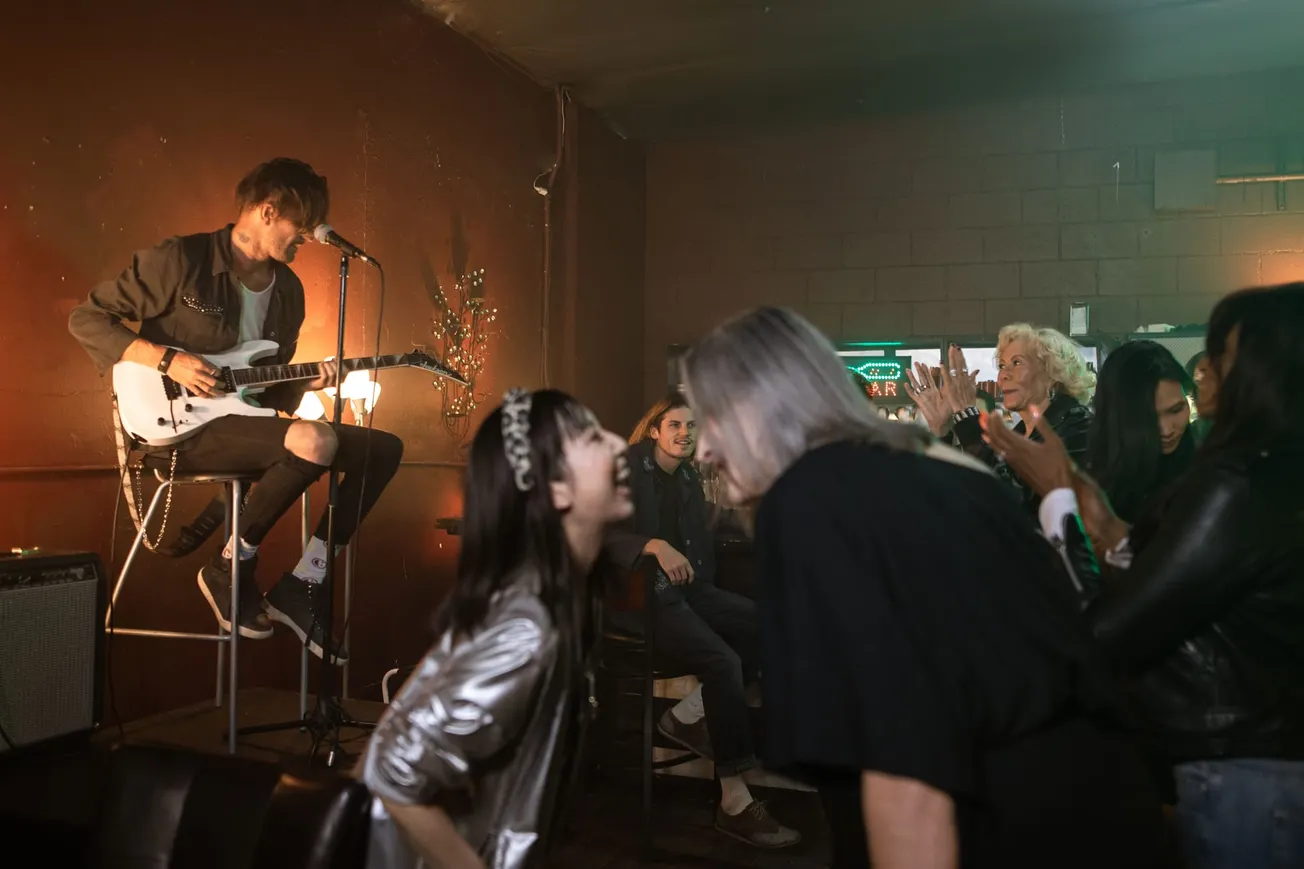
In a live setting, "boring" has very little to do with how you sound, and almost everything to do with whether there’s anything to see. Because honestly, we’ve all seen it: the performer staring down at an iPad, strumming, barely looking up. That’s fine at an open mic. It’s not what people pay to see on a stage.
Most bands don’t fail to take off because they’re bad. They fail because nothing about the experience gives audiences a reason to come back. And nothing about your music gives talent buyers and curators a reason to book you.
If you don’t define the experience of seeing your music yourself, listeners default to defining that for you: “generic band playing songs.” Some of these elements are:
- Who you are (visual identity)
- How you behave (presence/personality)
- How you relate to an audience personally (talking/engagement)
- How you shape people's attention (stagecraft)
- How you control the energy (experience)
Naturally, some performers don’t have to work as hard to get eyes on them. Yes, I’m subtly hinting that great-looking singers have their visual advantage built-in by the time they walk onstage. Most of us won't have that.
But there are so many other ways to be compelling that doesn’t involve major cosmetic surgery: Clothes and costumes, props and stage design, dance moves, lighting, dramatic elements, authentic delivery, unpredictability, chaos, uniquely performed sets for individual audiences, charismatic moments, special guests, t-shirt giveaways, etc.
There are hundreds more ideas here. Just remember your goal: You want to be known as “the band that does X.”
At the end of the day, this is about building your brand. And a brand is all about being able to answer the question "Why?":
- "Why should I pay money to see you?"
- "Why are your live concerts so unique?"
- "Why does your music sound like nothing else?"
- "Why do I care?"
Answer at least one of those questions, and your band will get booked more often. Answer all of them, and you'll be building your audience in no time.
Here are four strategies to help you get there.
+Read more: "Amyl & The Sniffers: How a F*ing Good Concert Film Helps You Grow"
1 - Consolidate or Expand Your Visual Identity.
Bands, whether they know it or not, are in "Show Business." And while the eye shadow and rock n' roll look probably isn’t standing out these days — although I can’t argue with leather pants — clothing can do so much of the work for a band’s recognizability.
Even just wearing suits boosts recognizability. Zoot suits, track suits, pant suits, matching suits, a suit of armor... A band of mine once had colored sweatsuits for special occasions – each of us had our own color like the Power Rangers.
If you really want to go the extra mile, just try some costumes. Think about: KISS, Devo, Flaming Lips... What do all of these bands have in common? You can picture exactly what each of those bands looks like in your mind right now.
But this doesn't have to mean only clothing, a logo or typographic identity will do the trick. A color scheme, video accompaniment to your live shows, anything symbolic you can add to the visual element of your performance goes a long way.
2 – Engage With Your Audience.
Don’t be a singer, be a “frontman.”
That means be wild, be interactive, or climb the scaffolding like Iggy Pop or Eddie Vedder. Or let your id just plain run wild. For a perfect example, watch a smidge of the guy my friend calls “the Cajun Liberace,” Fred Leblanc of Cowboy Mouth.
If that’s not your style, there’s a whole other way to relate to the audience, especially when you’re a solo act: Talk to them.
Be vulnerable, be honest, be open, be mean, be dumb, be funny...
I’ve seen standup comedy my whole life, but three of the funniest people I’ve ever seen on a stage are Tom Waits, Ben Folds, and Randy Newman. (Hmm, all keyboards...) Those guys established a high bar. In a more serious way, so does Bruce Springsteen’s storytelling when introducing a song. You would think that’s a go-to-the-bathroom moment at a concert, but I’ve been to Bruce shows when you could hear a pin drop in the middle of 15,000 people.
When performers go the storytelling route, as long as they’re passionate, it usually translates. Even when Bono was doing his cringeworthy “I don’t mean to bug ya” lecture in Rattle And Hum, it’s still eminently watchable. But be careful, talking works when it adds connection or context. It fails when it rambles. Talking is not always the same as engaging.
Storytelling doesn’t need to be an act. Just be yourself, but a times-10 version of yourself up there.
+Read more: "How We Built a Tour Identity for Fred again.. That Fans Made Their Own"
3 – Lean Into Creating a Schtick.
Cheesiness is fine!
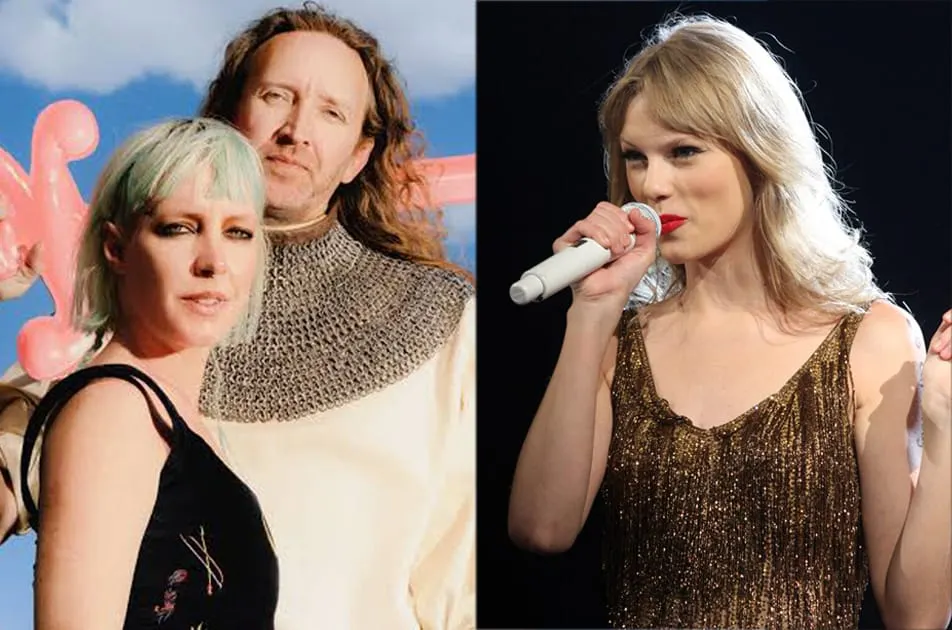
Okay, you probably don’t have the budget to put on a show that resembles Genesis or Pink Floyd (honestly they probably can't even afford that now either!). But you don't need a massive budget to have a good time! Just look at what Gelli Haha is doing on the road right now.
A few colored lights, a projected video screen, some props, and funky dances? If it's gimmicky or goofy, that's great, people remember those shows! Even a smoke machine or bubble machine puts you ahead of the curve – and both at the same time does even better!
Or just do SOMETHING.
My old band, The Bigfellas, was delightfully known for cooking grilled cheeses and hot dogs onstage. I played keyboards and the electric open-face griddle almost looked like a third keyboard. Sometimes people didn't even notice, which made it all the more fun.
4 – Make Your Concerts a "Scene."
Here's an example.
In San Diego, there’s a longtime Grateful Dead cover band who pack Winston’s with 200 people every single MONDAY! Are they great-looking or not stoned for long enough to have a sophisticated light show? No. Are they playing any original music? No. Is it really just a covert government operation to hypnotize people through tie-dye? Possibly.
But if you're in the mood for a good time on a Monday night, their gigs are pretty much the perfect place to be. And audiences flock.
Another example: in the early 1990s in Manchester, a dancing lunatic named Bez was an integral part of The Happy Mondays stage act.
Again, the band can focus on the music if they can convince a friend to put on a chicken outfit and dance next to them. Or invite a local fire-eater, baton twirler, or dancer to join you on stage. If it looks like a party, it is a party.
To quote Jerry from Seinfeld, “Oh, it’s a scene, man.”
Is It a Gimmick or Is It Authentic?
It kind of doesn't matter?
Everything I’ve described here is about putting on an act. Audiences will respond whether it's campy and gimmicky or truly authentic, you need to figure out which is right for you. But you need to have "an act."
That doesn't have to mean selling out to sacrifice your music. Giving people something to look at does not turn a band into a novelty act. It’s about being more you than you normally are, as a person. You have to be a performer, one way or another.
If you’re humorous, be hilarious. If you’re odd, be outrageous. If you’re moody, be mysterious.
Take it from me, when you're in the venue bathroom changing into a giant bunny suit, the experience might feel like it loses some show biz luster. But if the crowd can't stop talking about it, you’ve done your job.
Conclusion
If you're known for a thing, it’s easy to say who you are. It's easy for people to pass the word along. Promotion gets a lot easier, press gets easier. And let's face it, this translates on social media better than "local musicians sound good.”
You get booked.
+Read more: "How to Book Venues, Plan Concerts and Market Live Shows & Tours"