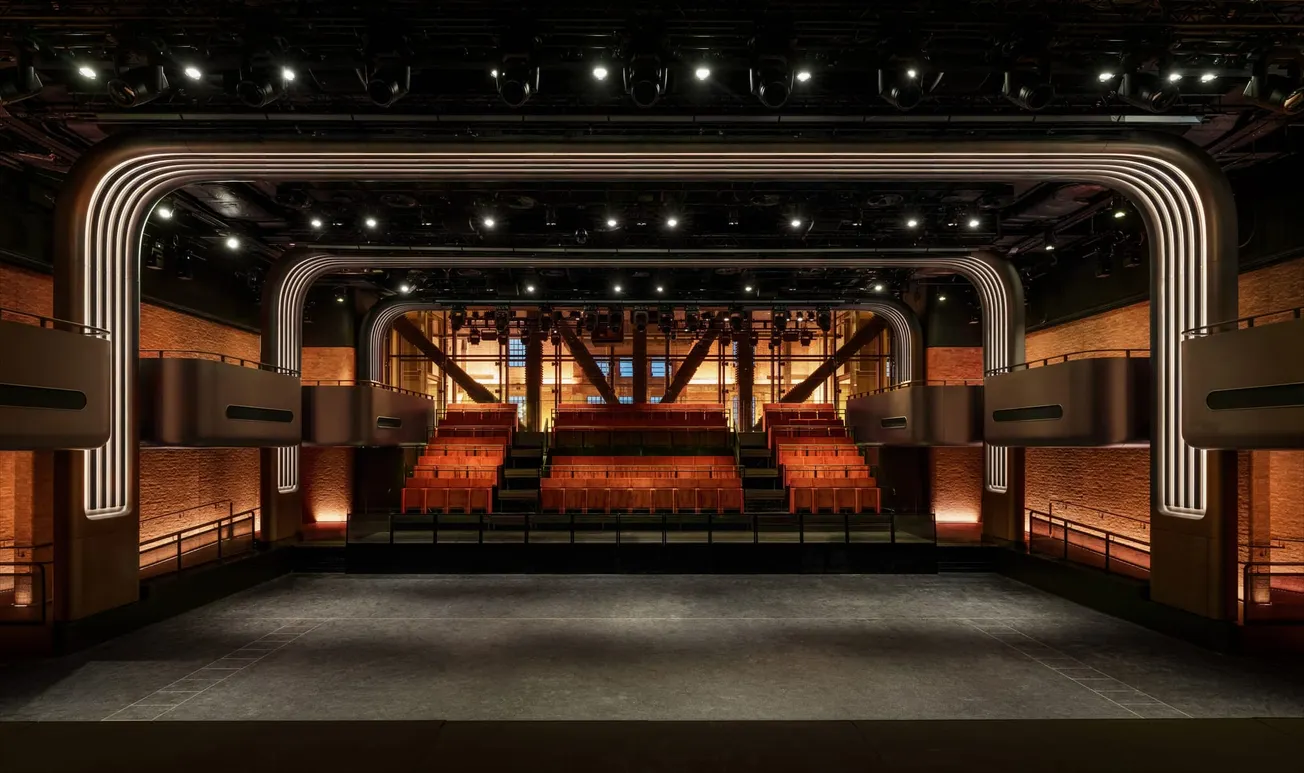


In The Dark, the unique London-born live music experience performed entirely in pitch blackness, has just announced its first UK-wide tour, moving from sold-out London residencies into cathedrals and abbeys this autumn.
It’s worth covering — because people are raving about this experience already — but it’s also worth offering some context about what it actually is: a well-executed, commercially packaged version of a listening format that sound artists and electroacoustic composers have been building for the better part of seventy years, which itself can be traced back to the teachings of Pythagoras in Ancient Greece.
That listening experience, called acousmatic music, is where no visual component accompanies the "performance" of sound in a live setting. The goal is to enhance the active, engaged, and embodied listening experience beyond the ears. So, what's going on here? Let's dive in.
What Is "In The Dark?"
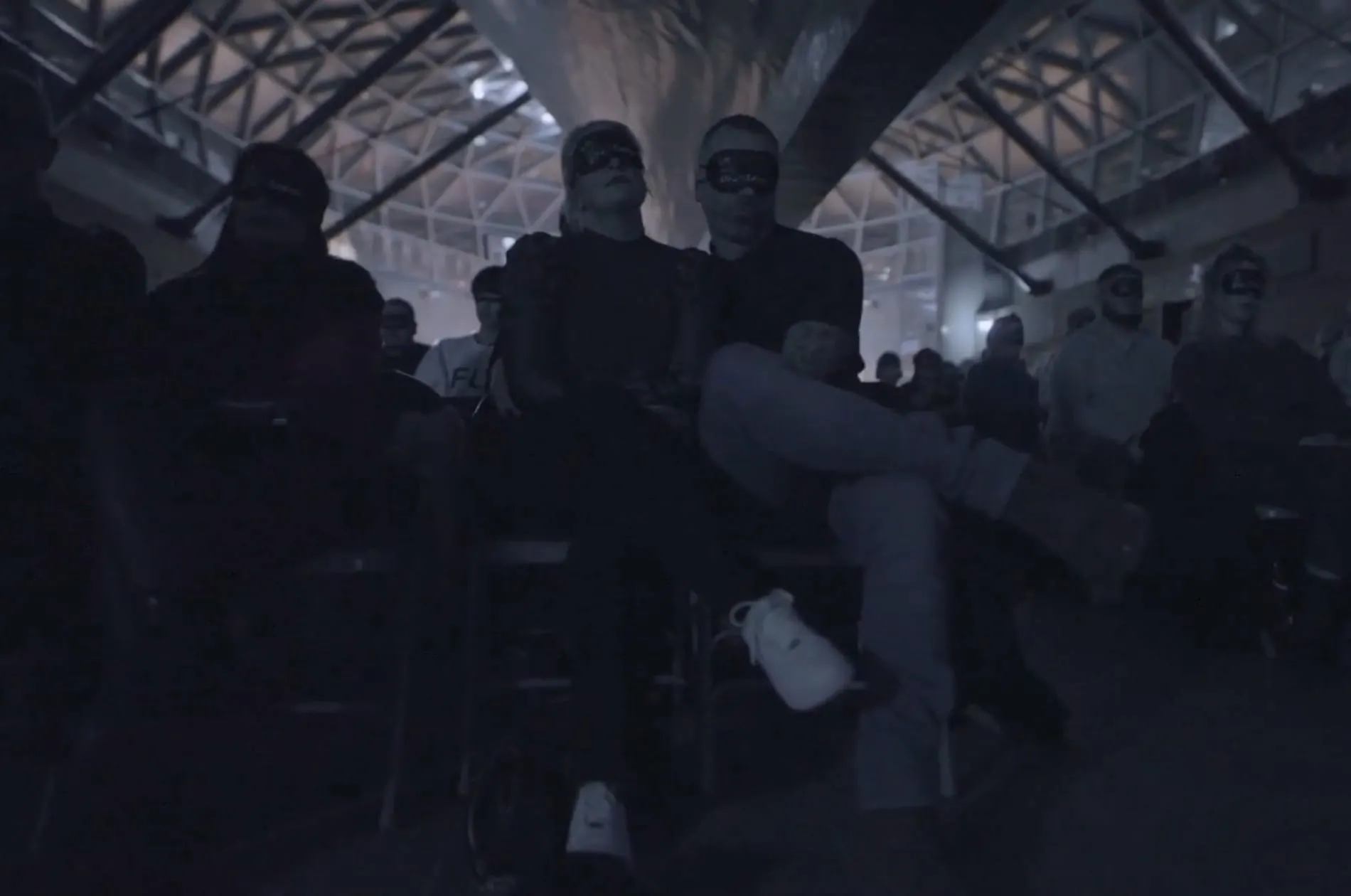
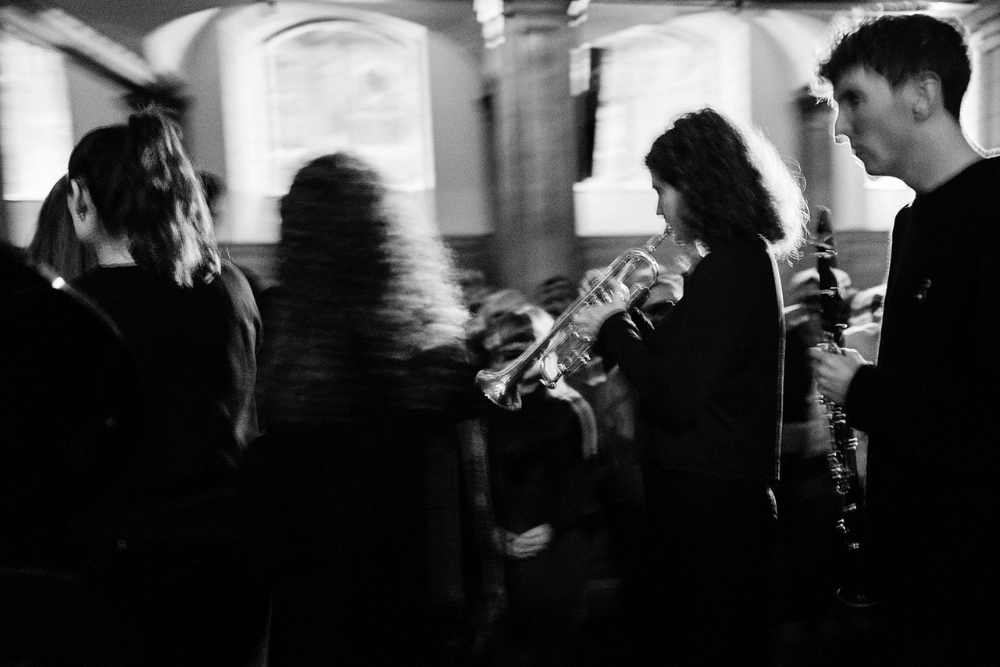
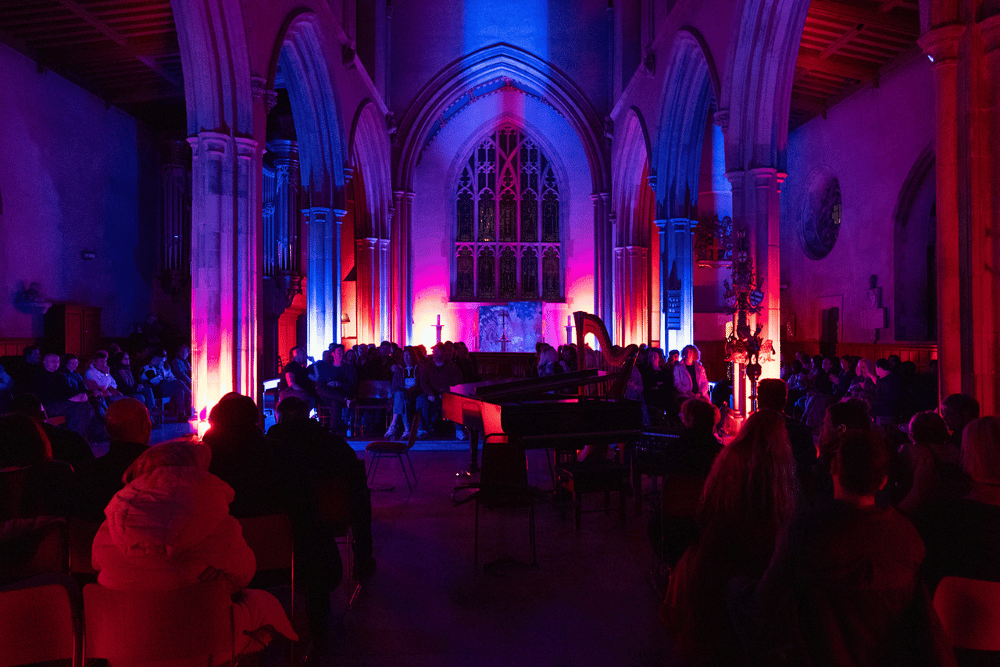
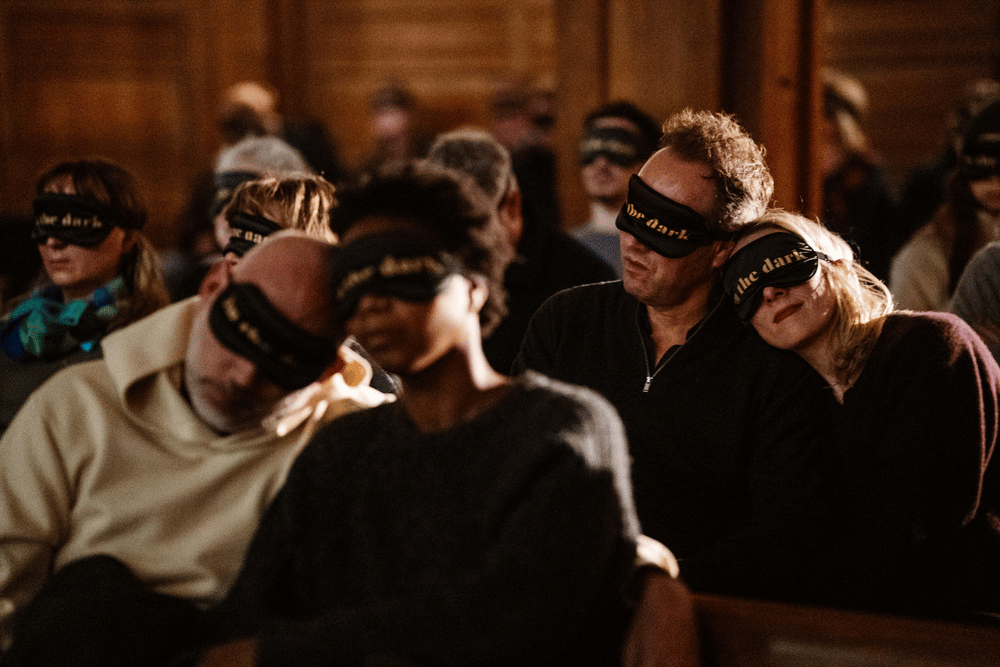
The In The Dark show runs 70-to-75 minutes, in which time, roughly 30 unamplified musicians and vocalists move silently through the venue, surrounding a seated audience wearing eye masks for the full duration.
No stage, no lighting, no setlist revealed until the show ends. Created by Bury-born musician Andrea Cockerton, it began in Cambridge before building to sold-out London runs.
This autumn’s tour brings two formats, split by their repertoires — HUSH (arrangements of Sigur Rós, Coldplay, Ólafur Arnalds, and Mumford & Sons, among others) and the newer PULSE — to Bristol Cathedral, Chichester Cathedral, St Albans Cathedral, Tewkesbury Abbey, Guildford Cathedral, and All Saints Hove, alongside continuing London dates.
+Read more: "What Is an Avatar Concert? Unit1 Is Making Them Easier to Produce"
Where this actually comes from
The idea of removing sight to intensify listening isn’t new, and it’s worth naming the lineage to give In The Dark some context.
Acousmatic music — composition and performance built specifically around sound with no visible source — traces back to French musique concrète in the 1950s, and a specific strand of that tradition is literally called “cinéma pour l’oreille,” or “cinema for the ear:” pieces built with the same dramaturgical logic as film, but for the ear alone, pioneered by composers like Francis Dhomont and carried forward by figures such as Robert Normandeau, whose Montreal concert series is pointedly named Rien à voir — “nothing to see.”
A longstanding Montreal festival that came out of this concert series called Akousma has been presenting annual commissioned works in this format for performance since 2005. These concert works are typically performed on multichannel speaker arrays (sometimes called an acousmonium), frequently in darkened rooms, built around the same premise: strip the visual, and the ear does more work.
Similarly, Spanish sound artist Francisco López has spent decades touring a more austere, solo version of this same idea — blindfolding audiences for performances built from his own archive of field recordings, across more than seventy countries. López describes the blindfold not as what he calls a “voluntary commitment to listening.”
The format, the staging logic, and even the specific choice to hand out blindfolds are all things this underground experimental scene has been refining since well before In The Dark existed.
In fact, quite far before. The origin of the term acousmatic can be traced back to Greek scholar and teacher, Pythagoras. It is believed that the philosopher tutored his cohort of students from behind a screen so as to not let his presence distract them from the content of his lecture. And in doing so, their recall of his words was rumoured to be immaculate. According to Wikipedia,
"In 1955, Jérôme Peignot and Pierre Schaeffer were the first to use the term acousmatique to define the listening experience of musique concrète. It is said to be derived from akousmatikoi, the outer circle of Pythagoras' disciples who only heard their teacher speaking from behind a veil. In a similar way, one hears acousmatic music from behind the 'veil' of loudspeakers, without seeing the source of the sound."
So what’s different here
In The Dark has taken a listening technique developed in experimental sound-art circles and applied it to a recognizable, radio-friendly repertoire (Coldplay, Sigur Rós, Mumford & Sons) at a ticketed, mainstream-accessible price point (£38–£48). The idea from the curator being that this experience should meet listeners where they are aesthetically and preferentially, in order to provide a wider audience with a magical experience.
It’s a case study in moving a long-running underground technique into commercially viable, broadly marketable territory.
The cathedral booking strategy follows the same logic: a format with no stage or lighting rig doesn’t need a conventional touring venue, which is exactly why acousmatic concerts have historically found homes in galleries, planetariums, and black-box spaces rather than standard theatres. In The Dark is extending that same venue logic to historic ecclesiastical buildings with better brand appeal and ticket pricing power.
+Read more: "Why the Levitt Foundation Model Should Not Be an Outlier"
What’s worth tracking
A few things are worth watching as the tour plays out: Whether ticket demand across six cathedral cities matches the London residency’s track record, which would validate that this works as a touring model rather than a single-city novelty.
Whether Cockerton or a competitor pushes the format toward more original or experimental material over time, closer to its acousmatic roots, or keeps it anchored to familiar covers as the commercial draw.
And more broadly, whether this success invites other promoters to look at the decades of existing sound-art practice — spatial audio works, acousmatic composition, phone-free listening formats — as untapped source material for new ticketed experiences, rather than treating “no lights, blindfolds” as a one-off gimmick unique to this show.
For now, we're more than happy to turn down the lights and let the music play.