

If you’ve been scrolling through the headlines lately, you might think live music is coming down with a terminal case of Blue Dot Fever - the nickname for tour cancellations marked by a sea of unsold blue tickets on venue seating maps.
But a new Luminate Live Music Report shows reality isn't a terminal diagnosis, but rather a complicated shift in how fans spend their cash. While the post-pandemic live music surge seems to have peaked, the market is proving incredibly resilient if you know how to navigate the new playing field.
Here are critical takeaways from the Live Music Report that every promoter, talent buyer, artist, manager, and agent needs to know.
Big Picture: The Post-Pandemic Boom Has Peaked
- The Revenue Ceiling: Billboard Boxscore data shows global live revenue for the top 100 tours flattened at $9.1 billion, indicating that the post-pandemic demand surge has leveled off.
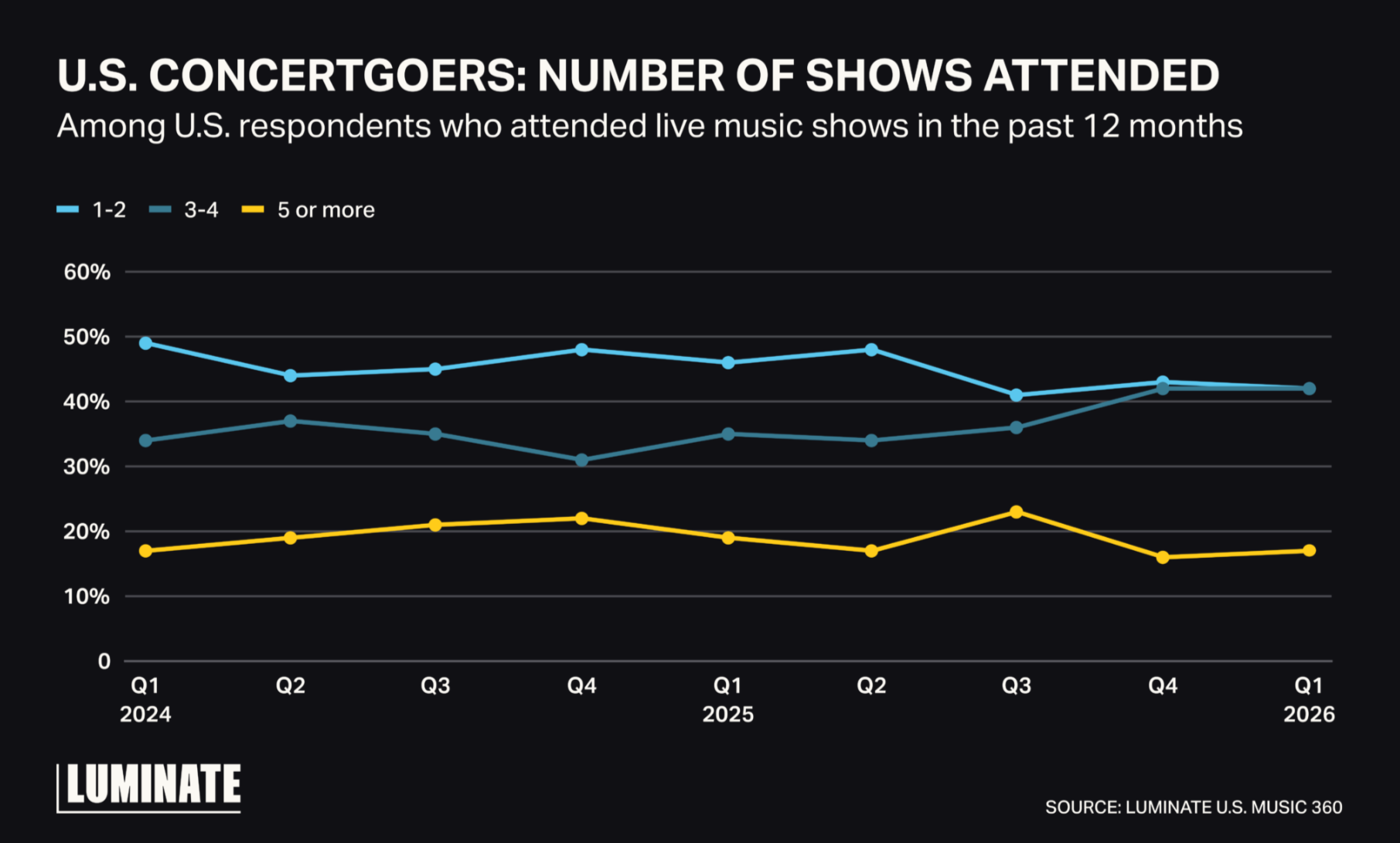
- Price Sensitivity is Morphing: While ticket cost remains the #1 barrier to entry, fewer fans are letting it stop them. The percentage of the general population citing cost as a barrier fell from 59% to 53% over the last two years, giving rise to multi-show "superfans" and a boom in music tourism.
- Ticket Prices Eased (Slightly): Likely in response to heavy consumer pushback, the average global ticket price dropped slightly to $127.17, down from the record high of $130.36.
- Long-Term Optimism: Despite a cooling period, Wall Street remains bullish. Goldman Sachs projects global live music revenue will hit $67.1 billion by 2035, while Morgan Stanley expects U.S. revenues to cross $14 billion by 2028.
Gen Z Demographics Split Along Gender Lines
Gen Z spent a monthly average of $101 on live music events in Q1 2026. That outpaced Millennials ($94 average) who are historically the highest-spending demographic for live music.
- Zoomer Woman Takeover: Women are heavily driving this trend. They are consistently outpacing men in concert attendance, packing stadiums for female-dominated fanbases like Taylor Swift, Olivia Rodrigo, and Sabrina Carpenter.
- Where the Men Went: Gen Z men aren't abandoning music, but they are opting out of expensive concert tickets. Luminate data shows their monthly entertainment spend on video games is now double what they spend on live events.
The Independent Festival Squeeze is Severe
- A Wave of Cancellations: While stadium tours dominate, the mid-tier festival circuit is struggling under supply chain inflation. Global festival cancellations spiked to 107, and European festival sellout rates plummeted to a mere 17%.
- What is Working: Consumers are choosing dependable legacy brands and niche events over eclectically booked, expensive festivals. Flagships like Coachella (which secured its first post-pandemic sellout in 2026) and hyper-focused, genre-specific boutique fests (like Camp Flog Gnaw) are the ones left standing.
Smart Touring Strategies: Three Blueprints That Won
Artists who dominated cracked the code by aligning their live routes directly with streaming data:
- The Mini-Residency (Beyoncé): The Cowboy Carter Tour was the highest-grossing global tour, generating $306 million from just 23 U.S. dates. Instead of a grueling multi-city haul, she set up multi-night stadium residencies in high-streaming hubs, betting that music tourists would travel to her. Harry Styles, The Eagles and others are perusing similar strategies.
- The Hometown Anchor (Tyler, the Creator): Tyler played 52 U.S. shows by aggressively clustering dates where his streaming volume was concentrated (like a massive six-night run in Los Angeles), using a traditional national routing only for smaller, secondary markets.
- The Nostalgia Plays (My Chemical Romance): Celebrating the 20th anniversary of The Black Parade, the band grossed $82.5 million across just 10 stadium dates. It proved that milestone album anniversaries perfectly mobilize legacy fan bases and drive massive post-tour streaming dividends.
Download the full free Luminate Live Music Report here.
Hypebot's Bottom Line
The new Luminate Live Music Report shows that live music is far from dying, but it is getting smarter.
The era of "build a standard 40-date tour and they will come" is facing a reckoning both in terms fan interest and the underlying costs of going on the road.
To avoid "blue dot fever," artists and promoters must embrace alternative formats like multi-night residencies, turning a tour into a "can't miss" event, hybrid virtual broadcasts and multi-act hyper-focused genre curation.