

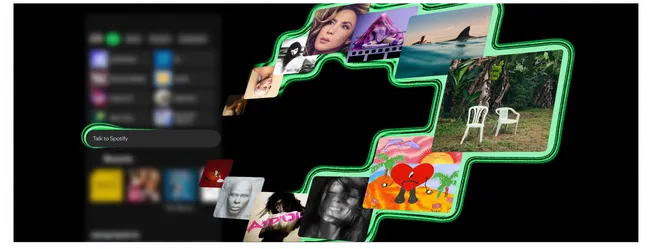
Spotify has launched "Talk to Spotify," a built-in, ChatGPT-style conversational AI assistant. It replaces passive algorithmic music discovery with an interactive, prompt-based listening experience.
For music marketers, leaning into metadata optimization, deep storytelling, and off-platform SEO are about to become as important as landing on an official editorial playlist.
What is Talk to Spotify?
With the beta rollout of Talk to Spotify, paid premium 18+ users in the U.S., Ireland, and Sweden can use voice or text to have dynamic, back-and-forth conversations with the app. It is accessible from both the Home page and the "Now Playing" screen.
Here is a breakdown of the new feature, how it alters discovery, and exactly how music marketers need to pivot their strategies.
The new assistant blends Spotify's internal data with external language models to serve as a personal, interactive DJ. Users can prompt the chatbot to:
- Shape Sessions in Real-Time: Listeners can say, "Play some artists I haven't heard before," and then follow up with, "Make it more upbeat" or "Just play their recent stuff".
- Answer Contextual Trivia: From the "Now Playing" view, users can ask questions like, "When was this album released?", "What genre is this?", or "What is the inspiration behind this song?".
- Analyze Listening History: The bot acts as a year-round Spotify Wrapped, answering queries like, "When did I first listen to this track?" or "What genres have I been into recently?".
How Talk to Spotify Changes Music Discovery
For years, music discovery has been dictated by static search inputs and passive algorithmic curation like Discover Weekly and Release Radar.
"Talk to Spotify" turns discovery into a highly specific, personalized dialogue that could level the playing field for niche artists.
If a listener asks the AI to "Play a rainy Sunday morning playlist" or "Introduce me to the biggest indie artists in Australia right now", the AI isn't just relying on mainstream chart data; it is scraping metadata, contextual tags, and audio profiles. Theis ability to ask about the music also means fans can build deeper parasocial connections with creators.
4 Ways Marketers and Artists Should Adjust
If listeners are now talking to Spotify, marketers need to ensure Spotify knows how to talk back.
Here is how to optimize for the AI-search era.
1) Metadata and Tagging is Non-Negotiable
If you want to be served up when a user prompts the AI to "Play upbeat deep cuts from the last 3 years," your backend data needs to be flawless. Accurate genres, moods, BPM, and credits are now crucial pieces of conversational SEO. Ensure your distributor has all the granular details about your track before release day.
Also Read: Music Rights Infrastructure Is Broken: Metadata Is the Missing Layer
2) Maximize Your Spotify for Artists Storytelling
The AI is pulling directly from the ecosystem. To accurately answer fan questions, Spotify needs data.
- Update your Bio: Keep it detailed, mentioning influences, hometowns, and recent milestones.
- Use Spotify Clips and Canvas: These tools keep users visually engaged on the "Now Playing" screen—exactly where the "Talk to Spotify" query bar lives.
- Add Songwriter & Producer Credits: The AI will definitely be answering questions like, "Who produced this track?"
3) Feed Off-Platform Large Language Models (LLMs)
Because conversational AI chatbots rely on large language models trained on the wider internet, your off-platform PR strategy matters. When a fan asks, "What is the inspiration behind this album?", the AI will likely scrape interviews, Genius annotations, press releases, and Wikipedia to construct its answer.
- Verify your Genius lyrics and add annotations explaining the meaning behind your songs.
- Ensure news and press releases distributed to music blogs and other outlets clearly outline the narrative, themes, and inspiration behind the music.
4) Market Your Prompt on Social Media
Short-form video may be the best way to train your audience to use this feature. Instead of just sharing a standard "Link in Bio" on TikTok, YouTube Shorts, or Instagram Reels, market the prompt.
Give your fans a direct Call-To-Action: "Go to Talk to Spotify and ask it to play my newest upbeat track" or "Ask Spotify what the secret meaning behind my new single is." Training your audience to generate these AI interactions will signal high engagement to Spotify’s backend algorithms.
Hypebot's Bottom Line
The era of passive and editorial playlist curation is giving way to conversational AI search.
It is no longer enough to just deliver a great audio file. Success in this new landscape requires building a comprehensive, highly accessible digital footprint.
If the Talk to Spotify AI assistant doesn’t know your backstory, your specific genre niche, or your lyrical themes, it simply won't recommend you when a listener asks for it.
To survive the shift to conversational AI music discovery, optimize your metadata, feed the large language models with consistent PR, and actively teach your fans how to prompt your music.
+Read more: "Forget 'Subscribe,' Teach Fans to Hack Their Social Feeds"
Get all the latest Music Industry & Live Music News updated continuously from across the web under the Hypebot Industry News tab here.