

By Ian Temple of Soundfly Weekly
*Follow Ian Temple's Substack, Soundfly Weekly for more essays on creativity.
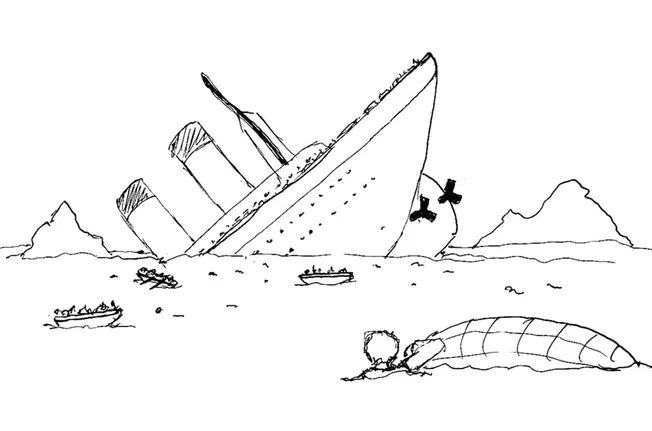
In the middle of the night on April 14-15, 1912, a junior wireless operator on the world’s largest ship who had been relaying distress signals all night following a collision with an iceberg was knocked off the deck by an encroaching wave.
The operator, one Harold Bride, ended up in the frigid waters of the North Atlantic from where he watched his ship, the unsinkable Titanic, start to “turn on its nose… just like a duck that goes down for a dive.” He swam away as fast as he could, miraculously grabbing onto an overturned lifeboat, from which he was rescued a few hours later.
But as he grasped on for dear life, he later told interviewers, he heard music echoing across the water. According to his testimony, it was the ship’s band that continued to play as it went down, even as they themselves went down with it.
In 1969, this story captured the imagination of an avant-garde bassist and composer named Gavin Bryars, who submitted a one-page description of how one might try to replicate the sound of the sinking band for a student art exhibition. What would the music sound like as it echoed across the water? As the musicians were slowly submerged in water? What other sounds would one hear echoing across the waves?
This exercise became the basis for Bryars’ now famous piece The Sinking of the Titanic, one of my favorite pieces of music. It was also the very first release on Brian Eno’s Obscure Records in 1975, a label founded in part on the idea that experimental music could move beyond the fine art world and reach wider audiences. This is certainly something that comes through in Bryars’ work: Beauty, emotion, and sentimentality are not incompatible with experimentation.
Love letters to the creative process.
The piece itself is built on an old hymn played by a string ensemble, lush and beautiful, atop a host of other sounds drawn imaginatively from the literal facts of the sinking of the ship: reflections, rumbles, tape recordings of survivors, echoing morse code signals, creaks and cracks from the ship’s hull, etc. Part of the instructions for the piece state that it should change over time as we discover new information about the real historical event.
I love this piece of music for a number of reasons, but most of all, it’s absolutely gorgeous. The melodies all feel cozy and recognizable. The warm, dense, round reverberations of the strings offer this rich, rumbly, drone-y harmonic bed on which everything else sits. It’s what Bryars imagines the sound vibrations might have sounded like bouncing off and through the water, reverberating forever in the “more sound-efficient medium of water,” as he describes it.
Then there are the metallic creaks and groans, the moving testimonies on tape, the echo-y woodblocks that open up the space, and all sorts of other subtle elements that help paint a vivid and moving picture of the night in question.
But I also love the way the piece can’t be separated from the process of its creation. The specific notes and chords are not that important here. They’re certainly secondary to their treatment, to their interpretation, to the imagination and faith of the performers in their recreation. In that way, it’s AI-proof art. It only exists in the specific recreations and interpretations of the performers playing it.
(Side note: Bryars took this process-based concept to the extreme with his orchestra the Portsmouth Sinfonia whose members were people who either had never played before or were playing different instruments from the ones they were trained in. Eno was also a member and played the clarinet. It’s… more than a little painful but actually had a top 40 hit in the UK in the ‘80s somehow.)
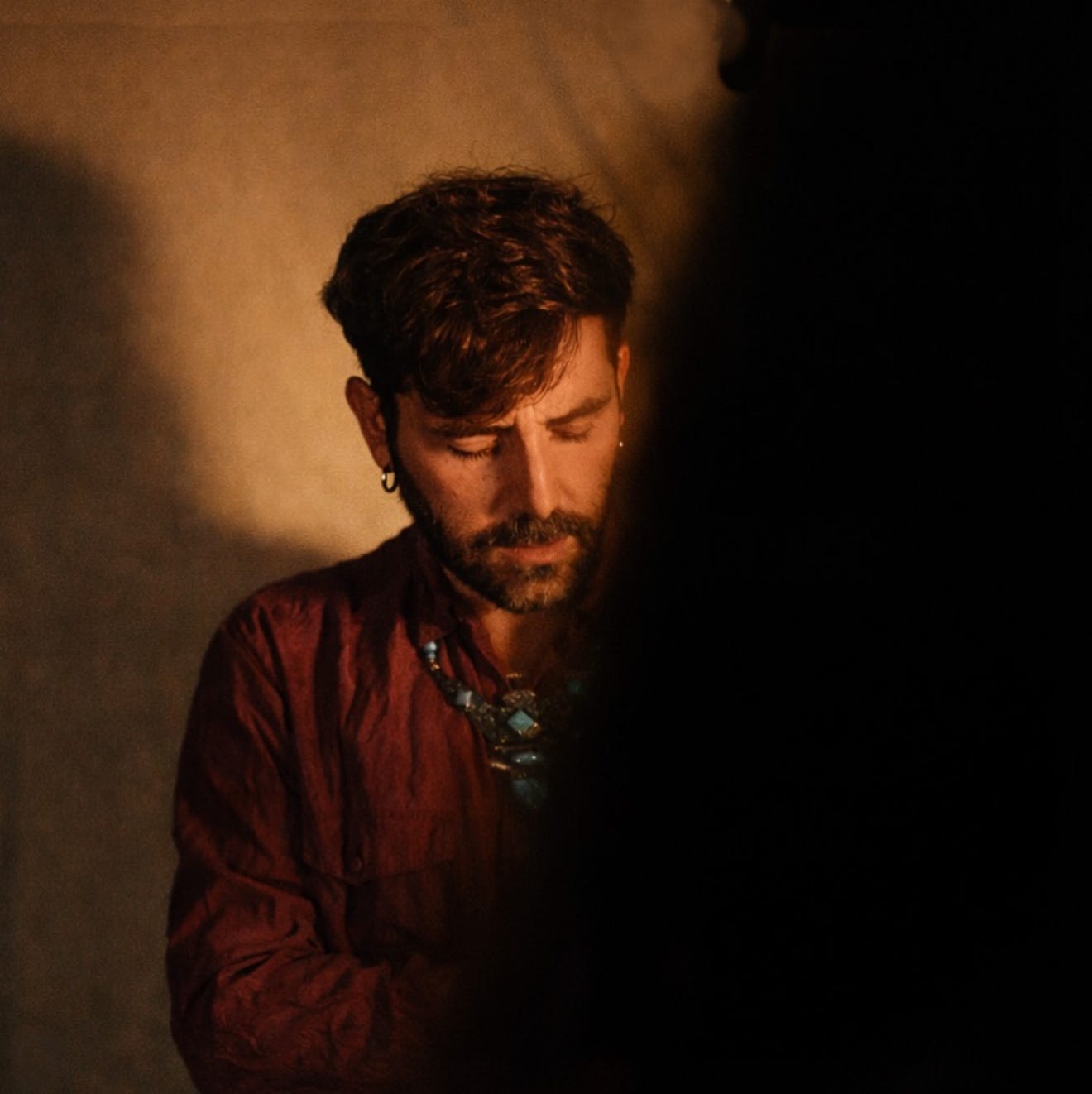
Recently, I’ve been listening to another work in this vein, a gorgeous new album by an artist I know named Alexandros Miaris called Selected Works for Film and Modular Orchestra. Alexandros is a very prolific artist. He’s a founding member of the rock band Electric Litany, an award-winning film scorer, and an adventurous solo composer.
And this album is vast. I’d even call it oceanic. It’s full of deep reflections and rumbles that call to mind the sorts of watery reverberations Bryars was playing with in The Sinking of the Titanic. It feels achingly full at times, and yet has a powerful simplicity to it. Give it a listen here:
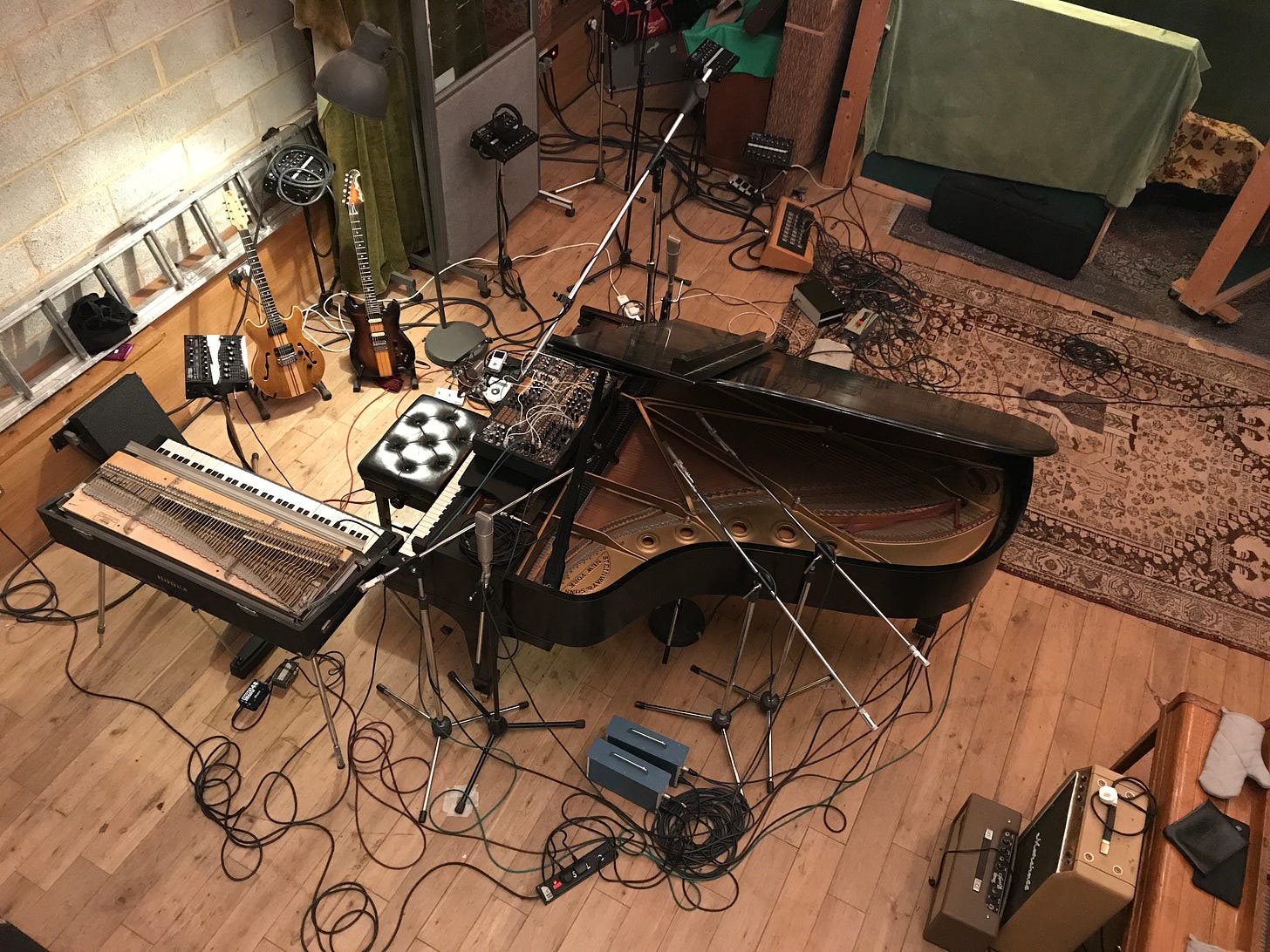
The water-y depth is due in part to how Alexandros made it. He took a bunch of acoustic sounds he’d recorded on piano, on guitar, or with strings and then put them through a series of outboard modules with audio inputs — chopping, filtering, distorting, and compressing them until they were something new. He then listened to the output, and recomposed the stuff he liked into songs, often putting them through the modules again in the process. (For the nerdy among you, two of the modules he cites are Make Noise’s Morphagene and the Overstayer 8776A Channel Strip).
This week, I chatted to Alexandros from Greece to ask a bit about his process.
“I felt a bit as if you’re taming a horse,” he says. “It’s a fine balance. It’s very easy to get carried away and create generic drone music, which doesn’t do much for me. But the more you program this system, the more you input some conditions — some can be tonal, some can be rhythmic — the more you prepare the system to work under your rules, the more you know pretty much it’s going to be tasteful to your personal taste.
I’m a believer of David Lynch always used to say about intention and idea, that there has to be some idea in the beginning. There has to be something to start with. Even if that idea is still very innocent and very simple, but at least there has to be an idea that I can play or write down, and that’s as important as the process of letting go.”
Part of the reason he took this approach is that it allowed him to listen to his own music as something new, as something to react to and get inspired by, as if he was listening to a different artist he likes. It was a way of tricking himself into seeing things in a whole new way.
“How can you place your idea in an environment — it can be a technological environment or something else — in order to remind ourselves why we do music in the first place? I remember when I was seven or six, and I was listening to music through headphones, and I was in shock about new ideas, new sounds I heard. I wanted to bring myself even just a glimpse of that again, of being inspired by something like that. So I think it was an exercise in pretending I’m just a listener.
What I found as a musician and composer [with this process] is that I can detach a little bit of my own identity, my own self from the music I fed into the system. The output of that system, I just listen to it as if it’s not me anymore, so I can inspire myself.
And now and then I would capture a few moments where I say, ‘Okay, this is great.’ And then I would go and recompose what I’ve heard on the piano or on the cello, on the guitar, and I would start writing the piece again as if I listened to someone else’s music or a part of someone else’s music which I enjoyed.”
It’s interesting to me how many parallels I can see between what Alexandros is describing and what Bryars did.
Alexandros talks about tricking himself into hearing his own music as someone else — the same way Bryars tried to do by putting himself in the ears of Harold Bride, listening to the music floating to him across the water.
There’s the way both are creating a specific sonic landscape — the collision of warm, recognizable instrumentation playing simple ideas with randomness, surprise, and the sound of things breaking.
There’s the way the process itself serves as inspiration, the collision of experimentation with beauty. Both pieces are built on a concept that is then developed through an interplay of artist agency and the space for chance occurrences to effect the outcome.
Here’s Alexandros again:
“I also think it’s interesting that when you, speaking from a technological point of view now, when you pass a relatively flat signal through a series of pieces of equipment that have valves and tubes, depending on how much you push it, they do break, and then harmonics appear from that break of the signal. They appear at places where they were not there, or they flourish where they were part of the sound.
I do enjoy them a lot, and especially how they start interacting with one another.”
One of the things that defines me as a musician is a wide and varied palette. I basically like it all — from the Delta blues recordings on Parchman Farm to Celine Dion belting overwrought orchestral pop music and beyond. But the throughline of stuff that really inspires me is an experimental mindset — the focus on finding and developing a process that will surprise and challenge and inspire you, or as Alexandros says, remind you why you make music in the first place.
Put differently, the part where you’re trying to tame a horse is part of what makes the whole thing exciting. And that’s often where you hear the human come through as well.
Apparently, Bryars thinks that one reason his piece The Sinking of the Titanic has been so enduring is because people are still so entranced by the story of the Titanic — the messianic and arrogant faith people had in human-developed technology to completely overcome all natural obstacles. It was meant to be the unsinkable ship! You could just let it do its thing. Of course, that faith proved to be tragically misguided.
I wonder to what extent we’re experiencing something similar right now with AI. It’s the pinnacle of technology, this tool that promises to grant each of us enormous powers to generate whatever we can imagine — and render it valueless in the process. And while many people are raising the possibilities of what can go wrong, we’re still heading toward the iceberg anyway.
Alexandros is working on another piece of music right now, a piece for solo piano that works on random Euclidean pattern sequencing. He inputs a note, and the software spits back out a bunch of rhythmic sequences. The funny thing is that many of these are unplayable — and yet Alexandros is trying to learn to play some of them himself on piano for a show this November.
There’s a certain irony in this, a certain reversal of the accepted order of things. While much of the world is creating instructions for AI to make stuff for them, in this case Alexandros is trying to perform music based on the impossible instructions given to him by his technology. And it’s going to be imperfect and challenging and quixotic and very, very human.
I asked him why he’s so drawn to technology in how he creates:
“I think it’s quite liberating when you befriend the tools that work with you. I have things that I can work with, and I love working with them. It’s a way to travel places musically that I couldn’t otherwise.”
Simple stuff, but maybe that’s what I love about these specific stories: Both these artists refuse to be constrained by dichotomies. You can make experimental music that’s also beautiful. You can use technology to feel more human. You can trick yourself into figuring out what you like. You can have a concept in mind without writing down every note on the page. You can approach something with intention and allow serendipity to alter it as it goes.
In particular, I’m thinking about how I use technology in music. I’m staring down all this unbelievable tech that promises to get me a better sound, to produce anything I can imagine. And I could let it drive — potentially right into an iceberg.
Or I can preserve my ownership of the process. I can keep my hands on the steering wheel. In that way, I can use the tech in a way that serves the spirit, that keeps authorship in my own hands, and that continues to excite me in the same way I was excited when I started playing music.
Stay dry out there.
Ian Temple is the Founder and CEO of Soundfly. Follow his Substack, Soundfly Weekly for essays on the creative process, or join the growing community of musicians and educators on Soundfly for free today.